Every hospital renovation in Florida that affects life safety systems — sprinklers, fire alarms, egress paths, smoke compartment integrity — requires a formal Interim Life Safety Measures (ILSM) program. This is not optional documentation. It's an AHCA licensing requirement and a Joint Commission standard, and the consequences of missing it range from survey findings to conditional licensure.
The GC who understands ILSM documentation is the GC who protects the hospital from compliance exposure. The GC who doesn't understand it creates a paper trail gap that surveyors find immediately.
Here's how ILSM works in Florida, what the GC's documentation responsibilities are, and how JK Prestige manages it on occupied hospital projects.
What ILSM Is and Why It Exists
When construction or renovation in an occupied hospital disrupts a required fire safety system — removing a sprinkler head for construction, impacting smoke compartment integrity, temporarily disabling a fire alarm zone — the facility's life safety compliance is compromised.
ILSM is the documented set of compensatory measures the facility implements to maintain an equivalent level of life safety during that compromise period. Think of it as the hospital's answer to: "We know the sprinkler in corridor 2B is offline. Here's what we're doing to make sure a fire in corridor 2B doesn't kill anyone while it's offline."
The ILSM program is required by:
- NFPA 101 (Life Safety Code): Section 4.8, Equivalency — allows for compensatory measures when full compliance is temporarily impaired
- The Joint Commission (TJC): Environment of Care Standard EC.02.06.05 — specifically requires ILSM implementation when life safety deficiencies occur due to construction
- AHCA (Agency for Health Care Administration): Florida's healthcare licensing body, which surveys for TJC compliance by reference and conducts its own surveys using NFPA 101 as the applicable code
A hospital that renovates without an ILSM program is not just non-compliant — it's a liability. Surveyors look for the ILSM documentation specifically when they see construction activity.
The ILSM Trigger Assessment
Not every renovation activity triggers ILSM. The trigger assessment determines whether a specific construction activity creates a life safety deficiency that requires compensatory measures.
ILSM is triggered by:
- Impairment of automatic fire suppression: Taking any sprinkler head, zone valve, or main out of service for more than 4 hours
- Impairment of fire alarm systems: Disabling a smoke detector, pull station, or fire alarm panel zone
- Smoke compartment penetrations: Creating any penetration through a smoke barrier that is not immediately sealed (even temporary breaches during work)
- Egress path blockage: Blocking a required egress corridor, stairwell, or exit door — even temporarily during work hours
- Fire barrier penetrations: Any opening in a 1-hour or 2-hour fire-rated assembly that is not immediately fire-stopped
Activities that do NOT trigger ILSM:
- Construction confined to a single patient room or non-patient care area with intact smoke barriers
- Electrical work that doesn't affect fire alarm devices
- Cosmetic renovation in areas with fully operational life safety systems
The assessment is documented. The GC and the hospital's facility management team jointly sign off on the assessment before work begins.
ILSM Documentation Requirements
The Joint Commission's Environment of Care standard requires 13 specific ILSM compensatory measures to be assessed and documented when construction activities create life safety deficiencies. Not all 13 apply to every situation — the ILSM assessment determines which measures are required for the specific deficiency type.
The 13 ILSM elements:
- Ensure free and unobstructed exits
- Ensure free and unobstructed access for emergency services
- Ensure operational fire alarm systems
- Ensure operational fire suppression systems (sprinklers, standpipes)
- Provide temporary but equivalent fire suppression systems when automatic systems are impaired
- Inspect exits, extinguishers, and egress systems at appropriate intervals (daily during impairment)
- Provide additional fire-fighting equipment as needed
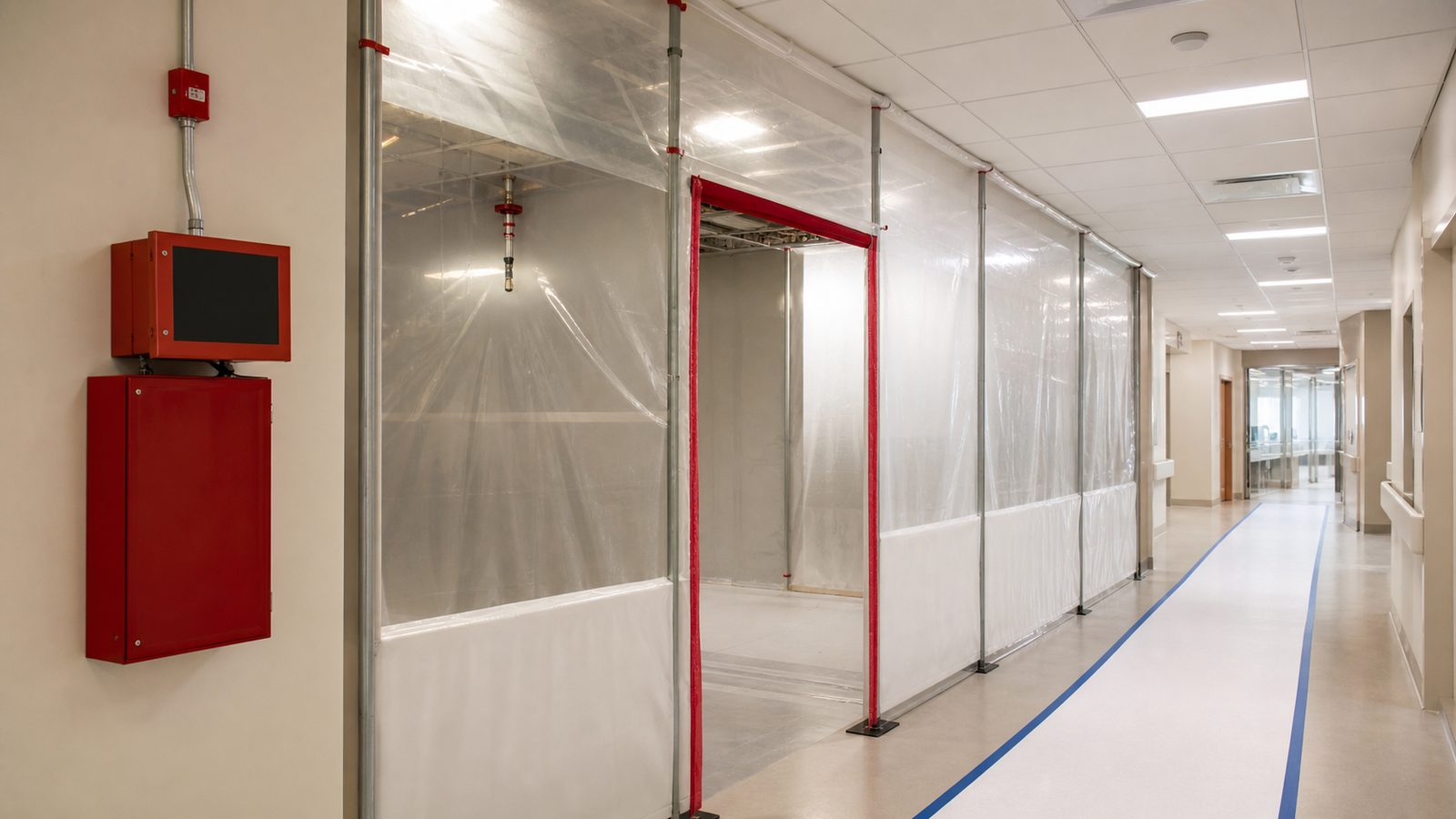
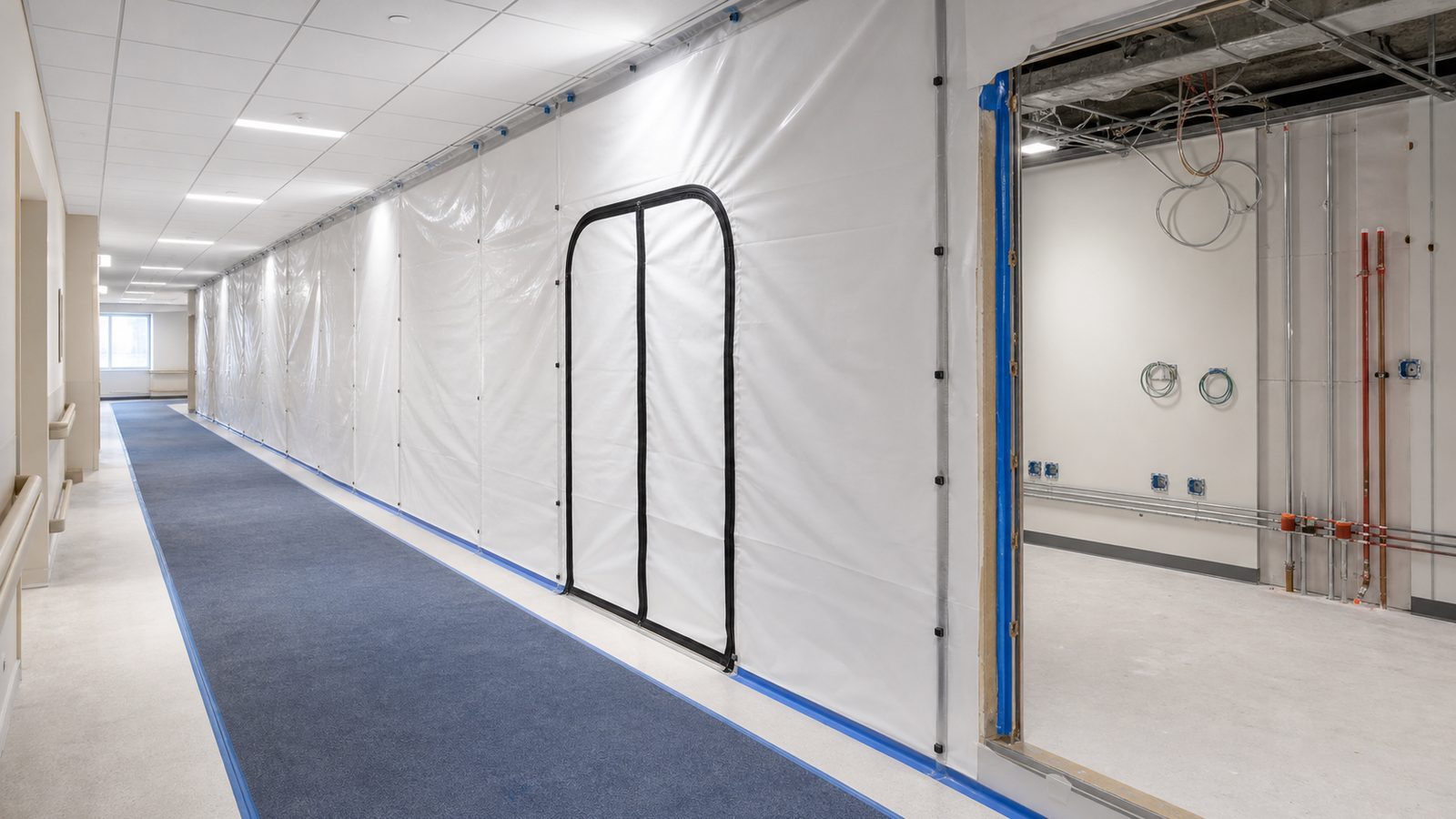
- Ensure interim construction measures (ICRA barriers) are in place
- Prohibit smoking in or near the construction area
- Educate staff on any emergency actions required by the ILSM
- Conduct more frequent safety inspections during the impairment period
- Conduct a fire drill to test altered egress paths and staff response
- Provide additional training for affected staff when required
For most hospital renovation projects, the applicable elements are 1, 3, 4, 6, 8, and 11. Elements 5 and 12 kick in for major sprinkler impairments.
The documentation format: a formal ILSM assessment form, completed jointly by the GC and the facility, signed by the Hospital Fire Safety Director or Safety Officer, and retained in the construction documentation file.
The GC's Role in ILSM Documentation
The GC's role is not to administer the ILSM program — that's the hospital's responsibility. But the GC has specific documentation obligations that hospitals require and surveyors verify.
Pre-Construction ILSM Assessment
Before any scope of work begins that creates a life safety impact, the GC submits an ILSM impact assessment to the hospital's facility management team. This document describes:
- The scope of work and its location
- The specific life safety system(s) affected
- The duration of the impairment
- The GC's construction-side commitments (maintaining ICRA barriers, providing hot work permits, not working in affected areas during specific hours)
This document triggers the hospital's formal ILSM response.
Hot Work Permit Documentation
Any open-flame or spark-generating work in a healthcare facility — welding, cutting, grinding — requires a Hot Work Permit. The permit is issued daily, specific to the work location and time, and requires a 30-minute fire watch after work stops. The GC maintains the hot work permit log on-site and produces it on request during inspections.
At JK Prestige, we do not proceed with any hot work on a healthcare project without a current permit in hand. The permit is on the foreman's clipboard, not filed in the trailer.
ICRA Compliance Documentation
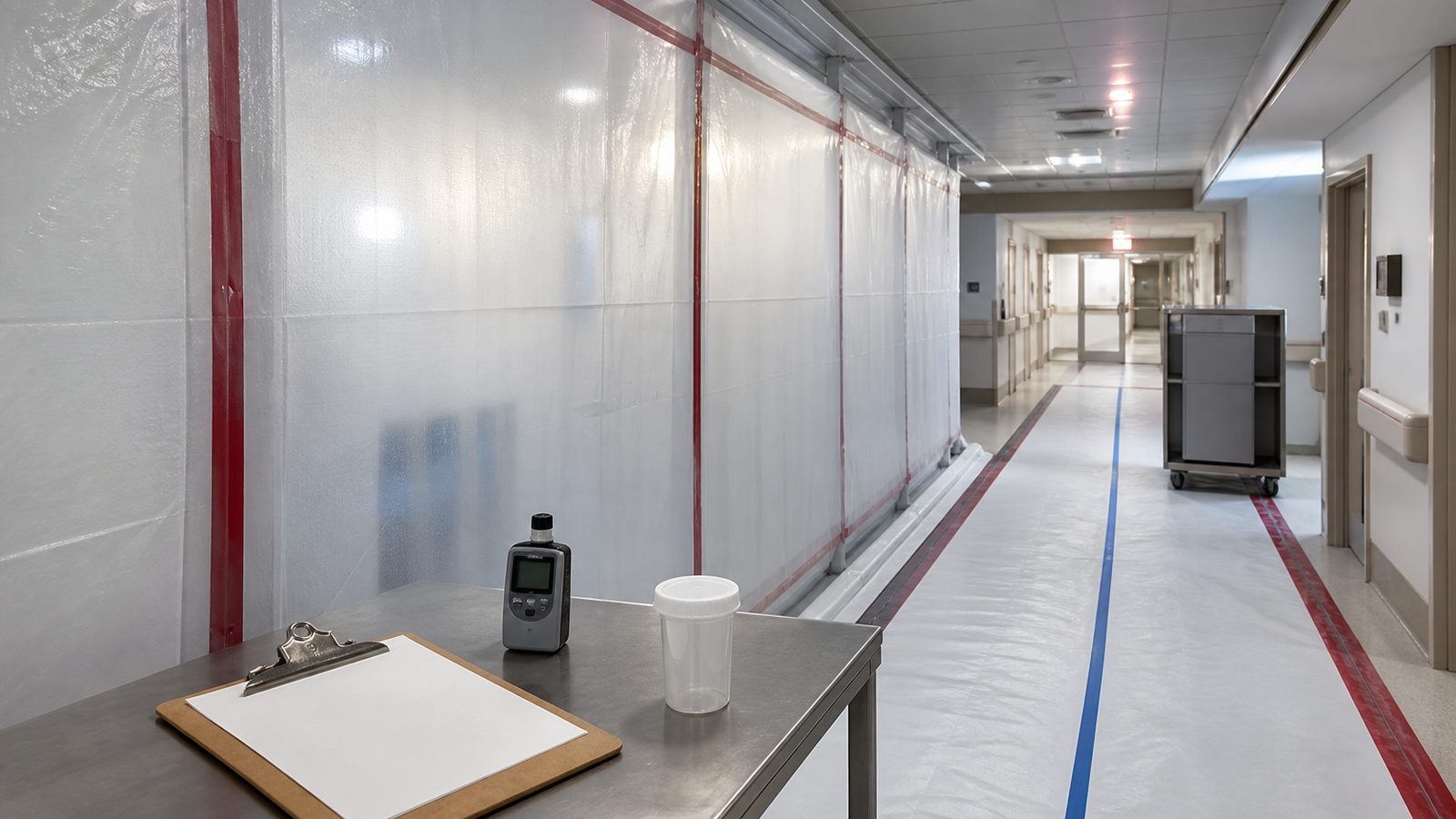
ICRA (Infection Control Risk Assessment) and ILSM run concurrently on hospital renovations. The GC's ICRA documentation — barrier inspection logs, negative pressure monitoring records, HEPA vacuum filter change logs — is produced alongside ILSM documentation. Surveyors review both.
Daily ICRA inspection logs, signed by a JK site superintendent, document that barriers are intact, negative pressure differential is maintained, and no dust or debris has migrated into the patient care environment.
Sprinkler and Fire Alarm Impairment Notifications
When sprinkler or fire alarm impairment is required for construction work, the following notification sequence must be documented:
- 24-hour advance written notification to the facility Safety Director
- Notification to the Authority Having Jurisdiction (AHJ) — typically the local fire marshal and AHCA's construction review office
- Notification to the insurance carrier if required by the policy
- Activation of temporary suppression measures (fire watch, additional extinguishers)
- Return to service notification with verification test documentation
JK Prestige maintains a impairment notification log for every hospital project that touches life safety systems. Each impairment has a file: the advance notice, the AHJ notification, the return to service verification, and the fire watch logs for the impairment period.
Common Compliance Gaps GCs Create
No ILSM assessment before work begins. The most common finding on Joint Commission hospital construction surveys is that ILSM assessments weren't completed before the construction activity occurred. The assessment must be in the file before the impairment, not after.
Daily inspection logs that are blank. An ILSM program that says daily inspections were conducted but has no logs is evidence that the inspections weren't happening. Blank logs are worse than no program — they demonstrate documented non-compliance.
Hot work without permits. Welders and pipefitters who know the work is coming and start without obtaining the daily permit. A single hot work fire in a healthcare facility is a catastrophic event. No permit = non-negotiable stop work at JK Prestige.
ICRA barriers allowed to degrade during construction. Gaps in ICRA barriers from material movement or equipment access that aren't repaired immediately. The daily barrier inspection exists precisely to catch and repair these within the same work shift.
No call center. No coordinator. A JK principal reviews every inquiry and replies with a real number, not a range, not a follow-up form.
Request Free Estimate →