Jacksonville is undergoing a healthcare infrastructure expansion that has no precedent in the city's recent history. UF Health, Mayo Clinic Florida, Baptist Health, Ascension St. Vincent's, and the VA Medical Center are all in active capital programs simultaneously. For developers and healthcare system real estate teams, this creates a specific challenge: the pool of general contractors (GCs) qualified to deliver hospital construction at a GMP (Guaranteed Maximum Price) contract level in NE Florida is thin, and it is being absorbed fast.
This post examines the drivers of Jacksonville's healthcare construction surge, what it means for GC capacity in the region, why regional GCs frequently outperform national firms on healthcare projects, and how healthcare owners can position their projects to attract qualified contractors in a tight market.
Jacksonville's Healthcare Construction Drivers in 2025
UF Health Jacksonville
UF Health's downtown Jacksonville campus has been in capital expansion mode for several years. The North Tower expansion added acute care capacity in a market where inpatient demand has grown with the regional population. Outpatient facility development has followed, with UF Health building ambulatory care capacity in suburban corridors to capture patients closer to their homes rather than routing all care through the downtown campus.
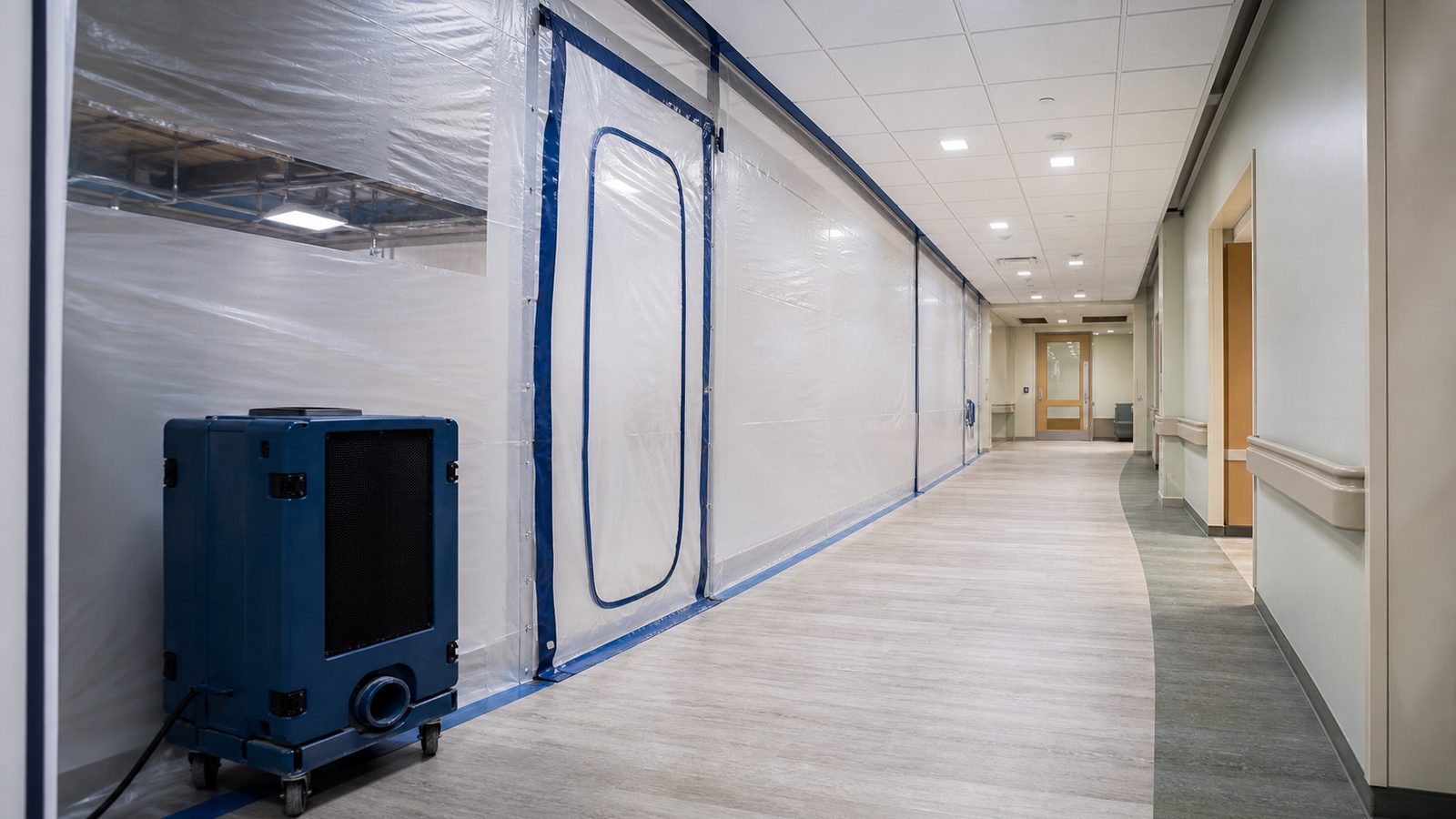
Ground-up hospital tower construction at this scale — 200,000+ square foot acute care facilities — requires a GC with documented experience in ICRA (Infection Control Risk Assessment) compliance, phased construction in occupied facilities, and National Fire Protection Association (NFPA) 99 medical gas and electrical systems. The scope of what can go wrong on a live hospital campus during construction is significant, and the consequences — patient safety events, Joint Commission findings, regulatory citations — are not abstractions.
Mayo Clinic Florida
Mayo Clinic's Jacksonville campus in the San Pablo corridor continues to grow. Mayo is one of the most demanding healthcare construction clients in the country: their internal facilities standards, quality control protocols, and phasing requirements for construction in or adjacent to clinical spaces exceed the already-elevated bar of standard hospital construction.
Mayo's presence in Jacksonville has a secondary effect: it attracts healthcare-adjacent construction. Medical office buildings, specialty outpatient facilities, and physician practice spaces cluster around Mayo's campus, generating a construction pipeline beyond the Mayo direct capital program.
Baptist Health System
Baptist Health is the largest healthcare network headquartered in Jacksonville and has one of the most active capital programs in the NE Florida market. Baptist's construction activity in 2025 spans multiple project types: hospital facility updates, new MOB (Medical Office Building) development, and expansion of outpatient surgery center capacity.
Baptist's size means they operate a sophisticated real estate and construction management function internally. GCs who work with Baptist need to perform at a documentation standard — RFI turnaround, submittal tracking, safety record — that eliminates the firms who operate informally.
Ascension St. Vincent's
Ascension St. Vincent's has operated in Jacksonville since 1916 and maintains a significant acute care and specialty facility footprint. Active facility update and capacity addition projects in 2025 include work on the Riverside and Southside campuses.
VA Medical Center Jacksonville
The VA Medical Center in Jacksonville operates under federally funded capital programs that follow a different procurement path from private healthcare construction — typically Design-Bid-Build with federal contracting requirements including Davis-Bacon prevailing wage. The VA's expansion program reflects the significant veteran population around Naval Station Mayport and NAS Jacksonville.
What This Means for Healthcare GC Capacity in NE Florida
Significant demand meeting a thin supply of qualified GCs is the condition defining healthcare construction in Jacksonville right now.
"Qualified" in the healthcare GC context is not interchangeable with "licensed and bonded." The specific requirements are:
- ICRA-trained superintendents. Infection Control Risk Assessment compliance requires superintendents who understand the four ICRA classes, know how to construct and maintain negative pressure containment barriers, and can document compliance in real time. This is a training and track record requirement — not something a competent commercial GC automatically possesses.
- GMP contract experience. Healthcare owners typically use GMP contracts with open-book cost ledgers. A GC that cannot produce a fully transparent cost ledger, manage subcontractor bid leveling transparently, and account for every dollar of the owner's GMP budget is not a viable healthcare GC.
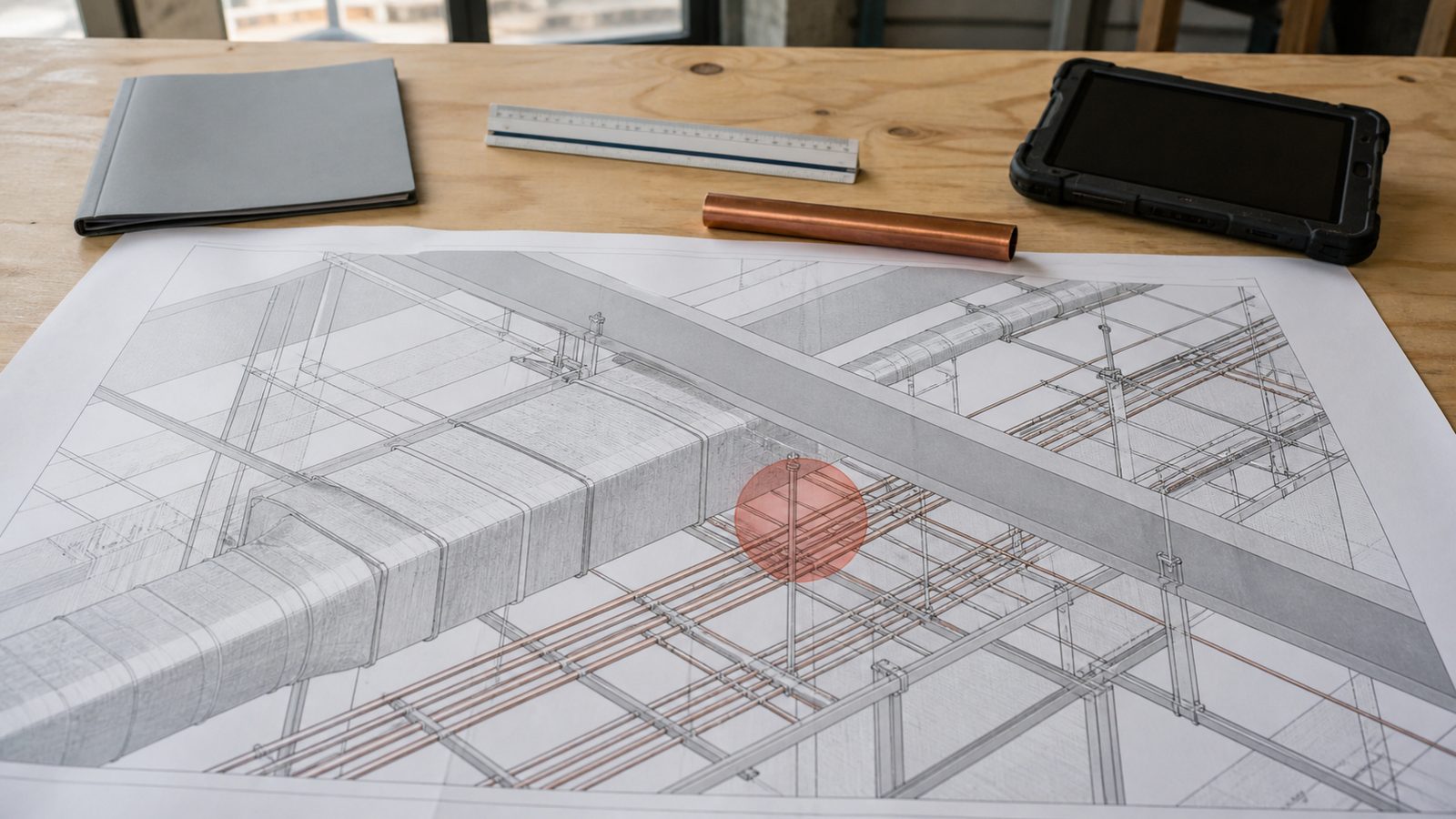
- NFPA 99 systems experience. Medical gas systems, electrical systems with healthcare-occupancy requirements, and emergency power systems in clinical spaces are governed by NFPA 99. MEP coordination on healthcare projects is materially more complex than standard commercial construction.
- Phased construction in live facilities. Healthcare systems rarely vacate wings or floors during renovation. Construction happens around active patient care areas. A GC that cannot manage this — containment, dust control, vibration limits near critical clinical spaces, noise management during clinical hours — is a patient safety risk.
JK Prestige brings all four of these capabilities to every healthcare project. Our ICRA-trained superintendents have field records on live hospital construction across multiple facilities. GMP contracts with open-book cost ledgers are our standard for all healthcare and commercial work over $2M. NFPA 99 systems coordination is part of our pre-construction process, not something we discover during MEP rough-in.
See the full scope of JK's hospital and medical construction expertise.
Why Regional GCs Compete Effectively Against National Firms in Jacksonville
Healthcare owners looking at a Jacksonville hospital project might default to one of the large national GCs — Turner, Skanska, McCarthy, Brasfield & Gorrie. These are capable firms. But regional GCs with documented healthcare expertise frequently outperform national firms on the specific variables that matter most to a healthcare owner in a market like Jacksonville.
Principal on site
At JK Prestige, the principal who signs the contract is on the jobsite. Not a project executive in an Atlanta office who visits monthly. Not a site superintendent who is three layers removed from anyone with authority. A principal with a direct phone number, walking the site, owning the outcome.
On a live hospital construction project where an ICRA barrier failure, a medical gas rough-in error, or an infection control breach can create a Joint Commission finding, the accountability structure of the GC matters. The national firm sends a project manager. A JK principal answers the phone.
Fast RFI turnaround
Healthcare projects generate a high volume of Requests for Information (RFIs). On a complex medical project, 100-300 RFIs is not unusual. The turnaround time on RFIs directly affects schedule. A 10-day average RFI response time on a 24-month hospital project has schedule implications that compound. JK Prestige maintains a 48-hour written response guarantee on owner questions, and our RFI tracking through the owner portal is real-time.
ICRA compliance track record
A GC's ICRA compliance record is not something you evaluate from a brochure. It is a document request: ask for the ICRA class breakdown by project, ask for the documentation record from the most recent Class III or Class IV project, ask whether there has ever been an infection control finding attributed to construction activities on a project this GC managed. The answers to those questions differentiate firms quickly.

How to Position a Project to Attract a Qualified Healthcare GC in a Tight Market
In a market where qualified healthcare GCs are fully subscribed, the owner's project positioning matters.
Engage GCs during pre-design or early schematic design. GCs who are pulled into a project when drawings are 90% complete and the owner needs a price in 30 days are not the GCs you want on a live hospital project. The relationship that produces the best healthcare construction outcome begins in pre-construction, when the GC's input can affect site logistics, phasing sequence, and long-lead procurement.
Use GMP contract structure. A GC who is comfortable with GMP and open-book cost accounting is advertising something about their operational discipline. Fixed-bid healthcare construction hides contingency and produces change-order disputes. GMP with a shared savings structure aligns the GC's incentive with the owner's.
Provide complete program documentation before RFP. Healthcare GCs price risk. Incomplete programs and undefined phasing sequences get risk-priced — the GC's contingency in a GMP estimate is a direct reflection of what they don't know. Complete program documentation, resolved phasing sequence, and defined infection control protocols produce more accurate and more competitive GMP proposals.
Ask for the ICRA superintendent's name and field record. Not the firm's ICRA capability statement. The name of the superintendent who will be on this project, and that individual's ICRA construction record. Healthcare construction quality lives or dies at the superintendent level.
JK Prestige provides the superintendent's name, field record, and ICRA training documentation as part of every healthcare GC proposal. The owner should know exactly who is on their site before they sign.
See how The JK Way structures healthcare projects: GMP contract, open-book cost ledger, ICRA superintendent documentation, and a principal's direct number from day one.
Get a written healthcare GC proposal in 48 hours — GMP structure, ICRA documentation, and a principal who signs the contract: jkprestigeconstruction.com/#/contact or call (904) 944-0278. A principal answers.
No call center. No coordinator. A JK principal reviews every inquiry and replies with a real number, not a range, not a follow-up form.
Request Free Estimate →