GC partners who work with JK Prestige's framing and drywall crews describe the relationship the same way: they show up with the right crew count, they read the prints, and the handoff to the next trade is clean. That's not a marketing description — it's the result of a mobilization process that establishes expectations in writing before the first day of work.
This post describes exactly what GC partners get when they use JK's crews as a framing or drywall subcontractor, and how the mobilization process works from trade packet to first day on the jobsite.
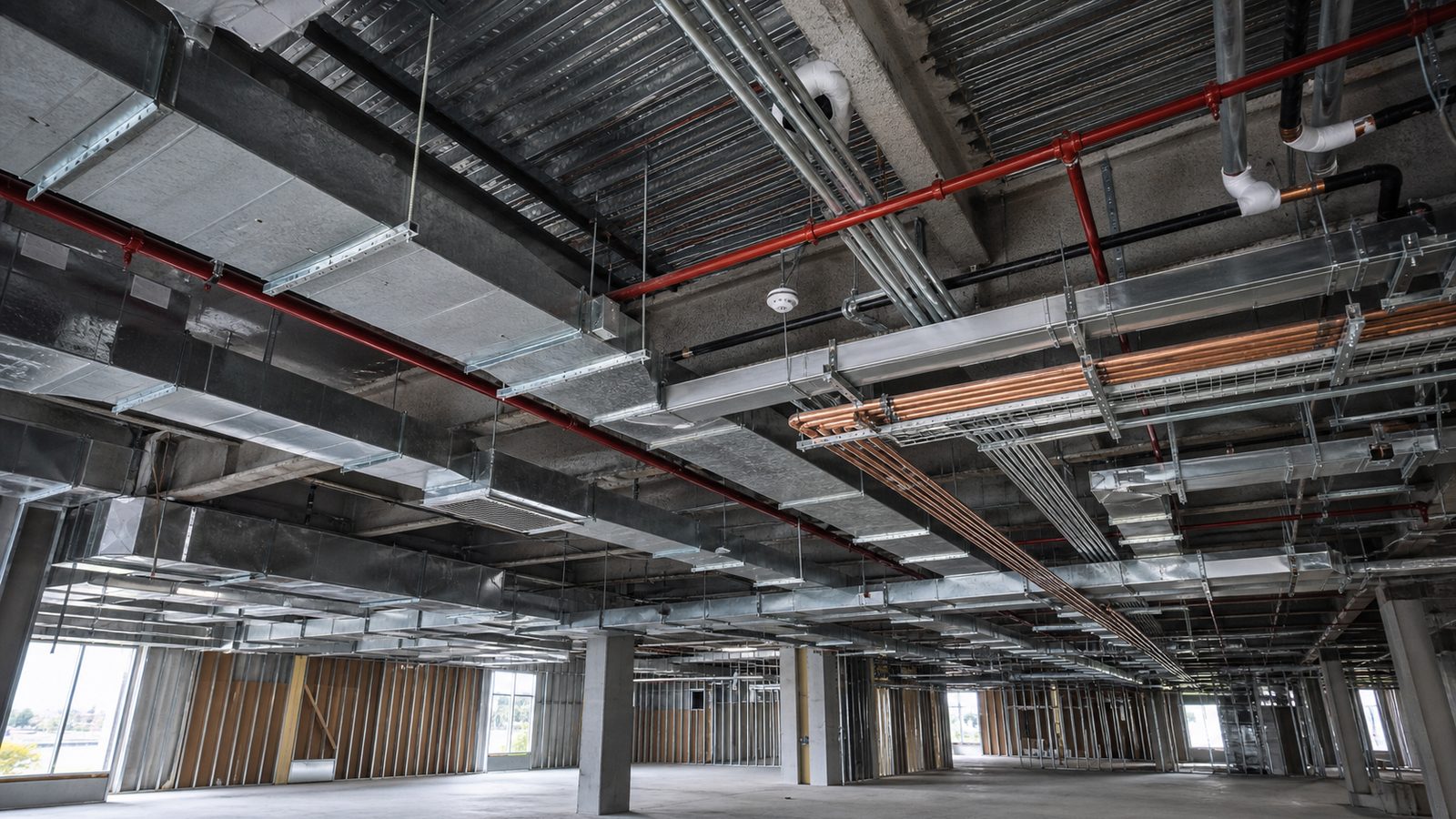
What GC Partners Get From JK's Crews
Before describing the process, here's what the outcome looks like on a typical project:
OSHA 30 foreman on every crew. Every supervisory employee on JK's framing and drywall crews holds a current OSHA 30 certificate. The certificate is on file before mobilization — not requested after a safety issue surfaces.
Self-perform labor — not brokered. JK's crew members are JK employees, not staffing agency workers. Crew deployment decisions are made by JK's superintendent. When we commit four framers for Thursday, four JK framers show up Thursday.
Reads prints on arrival. JK's foreman reviews the project drawing set before mobilization — not at the start of the first day. When the crew arrives, the foreman knows the partition types, the fire-rated assembly locations, the ceiling heights, and the board thickness specifications. The GC superintendent doesn't have to walk them through the drawings on day one.
Daily crew headcount submitted to GC project manager. At the end of each workday, JK's foreman submits headcount for that day to the GC's project manager. This eliminates the "how many people did you have on my project today?" question at the end of the week and gives the GC real-time visibility into crew deployment against schedule.
Weekly three-week look-ahead schedule. Every Monday, JK's foreman submits a three-week look-ahead that shows planned work by section or floor for the coming three weeks. This is mapped against the GC's master schedule. If a conflict or sequence issue is identified — MEP rough-in isn't done in a section where drywall is scheduled to start — it surfaces in the look-ahead, not on the day of the conflict.
Written JSA for non-routine tasks. Any task that isn't part of the standard daily work scope — cutting into an existing fire-rated assembly, working near an open edge without a standard guardrail, operating a lift in a confined area — gets a written Job Safety Analysis (JSA) before the task begins. The JSA is submitted to the GC superintendent for review.
Clean handoff to next trade. When JK's drywall scope is complete, the scope is complete. No deferred items. No "we'll come back for the closet." The space is inspectable and ready for finish carpentry, painting, or flooring — whatever comes next. If there are punch list items at the end of the scope, JK closes them within the GC's closeout window.

The Mobilization Process: From Trade Packet to First Day
Step 1: Trade Packet Submission
Before any bid or award conversation, JK submits a trade packet that includes:
- Florida Certified General Contractor (CGC) license documentation (entity name, license number, DBPR active status)
- Certificate of insurance with the GC named as additional insured — including the endorsement, not just the certificate
- OSHA 30 certificates for all supervisory employees on the project
- Project reference list: GC contacts, project types, square footage, completion dates
- Scope capability statement: stud sizes and heights, structural steel capability, sheathing, blocking
The trade packet is submitted before the bid, not as a condition of award. GCs who receive a trade packet before the bid don't have to chase documentation after they've already decided who to award.
Step 2: Scope Walk With the GC Superintendent
Before a contract is signed, JK's superintendent and the GC superintendent walk the project together. The scope walk serves several purposes:
- Confirms physical site conditions against the drawings (existing structure that doesn't match as-builts, slab conditions, ceiling heights that differ from plans)
- Establishes the coordination points between framing/drywall and MEP trades — who finishes what before JK's crew enters each area
- Confirms sequencing: will framing and MEP rough-in be concurrent (phased by section), or sequential?
- Identifies any access or sequencing constraints that affect JK's crew deployment
The GC superintendent's time investment in the scope walk pays for itself in reduced RFIs and coordination calls during execution.
Step 3: Scope Sheet Signed Before Mobilization
JK produces a written scope sheet that maps every element of the framing or drywall scope to specific plan sheets. The scope sheet specifies:
- Which partition types on which plan sheets are in JK's scope
- Which areas are excluded (another sub's scope, owner's scope, future phase)
- Fire-rated assembly locations and UL design numbers for each
- Drywall finish level by area (Level 3, Level 4, or Level 5)
- Blocking requirements and locations
- Coordination requirements with MEP (who installs backing before JK boards, who sequences after JK)
Both JK and the GC superintendent sign the scope sheet before JK mobilizes. This document eliminates the most common framing and drywall disputes: "that wasn't in my scope." If it's on the signed scope sheet, it's JK's scope. If it's not, it isn't.
Step 4: Mobilization
On the agreed mobilization date, JK's crew arrives with:
- Foreman's OSHA 30 certificate on their person or on the jobsite
- Current project drawing set reviewed and marked up
- Written fall protection plan for the project (prepared in advance by the foreman)
- JSA for any day-one non-routine tasks
Crew size for framing projects: typically 4–8 workers plus the foreman, scaled to the project phase and section size. Crew size for drywall projects: typically 3–6 workers plus the foreman.
JK's superintendent has the GC project manager's direct phone number and uses it — not email — for same-day issues that require immediate coordination.
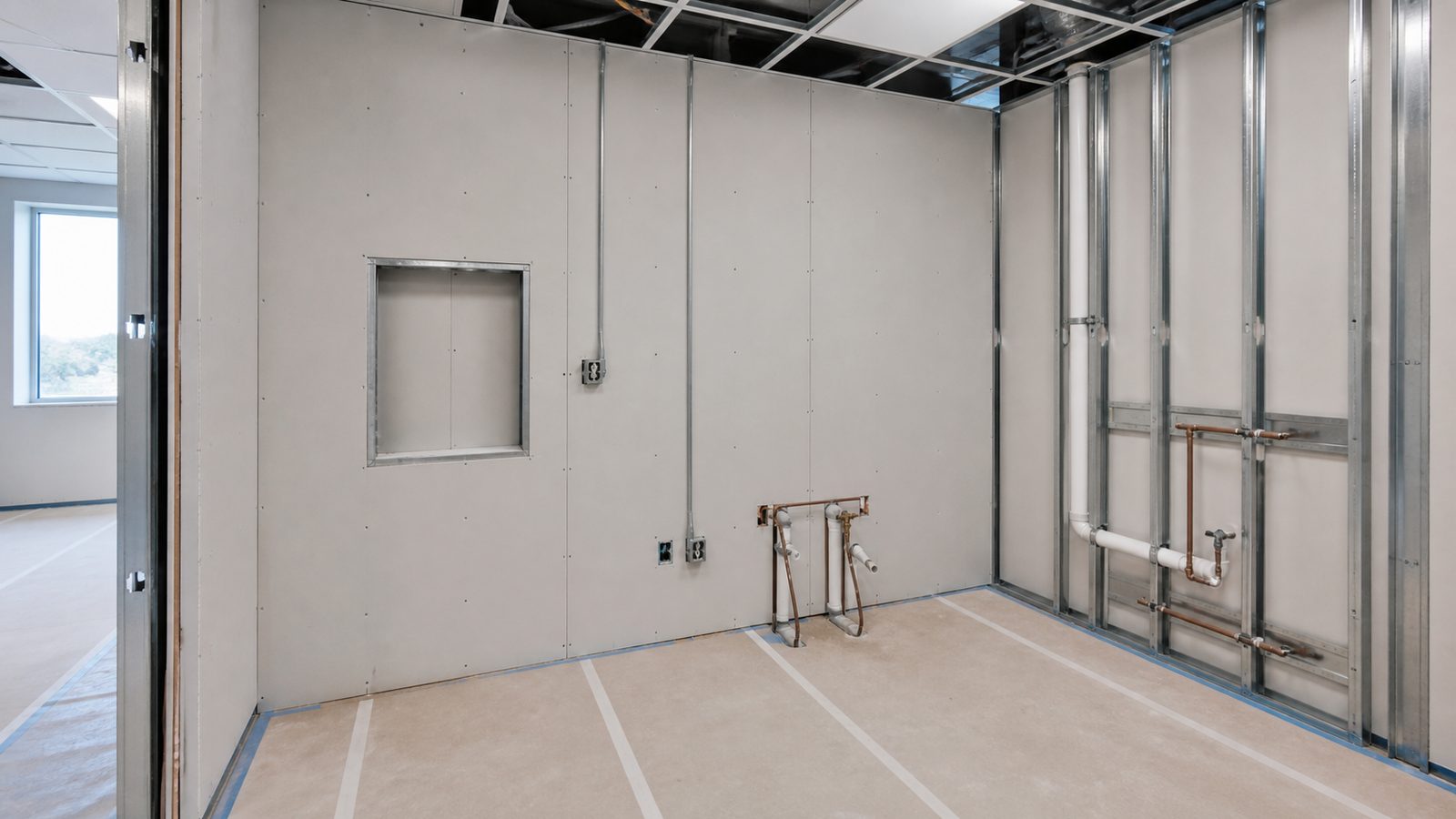
Who JK's GC Partner Service Is For
GC partners who benefit most from JK's framing and drywall crews are GCs who:
- Have critical path schedules where a framing or drywall gap creates downstream cascade
- Have had prior bad experiences with brokered framing crews that couldn't commit to crew size
- Are bidding hospital or healthcare projects that require documented safety supervision
- Need a framing or drywall sub who can read prints independently and reduce the GC superintendent's coordination burden
GC partners who are primarily looking for the lowest bid per square foot will find other subs. JK's pricing reflects OSHA 30 supervision, self-perform labor, and the documentation overhead that makes a GC partner's life easier — not the lowest-cost brokered crew available.
Request JK's trade packet and start the prequalification conversation — contact JK Prestige.
See the JK Way for the accountability standards JK maintains on every project, whether as GC or as a sub.
Request our trade packet, licensing, insurance certs, and references, contact JK Prestige. Call (904) 944-0278. A principal answers.
No call center. No coordinator. A JK principal reviews every inquiry and replies with a real number, not a range, not a follow-up form.
Request Free Estimate →