The standard scheduling tool for construction projects — Critical Path Method (CPM) scheduling — is built on an assumption that does not hold in live hospital renovations: that the GC controls access to the work area. In a hospital renovation, nursing operations control access. If the ICU census spikes on a Tuesday night, the Tuesday night barrier move does not happen. If a patient in Room 412 is too unstable to relocate, the Thursday decant that the CPM schedule assumes does not happen. The schedule slips, the CPM chart is revised, and three weeks later it slips again.
The Last Planner System (LPS) is a scheduling methodology built for exactly this constraint. It puts the people who actually control access — the trade foremen, the superintendent, and the nursing unit manager — in the room together, planning only what can realistically be committed to in the next two to six weeks. JK Prestige uses LPS on all projects over $2M, including complex hospital renovations where clinical operations and construction must share the calendar.
What the Last Planner System Is and How It Differs From CPM
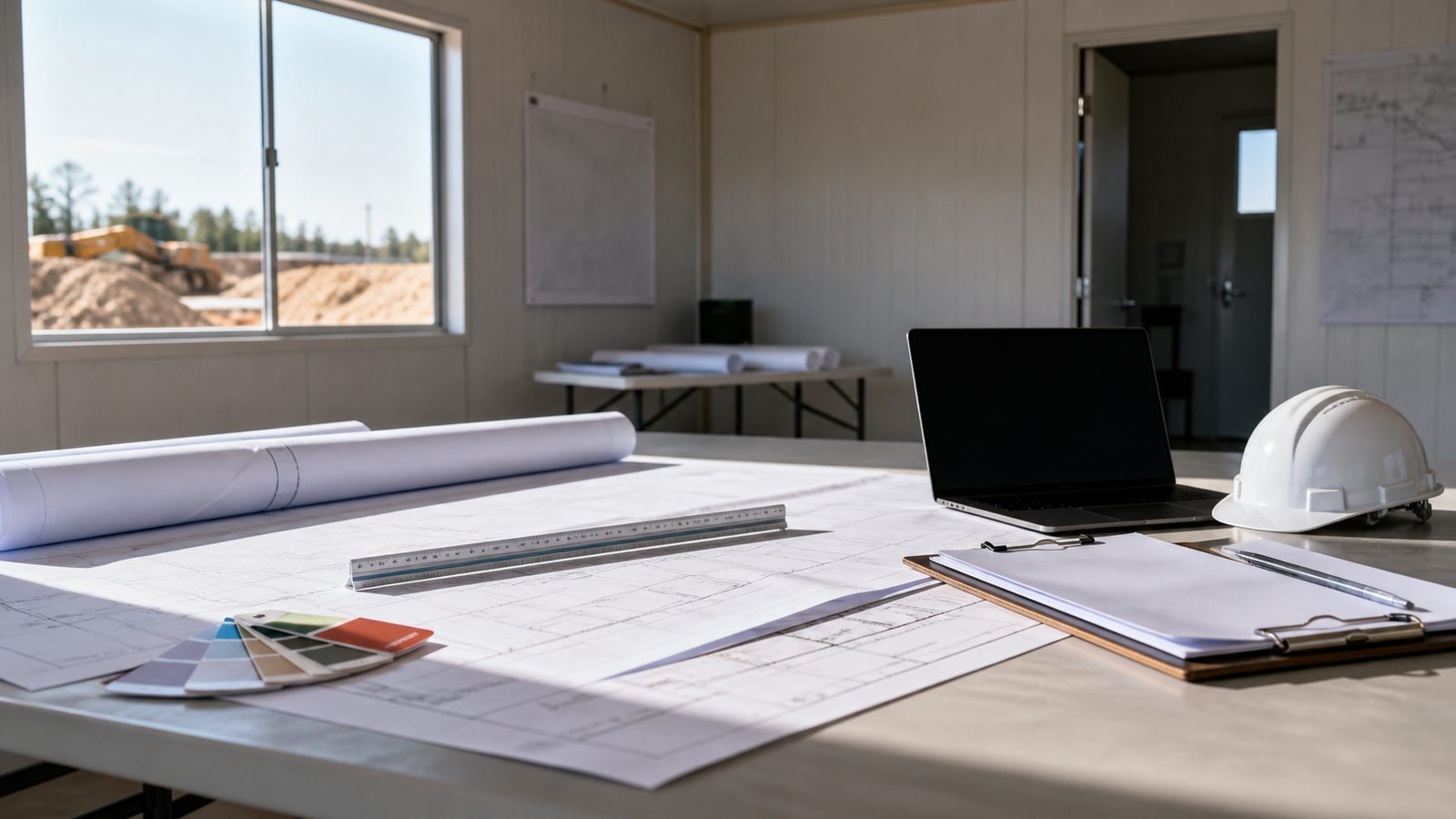
CPM scheduling is a top-down process. A project manager builds a schedule — typically in Primavera P6 or Microsoft Project — that sequences every activity from notice-to-proceed through certificate of occupancy (CO). Durations are estimated, logic ties are set, and a critical path is calculated. The schedule is shared with trade partners, who are expected to hit the milestones on it.
The problem: CPM reflects a planned world, not the actual field conditions on a live hospital project. When clinical operations need to delay a barrier move, the CPM schedule has no mechanism for that constraint to propagate through downstream activities in real time. The superintendent adjusts, the schedule is re-issued, and two weeks later the same gap between plan and field reality appears in a different location.
The Last Planner System is a collaborative pull-planning process developed by Glenn Ballard and Greg Howell in the 1990s. It operates at two time horizons simultaneously:
Make-ready planning (6-week lookahead): Identifies the work that will be attempted in the next six weeks and the conditions required for that work to proceed — permits, material deliveries, submittals, preceding trade completion, and, in hospital renovations, clinical access windows. Make-ready planning exposes constraints before they become schedule delays.
Weekly work plans: Trade foremen and the superintendent commit to specific tasks they will complete in the coming week. These are not estimates. They are commitments. Tasks are only placed on the weekly work plan if the foreman confirms that every prerequisite for that task is already in hand.
Percent Plan Complete (PPC): At the end of each week, the team scores what percentage of committed tasks were actually completed. PPC is the core metric of LPS. A healthy project runs 80–90% PPC. If PPC is consistently below 70%, the team investigates the root cause — not to assign blame, but to identify what constraint the planning process failed to expose.
Learn how JK Prestige structures project planning and delivery
Why LPS Works in Live Hospital Renovations
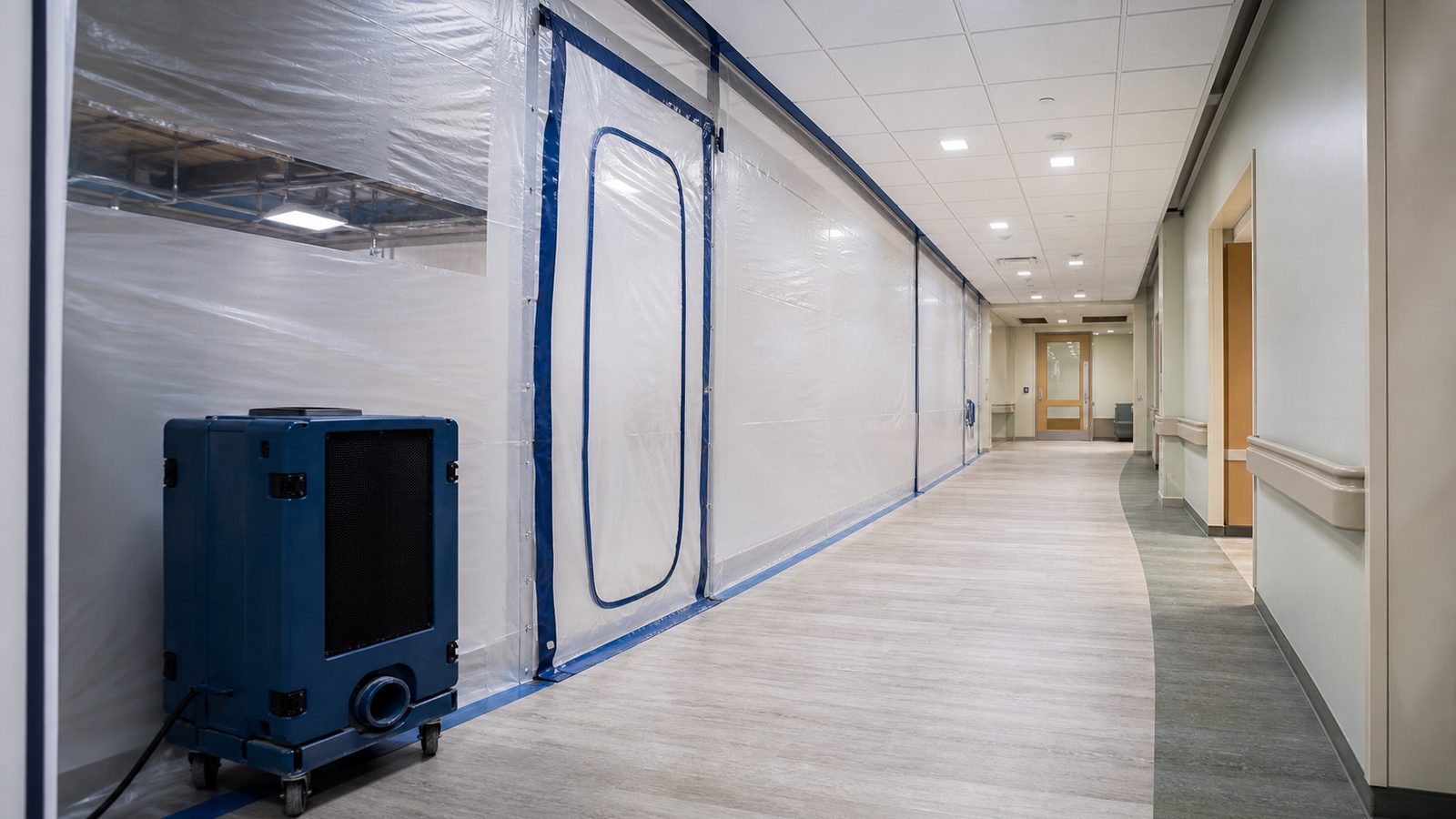
A live hospital renovation has a scheduling constraint that most commercial projects do not: the party controlling access to the work area is not on the construction team. Nursing operations controls the ICU census. Hospital administration controls room decants. Infection control controls barrier removal timing. None of these parties have a contractual obligation to hit the GC's CPM milestones.
LPS treats this as a feature, not a bug. The make-ready planning sessions include the nursing unit manager and infection control representative alongside the trade foremen and JK's superintendent. The clinical team contributes directly to the 6-week lookahead — identifying windows when room decants are feasible, flagging weeks when census is expected to be too high for construction access, and committing to specific dates when barrier moves can proceed.
This does three things that CPM cannot:
1. Clinical commitments are explicit and mutual. When the nursing unit manager participates in make-ready planning and agrees to a decant window on a specific date, that is a commitment tracked in the LPS system — not a date the GC assumed would be available based on a bar chart. When clinical conditions change, the nursing unit manager communicates the change at the next weekly meeting, and the 6-week lookahead is adjusted before the trade crews are mobilized to a space that is not ready.
2. Constraints are surfaced before they cause delay. In CPM scheduling, the superintendent discovers on Monday morning that the infection control sign-off needed to proceed was not obtained. In LPS, the make-ready planning process identifies that sign-off as a prerequisite in the 6-week window and assigns it to a named person with a due date. If the sign-off is not obtained by the required date, the task is removed from the weekly work plan before crews are committed.
3. PPC creates accountability without conflict. When a committed task is not completed, LPS does not ask "who failed?" It asks "what constraint prevented completion?" Tracking PPC by constraint type — material, access, preceding trade, clinical operation — reveals the recurring root causes in a project. A project where access constraints account for 60% of failed tasks knows it needs more proactive engagement with nursing operations. A project where material constraints dominate knows it has a procurement problem. CPM tracking does not produce that signal.
How JK Implements LPS With Hospital Operations Teams
JK's LPS implementation on a live hospital renovation follows a defined structure.
Project kickoff — Milestone pull session: Before the first barrier goes up, JK facilitates a full-team pull planning session with the hospital's facilities management team, the key trade foremen, and the infection control officer. The team works backward from the project completion date, identifying the milestones that must be hit and the sequence constraints between them. This session replaces the traditional CPM baseline schedule as the shared plan of record — or it is used to validate and calibrate the CPM baseline against operational reality.
Weekly LPS meetings: JK's superintendent chairs a 45–60 minute weekly meeting that includes:
- Review of last week's PPC: which tasks were completed, which were not, and why
- 6-week lookahead review: identify constraints in the upcoming window, assign owners, set due dates
- Weekly work plan commitment: each foreman commits to specific tasks for the coming week, confirmed by prerequisite verification
The hospital's nursing unit manager and infection control representative attend the meeting in person or by call for the segment covering their unit's access windows. This is not optional. LPS breaks down when clinical operations is represented by a project coordinator relaying information secondhand.
Twice-weekly barrier coordination: On hospital renovations, JK adds a twice-weekly barrier coordination touchpoint — a 15-minute standing call between JK's superintendent and the nursing unit charge nurse. The purpose is early warning: if a patient situation is developing that will affect access in the next 48 hours, JK hears about it before mobilizing the crew.
See JK Prestige's hospital renovation and construction portfolio
PPC as a Healthcare Renovation Health Metric
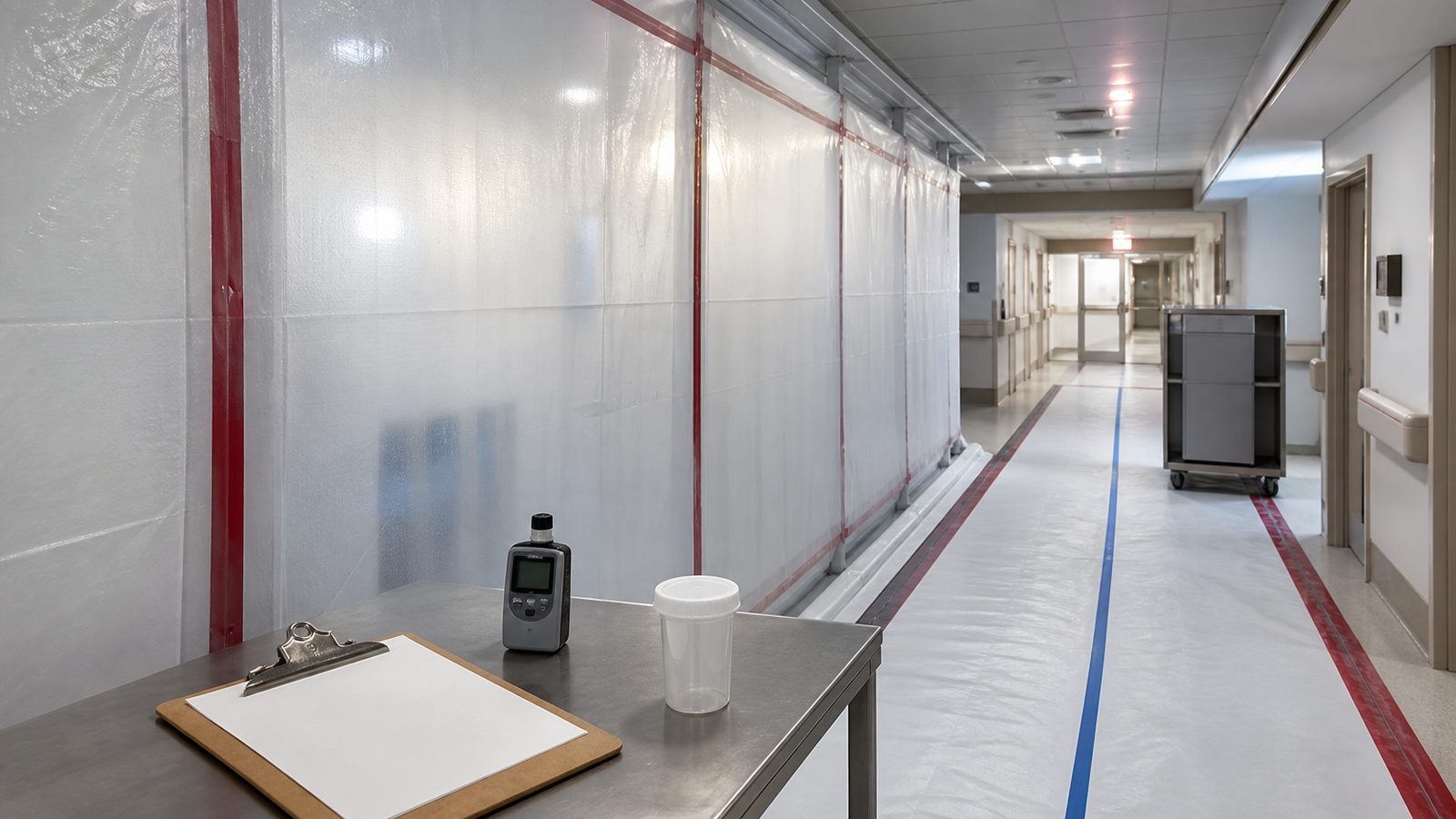
Percent Plan Complete is a more useful health metric than schedule float for a live hospital renovation. Here is why.
CPM schedule float shows how many days a task can slip before it affects the completion date. On a hospital renovation where access is controlled externally, float is consumed rapidly and unpredictably — a single census spike that delays two barrier moves can consume four weeks of float in one event.
PPC shows whether the planning process is working. An 85% PPC on a hospital renovation means 85% of the tasks the team committed to last week were actually completed. That reflects a planning process that is accurately identifying constraints and making realistic commitments. A 55% PPC on the same project means the team is committing to tasks with unresolved prerequisites — a planning failure, not a field execution failure.
JK tracks PPC by project and by constraint type. PPC data from hospital renovation projects shows that access constraints (clinical operations-related) and infection control approval delays are the two most common constraint types causing task failure in the first four weeks of a phased renovation. After week four, assuming the clinical communication cadence is working, access constraints drop and material and trade sequencing constraints become the dominant category — which is what should happen as the clinical relationship matures.
Selecting a Hospital Renovation GC Based on Scheduling Methodology
Not every GC who mentions LPS is running a real implementation. The questions that reveal actual practice:
- What is your current PPC on your active hospital renovation projects?
- Walk me through what a weekly LPS meeting looks like — who is in the room, what is covered, how long does it run?
- How do you handle a week where PPC drops below 70%?
- What is your process for incorporating clinical access windows into your 6-week lookahead?
- Have you facilitated a milestone pull session with a hospital facilities management team before? Can you walk me through how that session was structured?
A GC who can answer these questions with specifics is running LPS. A GC who describes LPS in general terms without field-specific examples is describing a scheduling philosophy they have read about, not practiced.
JK Prestige uses LPS on every hospital renovation project over $2M, with a named principal responsible for the weekly PPC report and the clinical communication cadence. A principal — not a project coordinator — answers the phone when nursing operations needs to make a schedule change at 11pm.
Learn more about hospital construction with JK Prestige
Get a free written estimate in 48 hours. contact JK Prestige Constructor. Call (904) 944-0278. A principal answers.
No call center. No coordinator. A JK principal reviews every inquiry and replies with a real number, not a range, not a follow-up form.
Request Free Estimate →