If you've watched a commercial project stall at structure with crews standing by, there's a good chance the problem was ordered 16 weeks earlier — or wasn't ordered at all. Long-lead materials are not a scheduling footnote. They are the single largest controllable source of schedule overruns on commercial construction, and a general contractor (GC) who doesn't address them before breaking ground is handing you the risk.
This post defines what qualifies as long-lead in 2025, what the real-world consequences of missing those windows look like, and how JK Prestige builds a procurement matrix into every pre-construction phase so your schedule holds.
What Makes a Material "Long-Lead" in 2025?
A long-lead material is any item with a vendor lead time of 8 weeks or more from purchase order to delivery on site. That threshold has crept upward since 2021 — post-COVID supply chain disruption and sustained demand from infrastructure spending have extended lead times across nearly every major building component category.
Here's where things stand entering 2025:
Structural steel: 14-20 weeks from fabrication order. Custom wide-flange sections and moment frames take longer. If your structural drawings aren't complete when the GC should be ordering, you're already behind.
Custom windows and storefront glazing: 12-16 weeks. Curtain wall systems with specific thermal performance ratings or custom profiles can extend toward 20 weeks. Standard commercial storefront sits at the low end of this range; anything with custom mullion profiles or specialty coatings adds 4-6 weeks.
Elevator equipment: 20-30 weeks. This is frequently the longest single lead time on a multi-story commercial or medical project. The elevator contractor needs engineered submittals approved before ordering. If that process starts at permit issuance instead of during design, you're likely pushing your certificate of occupancy (CO) by the same number of weeks you delayed the order.
Switchgear and transformers: 16-24 weeks. Medium-voltage switchgear has extended the most over the past 3 years. Utility-side transformers are often in the 24-week range. Failing to coordinate with JEA or the utility early compounds this — you're waiting on both the equipment and the utility's connection schedule.
Rooftop HVAC units: 12-20 weeks for commercial built-up systems and variable refrigerant flow (VRF) equipment. Standard split systems are shorter. Custom configurations for healthcare or food service applications trend toward the high end.
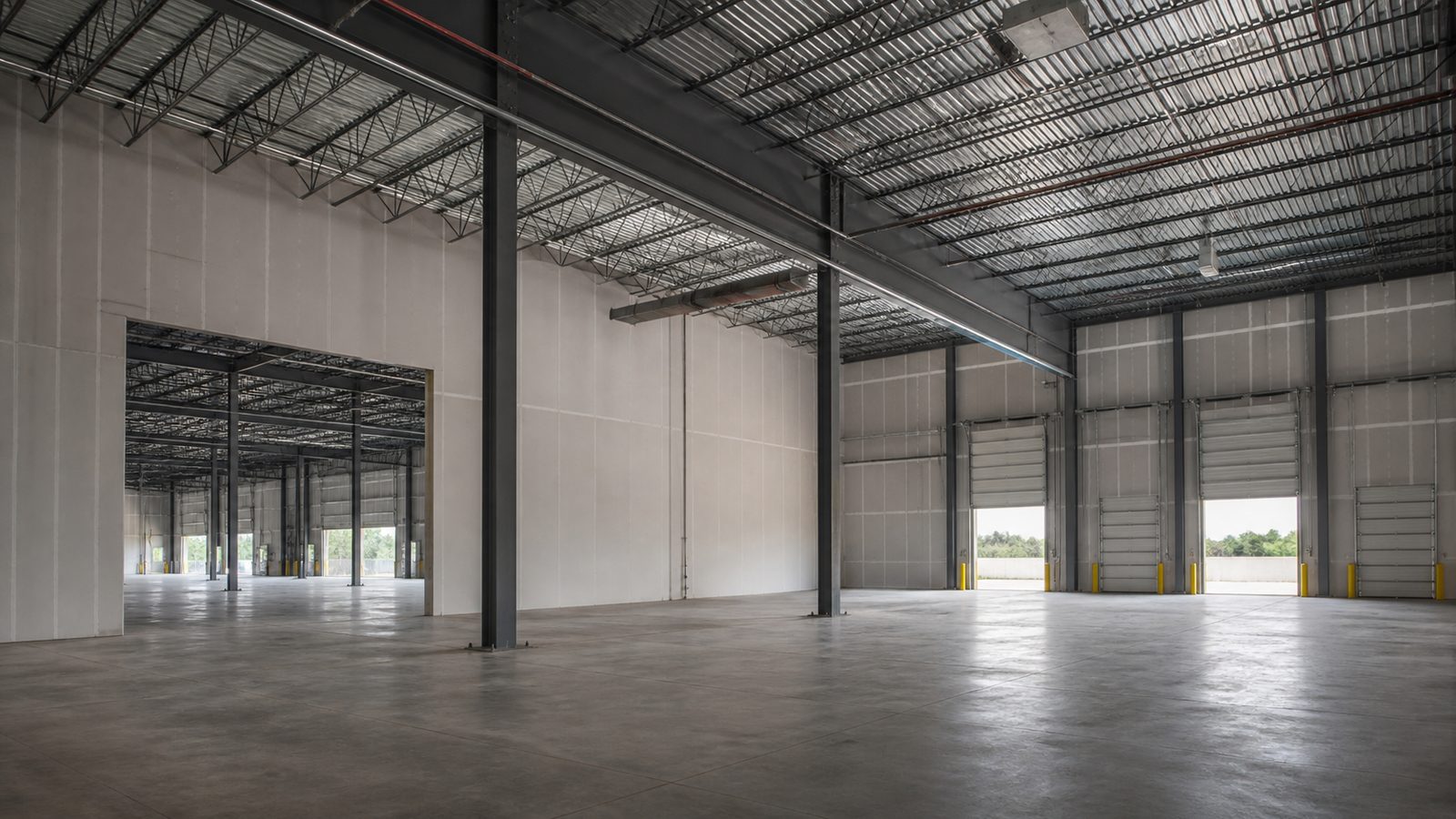
Dock levelers and loading equipment: 10-16 weeks for hydraulic dock levelers, dock seals, and vehicle restraint systems. On warehouse builds, this equipment often isn't ordered until the building envelope is nearly complete — by which time it's already on the critical path.
Commercial kitchen equipment: 10-14 weeks. Custom hood systems and ventilation-integrated equipment trend toward 14 weeks. If your restaurant or food service fit-out has a hard opening date, this timeline has to be set before framing.
What Happens When Long-Lead Items Aren't Identified Early
The damage is three-layered.
The direct stop. Work reaches a point in sequence where the next trade can't proceed until the material arrives. The mechanical contractor can't complete the HVAC installation. The building can't pass rough-in inspection. The CO can't be issued. Crews are paid to wait or demobilized and rescheduled — both cost money.
The ripple through extended general conditions. Every additional week on site costs money. Superintendent salary, site trailer, temporary utilities, portable facilities, security — these are the general conditions line items that run daily. A switchgear delivery that slips 6 weeks extends your general conditions by that same duration. On a project with $8,000/week in general conditions costs, that's $48,000 in added expense before a single change order is issued.
The subcontractor sequencing collapse. Subs schedule around your baseline. When a long-lead delay pushes the mechanical rough-in 6 weeks, the plumbing contractor who was scheduled to follow them has already moved to another project. Remobilization takes time and often costs more than the original bid. On a tight sub market like Jacksonville, skilled trade crews do not sit idle waiting for a material that wasn't ordered on time.
How JK Prestige's Pre-Construction Phase Addresses Long-Lead Risk
JK Prestige builds a long-lead matrix during pre-construction — before ground breaks, often before permit submittal. The process has four components.
1. Design review for long-lead triggers. During the pre-construction phase, our team reviews the construction documents specifically to identify every component that will require a lead time over 8 weeks. We flag these before the design is finalized where possible, because catching a specification that requires a 20-week elevator against a 14-week schedule allows the team to either accelerate or resequence — before it becomes a crisis.
2. Early vendor engagement. We contact equipment vendors for preliminary lead time confirmation during pre-construction. Lead times are not static — they shift by quarter based on manufacturer backlogs. A transformer that was 16 weeks in Q1 may be 22 weeks in Q3. We verify current lead time before locking the schedule.
3. Purchase order sequencing. Long-lead items are ordered before ground breaks where the design is locked and the budget is approved. This is not always possible for every item — some require stamped drawings or approved submittals before a vendor will accept a PO. In those cases, we identify the earliest possible order date and build that date into the pre-construction schedule.
4. Owner-facing long-lead log. Every JK Prestige commercial project includes a long-lead log in the weekly owner report — item, vendor, order date, expected delivery, and current status. You can see the log in the owner portal before the project mobilizes.
This is part of how JK Prestige approaches pre-construction differently from GCs who treat it as a formality. The schedule that gets locked before ground breaks is only as good as the procurement plan behind it.
Long-Lead Planning by Project Type
Commercial Office and Retail
The two most common long-lead failures in commercial fit-out are storefront glazing and HVAC equipment. Glazing shops in Florida are running 14-16 weeks for custom storefront — if your GC is ordering it when permits are issued instead of during design development, that's a 6-8 week schedule exposure right there.
Healthcare and Medical Office
Medical construction adds complexity because many long-lead items require engineered submittals and infection control approvals before they can be ordered. Elevator equipment in occupied healthcare facilities requires coordination with facility operations. Medical gas system components — covered in detail in our hospital construction expertise — have lead times that must be mapped against phased construction sequences so occupied areas are never left without service.
Warehouse and Industrial
Electrical infrastructure — specifically medium-voltage switchgear and utility transformers — is the dominant long-lead risk on industrial projects. On warehouse builds, dock equipment is routinely ordered late because it feels like a finish item. It's not. Lead times of 10-16 weeks mean dock equipment needs to be ordered when the foundation is being poured, not when the building shell is complete.
The Fixed-Price Connection
Long-lead identification isn't just a scheduling tool — it's a cost protection tool. When JK Prestige locks a fixed-price contract, that price reflects materials procured at known costs. Long-lead items ordered before the contract is signed can be priced at current market rates and included in the fixed-price scope. Materials ordered mid-project are subject to whatever the market is doing at that moment — and with a volatile materials market, that exposure is real.
A GC who doesn't identify long-lead items during pre-construction is either carrying a large allowance (meaning you'll pay the unknown difference at delivery) or is quoting a number that doesn't reflect actual procurement. Neither is a fixed price.
No call center. No coordinator. A JK principal reviews every inquiry and replies with a real number, not a range, not a follow-up form.
Request Free Estimate →