Florida homeowners searching for roof replacement options face a question with real financial stakes: standing seam metal or architectural shingles? The roofing industry doesn't give you a clean answer because every roofing contractor has a product line they prefer, and the upsell on metal roofing can be significant.
Here's the objective comparison — real costs, real performance data, and a framework for deciding what's right for your home and your timeline in Jacksonville.
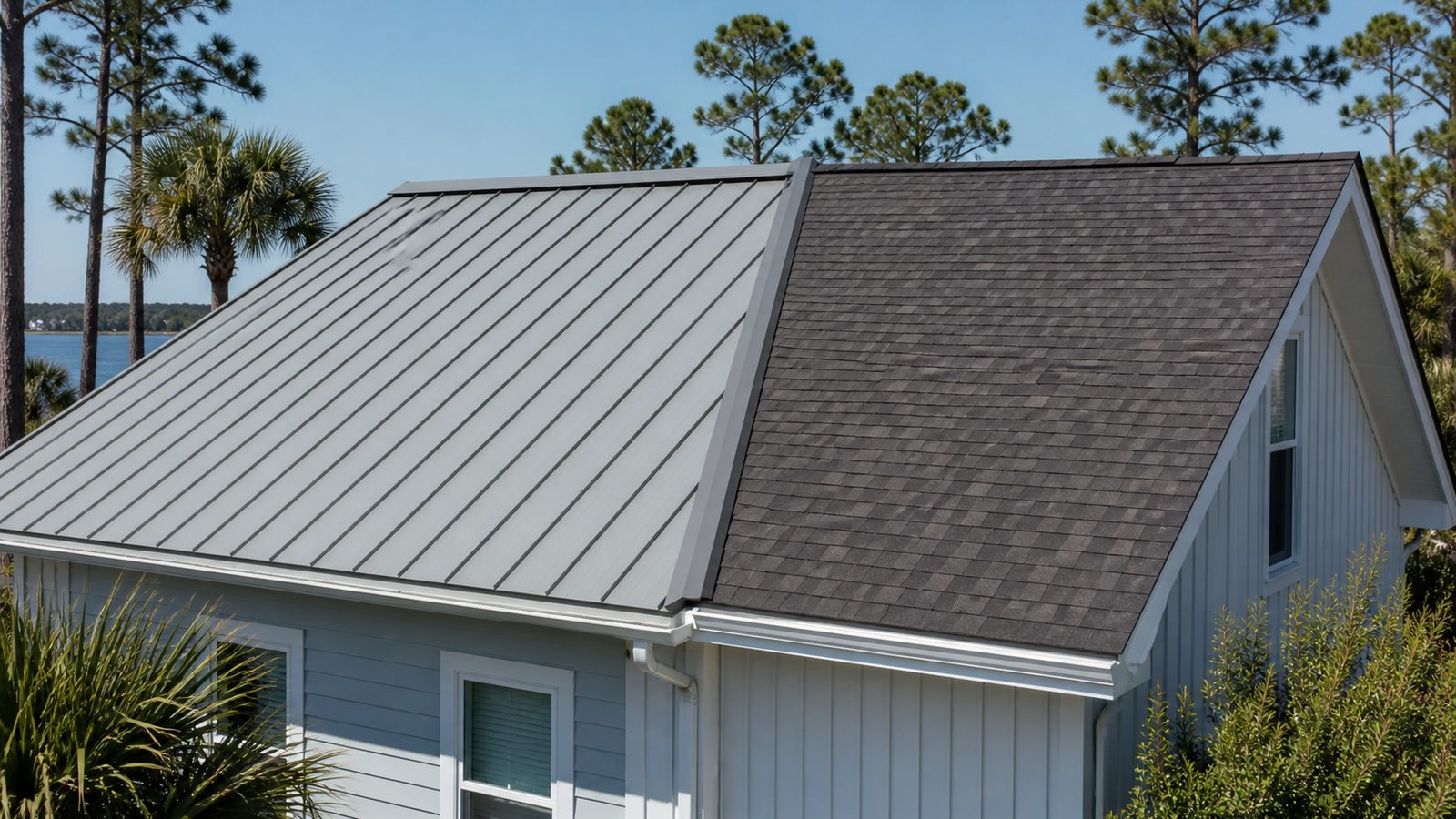
What Each System Is
Architectural Shingles (Dimensional Asphalt)
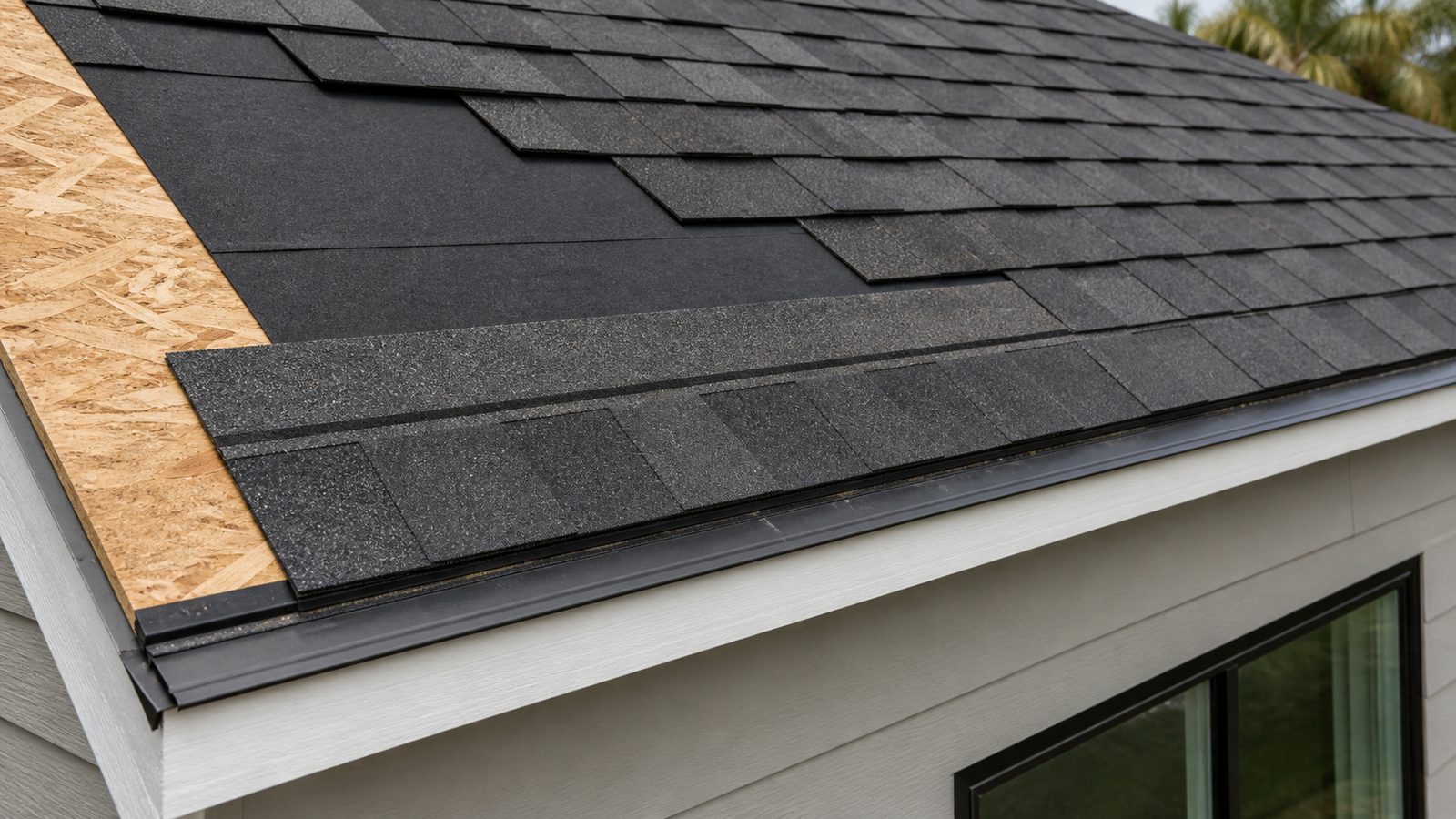
Architectural shingles are multi-layered asphalt products that create a dimensional appearance simulating wood shake or slate. They're the dominant product in residential roofing in Jacksonville — lightweight, fast to install, widely available from multiple manufacturers, and competitive in material cost.
Major manufacturers in the Florida market: GAF, Owens Corning, CertainTeed, Tamko. GAF's Timberline HDZ and Owens Corning's Duration series are the volume products. GAF's Camelot and Grand Canyon lines are the premium dimensional options.
JK Prestige is a GAF Master Elite contractor — one of the fewer than 3% of roofing contractors in the U.S. who qualify for this designation. It matters for homeowners because Master Elite certification is required to offer GAF's Golden Pledge warranty (50-year non-prorated) and because it requires annual performance verification that most contractors don't meet.
Standing Seam Metal Roofing
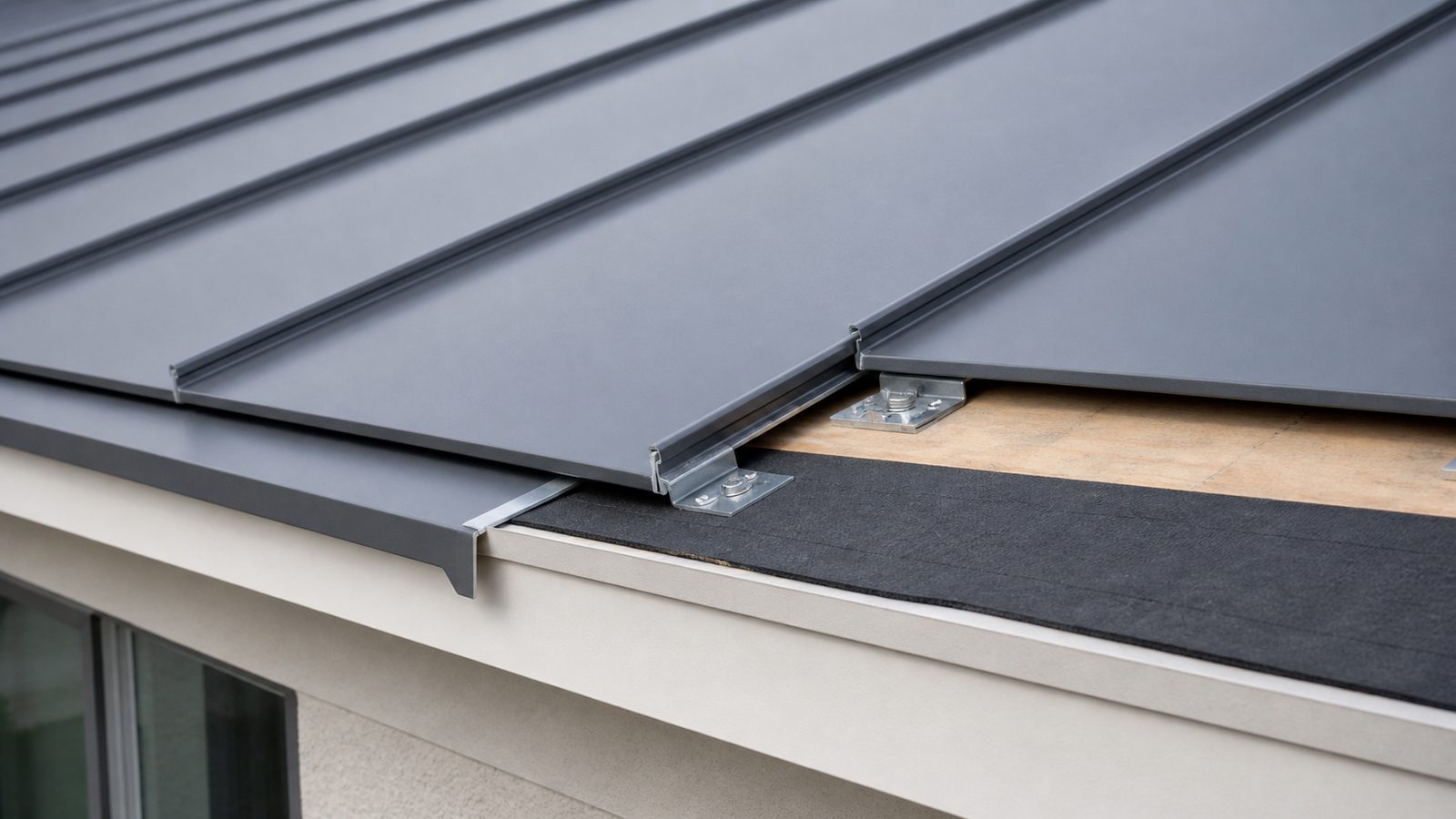
Standing seam metal is a concealed-fastener system where steel or aluminum panels are locked together at raised seams running vertically on the roof face. The fasteners are hidden inside the seam — there are no exposed screw penetrations that can leak over time.
The most common metals in Florida residential applications:
- Galvalume (aluminum-zinc coated steel): Most common, best balance of cost and longevity, needs paint system for coastal areas
- Aluminum: Higher cost than Galvalume, naturally corrosion-resistant, lighter, better for coastal applications within a mile of saltwater
- Copper: Premium product, extremely long-lasting, naturally develops a patina, rarely used in standard residential applications
Gauge and panel width vary by manufacturer. 24-gauge Galvalume is the right product for most Jacksonville homes; 26-gauge is thinner and used in lighter applications. Panel widths run 12 to 18 inches — narrower panels have more seams and cost more in labor.
Real Cost Comparison for Jacksonville Homeowners
Costs below are installed, including tear-off of one layer, material, labor, and standard flashings. They don't include permits (Duval County roofing permits are $150–$400) or code-required upgrades (sheathing replacement, ridge vent upgrades).
Architectural Shingles (Duval County, 2025)
Standard line (GAF Timberline HDZ, Owens Corning Duration):
- $6.50–$9.50 per square foot installed
- 2,000 sq ft roof: $13,000–$19,000
Premium dimensional line (GAF Grand Canyon, CertainTeed Landmark Premium):
- $9.00–$13.00 per square foot installed
- 2,000 sq ft roof: $18,000–$26,000
Standing Seam Metal (Duval County, 2025)
Galvalume steel, 24-gauge:
- $14.00–$20.00 per square foot installed
- 2,000 sq ft roof: $28,000–$40,000
Aluminum, 24-gauge:
- $17.00–$25.00 per square foot installed
- 2,000 sq ft roof: $34,000–$50,000
The gap is significant. Metal roofing runs 2–3x the cost of architectural shingles on first install.
Wind Performance: Where the Products Diverge
Florida's wind design requirements for residential roofing are not uniform. The Florida Building Code's wind speed map shows Jacksonville at 130 mph design wind speed for most residential locations. Coastal areas and barrier islands are higher — 140–150 mph.
Architectural Shingle Wind Ratings
The rating that matters for Florida homeowners is the wind resistance classification under ASTM D7158 or TAS (Testing Application Standard) under the Florida Product Approval system.
- Standard architectural shingles: rated for 110–130 mph (Class F or G)
- High-wind architectural shingles (GAF Timberline HDZ, Owens Corning Duration): rated for 130–150 mph with 4x4-nail installation
The installation method matters enormously. A standard 3-nail installation underperforms the rated wind speed. A 4-nail installation, with 6-inch nailing in the high-wind zone (within 1 mile of the coast), is what the Florida Product Approval requires for high-wind products in coastal Duval County.
Standing Seam Metal Wind Ratings
Standing seam metal systems, when properly designed and installed, can achieve wind resistance ratings exceeding 200 mph in Florida Product Approval testing. The system is mechanically attached to the roof deck, not glued or nailed through the face — so there's no exposed nail or shingle tab to lift under wind load.
For homeowners in Ponte Vedra Beach, Jacksonville Beach, or other barrier island locations where hurricane risk is highest, metal's wind performance is a genuine argument.
Hail Performance
Architectural shingles range from Class 1 to Class 4 impact resistance (UL 2218 rating). Class 4 is the highest — impact-resistant shingles that resist hail damage at simulated 2-inch hail. Not all architectural shingles achieve Class 4; verify the specific product before assuming.
Metal roofing generally achieves Class 4 impact resistance. However, some metal profiles show cosmetic denting in large hail events — not a performance failure, but a visible issue that affects aesthetics and resale perception.
Insurance Impact in Florida
Florida's homeowner's insurance market has been volatile since 2017. The practical insurance implications for roofing:
Architectural shingles: Most insurance carriers in Florida will write or continue coverage on a home with a new architectural shingle roof that meets current FBC wind ratings. Age is the critical factor — a shingle roof over 15 years old may trigger non-renewal or a requirement to replace before coverage continues.
Metal roofing: Several Florida carriers offer premium discounts for metal roofing — typically 15–25% on the wind coverage component. The discount varies by carrier, geographic zone, and the specific metal product's wind rating certification. For a homeowner paying $4,000–$6,000 per year in wind coverage, a 20% discount generates $800–$1,200 annually — meaningful over a 40-year roof life.
The insurance discount does not automatically make metal the right financial choice. The math depends on your current premium, the carrier's specific discount policy, and the cost differential in your case.
Lifespan Comparison
Architectural shingles: 25–35 years in Florida's climate with proper ventilation and maintenance. The Florida sun accelerates granule loss and shingle brittleness relative to northern climates. A 30-year shingle in Maine may be a 22-year shingle in Jacksonville.
Standing seam metal: 40–70 years, depending on material (Galvalume vs. aluminum vs. copper) and the paint system specified. A 24-gauge Galvalume roof with a PVDF paint system (Kynar or Hylar) will hold its finish for 30+ years in Florida. A lower-grade paint system (polyester) shows UV degradation in 15–20 years.
The Financial Decision Framework
The question homeowners should ask is not "which is better?" — metal performs better on every objective metric. The question is whether the performance premium is worth the cost premium for your specific situation.
Metal makes more sense when:
- You're planning to own the home for 20+ years and want a single roof replacement for the home's life
- You're in a coastal high-wind zone where the insurance discount is significant
- You have a complex roof (many penetrations, steep pitch) where the installed cost differential narrows
- The home's architectural style is compatible with standing seam metal's appearance
Architectural shingles make more sense when:
- Budget is the primary constraint and the difference funds other renovation priorities
- You expect to sell the home in 5–15 years — the incremental cost may not recover at sale
- The roof is a simple geometry where shingle labor is fast and cost-efficient
- The HOA or neighborhood aesthetic strongly favors shingles
JK Prestige installs both systems, with full GAF Master Elite warranty backing on shingle installations and manufacturer-certified metal roof installations. We'll walk through the math with you specifically — not as a sales exercise, but as a number that tells you what makes sense for your home.
No call center. No coordinator. A JK principal reviews every inquiry and replies with a real number, not a range, not a follow-up form.
Request Free Estimate →