A roof breach during a storm is not just a roofing problem. In Jacksonville's climate — average relative humidity above 70%, summer temperatures that keep interior surfaces warm even after rain — sustained water intrusion turns into a mold problem within 48 to 72 hours. By the time most homeowners discover the extent of the damage, remediation is already necessary.
What follows is a field-level account of what water intrusion actually does to a home's structure and systems, and what a general contractor (GC) coordinates to take a property from emergency response through full reconstruction. JK Prestige manages this process end-to-end: emergency tarp deployment, moisture mapping, remediation oversight, and complete interior rebuild.
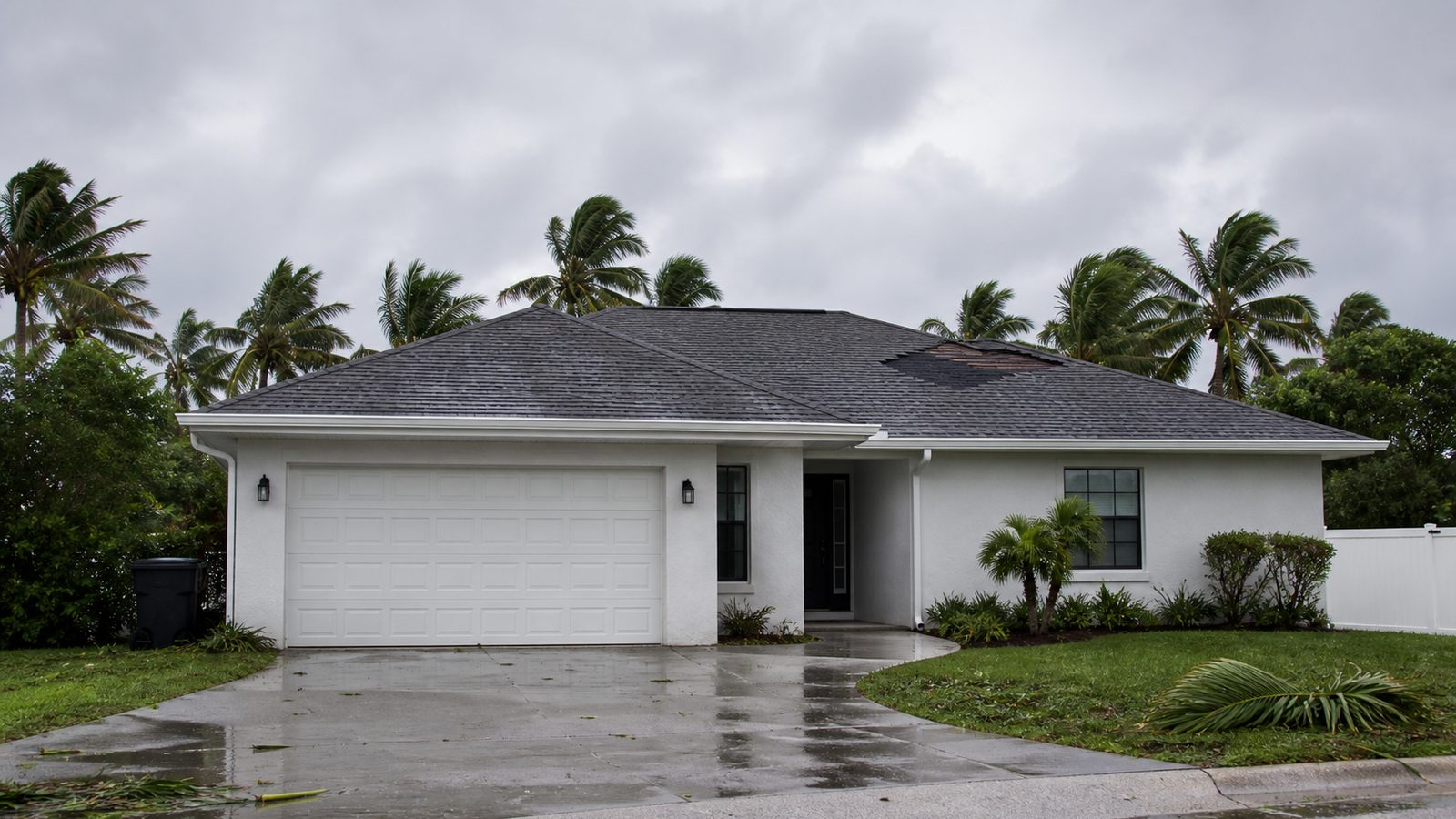
What Happens to Your Home's Structure After a Roof Breach
Drywall absorbs water and becomes structurally compromised
Drywall is gypsum board — absorbent by design. When water runs down interior wall cavities, drywall saturates within hours. Once saturated, it loses structural integrity and becomes a primary medium for mold colonization. Mold spores are already present in every indoor environment; what they need to activate is moisture. At 70% relative humidity with a wet substrate, colonization begins within 48-72 hours.
Saturated drywall cannot be dried in place and reused. The paper facing is the mold growth medium. Once it's wet and the 72-hour window has passed, it comes out — floor to ceiling in affected cavities.
Insulation saturates and loses R-value permanently
Fiberglass batt insulation loses effective R-value when wet. It does not recover to original performance after drying. Spray foam performs better in wet conditions, but once it has allowed sustained water contact and mold colonization on adjacent surfaces, it must be inspected and often removed to allow proper treatment of the framing behind it.
Saturated insulation is also a direct mold medium. Water-laden fiberglass retains moisture long after visible water has evaporated, continuing to feed mold growth in wall and ceiling cavities that look dry from the outside.
Framing begins to swell and can lose structural integrity over time
Wood framing exposed to sustained moisture begins to swell within days. Over weeks, untreated wet framing leads to fungal decay — a process that degrades structural capacity. In a Jacksonville home that sits for 30+ days with an unaddressed roof breach, framing in the affected bay can require sistering or partial replacement.
HVAC systems can distribute spores throughout the home
This is the risk that most homeowners do not anticipate. If the air handler or supply plenum is located near the water intrusion — in a ceiling-mounted unit, for example — the system can draw mold spores into circulation and distribute them to unaffected areas of the home. Remediation protocol must include assessment of the HVAC system and, when indicated, duct cleaning and HEPA filtration during the remediation period.
The Remediation Process: What Actually Happens
Step 1: Emergency tarp and water stop
The first priority is stopping the water from entering. JK Prestige deploys emergency tarps 24 hours a day, 7 days a week. Tarping a breached roof section is not a cosmetic measure — it is the action that determines whether remediation is a 10-day project or a 6-week project. Every additional day of water intrusion expands the affected zone and the remediation scope.
Emergency tarping is documented with photographs and is typically reimbursable under homeowner insurance as a mitigation expense. Keep every receipt.
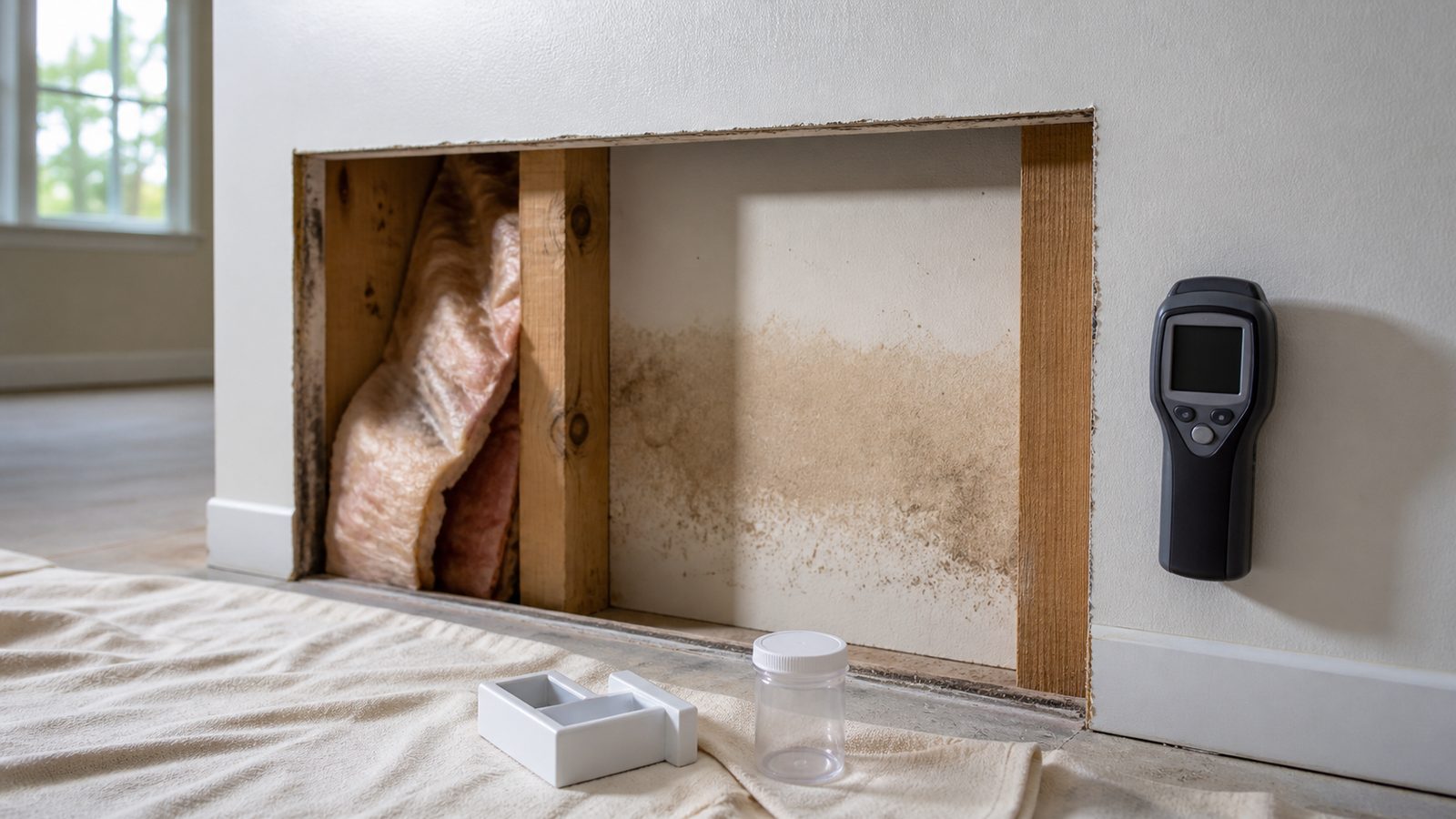
Step 2: Moisture mapping — find the full extent before you open a wall
Visible water damage represents the minimum extent of the problem. Water travels. It follows framing cavities, pools in low spots, and wicks into materials that may not show discoloration for days.
Professional moisture mapping uses two tools:
- Thermal imaging (infrared camera): Temperature differentials reveal wet materials that are invisible to the eye. A wet ceiling cavity or wall bay shows as a distinct cold zone in a thermal scan because evaporating moisture cools the surface.
- Pin meters: Non-destructive moisture meters that measure % moisture content in drywall, wood, and concrete. Used to confirm and quantify what the thermal camera identifies.
A proper moisture map before demolition prevents two failures: under-removal (leaving wet material that continues to grow mold behind new drywall) and over-removal (tearing out dry material unnecessarily, adding cost).
JK Prestige completes moisture mapping before any demolition begins. The map defines exactly which wall and ceiling sections come out — not an area approximation, but a documented boundary.
Step 3: Controlled demolition — drywall and insulation out to the stud line
Affected drywall comes out to the stud line. Affected insulation is bagged and removed. Demolition debris in a mold remediation project is treated as contaminated material — contained in 6-mil poly bags, not piled in the driveway.
The scope of demolition is defined by the moisture map, not visual inspection alone. On a roof breach that has been active for more than 5-7 days, affected zones typically extend well beyond what was visibly wet.
Step 4: HEPA air scrubbing during the remediation period
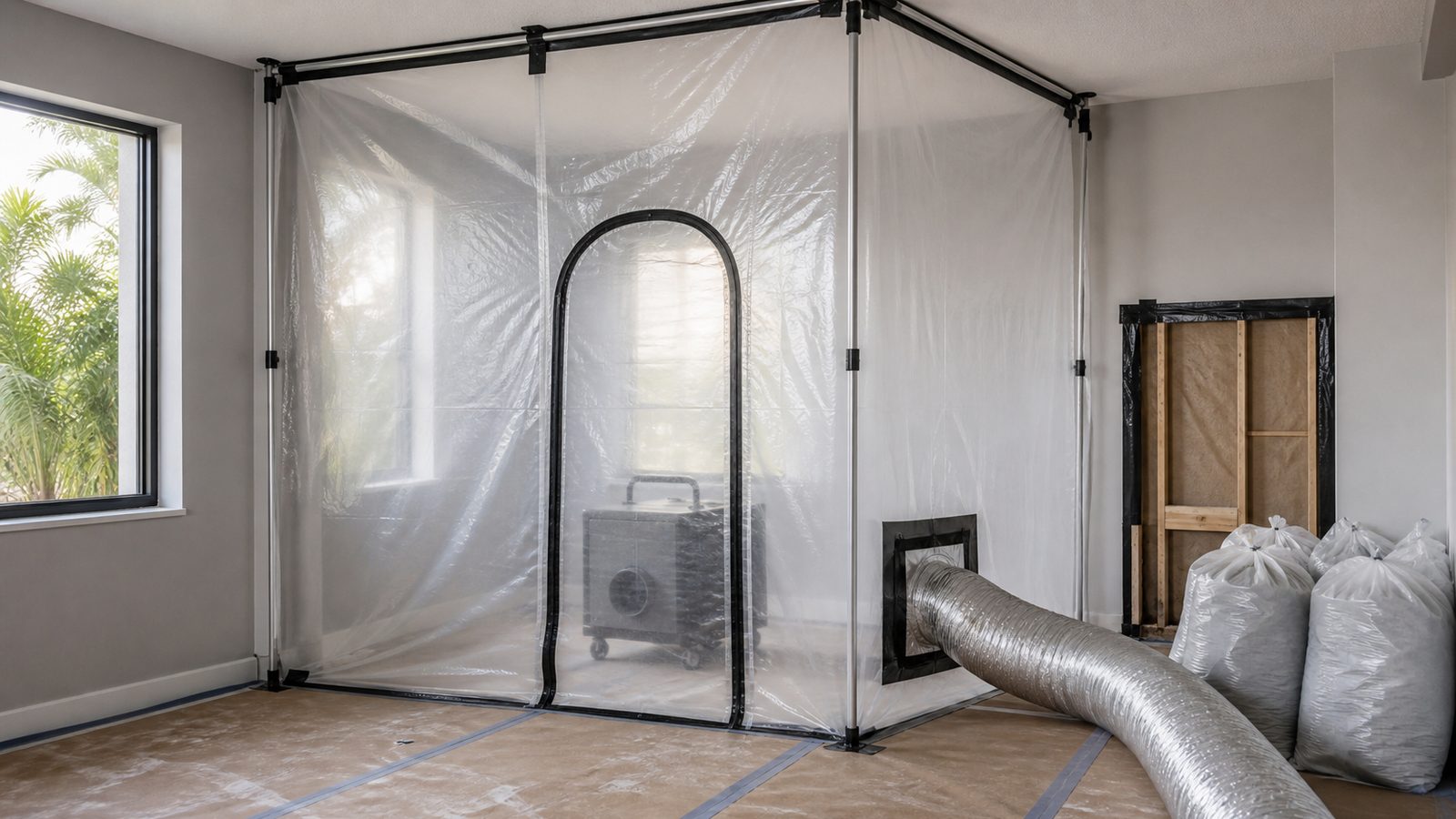
During demolition and treatment, negative air pressure is maintained in the affected area and HEPA air scrubbers run continuously. This prevents spores disturbed during demolition from migrating to unaffected areas of the home.
If the home is occupied during remediation, the affected area is isolated with poly barriers and zipper doors. JK Prestige coordinates temporary relocation if the scope makes occupation impractical.
Step 5: Antimicrobial treatment of exposed framing
Exposed framing — studs, plates, blocking, joists — is treated with an EPA-registered antimicrobial product. The treatment inhibits mold growth on the framing surface and provides a protective barrier before new drywall is installed.
Framing that shows visible fungal growth (black or gray discoloration on wood surfaces, often called "mold staining") is wire-brushed, sanded, treated, and allowed to dry. In cases of advanced fungal decay, affected members are sistered or replaced.
Step 6: Commercial drying — 3-7 days with dehumidifiers and air movers
After demolition and antimicrobial treatment, commercial-grade dehumidifiers and air movers run continuously. The drying period typically runs 3-7 days depending on the volume of wet material, ambient humidity, and building construction type.
Jacksonville's humidity makes this phase longer than in drier climates. A house in Phoenix might dry in 2 days. A Jacksonville home in August, with ambient exterior humidity above 85%, requires more equipment run-time and more time.
JK Prestige monitors moisture readings daily during the drying period. Equipment is not removed until pin meter readings confirm that all framing and substrate materials have reached acceptable moisture content — typically below 16% for wood framing.
Step 7: Clearance testing before reconstruction
Before new drywall goes up, moisture readings are taken at every previously affected location and documented. This is the confirmation test. It protects the homeowner from discovering in 18 months that the reconstruction sealed in a wet cavity.
Air sampling can also be conducted by a third-party industrial hygienist (IH) to confirm mold spore counts have returned to baseline. This is optional but recommended for significant remediation events and for insurance documentation purposes.
From Remediation to Full Reconstruction
Remediation clears the site. Reconstruction returns it to pre-loss condition — or better.
JK Prestige's renovation expertise means we handle both phases under one contract. You are not managing a separate remediation company and a separate GC with separate schedules and separate invoices. One scope document. One fixed-price contract. One principal who coordinates every trade from tarp through punch list.
The reconstruction phase after mold remediation typically includes:
- Insulation replacement (R-value to current code, not just original spec)
- Drywall installation and finishing
- Paint
- Trim and finish carpentry (restored to match existing)
- HVAC repairs or duct cleaning if system was affected
- Roofing repair or replacement (coordinated with the insurance claim)
See how The JK Way handles fixed-price contracts for remediation and reconstruction events: the scope is defined before we mobilize, and the price does not change if the scope does not change.
Insurance Coordination
Storm-related water intrusion and mold remediation is typically a covered event under a standard Florida homeowner policy — provided the entry point was storm damage, not a pre-existing maintenance failure. The distinction matters and is frequently disputed.
JK Prestige provides:
- Moisture map and photo documentation formatted for adjuster review
- Scope of loss report itemizing all affected materials by location
- Proof of emergency tarp deployment with timestamps
- Completion report for depreciation holdback release
We work directly with your adjuster. A principal from JK handles every conversation — not a project coordinator who wasn't at the moisture mapping.
Get a free written estimate in 48 hours. including emergency tarp coordination and moisture mapping: jkprestigeconstruction.com/#/contact or call (904) 944-0278. A principal answers.
No call center. No coordinator. A JK principal reviews every inquiry and replies with a real number, not a range, not a follow-up form.
Request Free Estimate →