Jacksonville's construction market in 2025 is not one trend — it's five running simultaneously, and they compete for the same GC and sub capacity. This is what JK Prestige sees from active jobsites across Duval, St. Johns, and Nassau counties: where owners and developers are building, what they are building, and what each trend means for finding a qualified general contractor (GC) in NE Florida right now.
This is not a forecast. It's field observation from a GC that has been operating in Jacksonville since 2017, across 500+ projects.
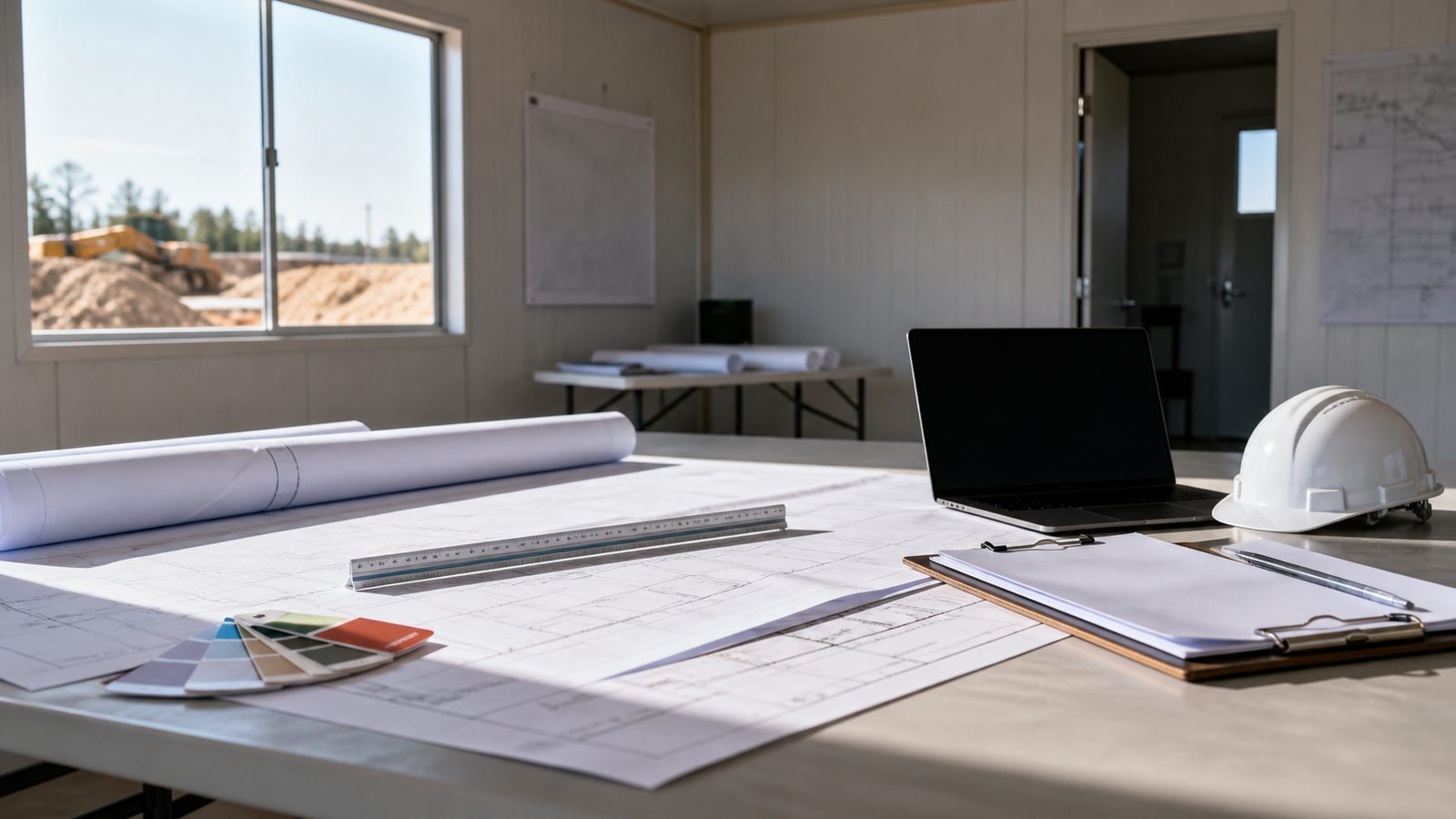
Trend 1: Gut-Reno Demand in Historic Jacksonville Neighborhoods
Riverside, Avondale, Springfield, and San Marco are producing some of the most active renovation pipelines in Jacksonville right now. The reason is arithmetic.
New construction in Jacksonville costs $350-$500 per square foot for a standard custom home at current labor and material rates. Existing homes in those historic neighborhoods trade at $250-$400 per square foot — but they need work. A 2,800 square foot craftsman bungalow in Avondale that sells for $550,000 and needs $180,000 in renovation is effectively at $730,000 — still well below what that same square footage would cost to build on a comparable lot in a mature neighborhood.
There is no comparable lot. That is the other part of the math. The mature trees, walkable blocks, proximity to restaurants and shops, and established school districts in Riverside and San Marco cannot be replicated by buying a lot in a new subdivision. Buyers with renovation budgets are increasingly making the calculation that a gut-reno of an existing historic home pencils out better than building new.
What this means for GC capacity: historic renovation is not the same work as new construction. It requires understanding original framing methods, compatibility with historic materials, and — in the case of historic district properties — navigation of Jacksonville Historic Preservation Commission (JHPC) Certificate of Appropriateness requirements. GCs who know how to work in these neighborhoods efficiently are in demand.
JK Prestige self-performs framing, drywall, and finish carpentry in historic renovation — the three trades that define whether a gut-reno in a 1925 craftsman feels right when it's done. Brokered finish carpentry in an Avondale renovation frequently looks brokered.
See how JK approaches historic and gut-reno renovation work.
Trend 2: Industrial and Warehouse Demand Along the I-10 and I-95 Corridors
The industrial and logistics demand around JAXPORT is concentrating along two specific corridors: I-10 west of downtown toward Baldwin and the Nassau County line, and I-95 south toward the St. Johns County border.
The I-10 corridor is attracting larger footprint users — 500,000 square foot and above distribution centers that need flat, deep lots with truck court depth. The I-95 south corridor is producing more varied industrial: smaller fulfillment nodes, cold storage, and 3PL facilities serving the growing residential population in St. Johns County.
Both corridors have produced strong speculative industrial development over the last three years. The spec pipeline is now tightening as sites get absorbed and available land with the right entitlements and infrastructure access becomes scarcer.
What this means for owners and developers building industrial in NE Florida in 2025: the GC market for tilt-up and clear-span construction is competitive on capacity, not on price. Quality GCs with tilt-up experience and the ability to self-perform framing and concrete — the two most schedule-sensitive trades in a tilt-up build — have full pipelines. Owners who wait until they have a signed site-control agreement to engage a GC are finding that their preferred firm has a 6-month backlog.
The other dynamic in this trend is MEP (Mechanical, Electrical, and Plumbing) coordination for logistics operations. A distribution center is not a simple building. Fire suppression systems for racking configurations, electrical for EV charging infrastructure at loading docks, and energy code compliance for large unconditioned spaces all require GC coordination with trades that have become their own capacity constraints.
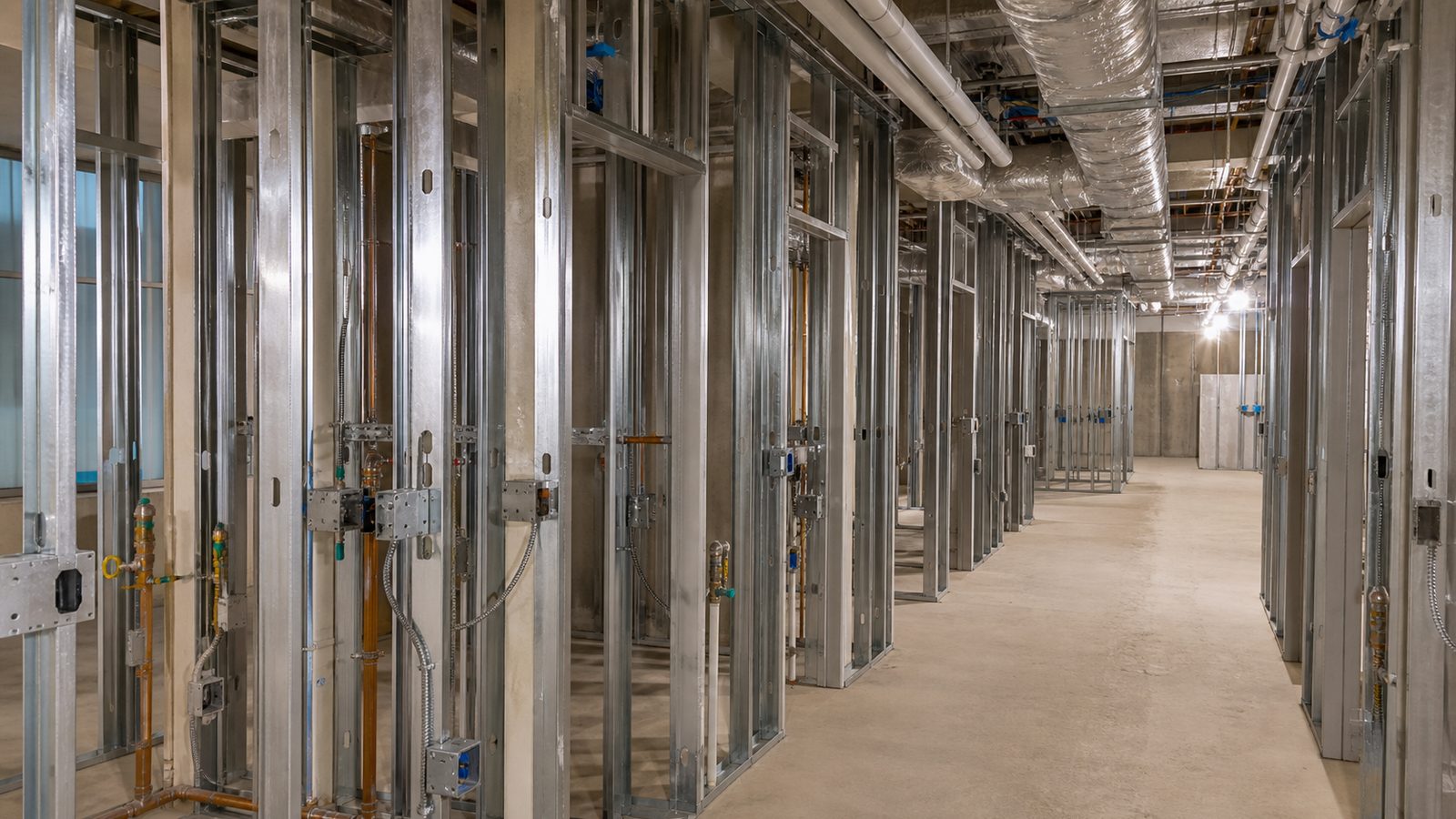
Trend 3: Medical Office Building Demand Outside Hospital Campuses
Physician groups in Jacksonville are expanding into Medical Office Buildings (MOBs) away from hospital campuses. The driver is economics: outpatient procedures that do not require hospital admission generate better margins when performed in an MOB or Ambulatory Surgery Center (ASC), and physician groups capture that margin rather than passing it to a hospital system.
The result is a strong pipeline of 8,000-25,000 square foot MOB and outpatient clinic construction projects in the Jacksonville suburbs — the Mandarin, Fleming Island, Ponte Vedra, and Oakleaf corridors where the residential growth has created concentrated patient populations.
MOB construction is technically demanding in ways that standard commercial fit-out is not. Medical gas systems, HVAC requirements for procedure rooms, compliance with building codes specific to healthcare occupancy (NFPA 99 and Florida's Chapter 59 healthcare facility code), and the specific power backup requirements for any space with procedure capability all require a GC with healthcare construction experience.
JK Prestige brings ICRA (Infection Control Risk Assessment) trained superintendents and an active healthcare GMP (Guaranteed Maximum Price) construction track record to every medical project, regardless of scale. An MOB build that goes sideways on MEP coordination delays the physician group's revenue start — a consequence that is not abstract.
See JK's full hospital and medical construction capabilities.
Trend 4: Custom Home Demand in Ponte Vedra, St. Johns County, and Amelia Island
The custom residential market in three NE Florida submarkets is producing significant activity in 2025: Ponte Vedra Beach, the Nocatee/St. Johns corridor, and Amelia Island in Nassau County.
Ponte Vedra Beach attracts buyers who want coastal proximity with mature neighborhoods and good school access. Custom homes in the $800,000-$2M range are the core of this market.
Nocatee and St. Johns County is one of the fastest-growing master-planned communities in the United States. The community has matured enough that custom-build lots are now available inside Nocatee's luxury enclaves — a different product than the production builders who initially dominated the community. Custom home demand here is in the $600,000-$1.2M range.
Amelia Island is a luxury coastal market with a distinct barrier island character. The renovation and custom home market here tends toward larger square footages and is sensitive to design quality in ways that production-builder construction cannot serve.
What all three submarkets share in 2025: long booking windows for quality custom home GCs, elevated expectations for design integration (buyers in these markets arrive with architects and designers already engaged), and high sensitivity to finish carpentry and smart home integration quality.
JK Prestige self-performs framing and finish carpentry — the two trades that define a custom home's structural quality and interior appearance. Smart home integration for AV, lighting control, security, and geothermal/solar is part of our standard custom home scope.
Trend 5: Commercial Fit-Out Driven by Restaurant and Fitness Concepts in Post-COVID Retail Vacancies
Jacksonville's retail real estate market went through the COVID shakeout that every major metro experienced — anchor closures, junior anchor vacancies, and the collapse of certain retail categories. What followed in 2024-2025 is a re-tenanting wave concentrated in two categories: food and beverage concepts and fitness/wellness operators.
Regional restaurant chains, ghost kitchen operators converting to full-service, and local food hall concepts are absorbing former junior anchor spaces at town centers and lifestyle centers across Jacksonville. Fitness operators — from boutique studios to large-format gyms — are filling the box spaces that apparel and electronics retailers vacated.
Commercial fit-out for these uses is not the same work as office or retail finish. Restaurant fit-out requires heavy MEP work: kitchen hood and make-up air systems, grease interceptor installation, walk-in cooler and freezer construction, and commercial dishwashing infrastructure. Fitness fit-out requires structural reinforcement for heavy equipment, HVAC systems designed for occupant loads far above standard commercial assumptions, and specialty flooring.
Owners and landlords doing fit-out for these tenants in Jacksonville need a GC that can execute MEP-heavy commercial work on a fast schedule. Restaurant openings are typically tied to lease commencement dates with landlord work letter obligations — delays are not absorbed by the GC, they trigger lease disputes.
JK Prestige's commercial fit-out work is backed by The JK Way: fixed-price contract, written scope before mobilization, and a principal on the phone for every RFI and coordination question.
What Each Trend Means for GC and Sub Capacity in NE Florida
These five trends do not operate in separate market compartments. They compete for the same licensed electricians, plumbers, HVAC installers, and structural framers. The result is a capacity market where quality matters more than availability.
A few specific constraints worth naming:
- ICRA-trained superintendents: There are fewer than 50 superintendents in NE Florida with documented ICRA training and active healthcare construction experience. Healthcare developers need to engage GCs with this capacity early in project planning.
- Tilt-up formwork crews: Tilt-up concrete panel construction requires specialized formwork experience. Crews with this skill set are fully scheduled through late 2025 in the Jacksonville market.
- Finish carpentry in historic renovation: Custom millwork and period-appropriate finish carpentry in Riverside and Avondale is a niche skill. Self-perform capability eliminates the dependency on the thin pool of sub-market craftsmen.
The owners and developers who are successfully executing construction in NE Florida in 2025 started their GC conversations 9-12 months before desired ground break. If you are planning a 2026 project, the right time to engage is now.
Get a free written estimate in 48 hours from a JK principal: jkprestigeconstruction.com/#/contact or call (904) 944-0278. A principal answers.
No call center. No coordinator. A JK principal reviews every inquiry and replies with a real number, not a range, not a follow-up form.
Request Free Estimate →