NFPA 99 — the National Fire Protection Association's Health Care Facilities Code — is the primary construction standard governing medical gas systems, electrical systems, and HVAC in hospital construction across the United States, including Florida. It is not a suggestion. In Florida, NFPA 99 compliance is required by the Agency for Health Care Administration (AHCA), and any facility that fails to meet it during a survey cycle faces citations, corrective action plans, and in severe cases, licensure jeopardy.
For healthcare developers and facilities VPs hiring a general contractor (GC) for new hospital construction or major renovation, NFPA 99 generates a specific set of questions: What does the standard actually require? What is the GC's responsibility versus the MEP engineer's? What inspections are required before the facility can be occupied? This post answers all three.
What NFPA 99 Governs in Hospital Construction
NFPA 99 covers four primary system categories in healthcare construction:
1. Medical Gas Systems
Medical gas systems — oxygen, nitrous oxide, medical air, nitrogen, vacuum, and waste anesthetic gas disposal — are the highest-risk utility systems in a hospital. A piping error, a cross-connection, or a contamination event in a medical oxygen system can kill patients directly. NFPA 99 Chapter 5 governs every aspect of medical gas system design, installation, testing, and verification.
On the construction side, NFPA 99 requires:
- Piping installed by qualified personnel; many jurisdictions require that medical gas piping be installed by ASSE 6010-certified medical gas installers
- Brazed joints using specific filler metals; no threaded joints in medical gas distribution
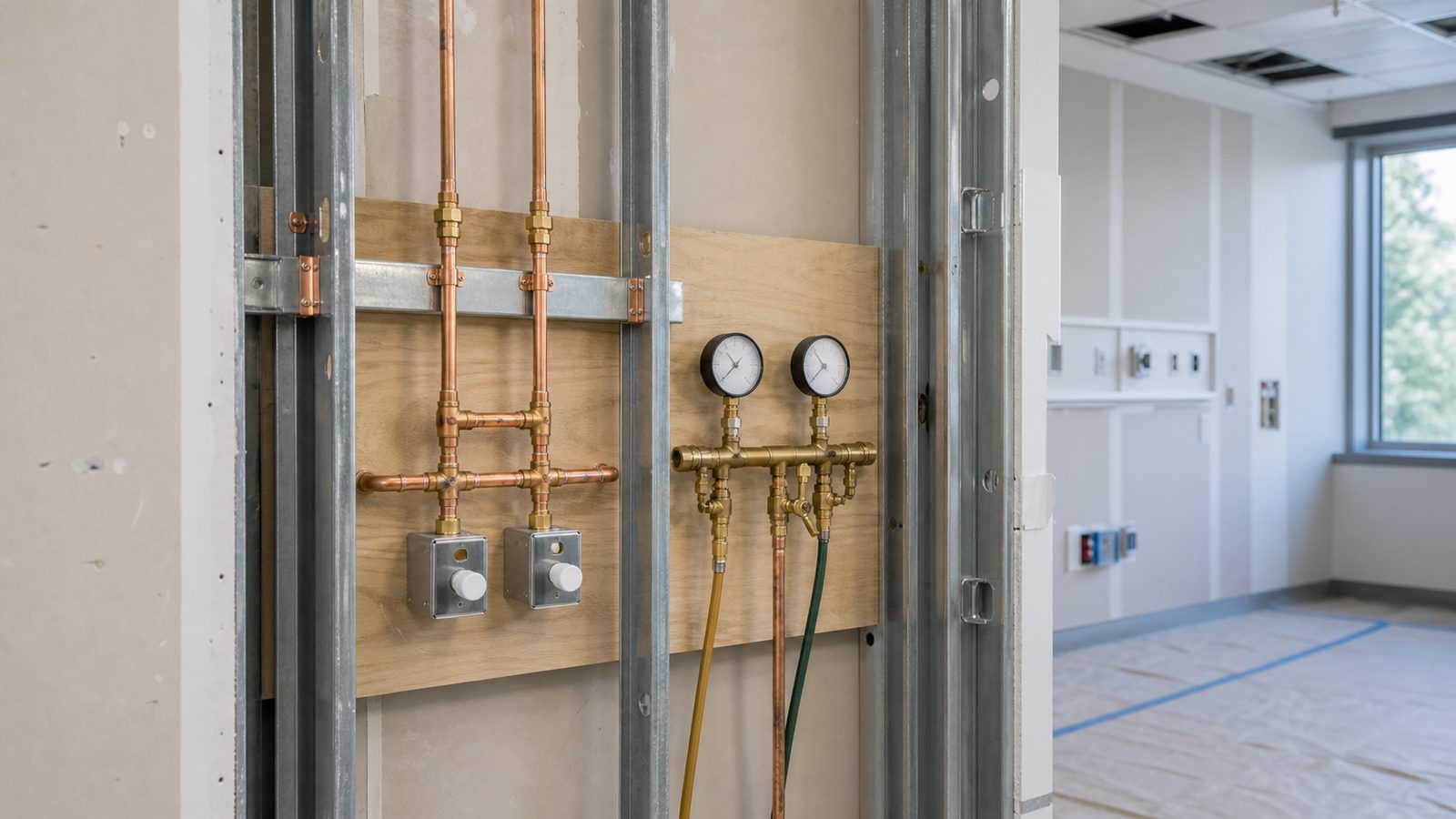
- Zone valve boxes with labeled outlets, pressure gauges, and alarm connections
- Source equipment (bulk oxygen systems, medical air compressors, vacuum pumps) meeting specific size, redundancy, and monitoring requirements
- Full system verification — including purity testing, pressure testing, flow testing, and gas identity confirmation at each outlet — before the system can be commissioned
The GC's rough-in crew does not install medical gas piping independently. But the GC is responsible for coordinating the subcontractor who does, ensuring they are qualified, sequencing the work so that verification testing can be conducted before walls are closed, and coordinating the third-party verification agent.
2. Electrical Systems
NFPA 99 Chapter 6 governs electrical systems in healthcare occupancies — specifically the requirements for essential electrical systems (EES): the life safety branch, the critical branch, and the equipment branch. These branches are required to transfer to emergency power within specific timeframes when normal power fails.
On the construction side, this governs:
- Where normal and emergency power receptacles must be installed and how they must be identified
- Separation requirements between normal and emergency wiring
- Automatic transfer switch (ATS) specifications and testing requirements
- Ground fault protection requirements in patient care areas
- Isolated ground requirements in specific clinical spaces (ORs, ICUs)
The MEP (Mechanical, Electrical, and Plumbing) engineer designs the system to NFPA 99 requirements. The GC is responsible for ensuring the electrical subcontractor installs per the approved design and that the work is inspected and tested per NFPA 99's commissioning requirements before occupancy.
3. HVAC in Healthcare
NFPA 99, in conjunction with ASHRAE 170 (Ventilation of Health Care Facilities), governs ventilation requirements in hospital spaces: air changes per hour, pressure relationships between spaces, filtration requirements, temperature and humidity ranges, and exhaust requirements. These are not comfort standards — they are infection control and patient safety standards.
Construction implications include:
- Laminar flow HVAC in ORs and certain high-risk procedure rooms: ceiling-mounted low-velocity unidirectional airflow systems designed to sweep particulate away from the sterile field
- Pressure relationship verification: ORs must maintain positive pressure relative to corridors; isolation rooms must maintain negative pressure; the GC must coordinate commissioning to verify these relationships before occupancy
- Specific filter efficiencies (MERV 14 minimum in most patient care areas; HEPA in high-risk spaces)
- No recirculation from OR HVAC to other building systems
The HVAC subcontractor installs to the design. The GC coordinates the commissioning agent who verifies pressure relationships, air changes, and filter installation before the facility goes live.
4. NFPA 99 Risk Categories
NFPA 99 organizes facilities and systems into four risk categories based on the probability that a system failure will cause patient harm:
- Category 1: Failure is likely to cause major injury or death. ORs, ICUs, critical care spaces, life support systems.
- Category 2: Failure is likely to cause minor injury. General acute care rooms, intermediate care, outpatient procedure areas.
- Category 3: Failure is unlikely to cause injury. Administrative areas, medical office buildings, outpatient clinics.
- Category 4: Failure has no impact on patient care. Support spaces, storage.
Category 1 systems carry the highest construction requirements — redundancy, monitoring, alarm systems, and verification testing requirements that Category 3 systems do not. A GC building an ambulatory surgery center (ASC) is typically working with Category 1 and Category 2 systems throughout most of the facility. A GC building an administrative addition to a hospital may work primarily in Category 3.
The distinction matters for construction because it determines which NFPA 99 chapters apply, what equipment specifications are required, and what testing is mandatory before occupancy.
What the GC Owns vs. What the MEP Engineer Owns
This is where many healthcare developers have gaps in their project oversight. The boundary between GC responsibility and MEP engineer responsibility under NFPA 99 is specific.
The MEP engineer is responsible for:
- Designing the medical gas, electrical, and HVAC systems to meet NFPA 99 requirements for the facility's occupancy type and risk category
- Producing construction documents that are stamped and submitted to the AHJ (Authority Having Jurisdiction) for plan review
- Responding to RFIs (Requests for Information) during construction when the GC's field conditions deviate from the design
- Witnessing commissioning tests and certifying that systems meet design intent
The GC is responsible for:
- Ensuring that the subcontractors installing NFPA 99 systems are qualified — specifically that medical gas installers hold the required certifications
- Sequencing the work so that required inspections happen before walls are closed and before systems are concealed
- Coordinating the third-party verification agents for medical gas systems (NFPA 99 requires independent verification, not self-certification by the installer)
- Scheduling and attending the AHJ's rough-in inspections and system acceptance tests
- Ensuring that the commissioning agent's findings are addressed before the contractor's final completion sign-off
What the GC cannot do is treat NFPA 99 compliance as the MEP engineer's problem. The engineer designs; the GC builds and coordinates the verification that the construction matches the design. When an AHCA surveyor or Joint Commission inspector identifies a NFPA 99 deficiency in a completed facility, the finding is against the facility — but the root cause is almost always a failure in either the GC's installation coordination or the verification testing sequence.
Required Inspections Before Occupancy
NFPA 99 triggers specific inspection and testing requirements that must be completed — and documented — before a healthcare facility can be licensed and occupied in Florida. For a healthcare developer managing an AHCA licensure application, these are non-negotiable schedule milestones.
Medical Gas System Verification
NFPA 99 requires that medical gas systems be verified by a qualified verification agency — independent of the installer — before they are placed in service. Verification includes:
- Cross-connection testing at every outlet
- Pressure testing of all distribution piping
- Purity testing of medical gases at the source and at a sample of outlets
- Flow testing to confirm adequate supply at peak demand conditions
- Labeling and signage confirmation
This verification must be documented and the documentation submitted to the AHJ. It is a discrete schedule milestone — the verification agency must be scheduled weeks in advance, and the work must be substantially complete before they arrive.
HVAC Commissioning
Pressure relationship testing, air changes per hour measurement, filter inspection, and temperature/humidity verification must all be documented before occupancy. Many Florida hospital projects require AHCA sign-off on HVAC commissioning results as part of the licensure application.
Electrical System Testing
Essential electrical system transfer testing — verifying that life safety, critical, and equipment branches transfer within required timeframes — must be witnessed and documented. Isolated power system (IPS) testing in ORs and ICUs must be recorded.
Verifying Your GC's NFPA 99 Competency
Before awarding a hospital construction contract in Florida, healthcare developers should ask:
"Name the medical gas installer you are proposing and confirm their ASSE 6010 certification." The GC should have a specific subcontractor named, not a general statement that they will find a qualified installer.
"Who is your proposed third-party medical gas verification agency, and have you worked with them before?" The GC should have a working relationship with a verification agency, not be starting that search at contract award.
"How do you sequence medical gas rough-in so that verification can be completed before drywall is closed?" The answer should describe a specific sequence: rough-in complete, inspector walk, pressure test, then drywall — not "we schedule the inspector when the work is done."
"Have you had an AHCA survey or Joint Commission visit during an active construction project? How did you manage code compliance?" A GC with real hospital experience in Florida has navigated AHCA. Their answer should be specific.
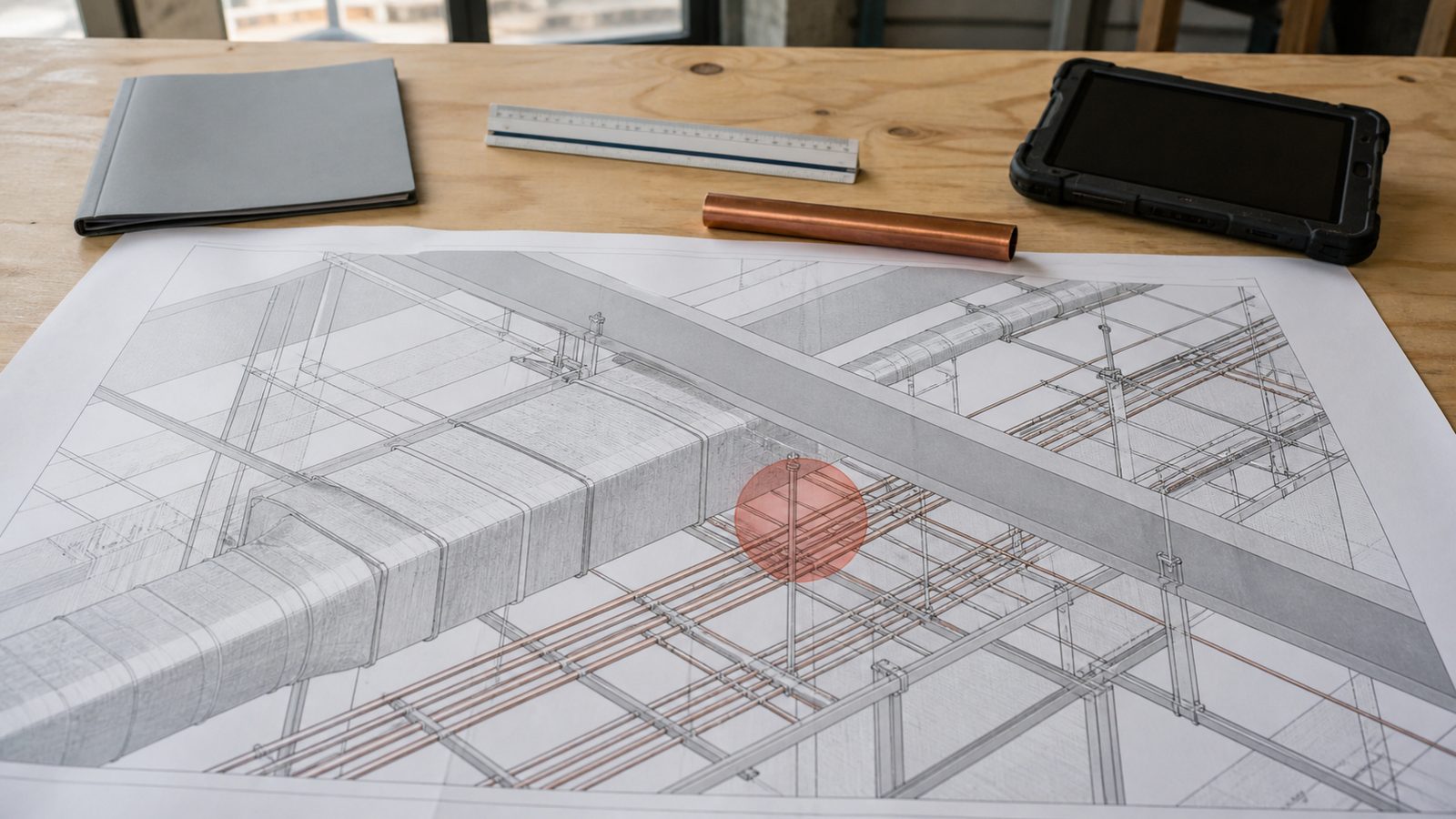
JK Prestige's healthcare general contracting practice in Florida includes full NFPA 99 compliance coordination on all hospital projects — medical gas, electrical, and HVAC commissioning included. Our BIM/VDC (Building Information Modeling/Virtual Design & Construction) workflow includes MEP clash detection before steel is ordered, which catches coordination conflicts that would otherwise surface as field problems during the inspection sequence.
NFPA 99 and the GMP Contract
One underappreciated connection between NFPA 99 compliance and contract structure: NFPA 99 compliance costs are often underestimated in early-stage project budgets. Medical gas verification, HVAC commissioning, electrical system testing, and ASSE-certified installer labor all carry real costs that a lump-sum bid may suppress or defer through scope exclusions.
In a GMP (Guaranteed Maximum Price) contract with an open-book cost ledger, these costs are visible as line items — you can see exactly what the verification agency is charging and what the ASSE-certified installer cost relative to a non-certified alternative. In a lump-sum contract, these costs may be buried in a trade allowance that does not survive contact with the actual compliance requirements. Read how JK's GMP contract structure makes healthcare compliance costs transparent throughout the project lifecycle.
No call center. No coordinator. A JK principal reviews every inquiry and replies with a real number, not a range, not a follow-up form.
Request Free Estimate →