OSHA 1926 is the primary federal standard for construction safety in the United States. Every supervisor working on a Florida jobsite — whether it's a hospital renovation in Jacksonville, a warehouse shell in Orange Park, or a residential gut-reno in San Marco — is required to understand and enforce its requirements. Ignorance of a subpart is not a defense when OSHA issues a citation.
This post covers the subparts that matter most on Florida construction sites, what each requires, and how JK Prestige Constructor Corp builds compliance into daily operations — not as paperwork, but as field practice.
OSHA 1926 at a Glance: What It Covers and Why Florida Sites Face Extra Risk
OSHA 1926 spans 26 subparts, A through Z. Together they govern everything from hazard communication and personal protective equipment (PPE) to excavation, scaffolding, and electrical safety. In Florida, two site-specific factors make compliance harder than in most states: heat and tropical weather.
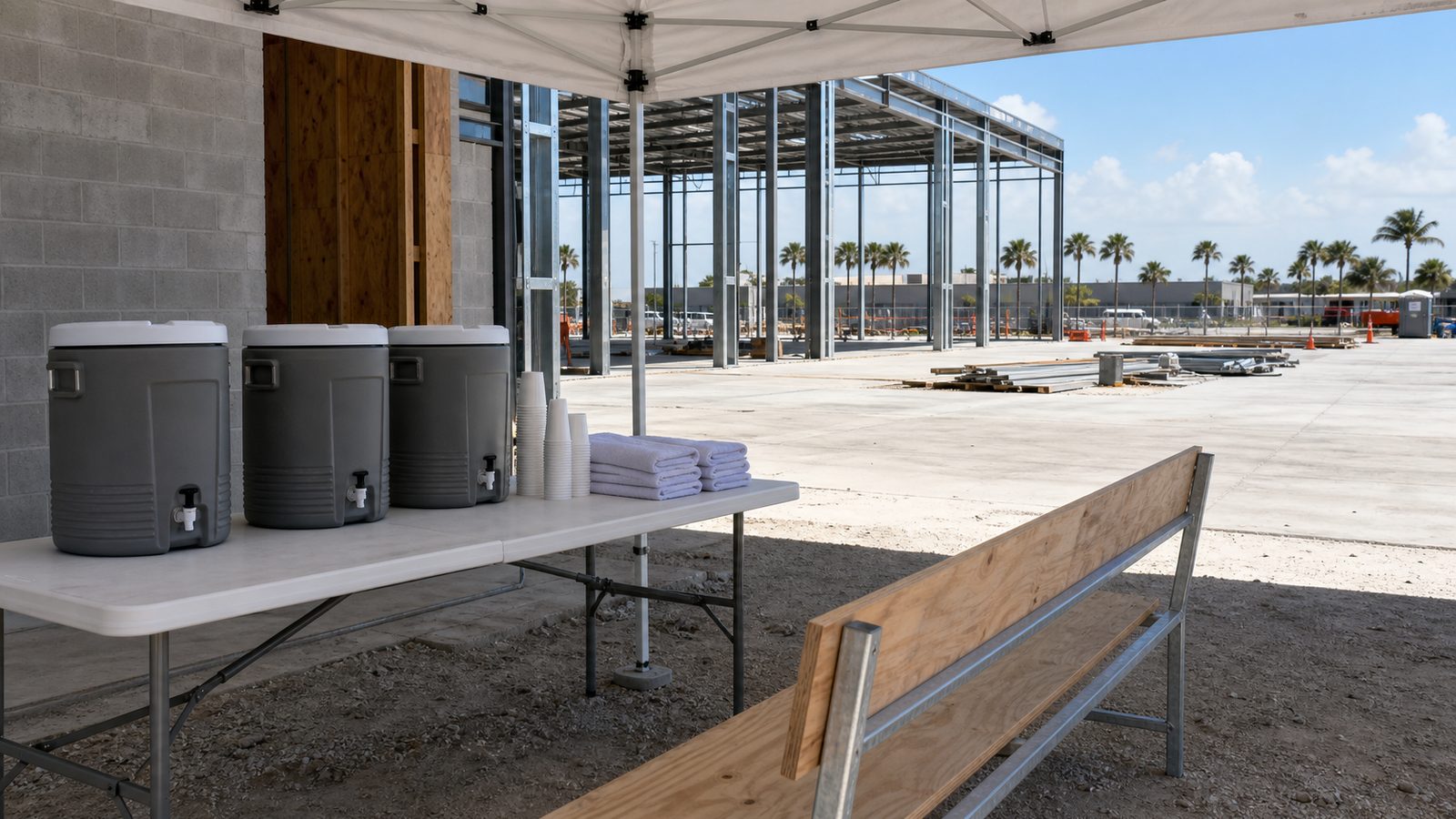
Florida's summer heat index regularly exceeds 100°F. OSHA's General Duty Clause (Section 5(a)(1)) requires employers to protect workers from recognized hazards — including heat illness — even when no specific OSHA heat standard exists. OSHA has repeatedly cited Florida contractors under the General Duty Clause for heat-related incidents. In 2024, OSHA proposed a formal heat illness rule that would codify what Florida contractors already face as enforcement risk.
Understanding which subparts apply to your work — and how Florida conditions affect compliance — is the first step to running a clean site.
Subpart C: General Safety and Health Provisions
Subpart C (29 CFR 1926.20-35) sets the baseline for every other requirement. It requires employers to initiate and maintain a safety program, designate a competent person for each trade operation, and conduct frequent site inspections.
Competent person is a defined term in OSHA. It means someone who can identify existing and predictable hazards and who has authority to take corrective action. Not every supervisor qualifies. A competent person for excavations is different from a competent person for scaffolding — the knowledge requirements differ by subpart.
At JK Prestige, every supervisor carries OSHA 30 certification. That's not a state requirement — it's a floor-level standard JK sets internally. OSHA 30 trains supervisors specifically on recognizing hazards under Subparts C through Z.
Subpart D: Occupational Health and Environmental Controls — Heat in Florida
Subpart D covers occupational health hazards: noise, illumination, ventilation, and hazardous substances. But the practical issue for Florida GCs is heat illness prevention, which OSHA addresses through the General Duty Clause and increasingly through enforcement guidance tied to the proposed heat rule.
What a Florida GC must provide on a heat-risk day (heat index at or above 91°F):
- Drinking water (at least 1 quart per hour per worker)
- Rest breaks in shade or air-conditioned space
- Acclimatization schedule for new workers (OSHA recommends 20% exposure on day one, incrementally increasing over 7-14 days)
- Buddy system and heat illness recognition training
JK supervisors run a daily temperature check before 7am and brief the crew on heat conditions at the start of each shift. It's part of the daily toolbox talk — not a separate meeting, but a documented check on the same form.
Subpart E: Personal Protective Equipment
PPE requirements under Subpart E (29 CFR 1926.95-106) require a written hazard assessment and specific PPE selection based on that assessment. Hard hats (Class E on JK sites), high-visibility vests, steel-toe footwear, safety glasses, and hearing protection are non-negotiable minimums. Respiratory protection, fall arrest harnesses, and gloves are required by operation and documented in the Job Safety Analysis (JSA).
Subpart J and K: Welding, Cutting, and Electrical
Subpart J (welding and cutting) and Subpart K (electrical) cover two of the most common ignition and electrocution hazards on a construction site. In Florida, electrical risk is elevated because water accumulates on sites from afternoon thunderstorms year-round.
Key Subpart K requirements:
- Ground fault circuit interrupter (GFCI) protection on all 120-volt, single-phase outlets
- Assured equipment grounding conductor program as an alternative
- Assured by inspection — not assumption
On JK sites, temporary power is GFCI-protected and inspected before each use. Electrical workers carry verification tags.
Subpart L: Scaffolding — A High-Frequency Inspection Item in Florida
Scaffolding (Subpart L) is one of OSHA's most-cited subpart categories nationally, and Florida inspectors actively enforce it. A competent person must inspect scaffolding before each work shift and after any event that could affect structural integrity — including Florida's afternoon thunderstorms, which create wind loads and standing water that affect scaffold stability.
Key requirements for supported scaffolding:
- Base plates and mudsills on all uprights
- Fully planked platforms (no gaps greater than 1 inch)
- Guardrails on all open sides 10+ feet above a lower level
- Access ladder or stairway — no jumping between levels
Subpart M: Fall Protection — The Leading Cause of Construction Fatalities
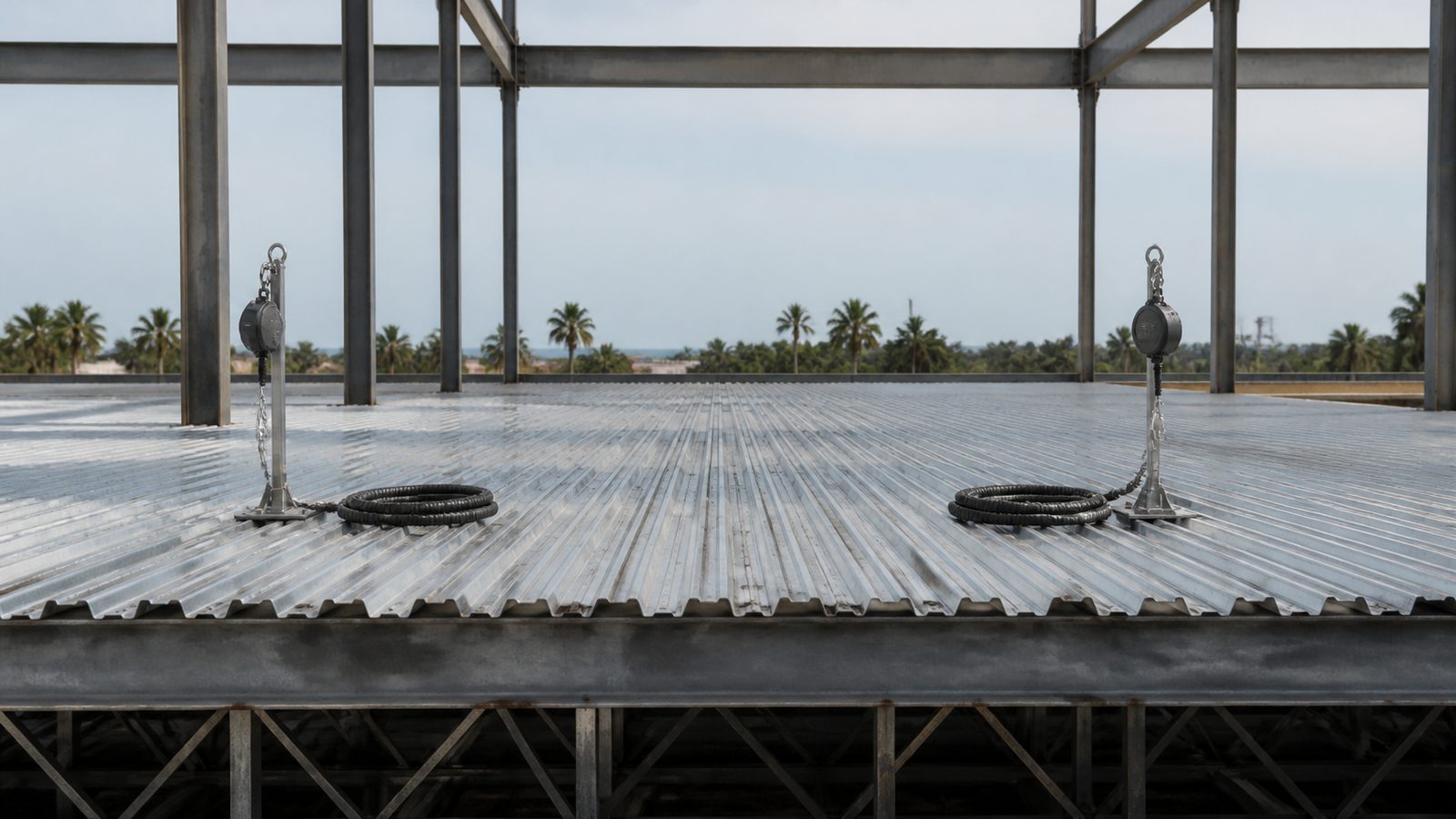
Fall protection (Subpart M) is the number one OSHA citation category nationally, and it's the leading cause of construction fatalities in Florida. The rule is simple: any worker at 6 feet or more above a lower level must be protected by a guardrail system, safety net, or personal fall arrest system (PFAS).
Residential work (1926.502(b)) permits some alternative compliance methods, but the competent person must document the assessment and the chosen protection method in writing. Verbal plans are not sufficient.
At JK Prestige, the written JSA required for all non-routine work includes fall hazard identification and the selected protection method. It's not paperwork for OSHA — it's a pre-task brief the crew reads before climbing.
Subpart P: Excavations — Critical for Foundation and Underground Work in Jacksonville
Subpart P governs excavation and trenching. Jacksonville's soil conditions — coastal plain soils, high water tables in low-lying areas, and loose sandy fill in many older neighborhoods — increase cave-in risk. Type A soil (most stable) is rarely the right classification in Duval County without a soil test.
Any excavation 5 feet or deeper requires a protective system: sloping, benching, shoring, or a trench box. Any excavation 20+ feet requires a registered professional engineer (PE) to design the protective system. A competent person must inspect the excavation daily and after any rain event.
For JK's foundation and site work, the competent person completes a written excavation inspection log before workers enter — no log entry, no entry.
Subpart Q and R: Concrete, Masonry, and Steel Erection
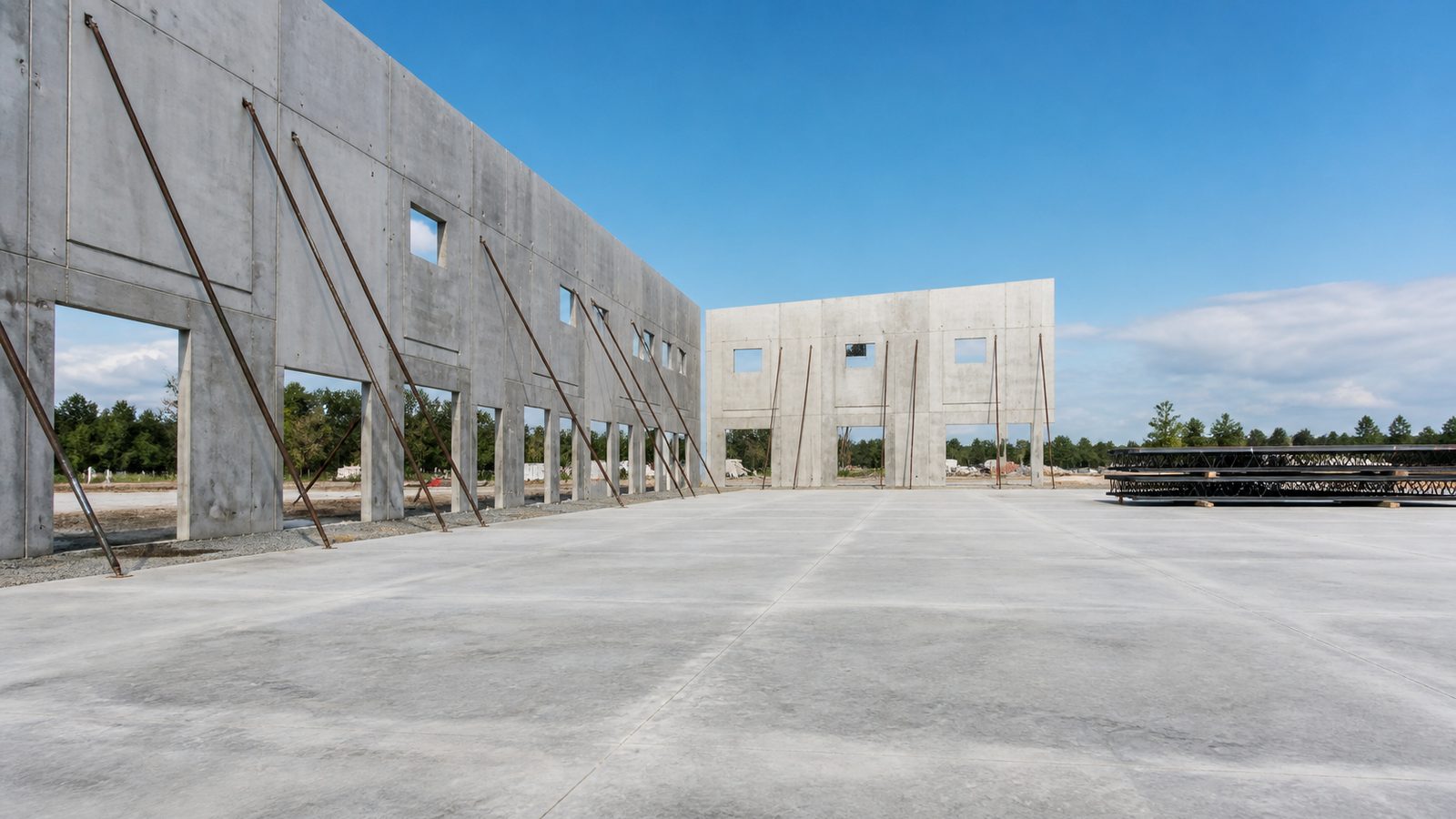
Subpart Q (concrete and masonry) covers everything from formwork design to post-tensioned concrete and masonry wall construction. Subpart R (steel erection) governs column stability, anchor bolt requirements, and fall protection during steel work.
In Florida, the concrete subpart matters on tilt-up warehouse construction, where JK's own crews handle the work. Tilt-up panels must be braced per an engineered bracing plan until the roof structure provides lateral support. No exceptions.
What OSHA 30 Trains Supervisors to Do — and Why JK Requires It for All Supervisors
OSHA 30 is a 30-hour training course authorized by OSHA's outreach program. For construction (OSHA 30-Construction), the curriculum covers Subparts C through Z, with emphasis on fall protection, scaffolding, electrical, and excavations. Supervisors also complete modules on OSHA inspection rights, citations, and penalties.
OSHA 30 is not required by Florida law for all supervisors. It is required by JK Prestige as an internal standard. The reasoning is direct: a supervisor who has completed OSHA 30 can identify hazards before they become incidents, run a written JSA without help, and respond to an OSHA inspector without making the situation worse.
OSHA 10 — the 10-hour version — is for workers, not supervisors. If a GC tells you their supervisors have OSHA 10, that's a gap.
JK Prestige's Safety Program: How It Works in Practice
JK's safety program is not a binder on the trailer shelf. It's a daily operating rhythm.
Daily toolbox talks: Every crew, every morning, before work starts. Documented on a standard form. Covers the hazards of that day's work scope — not a generic safety speech.
Written JSA for all non-routine work: Any task that falls outside standard crew operations gets a written Job Safety Analysis (JSA) before work begins. This includes confined space entry, crane picks, chemical handling, and any excavation.
Annual third-party safety audit: Each year, an independent safety consultant audits JK's program against OSHA 1926 Subpart C through Z. Findings are corrected with a written action plan and tracked to closure.
TRIR tracking: JK maintains a Total Recordable Incident Rate (TRIR) at less than one-third the commercial GC industry average. That number is available to any owner, developer, or GC partner who asks.
Learn more about JK Prestige's delivery and safety standards and our full range of construction expertise.
When OSHA Inspects a Florida Construction Site: What to Expect
OSHA inspects Florida construction sites in three ways: programmed inspections (random, targeting high-hazard industries), complaint-driven inspections, and fatality/catastrophe inspections. Florida operates under Federal OSHA jurisdiction (not a state plan), so federal 1926 standards apply directly.
When an OSHA compliance officer (CO) arrives, the employer has the right to:
- Request credentials
- Accompany the CO on the walkaround
- Participate in the closing conference
What GC supervisors should never do: alter conditions, remove documentation, or instruct workers to leave the area before the inspection is complete. These actions escalate citations.
Get a free written estimate in 48 hours. contact the JK Prestige team. A principal answers at (904) 944-0278.
No call center. No coordinator. A JK principal reviews every inquiry and replies with a real number, not a range, not a follow-up form.
Request Free Estimate →