OSHA 30 is a credential. But for GCs who award framing work, it's also a liability document.
When a worker is injured on a framing scope and the OSHA inspection examines the supervisory training chain, the foreman's OSHA certification status is one of the first things an inspector looks for. A foreman without OSHA 30 on a commercial framing jobsite is not automatically a violation — but it raises questions that a foreman with OSHA 30 doesn't raise. Those questions cost time, cost money, and sometimes result in citations.
This post covers what OSHA 30 requires a framing foreman to do, how that requirement changes your liability profile as a GC, and what to verify before awarding framing work to any sub in Florida.

What OSHA 30 Means for a Framing Supervisor
The Occupational Safety and Health Administration (OSHA) 30-hour training course is a voluntary credential issued by OSHA-authorized trainers through the OSHA Outreach Training Program. It's not an OSHA certification in the regulatory sense — OSHA does not issue certifications. But it is widely recognized in the construction industry as the minimum training standard for supervisory personnel on commercial jobsites.
For framing supervisors specifically, OSHA 30 training covers the hazards most relevant to framing work:
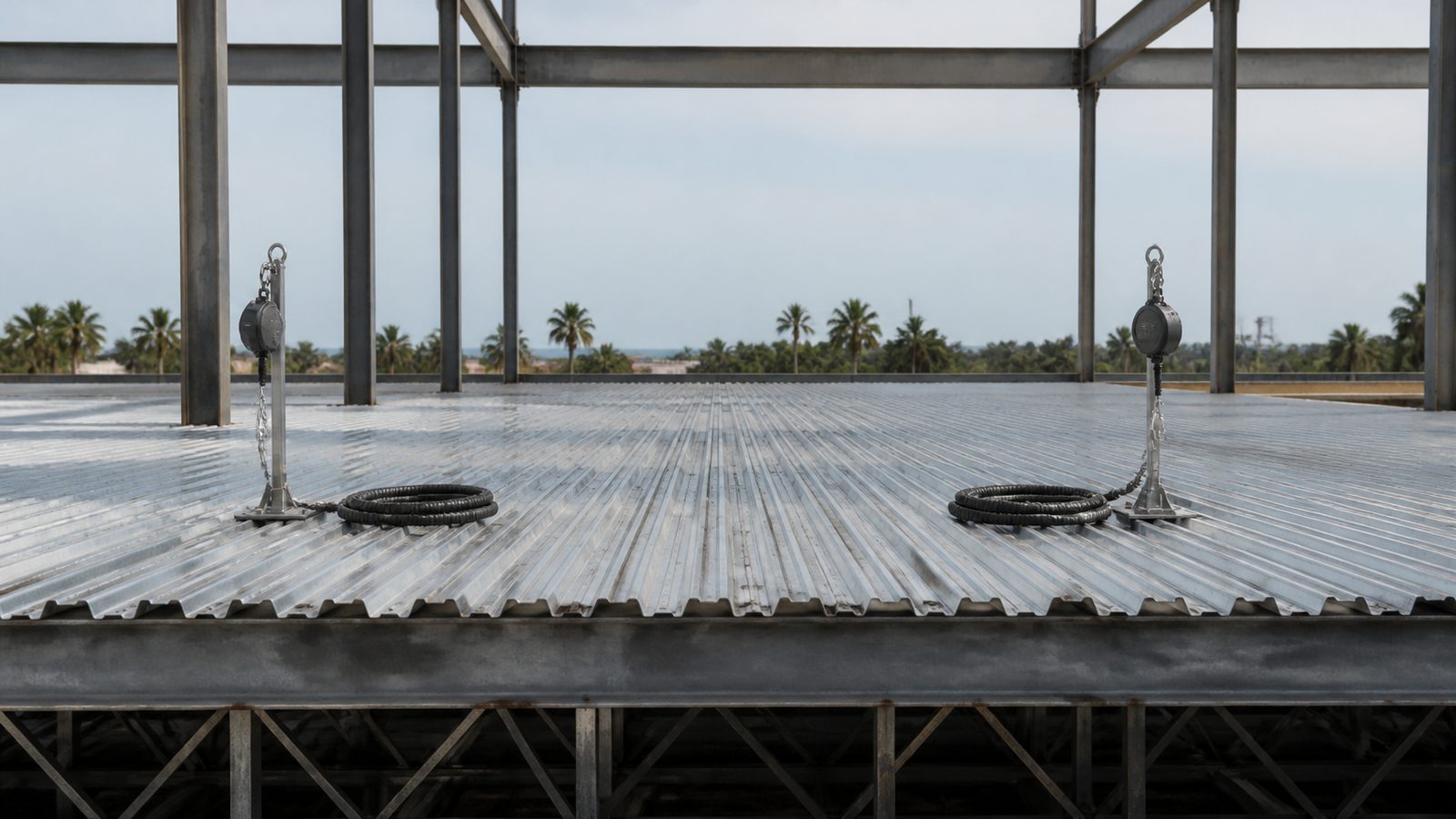
- Fall protection (29 CFR 1926 Subpart M). Workers on walking/working surfaces with unprotected sides or edges 6 feet or more above a lower level must be protected by guardrails, safety nets, or personal fall arrest systems. The foreman, as the designated competent person for fall protection, is responsible for evaluating fall hazards on each day's work and implementing the appropriate protection.
- Scaffolding (29 CFR 1926 Subpart L). When framing crews work from scaffolding, the competent person requirement applies to scaffold erection, use, and dismantling.
- Struck-by and caught-between hazards. Framing involves heavy materials — wall panels, beams, sheathing — that create struck-by risk during lifting and positioning.
- Tool safety. Pneumatic nail guns are the most common source of puncture injuries in framing operations. OSHA 30 includes tool safety content specific to nail guns, saw operation, and power tools.
The Competent Person Requirement
The most important function OSHA 30 training fulfills is establishing the foreman as a competent person under OSHA's definition: "one who is capable of identifying existing and predictable hazards in the surroundings or working conditions which are unsettled, unsanitary, or dangerous to employees, and who has authorization to take prompt corrective measures to eliminate them."
OSHA regulations require a competent person designation for fall protection, scaffolding, excavation, and several other hazard categories. A framing foreman who has not received OSHA 30 training can still be designated as competent by an employer — the regulation doesn't specify OSHA 30 as the exclusive path. But demonstrating competency without a recognizable training credential, in the context of an OSHA inspection following an incident, is a harder position to defend.
How OSHA 30 Changes the GC's Liability Profile
When a framing worker is injured on a GC's project, the sequence of events that follows has implications for the GC regardless of which sub employed the worker.
Workers' compensation. The injured worker files a workers' comp claim with their employer's carrier — the framing sub's workers' comp carrier, not the GC's. This is the first line of financial response. If the framing sub carries adequate workers' comp, the GC's direct financial exposure in the workers' comp claim is typically limited.
OSHA inspection. A recordable incident triggers OSHA's recordkeeping requirements. A fatality or severe injury (hospitalization, amputation, loss of an eye) triggers OSHA's on-site inspection authority. OSHA inspections examine the overall safety program, not just the framing sub's program — they examine the GC's site safety plan, the GC's knowledge of the framing sub's safety qualifications, and the GC's oversight of hazards on the jobsite.
Multi-employer citation policy. OSHA's multi-employer citation policy allows OSHA to cite both the creating employer (who created the hazard) and the controlling employer (the GC, who has the authority and responsibility to correct hazards on the site) for the same violation. If the framing sub's crew was working without an adequate fall protection plan and a worker fell, OSHA can cite the framing sub for creating the hazard and cite the GC for failing to exercise controlling employer authority to correct it.
A GC who can demonstrate that they:
- Required the framing sub to have OSHA 30-trained supervision as a prequalification requirement
- Verified the foreman's OSHA 30 credentials before mobilization
- Conducted regular jobsite safety inspections that would have identified a fall protection deficiency
— is in a materially different position from a GC who cannot demonstrate any of those things. The difference may determine whether the controlling employer citation is issued at all, and at what penalty level.
What an OSHA 30 Requirement for Framing Subs Looks Like in Practice
A GC who requires OSHA 30 for all framing sub foremen as a prequalification condition should implement this as a written requirement in the subcontract agreement — not just as a verbal expectation.
The subcontract language should specify:
- All supervisory employees (foremen, superintendents) on this project must hold a current OSHA 30 certificate
- Certificates must be produced prior to first mobilization and maintained on the jobsite
- The GC reserves the right to remove any supervisory employee whose certificate is not current from the jobsite without penalty to the GC
Beyond the language, verification must happen. Requiring OSHA 30 in the contract and then not verifying the certificates provides protection in a contract dispute but not in an OSHA inspection. Inspectors will ask whether the GC actually reviewed the certificates. "We required it in the contract" is a weaker position than "we required it in the contract, reviewed the certificates before mobilization, and have copies in the project file."
Written Fall Protection Plan: What It Must Include
OSHA 29 CFR 1926.502(k) requires that before any employee performs work at heights in situations not otherwise covered by the standard, the employer must develop a written fall protection plan. For framing crews working above 6 feet, this plan must include:
- The specific locations where fall protection will be provided
- The type of fall protection used at each location (guardrail, PFAS, or safety net)
- Procedures for erecting and maintaining each protective system
- The name of the competent person responsible for fall protection
An OSHA 30 foreman knows this is required. A foreman without safety training may not. When OSHA inspects a framing scope following an incident, the written fall protection plan is one of the first documents requested.

How JK's OSHA 30 Requirement Changes the Risk Profile for GC Partners
Every JK Prestige supervisory employee — foreman and above — holds a current OSHA 30 certificate. This is not a project-specific requirement; it's a baseline employment standard at JK.
When a GC awards framing work to JK's crews, they receive:
- Documented OSHA 30 credentials for all foremen on the project, on file before mobilization
- A written fall protection plan prepared before first work above 6 feet begins
- Documented toolbox talks — written records of daily crew safety briefings — submitted to the GC project manager weekly
- Written Job Safety Analysis (JSA) for any non-routine task before execution begins
These documents don't just serve JK's safety program. They serve the GC's controlling employer defense if OSHA inspects the jobsite. A GC who can produce JK's fall protection plan, toolbox talk records, and foreman OSHA 30 certificates in an OSHA inspection is demonstrating exactly the controlling employer oversight that mitigates or eliminates the controlling employer citation exposure.
Request JK's trade packet — including OSHA 30 certificates for all current supervisory employees — contact JK Prestige.
The JK Way includes safety documentation as a standard deliverable on every project, not a special request.
Request our trade packet, licensing, insurance certs, and references, contact JK Prestige. Call (904) 944-0278. A principal answers.
No call center. No coordinator. A JK principal reviews every inquiry and replies with a real number, not a range, not a follow-up form.
Request Free Estimate →