Roofing is the most dangerous trade in construction. The Occupational Safety and Health Administration (OSHA) tracks fatal injuries by trade annually — roofing consistently appears at or near the top. Falls from elevation account for most roofing fatalities, and Florida's heat creates a secondary hazard (heat illness) that kills workers across the construction industry each year.
When a property owner hires a roofing contractor, they are making a legal decision, not just a purchasing decision. If a worker is injured or killed on your property and the contractor lacks proper supervision, documentation, and safety systems, the liability exposure can extend to the property owner. Most homeowners and building owners don't know this.
This post explains what OSHA 10 and OSHA 30 certifications mean in the context of roofing work, what supervisory OSHA 30 certification requires on a real jobsite, and why it matters for anyone hiring a roofing contractor in Jacksonville.
JK Prestige requires OSHA 30 certification for all supervisory employees — not as a credential to display, but as the operating standard for how jobsite safety is managed.
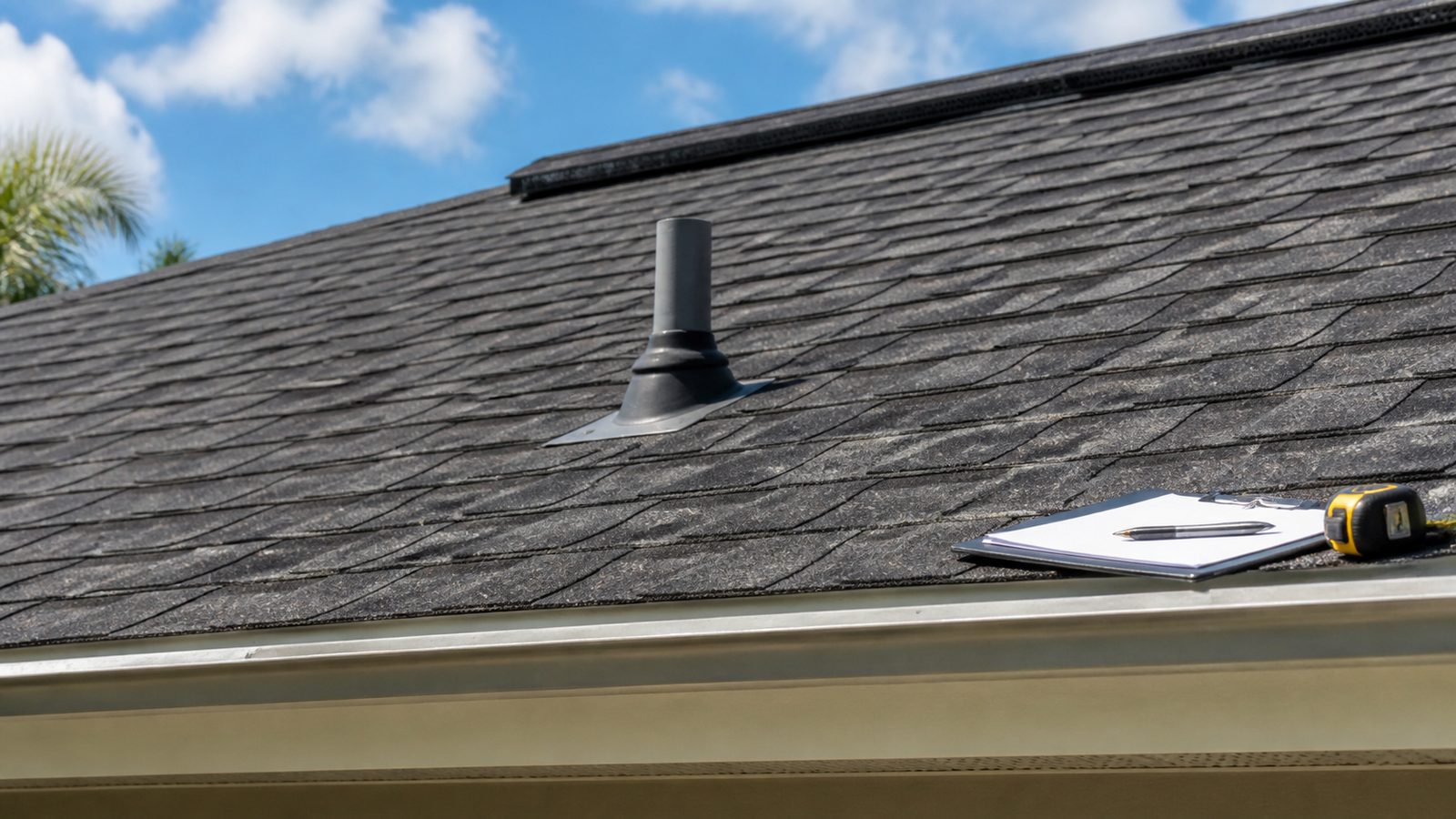
Roofing and the OSHA Fatal Four
OSHA identifies four hazard categories that account for the majority of construction fatalities:
- Falls — the leading cause of roofing deaths
- Struck-by — materials, equipment, or vehicles
- Caught-in/between — equipment entrapment
- Electrocution — contact with overhead power lines, especially relevant on roofing work near service masts
Falls from roofs account for roughly one-third of all construction fatalities nationally. On a residential job, a worker falling from a 12-foot eave lands with enough force to cause fatal or catastrophic injury. The fall hazards on a residential roof in Jacksonville are not abstract — they are specific, predictable, and preventable with proper equipment and supervision.
Florida adds a secondary hazard: heat illness. Jacksonville's heat index from May through September regularly exceeds 100°F. Roofing crews work on dark-surface material in direct sun, often without shade or adequate hydration stations. OSHA's heat illness prevention standard requires employers to provide water, rest, and shade. Heat cramps, exhaustion, and heat stroke are all preventable — and all documented causes of construction worker deaths in Florida.
What OSHA 10 Means vs. What OSHA 30 Means
OSHA 10 — Worker Awareness
OSHA 10 is a 10-hour course covering OSHA standards and worker rights. It is designed for entry-level construction workers. Completion of OSHA 10 means the worker has been exposed to:
- Basic fall protection standards
- Hazard communication (chemical labeling, SDS)
- Personal protective equipment (PPE) requirements
- General site safety awareness
OSHA 10 does not certify a worker to plan, supervise, or manage a safety program. It is an introductory awareness course. Many states and municipalities require OSHA 10 for workers on public job sites. In Florida, it is not universally mandated but is widely held among experienced workers.
OSHA 30 — Supervisory Competency
OSHA 30 is a 30-hour course designed for supervisors, foremen, and safety personnel. The curriculum covers everything in OSHA 10, plus:
- Writing and implementing a site-specific safety plan
- Fall protection planning and documented rescue procedures
- Writing a Job Safety Analysis (JSA) for non-routine tasks
- Managing and documenting toolbox talks
- Scaffolding, excavation, electrical safety at a supervisory level
- Recognizing OSHA violations and correcting them before an inspector does
OSHA 30 certification means the holder is trained to manage a safety program — not just participate in one. That distinction matters enormously on a roofing job.
On a JK Prestige roofing crew, the site supervisor holds OSHA 30 certification. This person writes the fall protection plan for the specific job (roof pitch, eave height, parapet conditions), documents the daily safety meeting, and signs the JSA (Job Safety Analysis) for any non-routine task before the crew begins it.
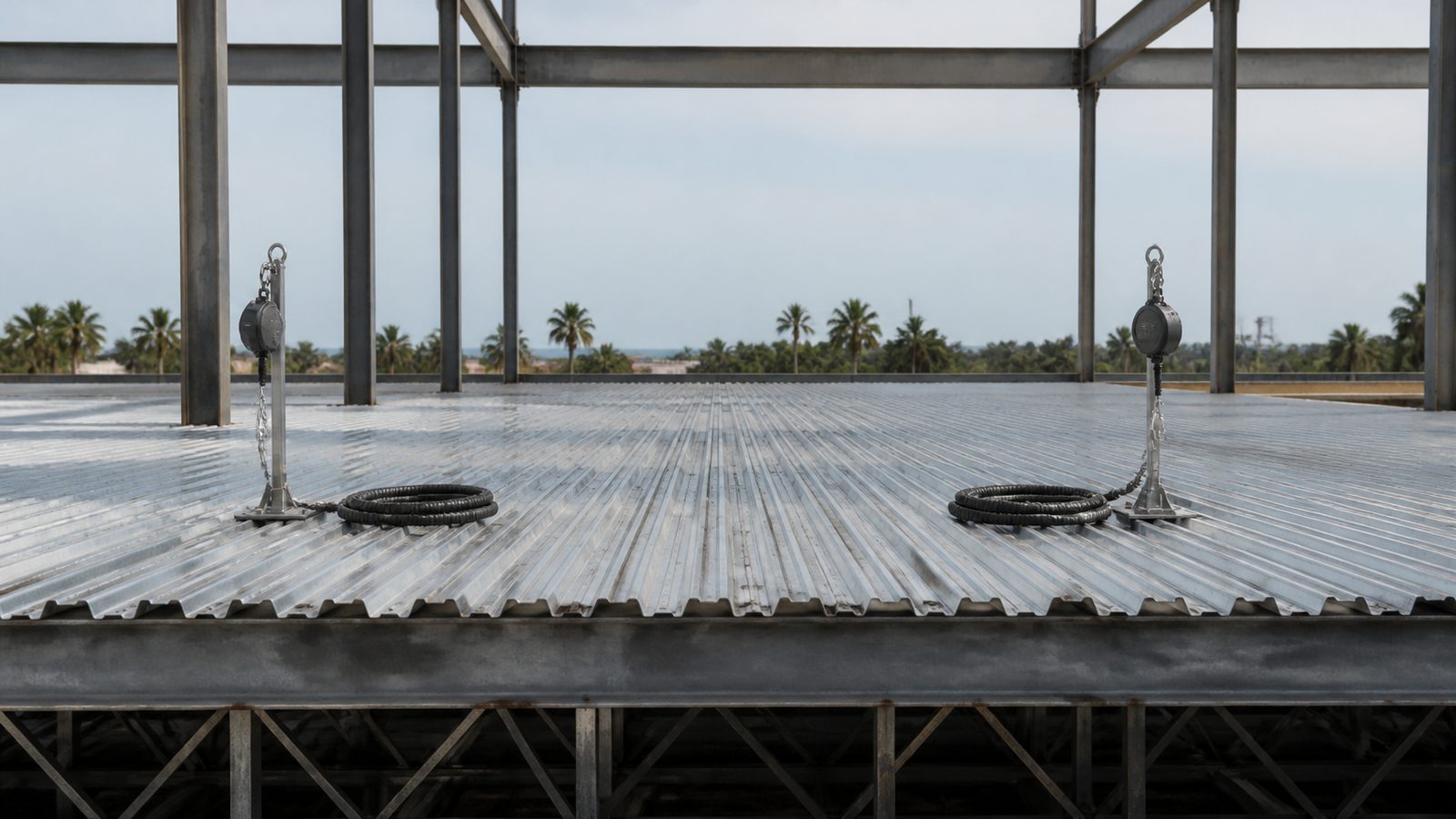
What OSHA 30 Actually Requires on a Roofing Job
OSHA 30 certification means the supervisor has been trained to implement the following on every roofing job — residential or commercial.
Written Fall Protection Plan
OSHA 1926.502 requires a written fall protection plan for any work at elevations above six feet. On a roofing job, this plan must address:
- Roof pitch and walking surface conditions
- Leading edge protection (guardrail, personal fall arrest system (PFAS), or safety monitoring system for residential slopes)
- Roof opening protection (skylights, HVAC curb openings)
- Ladder access points and ladder security requirements
- Emergency rescue procedures if a worker is suspended in a PFAS harness
A legitimate roofing contractor has this document for every job. It is not a template they fill in once. It is a job-specific document that accounts for the specific roof geometry, access conditions, and hazards on that property.
Documented Daily Safety Meetings
Toolbox talks are brief daily safety meetings held with the full crew before work begins. They are required under OSHA standards and must be documented: date, topic, attendees, and the supervisor's signature.
On JK Prestige roofing jobs, toolbox talks are conducted by the OSHA 30-certified supervisor each morning. The documentation is maintained in the job file. This is not a checkbox — it is a daily practice that establishes the safety standard for the day.
Written JSA for Non-Routine Tasks
A Job Safety Analysis (JSA) documents the specific hazards and controls for a task that falls outside the routine work sequence. Examples on a roofing job:
- Operating a crane or material hoist to lift panels to the roof
- Working around energized power lines at the service mast
- Removing a skylight and working over an open roof penetration
- Applying torch-applied modified bitumen (open flame on an occupied structure)
The JSA is written by the OSHA 30-certified supervisor before the task begins, reviewed with the crew, and signed by all participants. If a non-routine task is performed without a JSA and a worker is injured, that is a willful OSHA violation — which carries penalties up to $15,625 per violation (2025 rates) and opens the contractor to enhanced civil liability.
Property Owner Liability: What You Need to Know
This is where OSHA 30 supervision becomes a property owner issue, not just a contractor issue.
Under Florida law and federal OSHA regulations, property owners are not typically the "employer" responsible for contractor employee safety. The contractor carries that responsibility. However, property owner liability can arise when:
- The contractor is uninsured or underinsured. If the injured worker cannot recover from the contractor's workers' compensation policy (because the contractor has none or has lapsed coverage), a civil suit against the property owner is not uncommon.
- The property owner exercised control over the means and methods of work. If you told the crew where to set up their ladder, when to work, or how to sequence the job, a court may find you exercised enough control to share in employer-level responsibility.
- The contractor's safety failures were visible and the owner did nothing. If you watched a crew work without fall protection on your 25-foot eave and said nothing, your exposure increases.
The simplest way for a property owner to reduce this exposure: hire a licensed, insured contractor with documented OSHA 30 supervisory certification and workers' compensation coverage in force. Ask for the workers' comp certificate of insurance before any crew sets foot on your property. Confirm the certificate shows active coverage, not expired coverage.
JK Prestige provides certificate of insurance, contractor license number, and OSHA 30 certification documentation to every property owner before mobilization. This is standard. If a contractor can't produce these documents, they're not ready to be on your property.
What to Ask a Roofing Contractor Before Signing
Before hiring any roofing contractor in Jacksonville, ask these five questions:
- "Does your on-site supervisor hold OSHA 30 certification, and can I see the card?" OSHA 30 cards are issued by OSHA-authorized trainers and include the holder's name and completion date. Request a copy.
- "Will you provide a certificate of insurance showing active workers' compensation and general liability?" Workers' comp is mandatory for Florida contractors with one or more employees. General liability should be minimum $1M per occurrence.
- "What is your written fall protection plan for this job?" A serious contractor has this ready. An evasive answer tells you something.
- "Do your crews self-perform the work, or are you brokering this to another company?" A brokered job means the safety supervision chain passes through a subcontractor you've never met.
- "What is your TRIR (Total Recordable Incident Rate)?" TRIR measures actual safety performance, not just certifications. JK Prestige's TRIR is below one-third of the commercial GC industry average.
See how JK Prestige structures safety accountability across every project, then contact us for a free roof inspection or call (904) 944-0278. A principal answers.
No call center. No coordinator. A JK principal reviews every inquiry and replies with a real number, not a range, not a follow-up form.
Request Free Estimate →