When you're vetting a general contractor (GC) in Jacksonville, safety credentials typically appear somewhere in the proposal package. What they say matters less than what they actually require on the jobsite. The difference between OSHA 10 and OSHA 30 is not a technicality — it separates awareness-level training from supervisory-level competency. JK Prestige Constructor requires OSHA 30 for every supervisory employee on every project. This post explains what each certification covers, what the regulatory floor actually is, and why requiring OSHA 30 across all supervisors is the higher standard.
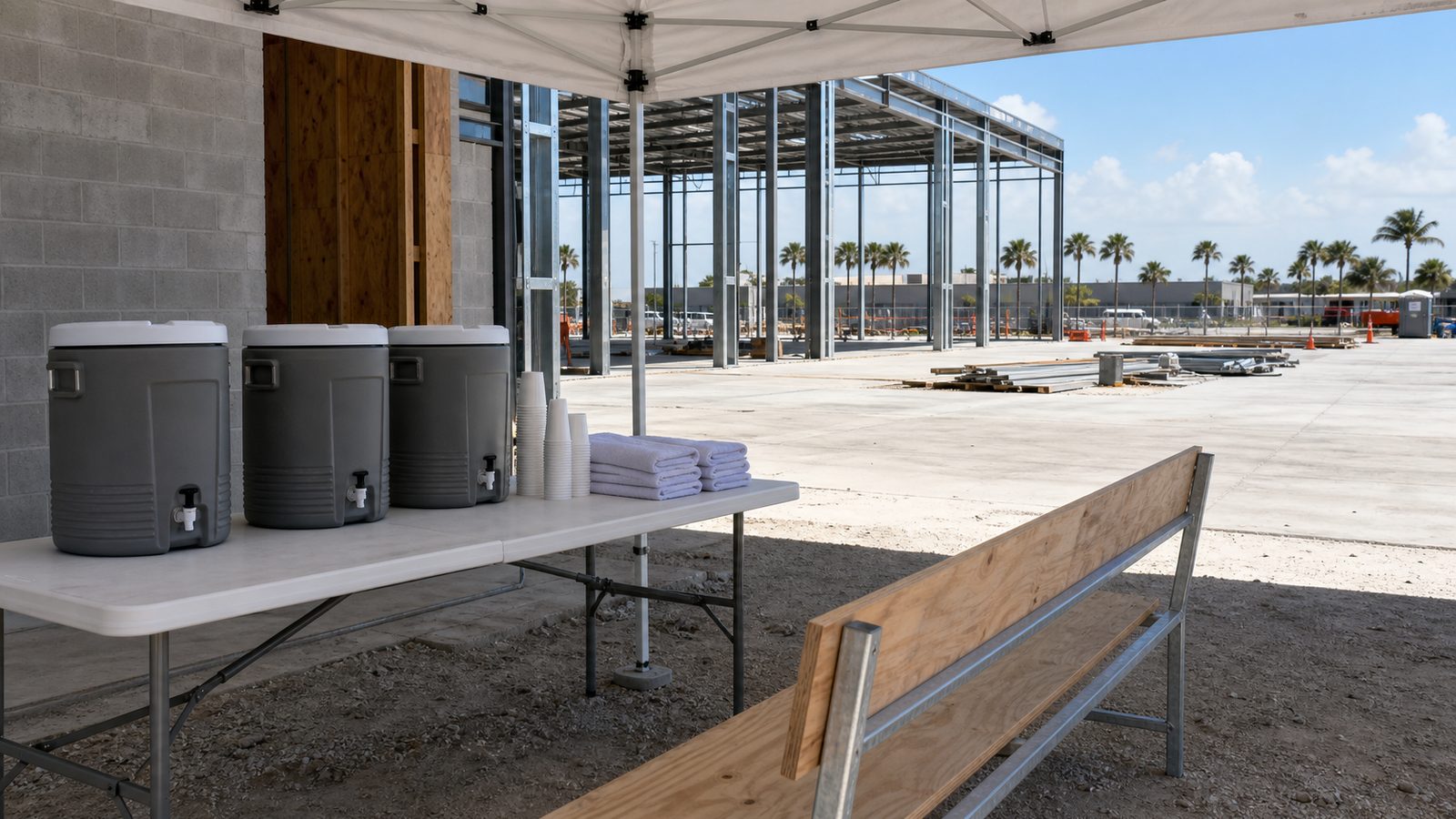
OSHA 10 vs. OSHA 30: What Each Certification Covers
The Occupational Safety and Health Administration (OSHA) Outreach Training Program offers two levels of training for construction workers: the 10-hour course and the 30-hour course. Both result in a wallet card that gets checked at the gate on many commercial projects.
OSHA 10: Entry-Level Awareness
The OSHA 10-hour course is designed for construction workers who are not in supervisory roles. It covers:
- Introduction to OSHA rights and responsibilities
- Fall protection basics
- Electrical hazard awareness
- Struck-by and caught-in-between hazard recognition
- Personal protective equipment (PPE) selection
The 10-hour course is awareness training. It teaches a worker to recognize common hazards and understand their right to refuse unsafe work. It does not train supervisory decision-making, hazard mitigation planning, or incident investigation.
A worker with an OSHA 10 card knows what a fall hazard looks like. A supervisor with only an OSHA 10 card does not have the training to plan fall protection systems, conduct a Job Safety Analysis (JSA), or investigate a near-miss properly.
OSHA 30: Supervisory-Level Training
The OSHA 30-hour course is designed for supervisors, foremen, lead workers, and site safety personnel. It covers everything in the 10-hour course at greater depth, plus:
- Advanced fall protection system design and inspection
- Scaffold erection and inspection requirements
- Excavation and trenching safety (a leading cause of construction fatalities)
- Confined space entry procedures
- Fire protection planning
- Materials handling and rigging
- First aid and emergency response planning
- Management's role in creating a safety culture
- Incident investigation procedures
The 30-hour course takes a full week of classroom and scenario-based instruction. It is specifically built to produce supervisors who can make real-time safety decisions under production pressure — not just recognize a hazard but act on it correctly before someone gets hurt.
What Florida Law and Federal OSHA Actually Require
Here is the regulatory reality: neither Florida law nor federal OSHA regulations require OSHA 10 or OSHA 30 as a blanket condition of employment in commercial construction. Federal OSHA sets hazard-based standards — you must provide fall protection at six feet, you must use certain equipment when working near energized lines — but it does not mandate a specific training card for all workers.
Some states have enacted their own requirements. New York, Massachusetts, Nevada, and Michigan have mandatory OSHA 10 or 30 requirements for certain project types. Florida has not.
Where OSHA 10 and OSHA 30 become contractual requirements is at the owner or developer level. Hospitals, government agencies, and major commercial developers frequently require OSHA 30 for all supervisors as a condition of the construction contract. It is a procurement requirement, not a statutory one.
This means a GC can legally put a supervisor on your Jacksonville jobsite with no OSHA outreach training at all, as long as they meet the specific hazard-based training requirements buried in 29 CFR 1926.
When you see OSHA 10 listed as a GC's safety credential, that's the floor. It may mean workers carry the card. It does not mean every supervisor has supervisory-level safety training.
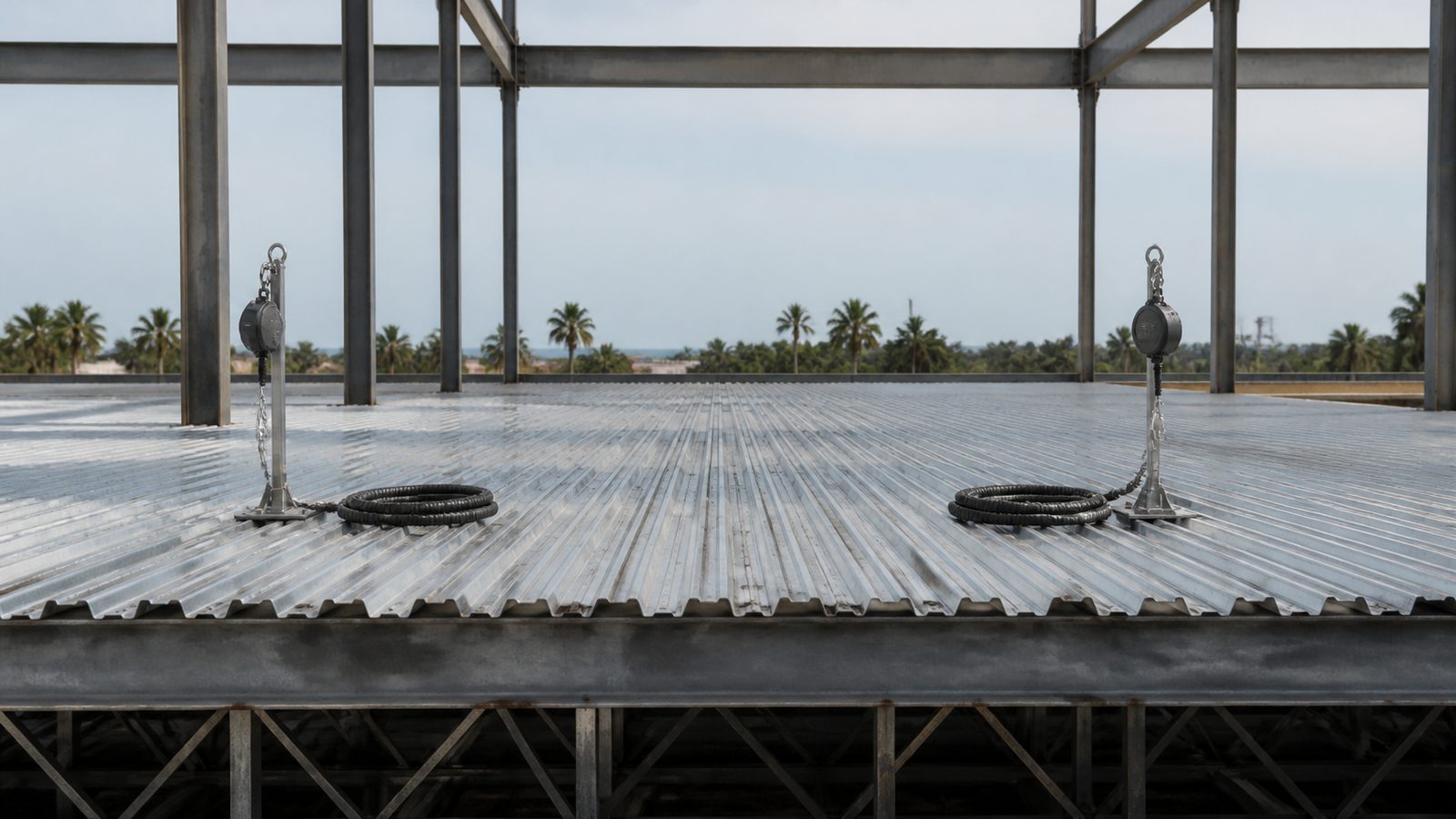
Why All-Supervisor OSHA 30 Is the Higher Standard
Most GCs with OSHA credentials require OSHA 10 for their workforce and OSHA 30 for some supervisors — typically the safety director, project managers, and senior superintendents. This is a selective approach. The assumption is that the safety director cascades the supervisory-level knowledge down to lead workers and foremen.
The gap in that model is the foreman running a three-person framing crew at 7 a.m., making a decision about whether to proceed with work on an unguarded leading edge while the safety director is on a different site 20 minutes away. That foreman needs OSHA 30 training — hazard mitigation planning, fall protection system knowledge, and the specific authority to stop work — not OSHA 10 awareness and a phone number for the safety director.
JK Prestige requires OSHA 30 for every supervisory employee on every project. Not just the safety director. Not just the project superintendent. Every foreman, every lead, every person with supervisory responsibility for a crew.
This requirement extends to JK Prestige's own crews — the framing, concrete, drywall, and roofing teams that JK self-performs. JK does not broker those trades out to crews whose safety training is unknown. The crews on a JK Prestige jobsite are JK employees, and their supervisors hold OSHA 30 cards.
TRIR: The Number That Tells You If the Training Is Working
An OSHA card is a training credential. The Total Recordable Incident Rate (TRIR) is the outcome measure. TRIR is calculated from OSHA Form 300 incident logs and represents the number of recordable injuries and illnesses per 100 full-time equivalent workers per year.
The Bureau of Labor Statistics publishes annual TRIR averages by industry code. For commercial general contractors, the average TRIR has historically run between 2.0 and 3.5 depending on project type and year.
JK Prestige's TRIR is below one-third of the commercial GC industry average.
That is not a claim about having a good safety program. It is a documented outcome — fewer recordable incidents per worker-hour than the industry norm. For a developer, a low TRIR on your GC's record has direct financial consequences: it affects the GC's workers' compensation experience modifier, and a high TRIR can trigger increased insurance costs that flow downstream into project overhead.
When requesting a GC's OSHA documentation, ask for:
- The OSHA 30 card roster — which employees hold it and in what roles
- OSHA 300 logs for the past three years (recordable incidents)
- The calculated TRIR for each of those years
- A description of the JSA (Job Safety Analysis) process — who writes JSAs, what triggers one, and how they're documented
A GC that trains to OSHA 30 across all supervisors and maintains a low TRIR has made safety a production standard, not a compliance exercise.

Additional Safety Standards at JK Prestige
Beyond OSHA 30 certification requirements, JK Prestige runs:
- Daily crew-led toolbox talks, documented on every project. These are not generic handouts — the lead worker for each crew runs a five-minute site-specific safety review at the start of each shift.
- Written JSAs for every non-routine task. Lifting concrete tilt-up panels, working inside a confined mechanical room, cutting into a live wall — each gets a written JSA before work begins.
- Annual third-party safety audits against OSHA 1926 Subpart C through Z. An external safety firm audits every JK project annually against the full construction safety standard.
These practices apply across all JK Prestige service lines — from custom residential builds to hospital construction, where ICRA (Infection Control Risk Assessment) compliance adds a second layer of site-access and contamination-control requirements on top of the standard OSHA framework.
Safety credentials are part of the JK Way — the operating standard that applies on every project regardless of size.
For a GC whose safety record is in writing — OSHA 30 across all supervisors, TRIR below one-third of industry average — request a trade packet or get a free estimate. Call (904) 944-0278 or contact JK Prestige Constructor directly. A principal answers.
No call center. No coordinator. A JK principal reviews every inquiry and replies with a real number, not a range, not a follow-up form.
Request Free Estimate →