Within 24 hours of a major storm making landfall near Jacksonville, out-of-state contractors begin arriving. By the time the evacuations are lifted and residents return, neighborhoods throughout Duval County are flooded with trucks bearing out-of-state plates, door-to-door salespeople offering "immediate assessments," and flyers under windshield wipers advertising deep discounts on "storm damage repairs."
Some of these contractors are legitimate — professionals who mobilize to disaster areas to help with genuine capacity shortfalls. Most are not. Florida's contractor licensing database shows a sharp spike in unlicensed contractor complaints following every significant storm event. The pattern is predictable, the tactics are consistent, and the damage to homeowners who get caught is real.
Here's how to tell the difference in 90 seconds or less — before you sign anything or hand over any money.
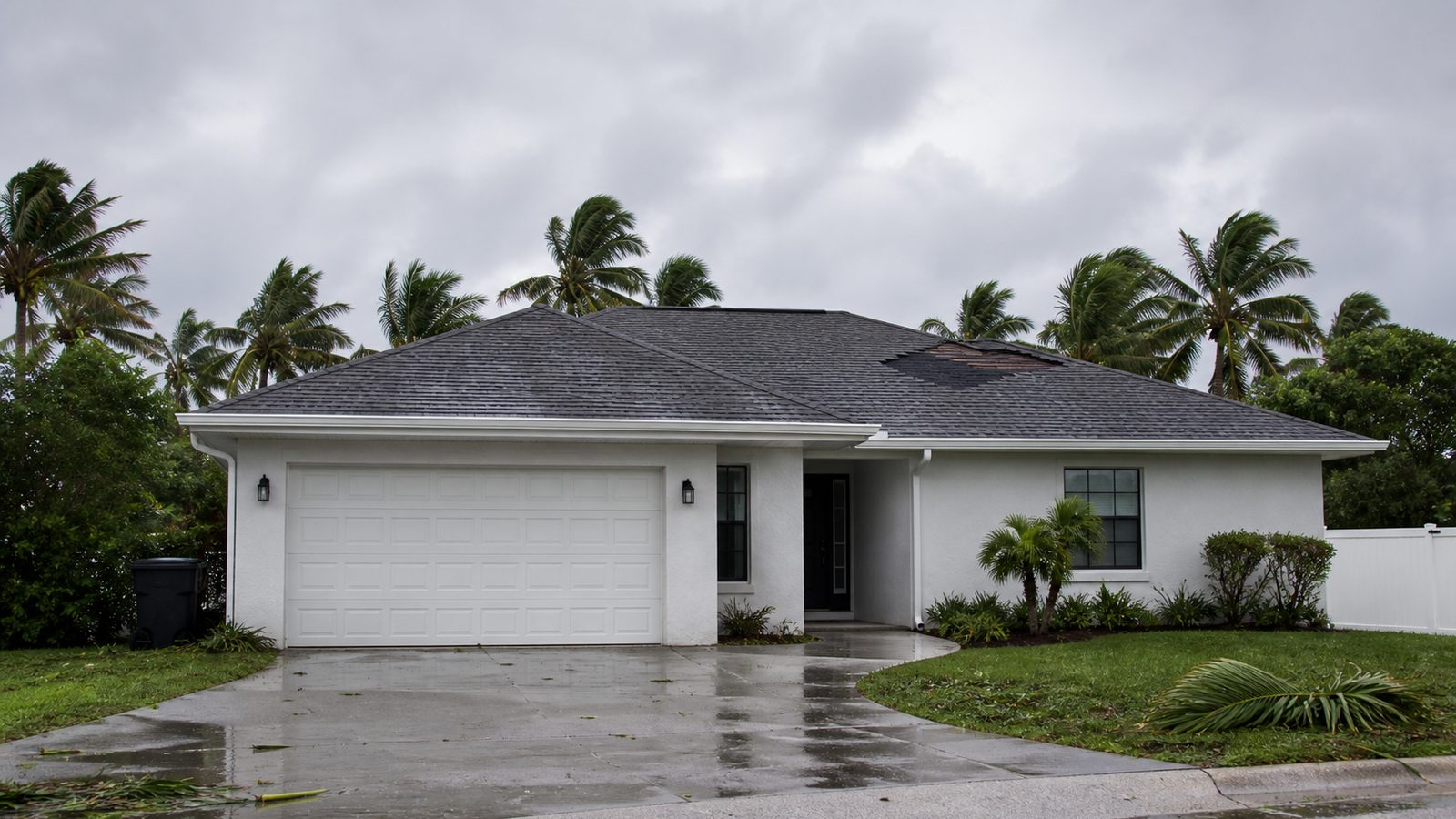
What Storm Chasers Do: The Playbook
Storm chasers — also called disaster contractors or storm restoration contractors — operate on a specific model that takes advantage of three things: urgency, insurance complexity, and information asymmetry.
Urgency: Homeowners with damaged roofs are in a vulnerable position. Water is getting in. The interior is at risk. The pressure to get someone on the roof immediately overrides the normal due diligence process. Storm chasers show up when the urgency is highest — the first 24-48 hours — and close as many deals as possible before homeowners have time to think.
Insurance complexity: Most homeowners have limited experience with property damage claims. Storm chasers frequently position themselves as insurance experts who will "handle everything." In some cases, they push the homeowner to sign an Assignment of Benefits (AOB) agreement — effectively signing over the claim — or they sign the homeowner to a repair contract before the insurance adjuster has established a scope.
Information asymmetry: Homeowners generally don't know what a legitimate roofing repair or replacement costs, what the code requires, or how to verify a contractor's license and insurance. Storm chasers exploit this gap with high-pressure pricing and urgency tactics.
Red Flags: What Storm Chasers Do That Legitimate Contractors Don't
No Florida license. This is the single most important red flag and the easiest to check. Florida requires a roofing contractor license for any residential or commercial roofing work. Out-of-state licenses are not valid in Florida. An unlicensed contractor cannot legally pull a permit — which means the work will not receive a building inspection, which means you are responsible for code compliance on your own home.
Demands full payment upfront. Legitimate contractors take a deposit — typically 10-33% of the contract value — to schedule the job and order materials. They take the remaining balance upon completion. A contractor who demands full payment before work begins has every incentive to disappear once the check clears. Never pay in full before work is complete.
No physical address in Florida. A roofing contractor who operates in Jacksonville should have a physical address in Florida — not a P.O. box, not an out-of-state address, not "we have a local crew." Ask for the address. Look it up. If it's a vacant lot or a UPS Store, you have your answer.
Pressure tactics: "This price is only available today." Scarcity pressure in a post-storm environment is a manipulation technique. The damage is not going anywhere. The material price is not changing in the next 24 hours. A contractor who won't commit to an estimate beyond today is creating artificial urgency because they know slower decision-making is better decision-making.
No written contract with scope. A legitimate contractor provides a written scope of work — exactly what will be done, what materials will be used (product name and specification), what the timeline is, and what the warranty covers. A handshake or a generic "repair storm damage" contract is not sufficient documentation for an insurance claim and provides you no legal recourse if the work is deficient.
Unsolicited door-to-door approach. Professional roofing contractors are dispatched by a dispatcher, not by driving neighborhoods after storms. Some legitimate contractors do market aggressively in storm-affected areas — but the door-knock approach has an overwhelming correlation with unlicensed storm chasers in Florida's post-storm experience.
How to Verify Any Contractor in 90 Seconds
Before any further conversation, go to:
myfloridalicense.com
Click "Verify a License," select "Division of Professions" or search "Contractor," and enter the contractor's name or license number. The result shows:
- License type (Roofing Contractor, Certified General Contractor, Certified Building Contractor, etc.)
- License status (Active, Delinquent, Void)
- Expiration date
- Any disciplinary history (complaints, citations, license suspensions)
If the search returns no license for the name provided, the contractor is not licensed to perform roofing work in Florida. Do not proceed.
If they give you a license number and it doesn't match their name: This is a red flag for license fraud. Storm chasers have been known to use another contractor's license number on their marketing materials. The DBPR search matches name to license — if the name doesn't match the license number provided, call the DBPR directly.
After verifying the license, request a Certificate of Insurance (COI) for general liability and workers' compensation. The COI should list your name and address as an additional insured. Call the insurer directly — using the number on the COI, not a number the contractor provides — to confirm the policy is active.
What Legitimate Post-Storm Contractors Do Differently
The contrast between a storm chaser and a legitimate contractor is visible from the first interaction.
A legitimate contractor:
- Has an active Florida roofing contractor license (verifiable in 90 seconds)
- Provides proof of insurance before accessing your roof
- Puts the scope of work in writing with product specifications
- Takes a deposit, not full payment
- Gives you a contract you can read before signing
- Provides a workmanship warranty in writing with a named responsible party
- Has a physical Jacksonville address and a local phone number that reaches someone when you call
- Does not pressure you to sign anything within 24 hours
- Is reachable after the job is done when you have a question
What JK Prestige does: Every JK roofing project starts with a written scope that specifies the products (by manufacturer, product name, and Florida Product Approval number), the installation standard, the timeline, and the warranty. The deposit structure is in the contract. The warranty is in the contract. The license and insurance numbers are available on request. When you call (904) 944-0278, a principal answers — not a call center, not a dispatcher, not a rep who has to "check with the team."
See our full roofing division capabilities including storm response and how JK Prestige handles accountability at The JK Way.
Post-Storm Demand and Schedule Reality: What to Expect
After a major storm event, legitimate roofing contractors in Jacksonville are overwhelmed. Booking a full roof replacement 2-3 months after a Category 2 or stronger strike on Duval County is not unreasonable. This reality is what storm chasers exploit — they offer immediate availability when legitimate contractors have 6-week backlogs.
How to manage the legitimate contractor backlog:
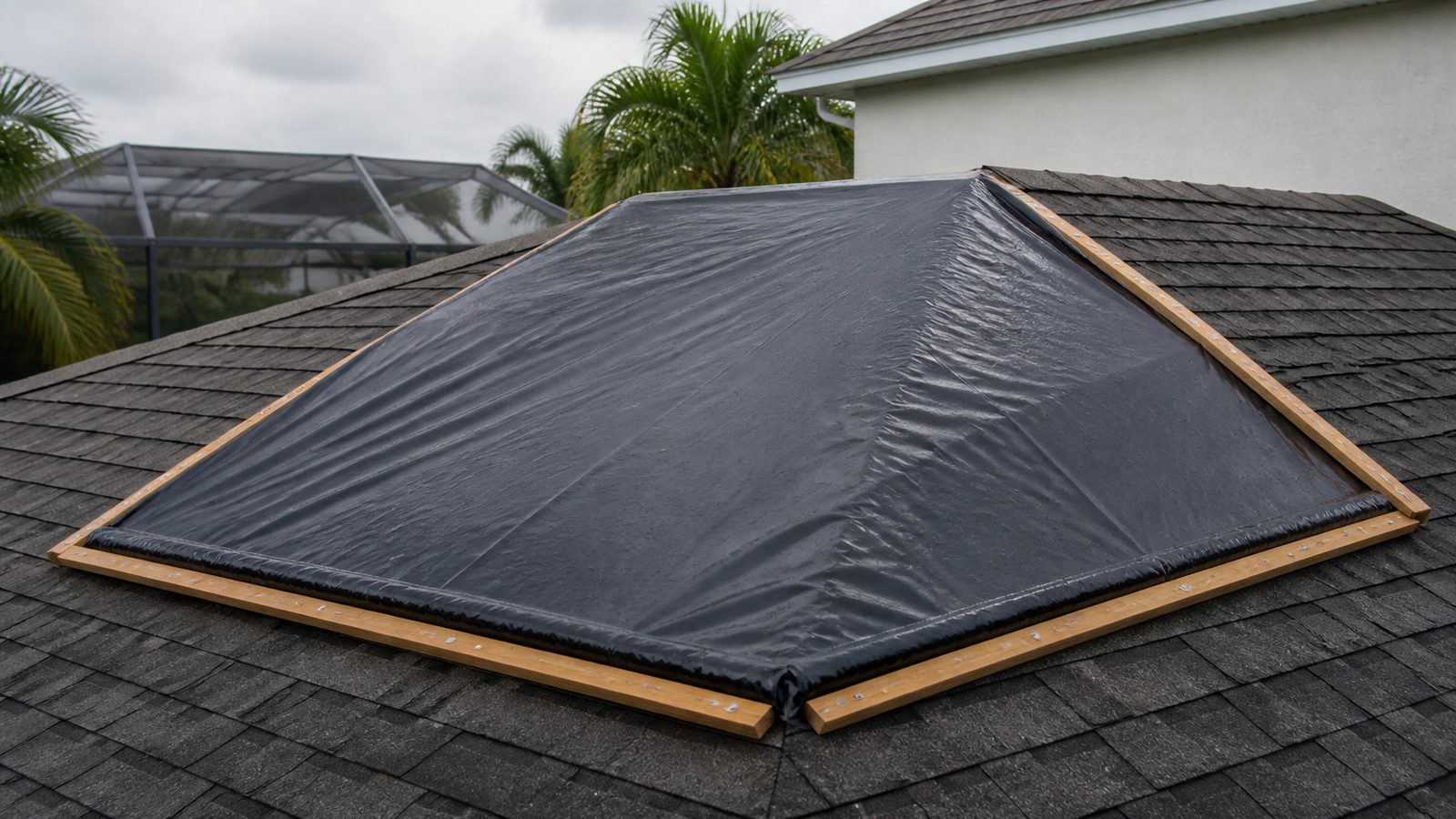
- Get emergency tarping done first — this can be done quickly and protects the interior while you wait for permanent repair scheduling
- Book with a licensed contractor as early as possible — the backlog grows, not shrinks, in the weeks after a storm
- Get your insurance claim filed and adjuster visit completed while you wait — this way, when your repair slot arrives, you have a settlement scope and can move directly to contract
The urgency to get a permanent repair done is real. But the urgency should drive you toward the licensed, verified contractor on a 6-week wait — not toward the unlicensed truck parked in front of your neighbor's house offering immediate installation.
Book your free 24-point roof inspection. contact the JK Prestige roofing team. Call (904) 944-0278. A principal answers.
No call center. No coordinator. A JK principal reviews every inquiry and replies with a real number, not a range, not a follow-up form.
Request Free Estimate →