The question owners most often ask when a GC mentions a pre-construction fee is: "Why am I paying you before you've done anything?"
The premise is wrong. Before a crew mobilizes on a construction project, significant GC work has already happened — site investigation, scope document development, BIM coordination, permit package assembly, long-lead material identification, and schedule baseline development. That work takes weeks and involves principal and staff time. It has real value. And it must be compensated.
This post explains what a pre-construction fee covers, why it protects the owner as much as the GC, and how JK Prestige's credit-at-signing structure works.
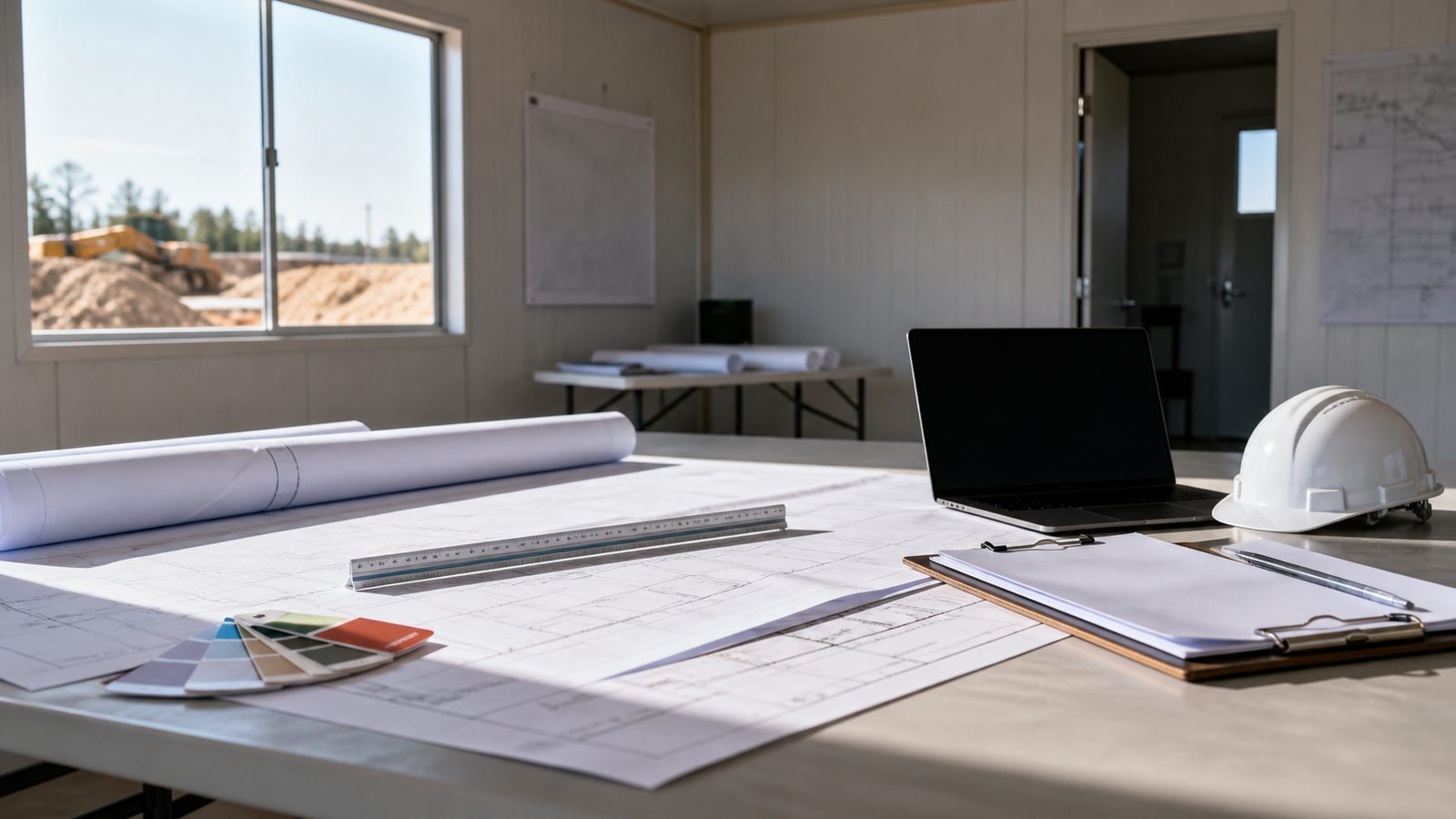
What the Pre-Construction Fee Covers
Pre-construction services are the activities a GC performs between the decision to engage them and the first day a crew shows up. These activities are substantive:
Site Walk and Existing Conditions Survey
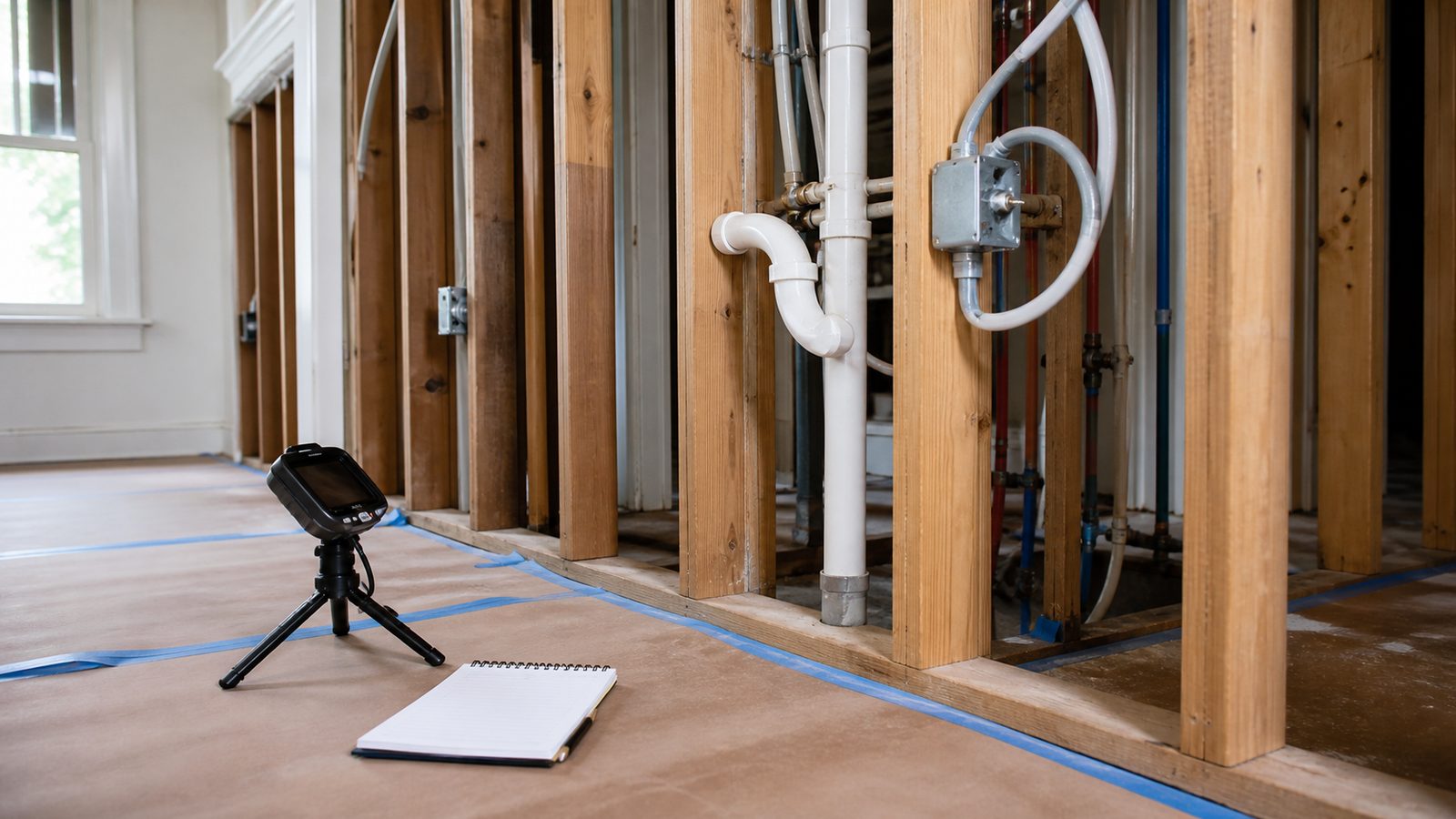
The principal walks the site — or the building in the case of a renovation — and documents existing conditions. For a renovation, this means structural observations, utility location, moisture mapping, asbestos survey coordination, and a detailed room-by-room condition assessment. For ground-up, it means site access, drainage, topographic survey review, and adjacent property conditions.
This is not a casual observation. It's a methodical documentation effort that informs every subsequent pricing and sequencing decision.
Subsurface Investigation
On ground-up projects, a geotechnical investigation is coordinated: soil borings, lab analysis, geotechnical report, and review by the GC to understand the foundation design implications. On renovations, it may include in-wall probing, structural integrity assessment of existing conditions, and plumbing and electrical system inspection before the walls are opened.
Finding a soil problem in preconstruction changes the design. Finding it on day 15 of construction changes the budget — in the owner's direction.
Scope Document Development
The scope document is the written definition of every element of the project. Developing a complete scope document requires the principal's time and knowledge: understanding what systems are appropriate for the building type, what finish levels the owner intends, what code requirements apply, and how each trade's work integrates with the others.
A complete scope document for a 4,000-square-foot custom home renovation can run 20 to 40 pages. For a ground-up commercial building, it's longer. Writing that document from scratch, accurately, takes days of work.
BIM Model Build and MEP Coordination
On projects over $2 million, JK Prestige builds a BIM (Building Information Modeling) model during preconstruction. MEP (Mechanical, Electrical, and Plumbing) clash detection — identifying conflicts between structural elements and MEP systems before construction — runs during this phase.
The BIM model and the clash detection report are deliverables with real value. They identify problems that would otherwise cost money and schedule to resolve in the field.
Long-Lead Material Identification and Procurement Initiation
Long-lead items — structural steel, custom windows, elevator equipment, electrical switchgear, specialized MEP equipment — have lead times that can exceed the construction phase for which they're needed. The GC must identify them during preconstruction and initiate procurement immediately. On a hospital project, medical gas equipment and vacuum systems may have 24-week lead times that must be ordered during preconstruction to land on time.
Initiating procurement requires issuing purchase orders, which requires the GC to be financially engaged — which the pre-construction fee enables.
Permit Package Assembly and Submittal
Assembling a complete permit package requires the GC to coordinate architectural drawings, structural calculations, MEP drawings, geotechnical reports, energy compliance calculations, and any special inspection agreements — all in the format required by the specific jurisdiction. An incomplete package wastes the plan reviewer's time and yours, because it comes back with a list of missing items that extends the review timeline.
Getting the package right requires GC knowledge of what each jurisdiction requires and what reviewers typically flag. That knowledge is not free.
Schedule Baseline Development
The schedule baseline — the locked master schedule against which all construction progress is measured — is developed during preconstruction. Activity identification, duration assignment, dependency sequencing, critical path analysis, and milestone definition take time and expertise.
Why It Protects the Owner
The owner's protection from the pre-construction fee is the deliverable: a real scope document, a real price, and a real schedule before committing to construction.
Without a pre-construction phase, the owner gets one of two things: a vague scope with a price that will change, or a scope defined in such broad strokes that the GC has maximum flexibility to interpret it to their advantage.
With a pre-construction phase, the owner gets:
- A complete scope document that eliminates ambiguity
- A price based on that defined scope — not on a general description
- A schedule baseline that can be held to from day one
- A subsurface investigation that removes the most common "unforeseen conditions" claim
- Long-lead items already in procurement so the schedule isn't held up at month four
Projects with complete pre-construction phases have materially fewer cost overruns and schedule disputes than projects that skip the phase. The pre-construction fee is the owner paying for certainty — not for the GC's time.
Why It Protects the GC
A GC who gives away pre-construction services for free takes a financial risk: they invest weeks of principal and staff time in scope development and permit coordination for a project that may not proceed, or that may be awarded to a lower bidder once the scope is defined using the original GC's work.
The pre-construction fee compensates the GC for that investment and creates a mutual commitment. The owner who has paid a pre-construction fee is a committed buyer. The GC who has been paid for pre-construction services has a formal, documented engagement — not a handshake expectation.
The fee also funds the actual direct costs of the pre-construction work: geotechnical investigation, BIM modeling software and services, permit submittal fees, and survey costs.

How JK Prestige Structures the Pre-Construction Fee
At JK Prestige Constructor, the pre-construction fee is credited in full against the construction contract at signing. It is not an additional cost layered on top of the construction price. It is an advance on the construction fee.
Here's how it works:
- Owner engages JK for pre-construction services. A pre-construction agreement is signed. The fee is paid.
- JK delivers: existing conditions survey, scope document, subsurface investigation results, BIM model and clash detection report (on applicable projects), long-lead procurement initiation, permit package submission, and schedule baseline.
- Owner reviews the scope document, confirms it matches their expectations, and approves the fixed-price construction contract.
- The pre-construction fee is credited against the first payment application of the construction contract. The net cost to the owner is zero additional — the fee was an advance.
If the owner decides not to proceed to construction after pre-construction is complete, the fee is not refunded — it compensated real work that was delivered. But if the project proceeds (which it does in the overwhelming majority of cases, because the pre-construction process produces confidence, not doubt), the owner has paid nothing extra.
This structure — pre-construction credited at signing — is documented in The JK Way. See how we apply it on renovation projects and custom home builds.
If you're starting a project in Jacksonville or anywhere in Florida and want to understand what a complete pre-construction process looks like for your specific scope, contact JK Prestige Constructor for an initial consultation. Call (904) 944-0278. A principal answers.
No call center. No coordinator. A JK principal reviews every inquiry and replies with a real number, not a range, not a follow-up form.
Request Free Estimate →