A pre-construction fee confuses homeowners the first time they hear about it. You're asking me to pay before the work starts? That's the first reaction. The second reaction, after a principal explains what it covers and what it produces, is usually: why doesn't every contractor do this?
The short answer: because it takes real work, and most GCs (general contractors) would rather skip to the contract and issue change orders later. JK Prestige charges a pre-construction fee because building a fixed-price renovation contract that actually holds requires doing the work upfront. And because that fee is credited in full against the construction contract at signing, it is never an extra cost for homeowners who proceed.
What Pre-Construction Covers
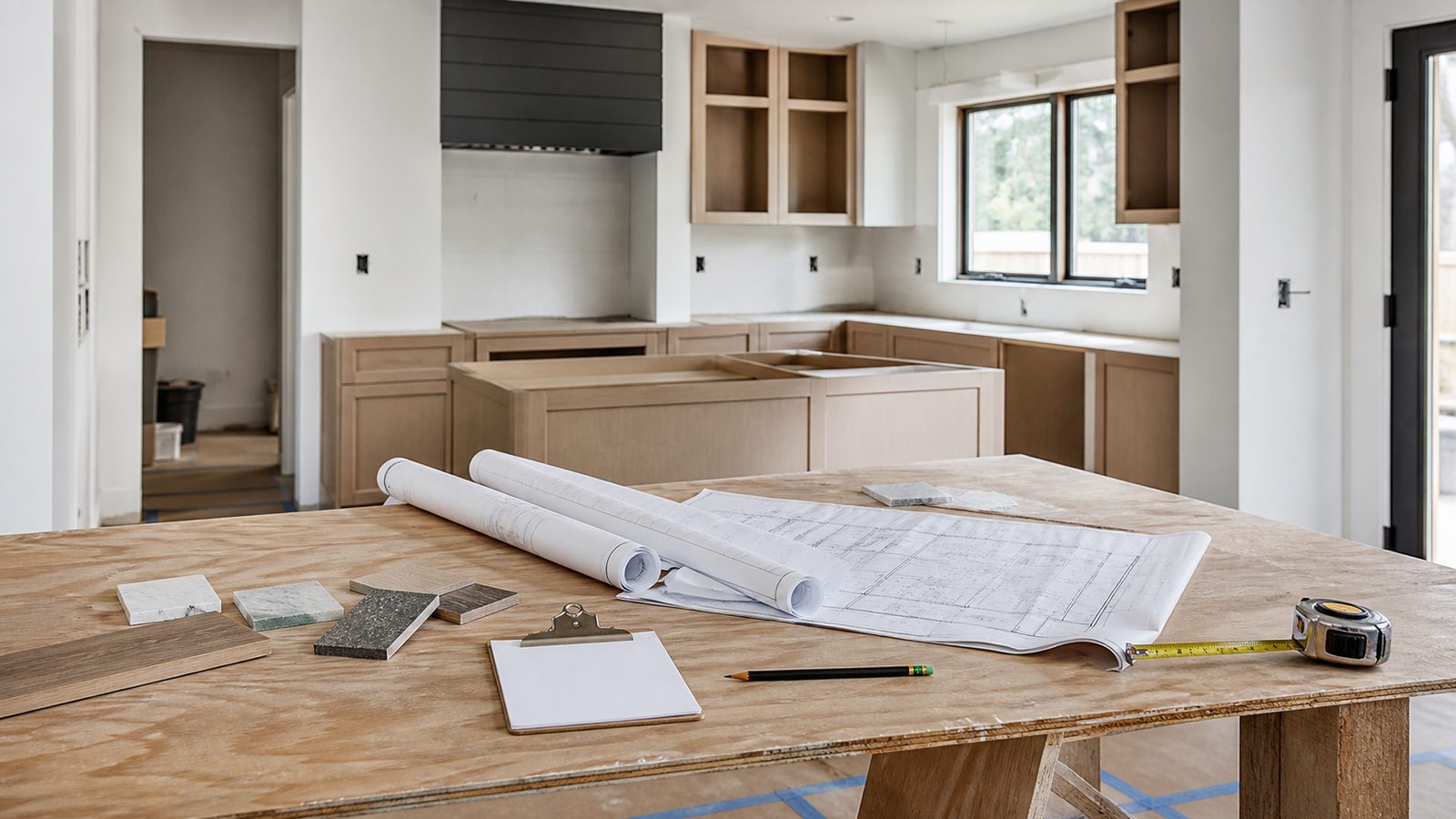
The pre-construction phase for a gut renovation in Jacksonville typically runs 2 to 4 weeks and produces five deliverables.
1. Site Walk and Subsurface Validation
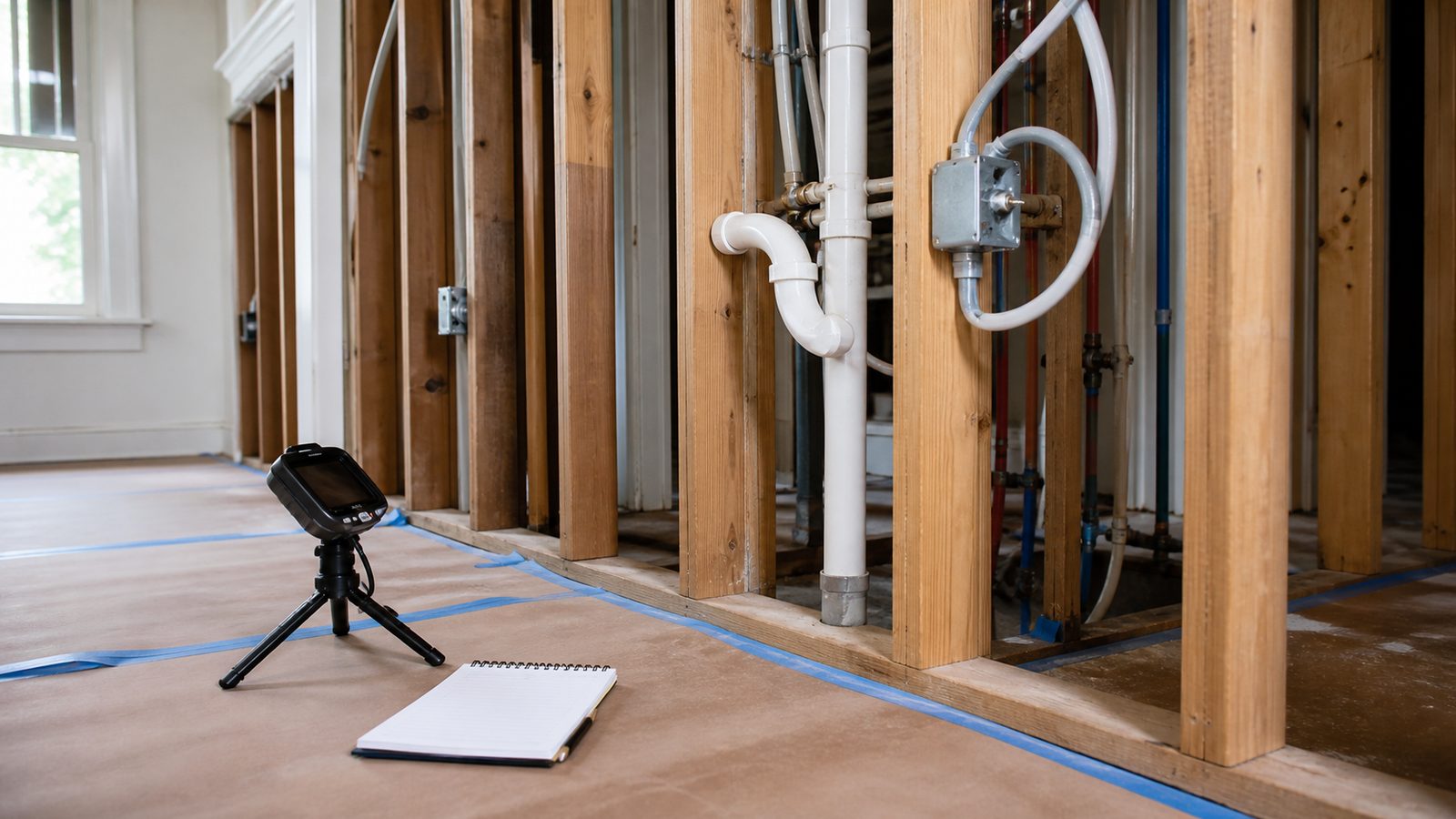
The first thing JK's principal does is walk the property with the homeowner and walk it again alone — looking at what exists, not what the homeowner describes. This includes thermal imaging, moisture mapping, selective wall cavity openings, crawl space or attic inspection, and camera scope of main drain lines where relevant.
In older Jacksonville neighborhoods — Riverside, Avondale, Springfield, San Marco, Murray Hill — subsurface conditions routinely differ from what the home looks like from the outside. Knob-and-tube wiring, mold behind tile, cast-iron drains that are 60 years past their service life: these are normal findings in homes built before 1960. None of them should be change orders. All of them should be in the scope document before the price is set.
2. Full Scope Document
The scope document is the deliverable that makes a fixed-price contract possible. It's not a summary or a general description. It's a line-itemized trade-by-trade breakdown of exactly what will be built, what materials will be used, and what the assumptions are.
Every trade is listed: demolition, concrete, framing, rough electrical, rough plumbing, MEP (Mechanical, Electrical, and Plumbing), drywall, insulation, tile, finish carpentry, painting, fixture installation, cabinetry, appliance installation. Every selection that affects cost is identified. Every assumption is stated explicitly so that both parties understand what "included" means.
This document is what you sign. It's not supporting material — it's the contract exhibit that defines the scope. If it's not in the document, it's not in the price.
3. Selections Made Before Pricing
JK requires selections to be finalized or range-priced before the construction price is set. Flooring product and grade, tile size and material, cabinet line, fixture specifications, appliance models — all of it is identified during pre-construction.
This eliminates the allowance problem. When a contractor sets a flooring allowance at $3 per square foot and you choose $8 tile, the $5 delta is a change order. JK prices against real products you've actually selected — or against a defined price tier you've confirmed represents your intent. The allowance gap doesn't exist because the allowance is replaced with an actual number.
4. Permit Submittal Package
For renovations that require permits — structural work, electrical upgrades, plumbing reroutes, additions — JK prepares the permit submittal package during pre-construction. This includes architectural drawings where required, scope descriptions for the building department, and MEP documentation.
Getting the permit package ready before construction starts means the permit is either in hand or in review when ground breaks. Projects that treat permitting as an afterthought often sit idle for weeks waiting for approvals while the homeowner pays holding costs.
5. Long-Lead Material Identification
Some materials take 6 to 14 weeks to arrive after ordering: custom cabinetry, specialty tile, imported stone, specific appliance models, custom millwork. Pre-construction is when these items are identified and ordered. For a renovation with a hard end date — a homeowner moving out of temporary housing by a specific month — failing to order long-lead items during pre-construction is a schedule guarantee failure, not bad luck.
JK's renovation process locks the schedule baseline before ground breaks. Long-lead material lead times are on that schedule from day one.
Why It Costs Money
Pre-construction work is skilled professional work that takes real time. A full scope document for a $300,000 renovation requires 15 to 25 hours of a principal's time: walking the property, conducting validation, researching local conditions, producing the scope document, coordinating selections, preparing permit submittals, and building the schedule.
That work has cost. JK doesn't absorb it in the hope that the homeowner signs the contract. The pre-construction fee covers the deliverables produced. If the homeowner decides not to proceed — for any reason — they keep the scope document, the findings, and the permit package. Those are valuable. They accurately describe the project, and any other contractor they engage will benefit from the work JK already did.
Why It's Credited Back at Signing
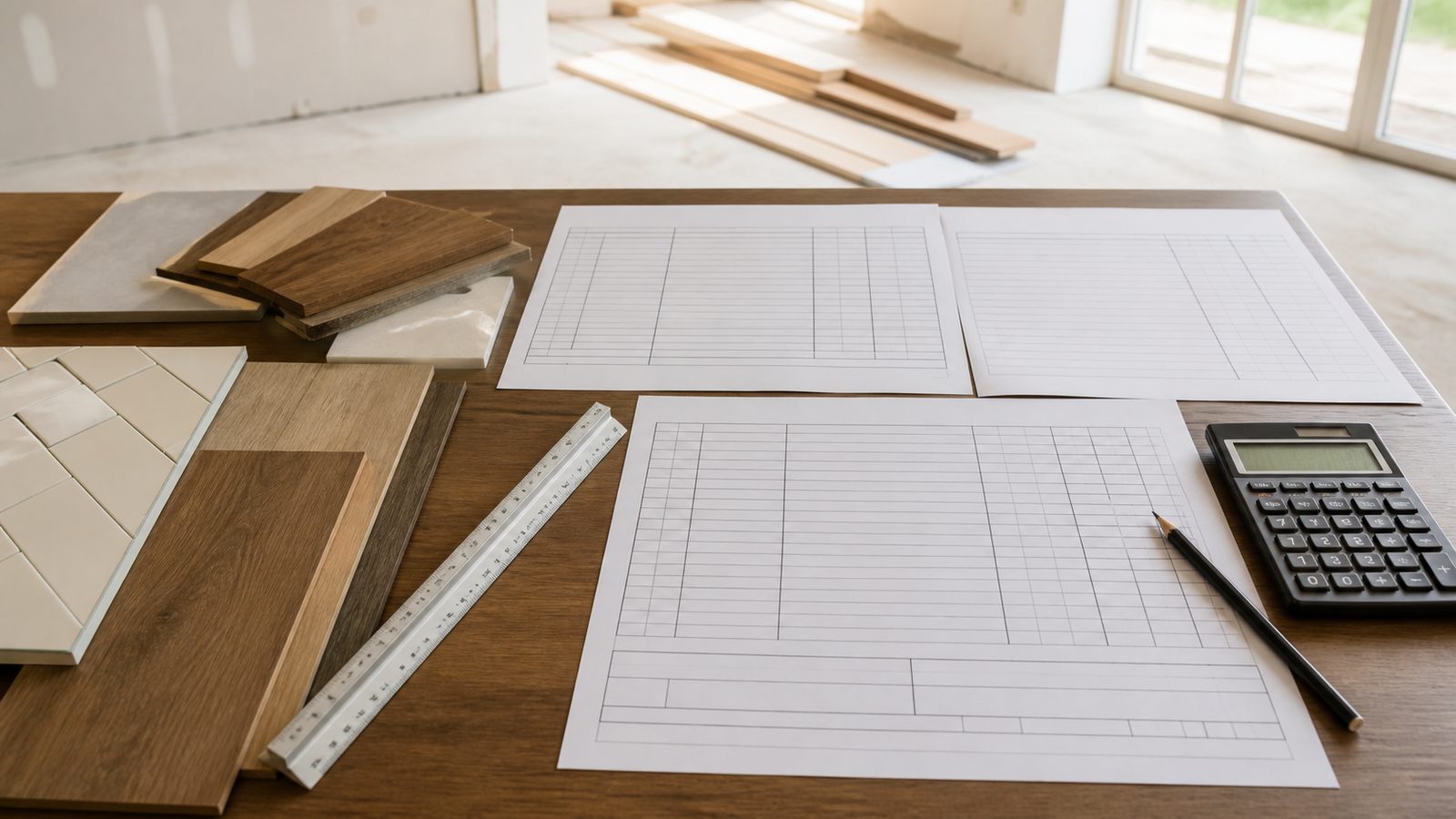
When a homeowner signs the JK construction contract, the pre-construction fee is credited in full against the construction contract price. The fee is not an additional cost — it's an advance on the project fee that gets applied when construction proceeds.
The reason for structuring it this way is straightforward: JK's goal is a fixed-price contract that holds. The pre-construction phase is the mechanism that makes that possible. Separating it into its own fee — and then crediting it at signing — makes the value of that phase clear. You're not paying extra for pre-construction. You're paying for the work that produces the price, and that payment applies to the project.
This is the JK Way: price lock comes after scope definition. Scope definition comes after subsurface validation. Subsurface validation requires physical access and professional time. The pre-construction fee is what makes that sequence viable for both parties.
What It Signals When a GC Doesn't Offer Pre-Construction
A GC who provides a fixed-price renovation contract without a pre-construction phase hasn't done the work to support that price. They've made assumptions — about what's in the walls, about your material selections, about existing conditions — and they've priced against those assumptions.
When demo reveals the assumptions were wrong, those differences become change orders. The price in the contract wasn't fixed; it was the minimum. The contract language that seemed airtight had enough vague terms — "allowances," "as-needed," "per standard practice" — to absorb cost increases later.
A pre-construction fee, credited at signing, is the signal that the GC has done the work to support the price they're quoting. No pre-construction means no subsurface validation. No subsurface validation means the price isn't built on what's actually there.
Get a free written estimate in 48 hours. contact JK Prestige Constructor or call (904) 944-0278. A principal answers, walks the site, and produces a scope document before a price is quoted.
No call center. No coordinator. A JK principal reviews every inquiry and replies with a real number, not a range, not a follow-up form.
Request Free Estimate →