Most construction problems that surface during a build were created before the build started. The schedule slips because long-lead materials were ordered late. The budget blows because soil conditions were assumed, not tested. The GMP changes because the scope was never fully documented before signing. Every one of those problems is preventable — and the mechanism that prevents them is a disciplined pre-construction process.
At JK Prestige, pre-construction is not a courtesy phase. It is where the project is actually built on paper before a single crew mobilizes. For commercial clients — developers, building owners, institutional operators — this means your Guaranteed Maximum Price (GMP) or fixed-price contract is locked against a fully validated scope before ground breaks. Here is exactly how that process works, step by step.
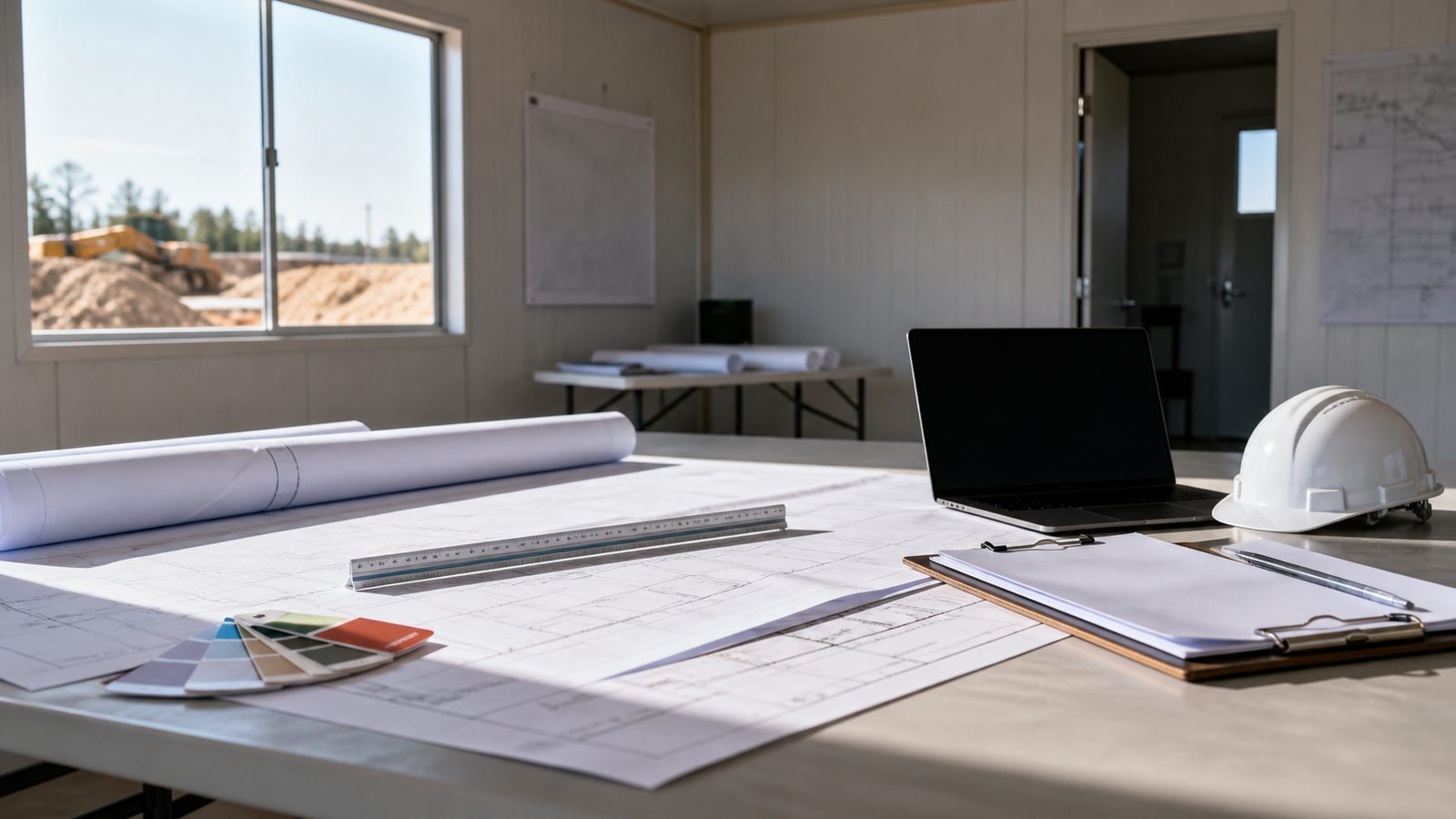
Why Pre-Construction Determines Project Outcome
A project with a rushed pre-construction phase does not become a problem on the day something goes wrong. It becomes a problem the day the contract is signed with assumptions baked in rather than conditions verified. By the time the field discovers the gap, you are already in a change-order conversation instead of a scope-confirmation conversation.
The distinction matters financially. A change order during active construction is disruptive: it affects active crews, running subcontract schedules, and a critical path that is already in motion. A scope clarification during pre-construction — before mobilization, before crews are scheduled, before materials are ordered — costs a fraction of that disruption and produces a cleaner contract.
JK Prestige's pre-construction fee is credited back against the construction contract at signing. If you proceed, the phase costs you nothing additional. If you do not proceed, you have a fully validated scope, a tested site, and a schedule baseline you can take to any other GC.
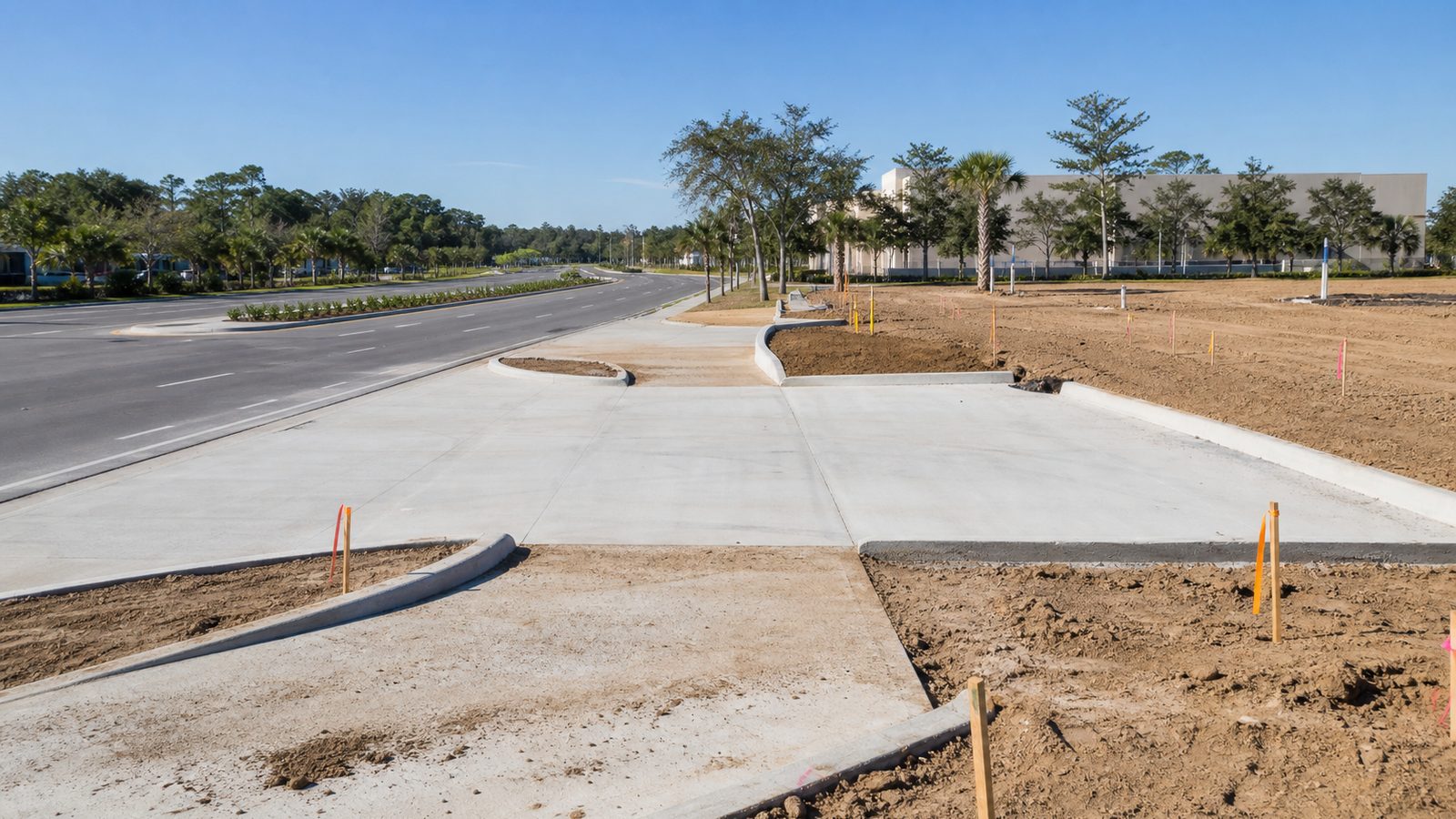
Step 1: Site Walk With the Principal
Pre-construction begins with a site walk conducted by a JK Prestige principal — not a sales representative, not a project coordinator. The principal who will sign the contract walks the site personally and documents what they see.
This walkthrough covers:
- Existing conditions: What is on site, what is below grade (visually), what adjacent structures or operations affect the project
- Access and logistics: Where materials stage, where crews mobilize, how deliveries route
- Phasing considerations: If the facility is occupied or partially operational, how active areas are protected
- Immediate risk identification: Anything visible that could affect schedule, cost, or design — noted before pricing begins
The site walk is the baseline for everything that follows. Principals at JK Prestige have walked everything from 320,000-square-foot hospital towers to warehouse shells and gut-reno commercial interiors. The site walk is not a formality — it is where the real project scope starts taking shape.
Step 2: Subsurface Validation
What is visible on the surface does not tell you what is below it. For commercial projects, subsurface conditions — soil bearing capacity, existing utility routing, buried structures, contamination — are among the most common sources of mid-project surprises that force contract amendments.
JK Prestige conducts subsurface validation before the GMP or fixed-price is set. Depending on site type and available information, this may include:
- Soil borings to confirm bearing capacity at foundation depth
- Utility locate (811 and private locating services) to map underground utility routing
- Phase I or Phase II environmental review where site history suggests contamination risk
- Slab probing on renovation projects where existing foundation conditions are unknown
If subsurface conditions differ materially from assumptions, the scope and price are adjusted before the contract is signed — not after. This is the only fair way to write a fixed-price or GMP contract for a commercial project.
Step 3: Long-Lead Material Identification
Long-lead materials are items with procurement timelines of 16 weeks or more. On commercial projects, these typically include:
- Structural steel and custom fabricated components
- Electrical switchgear and transformers
- Mechanical equipment: chillers, air handling units, boilers
- Elevators and specialty vertical transport
- Curtain wall and exterior glazing systems
- Generator and emergency power equipment
Identifying these items at the start of pre-construction — not at the start of construction — gives the project two paths: early procurement under the pre-construction budget, or schedule adjustments to account for delivery timelines. Missing this step is how projects that look on schedule in month two suddenly have a 14-week gap in month four waiting for steel that was ordered late.
JK Prestige's pre-construction team produces a long-lead log that identifies each item, its lead time, the procurement decision date, and the impact on the schedule critical path if that date is missed.
Step 4: Full Scope Document Drafted
Once site conditions are validated and long-lead items are catalogued, the scope document is drafted. For a commercial project, this is a formal, comprehensive document — not a proposal summary. It includes:
- Division-by-division breakdown (Uniformat or MasterFormat, depending on project type): sitework, concrete, masonry, structural steel, framing, drywall, MEP (Mechanical, Electrical, and Plumbing), finishes, specialties
- Specifications for each trade: materials, products, installation methods, and quality standards
- Drawings and exhibit references: every scope item tied to a drawing sheet and detail number
- Exclusions list: what is explicitly not in the GC's scope
- Clarifications log: every ambiguous specification resolved in writing before signing
- Owner-furnished items: what the owner is supplying directly and when it must be on site
This document is attached as an exhibit to the GMP or fixed-price contract. Every change order issued during construction is measured against this document. If it is in the scope, the GC delivers it. If it is not, a written change order is issued before any work begins.
Step 5: GMP or Fixed-Price Locked
With subsurface conditions validated, long-lead items identified, and the scope document complete, JK Prestige locks the contract price.
For most commercial projects, this is a Guaranteed Maximum Price (GMP) contract with an open-book cost ledger. The GMP establishes a price ceiling — costs cannot exceed it without an owner-approved change order. If actual costs come in below the GMP, the savings are shared between the owner and JK Prestige per the contract terms. The open-book cost ledger gives the owner visibility into how the GMP is allocated, trade by trade, in real time.
For smaller commercial projects and tenant fit-outs, a fixed-price contract is often more appropriate: one number, full scope, no GMP mechanics needed.
Both structures are built on the same foundation: a validated site, a documented scope, and a price that reflects actual conditions rather than best-case assumptions.
Step 6: Schedule Baseline With Critical Path Marked
Before mobilization, JK Prestige establishes a schedule baseline — a full project schedule from groundbreaking through certificate of occupancy (CO), with the critical path explicitly identified.
The critical path marks every sequence of activities where a delay directly delays project completion. On a commercial project, the critical path typically runs through:
- Foundation and structural steel (waiting on soil and fabrication)
- MEP rough-in (dependent on structural completion)
- Enclosure (roofing and exterior wall, dependent on structure)
- Mechanical equipment installation (tied to equipment delivery lead time)
- Interior finishes and specialty items
- Testing, commissioning, and inspections
On projects over $2 million, JK Prestige uses the Last Planner System (LPS) to manage the schedule through construction: pull planning sessions with trade leads, weekly look-ahead schedules, and Percent Plan Complete (PPC) tracking to identify and resolve schedule variance before it compounds.
The schedule baseline is locked before ground breaks and is the reference document for all progress reporting through the project.
Step 7: Permit Submittal Package Assembled
Construction cannot begin without permits. On commercial projects, permit submittal — and the review timeline that follows — is frequently underestimated. The Jacksonville Building Inspection Division and Florida Building Code review cycles can run four to 12 weeks depending on project complexity, completeness of the submittal package, and the current volume of commercial reviews in the queue.
JK Prestige assembles the permit submittal package during pre-construction, in parallel with the scope and schedule work — not as an afterthought after contract signing. The package includes:
- Architectural and engineering drawings, signed and sealed
- MEP design-build drawings where applicable
- Energy compliance documentation (Florida Building Code Chapter 13)
- Site plan with survey and drainage documentation
- Special inspection program (where required by structural engineer)
- Contractor license and insurance documentation
Submitting a complete, coordinated package in the first round eliminates back-and-forth with the plan reviewer and accelerates the start of construction by weeks.
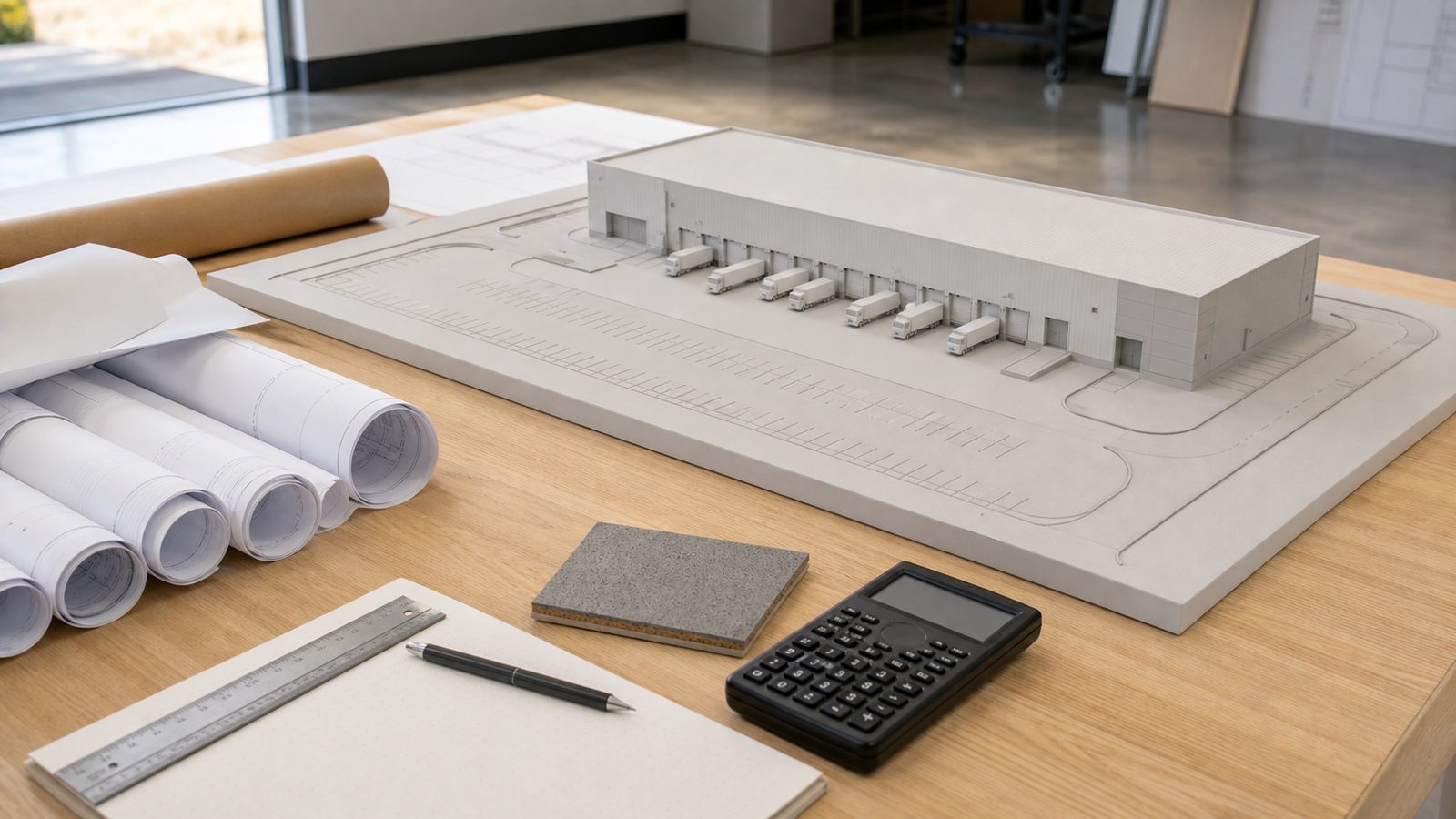
What the Owner Receives at Pre-Construction Completion
When JK Prestige's pre-construction phase is complete, the owner has in hand:
- Validated site conditions (subsurface, utilities, existing conditions documented)
- A complete scope document with trade-by-trade breakdown
- A signed GMP or fixed-price contract
- A schedule baseline with critical path and long-lead delivery dates
- A permit submittal package in process
- A principal's direct contact for every question through construction
If you want to review how this process applies to specific project types — hospital construction, warehouse and industrial builds, or commercial renovation — those are detailed at JK Prestige's expertise pages.
For warehouse and industrial projects, the pre-construction process also covers tilt-up design coordination, clear-span structural analysis, and loading dock logistics. Details at warehouse expertise.
To discuss pre-construction services for your Jacksonville or Northeast Florida commercial project, call (904) 944-0278 or contact a JK principal directly. The pre-construction fee is credited back against the construction contract at signing. A principal answers.
No call center. No coordinator. A JK principal reviews every inquiry and replies with a real number, not a range, not a follow-up form.
Request Free Estimate →