When the National Hurricane Center places northeast Florida in a named storm's cone within 72 hours, responsible general contractors (GCs) do not wait for the last possible moment. They execute a documented site shutdown protocol while there is still time to do it properly — before the subcontractors clear out and the chaos begins.
At JK Prestige, this is not improvised. It's a written protocol that every superintendent executes in the same order, on the same timeline, documented on the same checklist. Here's what that protocol includes, what it protects against, and what it does not cover.
Why the 72-Hour Window Matters
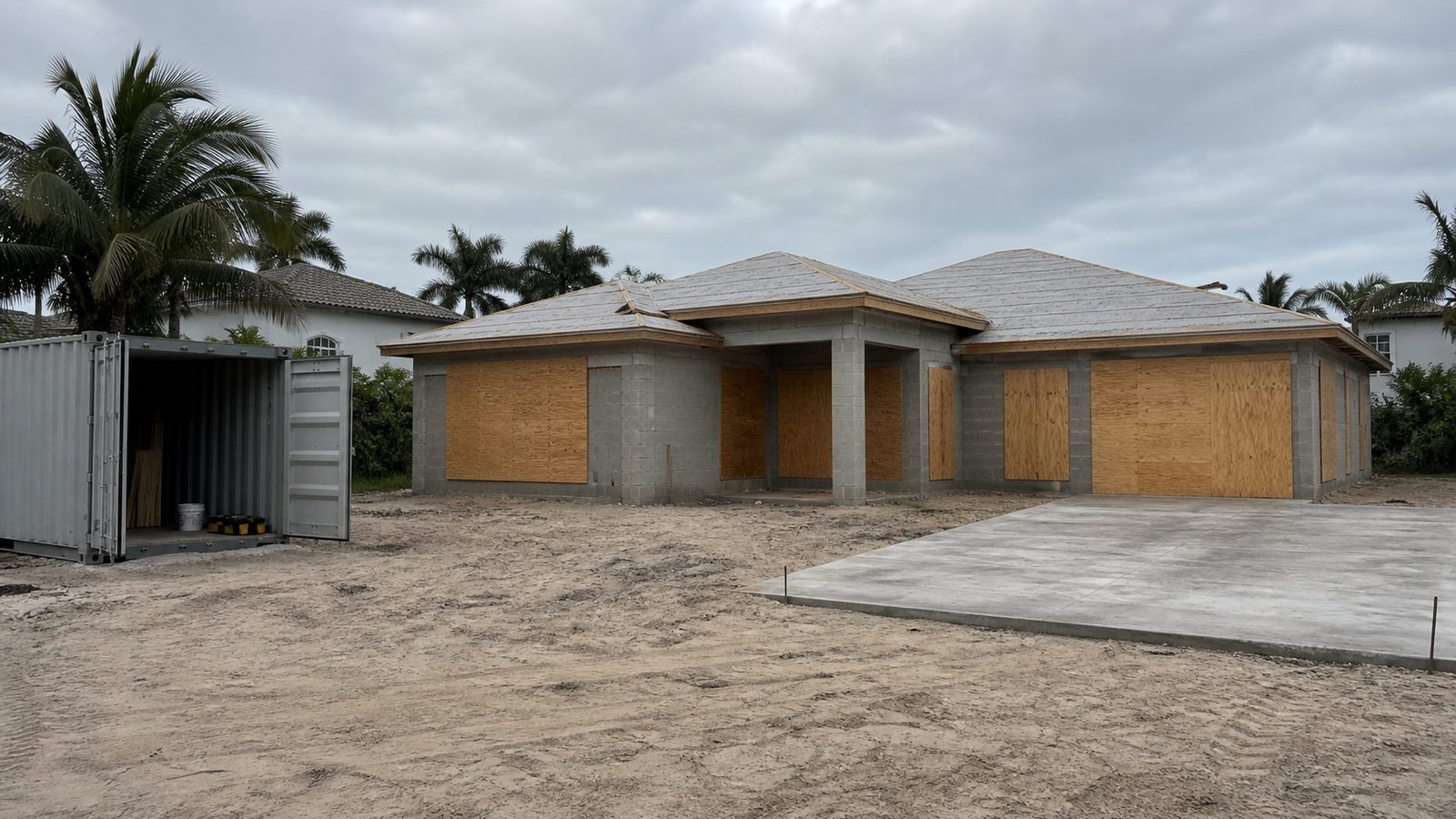
72 hours before projected landfall or severe impact: This is when the National Hurricane Center's track is reliable enough to make final go/no-go decisions on site shutdown, but early enough to execute the protocol without rushing. Waiting for 48 hours means material handling is compressed into a window when trades are also demobilizing and wind gusts are already beginning in outer bands.
48 hours before: All site work should be suspended. The site shutdown checklist should be complete. Any remaining securing work (additional tie-downs, final water extraction) should be finished before conditions make site access unsafe.
The economic pressure to keep working as long as possible is real. Owners and GCs both feel it — lost production days have direct cost. But the risk calculus flips completely when a construction site becomes a source of projectiles. Unsecured material on a construction site in a Category 1 or stronger hurricane is not a construction problem — it's a community safety problem.
Step 1: Remove All Unsecured Material
The first priority is eliminating projectile risk. A construction site has an extraordinary density of lightweight, high-aerodynamic material — items that at 80 mph sustained wind become missiles.
What must be removed or secured:
- Loose lumber: any framing lumber not already nailed into structure, trim pieces, furring strips, and blocking
- Insulation: batt insulation is caught by wind at 30 mph; rigid foam board at even lower speeds
- Roofing material: shingles, underlayment rolls, tar paper — any roofing material not installed
- Drywall sheets: unsecured full sheets of 4x8 drywall at 80 mph are lethal
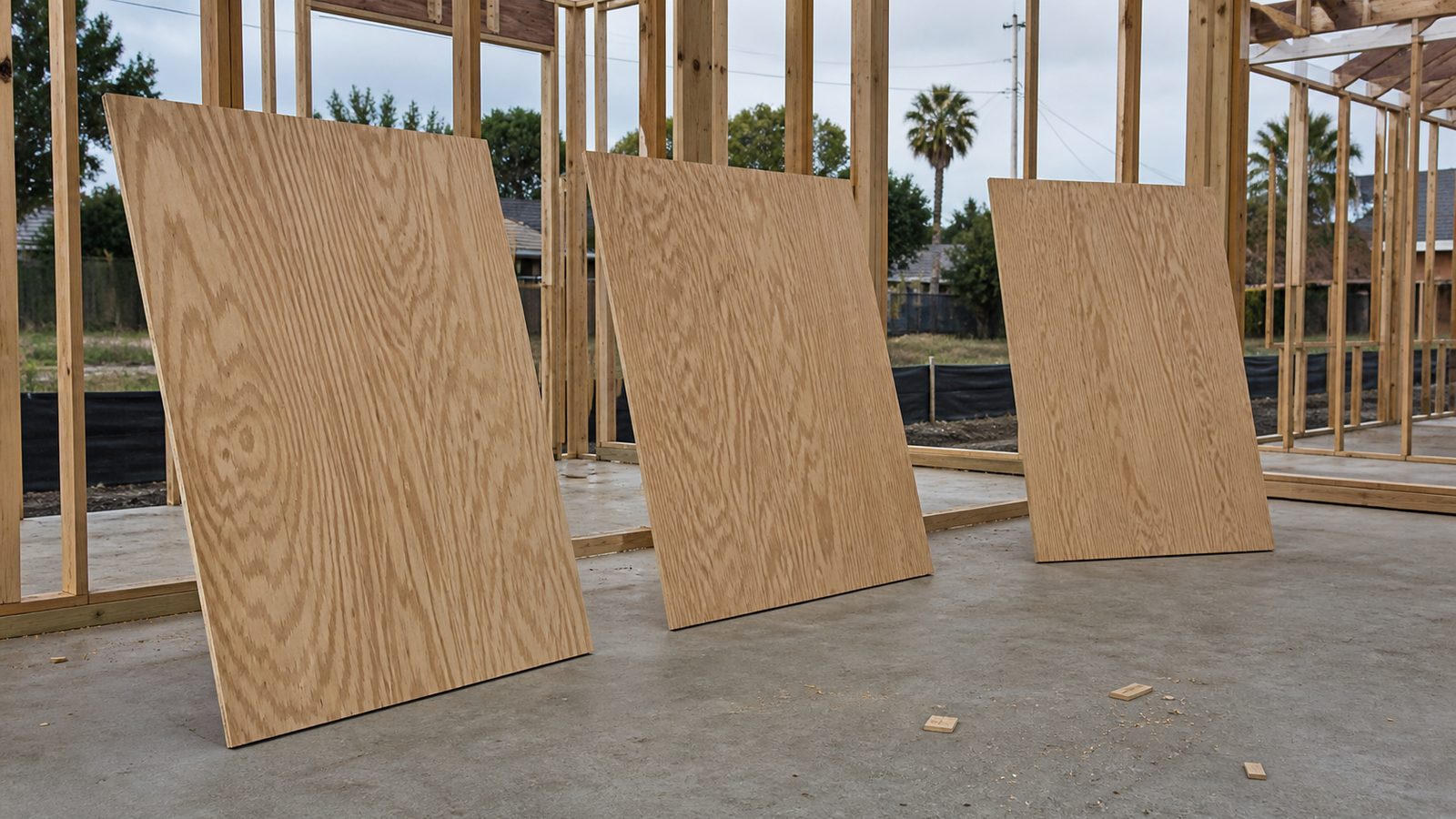
- Plywood and OSB panels: same risk as drywall at lower wind thresholds
- Conduit, pipe, and duct sections: these fly end-first in high wind and penetrate walls
- Buckets, cans, and small containers: paint cans, five-gallon buckets — empty them or lock them in the site trailer
Where it goes: Secured materials go into locked enclosed containers (dumpsters with lids, site trailers), into garages or enclosed structures if available on-site, or off-site entirely if the site has no enclosed storage. "On the ground with boards on top" is not sufficient in a hurricane wind event.
Step 2: Secure or Remove Scaffolding
Scaffolding is the highest-risk item on any construction site in a storm. An unsecured scaffold frame caught in 100 mph wind is a falling hazard and a projectile hazard simultaneously.
The options:
- Remove the scaffolding entirely. The safest option if there is time and equipment to disassemble before the storm.
- Dismantle to the lowest level possible and brace the remaining base section to the structure.
- Brace remaining scaffolding with diagonal knee braces and additional ties to the building structure at minimum 4-foot vertical intervals. OSHA and SSFI (Scaffold & Access Industry Association) provide guidance on scaffold wind bracing requirements.
There is no universally safe way to leave multi-story scaffolding standing through a hurricane. If the storm intensity is projected at Category 2 or greater, full removal is the only defensible approach.
Step 3: Pump Standing Water from Excavations
Any open excavation — foundation trenches, footings, utility trenches — will flood in a storm. A flooded excavation is not just a schedule problem; it's a structural problem.
What standing water in an excavation does:
- Saturates the bearing soil, reducing capacity below design assumptions
- Can undermine partially placed footings through hydrostatic pressure
- Collapses unsupported trench walls if the water load overcomes the soil's passive resistance
- Contaminates freshly placed concrete that has not achieved design strength
Before the storm: pump all excavations to dry. Install sumps if pumping will take more than a few hours. Cover open excavations with plywood weighted down with sandbags or framing lumber to reduce the volume of water entering during the storm.
Step 4: Board Open Window and Door Rough Openings
A structure under construction with open rough openings is not a shelter — it's a wind tunnel. Open window and door openings create through-flow conditions that apply massive positive and negative pressure loads on partially framed walls. Framing that would survive a storm as part of a complete envelope may fail when wind flows through an unenclosed structure.
What to cover: All window rough openings, all door rough openings, and any other wall penetrations that have not yet received windows, doors, or permanent closure.
How to cover them: Plywood panels cut to fit the rough opening, secured with structural screws into the rough framing (not just staples). For openings in exterior sheathing, the plywood should overlap the sheathing on all sides to prevent wind infiltration at the edges.
Step 5: Secure Any Partially Installed Roofing
A partially installed roof is the highest structural vulnerability on a construction site. A roof with 40% of its shingles installed and 60% of its deck exposed will lose the installed shingles first — then the deck, and then the top plate.
What to do with a partially installed roof:
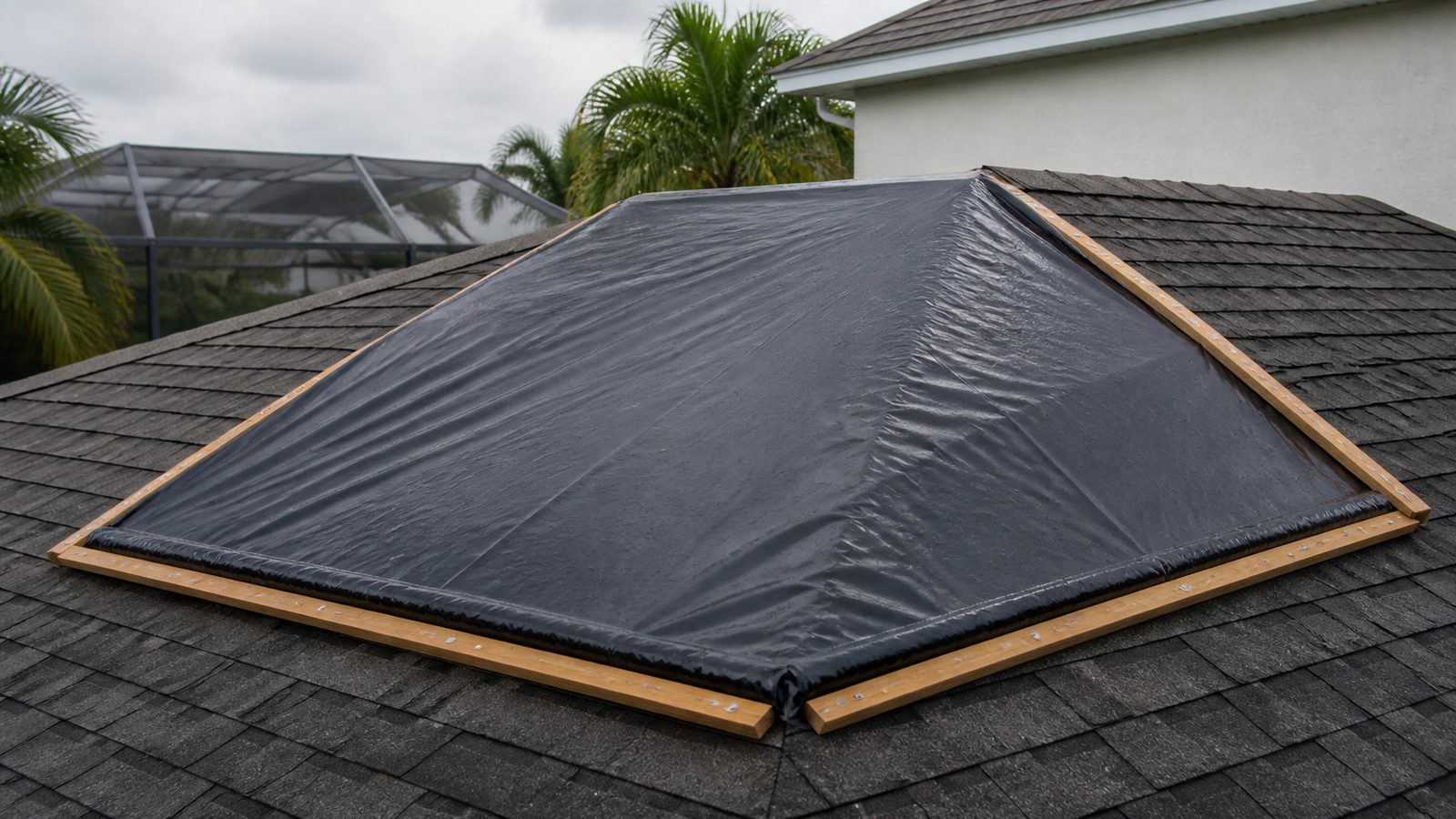
- If shingles are partially installed: ballast the installed sections (additional fastening if time permits) and cover unsheathed or un-shingled sections with temporary modified bitumen or heavy poly tarp secured into the deck.
- If roof deck (sheathing) is installed but not shingled: temporary ice and water shield applied to the entire exposed deck surface and nailed at edges provides significant protection. This is more effective than a loose tarp.
- If roof deck is not fully installed: this is the most exposed condition. Secure all remaining sheathing with screws into the roof framing and cover exposed areas with whatever is available.
Step 6: Lock Containers and Site Trailers
Site trailers are wind-resistant but not hurricane-proof. Satellite trailers (the standard 8x40 or 10x40 site office trailers) should be locked and, if on wheels, should have their jacks lowered and wheel chocks in place. They should not be relied upon to survive a direct Category 2+ strike.
Electronic equipment (computers, tablets, survey equipment), project documents, and permit sets should be removed from trailers or secured in waterproof containers before the storm.
All material containers (CONEX boxes, enclosed dumpsters) should be locked and their positions documented so they can be confirmed after the storm.
Step 7: Notify Owner and Insurance
The GC's obligation: Notify the owner of the site shutdown, the expected timing, and the measures taken to protect the site and structure. This notification should be in writing — email with delivery confirmation.
What this notification includes:
- The shutdown steps completed and the date/time of completion
- Any areas where full protection was not achievable (an honest assessment)
- The GC's timeline for returning to site after storm passage and all-clear
What this notification does not do: It does not activate the owner's insurance or absolve the GC of responsibility for any damage caused by the GC's own operations or negligence. If the GC leaves equipment unsecured that becomes a projectile and damages a neighboring structure, that is a liability matter for the GC's general liability policy.
Builder's risk insurance: The owner is responsible for maintaining a builder's risk policy on construction projects. Builder's risk covers storm damage to the structure and materials during construction. The GC's general liability policy does not cover storm damage to the structure — that is the owner's builder's risk coverage. Confirming that the owner has an active builder's risk policy before hurricane season is a due diligence item that JK Prestige addresses at contract signing.
See how JK Prestige handles project communication and owner reporting at The JK Way and our general contracting expertise in Jacksonville.
Get a free written estimate in 48 hours. contact the JK Prestige team. For active projects with storm questions, call (904) 944-0278. A principal answers.
No call center. No coordinator. A JK principal reviews every inquiry and replies with a real number, not a range, not a follow-up form.
Request Free Estimate →