If you have ever hired a contractor in Jacksonville and then watched them disappear, you already understand the problem this article is about. You signed with one person. You got another. The second person reports to a third. Nobody can give you a straight answer. When something goes wrong, you are three handoffs away from the person whose name is on the contract.
That pattern has a name: the coordinator model. It is how most general contractors (GCs) operate, and it is the single biggest source of frustration in residential and commercial construction. Understanding the difference between that model and a principal-led approach will help you hire the right GC before you sign — not after.

Why the Best General Contractor in Jacksonville FL Looks Nothing Like a Typical GC Firm
The coordinator model works like this. A salesperson or business development rep walks the site with you, builds rapport, and closes the contract. Once you sign, that person hands the project to a project manager you may have briefly met. The project manager coordinates with a superintendent on site. When you have a question or a concern, you call a coordinator — sometimes a scheduling specialist, sometimes an admin — who relays messages to the PM, who relays them to the field.
The business owner, the principal, the person whose license is on the wall? You will not hear from them again unless there is a lawsuit.
This is not a fringe scenario. It is the standard operating model at most mid-size and large GC firms. The salesperson who earned your trust has no authority over budget, schedule, or scope decisions. The PM managing your job is juggling six others. The coordinator handling your calls has no accountability for outcomes.
The result: slow answers, scope drift, and change-order surprises. Not because anyone is dishonest — but because accountability is distributed across a chain where nobody holds all the threads.
What Principal-Led Actually Means
Principal-led construction means the person with authority, liability, and decision-making power stays connected to your project from first site walk through final walkthrough.
At JK Prestige, the principal who signs your contract does the following, on every project:
- Conducts the initial site walk personally
- Signs the fixed-price contract and puts their direct phone number in it
- Reviews every weekly written report covering budget variance, schedule status, open requests for information (RFIs), and the look-ahead
- Walks the jobsite monthly — not delegated to a superintendent or coordinator
- Handles year-one warranty issues directly
That is not a premium add-on. That is the operating model, described in The JK Way and applied to every contract from a gut-reno to a ground-up build.
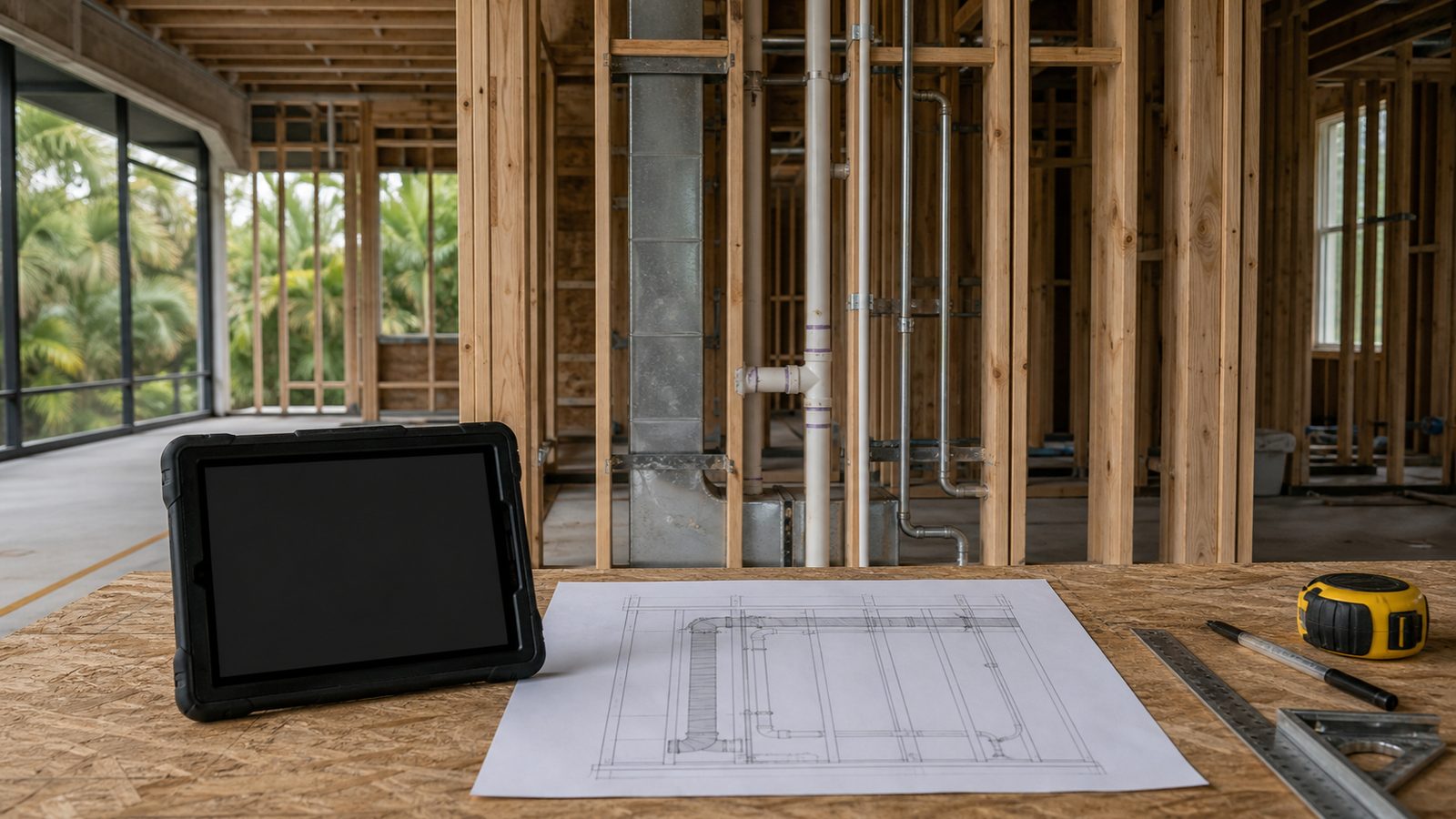
The Weekly Report: Where Accountability Shows Up in Writing
One of the clearest differences between a principal-led model and a coordinator model is what happens every week between site visits.
In a coordinator model, you get what the PM chooses to share — usually a brief status update or a call when there is a problem. You are reactive. You find out about schedule slippage when the schedule slips.
In a principal-led model, you receive a written weekly report that covers:
- Budget variance — where you stand against the fixed price, line by line
- Schedule status — what was completed this week against the baseline
- Open RFIs — outstanding questions to the architect or engineer, with aging
- Look-ahead — what is planned for the next two to three weeks
This report goes to the owner. A principal reviews it. If something is off, it gets flagged before it compounds. You are not managing a mystery — you are managing a documented project.
The Phone Number Test
Here is a practical test you can run before signing any construction contract in Jacksonville: ask for the direct cell number of the person who will sign the contract, and ask what their involvement looks like once construction starts.
If the answer is "you'll be working with our project manager," that is a coordinator model. The signer is a closer, not an owner of outcomes.
If the answer is "here is my direct number — I walk the site monthly, review every weekly report, and you can reach me when something matters," that is principal-led.
At JK Prestige, a principal's direct number goes into the contract document itself. Not in a footer. Not in a follow-up email. In the contract, next to the signature.
What This Model Means for Change Orders
The coordinator model creates a structural incentive for change orders. The salesperson closes at a number that looks competitive. The PM on the ground discovers conditions that were not in the scope — or conveniently reinterprets scope language — and issues a change order. The coordinator processes it. The owner signs it. This cycle repeats.
When the principal who signed the contract is also the person reviewing the weekly budget and walking the site, that dynamic changes. The principal has their own credibility at stake. They approved the scope document before signing. They know what was in the estimate and why.
At JK Prestige, fixed-price contracts mean the price does not change if the scope does not change. If a scope change is genuinely necessary, the principal discusses it directly with you — not through a coordinator. You get a written explanation of what changed, why, and what it costs. No theater.
If you want to understand how this works in practice, the JK Prestige renovation process and custom home delivery model both reflect this structure.
Why Family-Operated Is a Feature, Not a Limitation
Large GC firms sometimes present their size as a credential. Hundreds of employees, multiple offices, sophisticated back-office systems. That infrastructure can look impressive in a proposal.
But it also explains the coordinator model. When a firm has dozens of active projects and a layered management structure, the founding principal is necessarily removed from day-to-day operations. They cannot walk your jobsite monthly when they are running a company with 30 concurrent projects.
JK Prestige is family-operated by design. That is not a constraint — it is what makes the principal-led model executable. The principal can be reachable because they have not built a structure that puts layers of staff between themselves and the client.
Family-operated does not mean limited capacity. JK has delivered 500+ projects and more than $2 billion in construction value across 14+ states. It means the operating model stays intact regardless of project size.
What to Ask Before You Sign
If you are evaluating general contractors in Jacksonville or anywhere in Northeast Florida, these questions will tell you which model you are dealing with:
- Who signs the contract, and what is their ongoing involvement once construction starts?
- Who is my primary contact for day-to-day questions — and is that the same person who signed?
- Do I get a direct phone number for the contract signer, or a general office number?
- How often does the principal walk my jobsite?
- What does the weekly reporting look like, and who reviews it on your side?
The answers will separate the closers from the builders.
Get a free written estimate in 48 hours. call (904) 944-0278 or contact a JK principal directly. A principal answers.
No call center. No coordinator. A JK principal reviews every inquiry and replies with a real number, not a range, not a follow-up form.
Request Free Estimate →