Most hospital construction failures are not field failures. They are pre-kickoff failures — a GC who did not understand Infection Control Risk Assessment (ICRA) requirements, a phasing plan built without nursing input, a safety record no one checked. By the time the first barrier goes up, the damage is already priced in.
This checklist is structured for facility directors, infection control nurses, and healthcare project managers evaluating a general contractor (GC) before a phased occupied-facility renovation kickoff. It is organized by category. The right GC answers every question without hesitation. The wrong GC hedges, defers, or provides generic answers.
For context on what a principal-led, ICRA-trained GC operation looks like in practice, see JK Prestige's hospital construction expertise page.
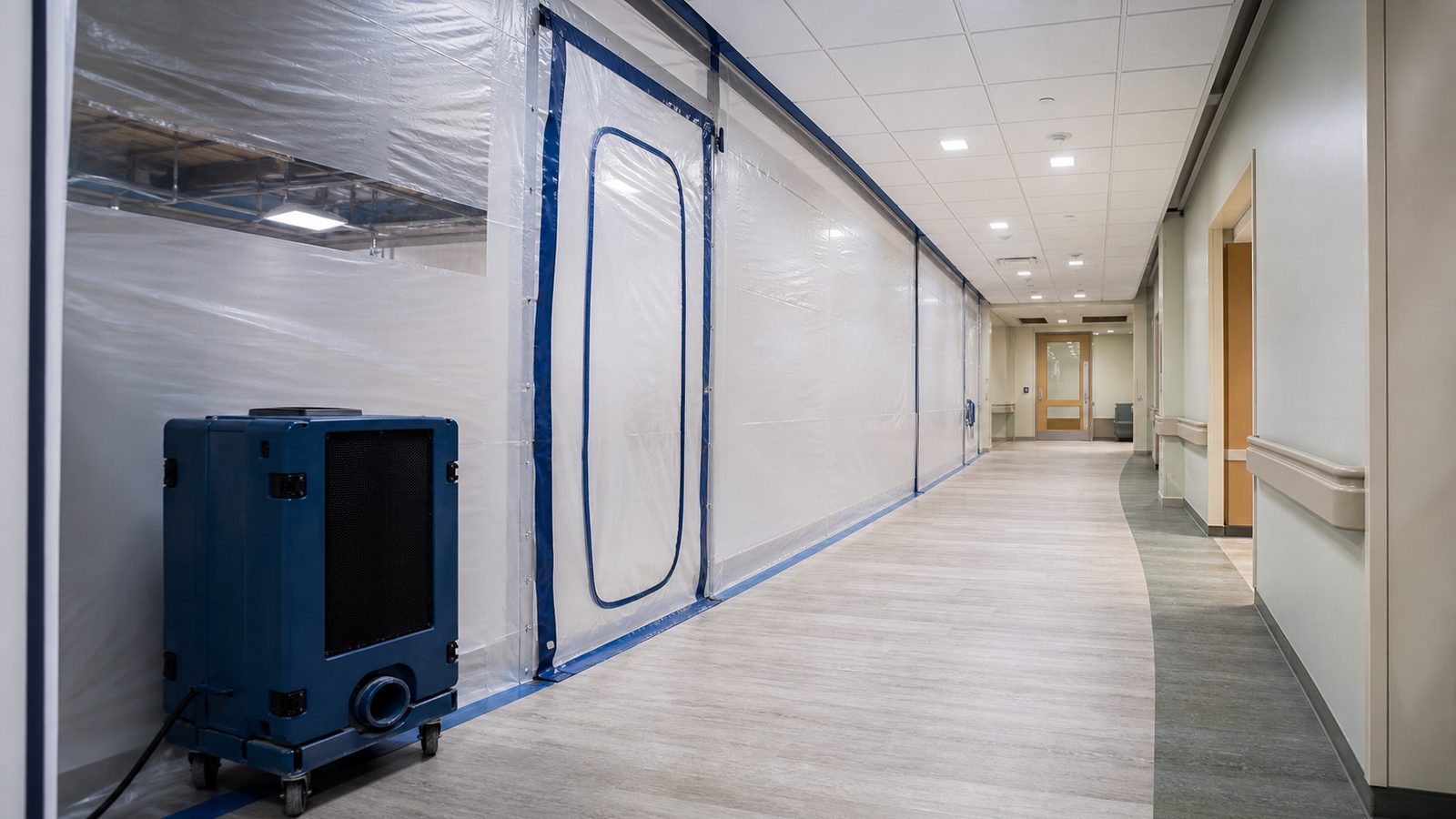
ICRA and Infection Control Questions
Who on your team holds ICRA training, and at what level?
The superintendent on site — not a project manager in an office — must hold current ICRA training. Ask specifically: is the ICRA training held by the person who walks the jobsite every day? At JK Prestige, every superintendent on a healthcare project is ICRA-trained. That is a non-negotiable staffing requirement, not an ad-hoc accommodation.
How often are barriers inspected, and by whom?
The answer should be: daily minimum, by the superintendent, with a documented log. Weekly inspection by a third party is a bonus. Any GC who says "as needed" or "when issues arise" is describing a reactive approach in an environment that requires a proactive one.
What is your protocol for a barrier breach?
A barrier breach in a Class III or Class IV ICRA zone adjacent to an occupied unit is a patient safety event. The GC must have a written protocol: stop work, seal the breach, notify infection control within a defined window (typically 15 minutes), document the event, and do not resume until inspection sign-off. If the GC cannot produce a written protocol on request, they do not have one.
How do you handle negative-pressure verification in adjacent occupied spaces?
For Class IV work adjacent to occupied patient care areas, continuous pressure monitoring is standard. Ask whether the GC installs monitoring equipment, who reads it, and what the escalation path is if readings go out of tolerance.
How do you document ICRA compliance throughout the project?
The GC should maintain a daily ICRA log tied to the project's inspection record. That log should be available to the facility's infection control officer on demand. It becomes part of the permanent project file.
Scheduling and Phasing Questions
How is phasing sequenced relative to patient census?
A GC who builds a phasing schedule without input from nursing leadership is building the wrong schedule. The sequence of barrier moves, system shutdowns, and work windows must be validated against unit census patterns — not assumed. Ask the GC how they gathered that input on their last hospital project.
Who attends daily coordination meetings with nursing?
The superintendent, not an assistant project manager or a scheduling coordinator. Daily touchpoints with nursing are where last-minute patient transfers, equipment needs, or infection control concerns surface. The person in that room needs decision authority.
How do you implement the Last Planner System (LPS) on a hospital project?
LPS — a collaborative pull-planning method — is the correct scheduling framework for phased hospital work, because nursing units cannot commit to construction windows 90 days in advance but can commit to 2- to 4-week windows. A GC who defaults to traditional Critical Path Method (CPM) scheduling imposed top-down is not structured for the adaptive sequencing that hospital operations require. The right answer names pull planning sessions, look-ahead schedules, and weekly Percent Plan Complete (PPC) tracking.
How do you sequence work to avoid simultaneous system shutdowns?
Electrical, medical gas, HVAC, and fire suppression shutdowns require separate coordination paths. Ask the GC to describe how they manage simultaneous interdependencies — specifically, whether they use a shutdown matrix and how far in advance shutdown permits are requested.
What is your process when a phase needs to slip due to patient census?
A phase slipping is not a failure — it is an expected outcome in occupied-facility work. The right GC has a recovery plan built in: float time, pre-positioned crews for adjacent work, a notification protocol to the owner within a defined timeframe.
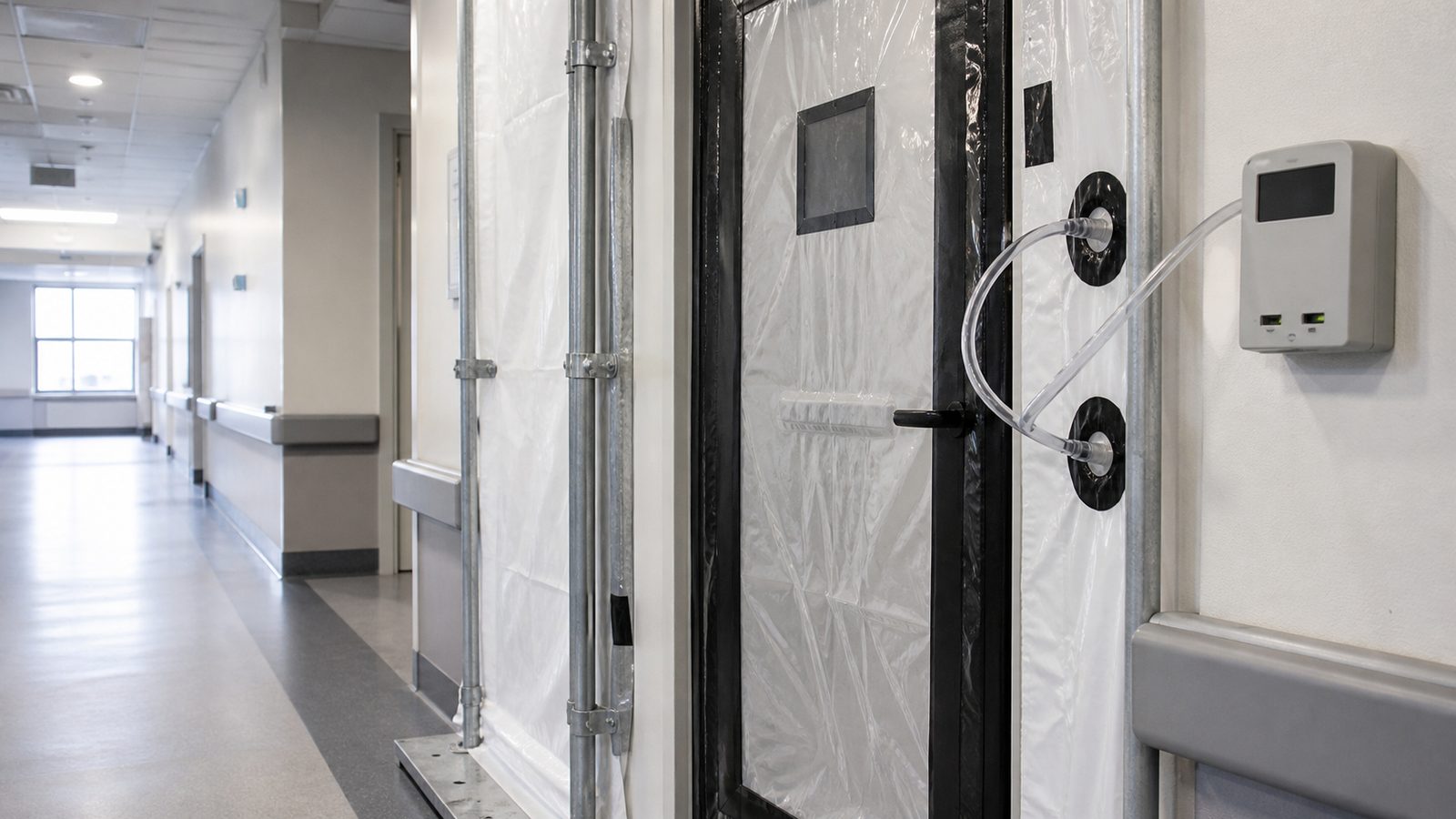
Communication and Escalation Questions
Who is the single point of contact for owner questions?
The answer must be a named individual, not a role title. In a healthcare renovation, you cannot have owner questions routed through a general inbox or a junior coordinator. The principal or senior superintendent owns all owner communication, with a defined response window.
At JK Prestige, a principal's direct number is written into every contract. Owner questions receive a written response within 48 hours. That is part of The JK Way — not a project-by-project accommodation.
How fast do RFIs get answered?
In hospital construction, an unresolved Request for Information (RFI) can stop work in a zone with hard shutdown windows. Ask for the GC's average RFI turnaround on their last three healthcare projects. Anything over five business days in a critical-path situation is a schedule risk.
How are owner questions — not RFIs, but informal owner questions — documented and escalated?
Verbal-only communication in a hospital project is a liability. Ask whether the GC uses a written owner inquiry log, how quickly informal questions get a written response, and who is responsible for following through when the answer requires a design or engineering decision.
What does your weekly owner report contain?
The report should include: schedule status against baseline, budget variance against GMP, open RFIs and submittals by age, upcoming work windows requiring nursing coordination, and a look-ahead for the next two to four weeks. A one-paragraph narrative is not a report.
Safety Questions
What is your TRIR on healthcare projects?
Total Recordable Incident Rate (TRIR) is the standard safety metric. The commercial GC industry average TRIR runs between 2.5 and 3.5. JK Prestige's TRIR is below one-third of that average. Ask for the specific number on healthcare projects specifically — hospital environments carry unique risks, and a GC's overall TRIR may obscure poor performance in occupied-facility work.
What is your Experience Modification Rate (EMR)?
The EMR measures workers' compensation claim history relative to industry peers. An EMR above 1.0 means the GC's loss history is worse than the industry baseline. An EMR below 1.0 means better. Any healthcare GC should be able to produce their current EMR certificate on request.
How are toolbox talks documented in a hospital environment?
Hospital toolbox talks are not optional and are not generic. They should address ICRA zone-specific hazards, patient adjacency protocols, and any shutdown or permit-required activity scheduled for that day. Ask to see a sample toolbox talk log from a recent hospital project.
Are all supervisors OSHA 30 certified?
OSHA 10 is insufficient for occupied-facility hospital work. All supervisory personnel — superintendents and foremen — should hold OSHA 30. Ask whether that applies to every supervisor on site, or only the superintendent of record.
What is your protocol for a safety incident inside the occupied facility?
The protocol must include: immediate treatment, notification to the facility safety officer within a defined window, documentation of the event, and a corrective action plan before work resumes in the affected zone. Ask for the written protocol.
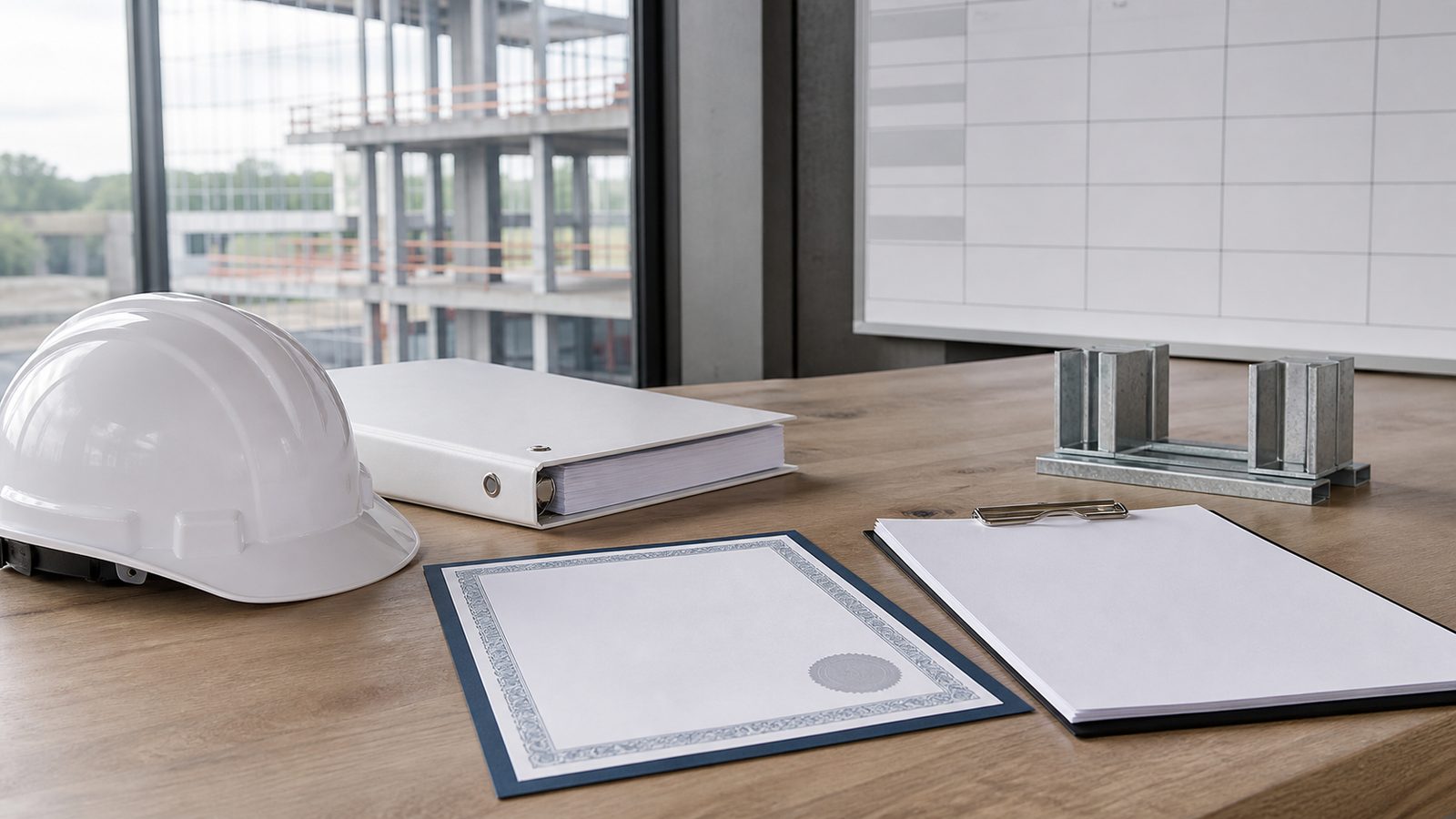
Putting It Together
A healthcare GC that can answer every question in this list — with specifics, not generalities, and with documentation on request — is a GC that has done this work before. A GC who hedges on barrier breach protocols or cannot name the person who attends daily nursing coordination is telling you something.
The pre-kickoff interview is not a formality. In phased occupied-facility work, the questions you ask before mobilization determine what happens when a census surge forces a phase delay at week six, or when an ICRA barrier fails during a night shift, or when a medical gas shutdown runs 45 minutes long.
Get the answers in writing. Get them before you sign.
To speak directly with a JK Prestige principal about an upcoming hospital renovation — including our ICRA protocols and phasing approach — contact us here. A principal answers. See our completed healthcare projects for reference.
No call center. No coordinator. A JK principal reviews every inquiry and replies with a real number, not a range, not a follow-up form.
Request Free Estimate →