Every GC in Florida has a drywall sub story. A crew that showed up with the wrong board thickness. A foreman who didn't read the reflected ceiling plan and hung Level 3 where the specs called for Level 4. A sub that disappeared for a week after the hang was done and came back with two guys to tape 8,000 square feet.
Finding a reliable drywall sub in Jacksonville isn't about price. It's about three verifiable criteria before you award the work: safety supervision credentials, proper insurance documentation, and references that tell you something real about punch list performance.
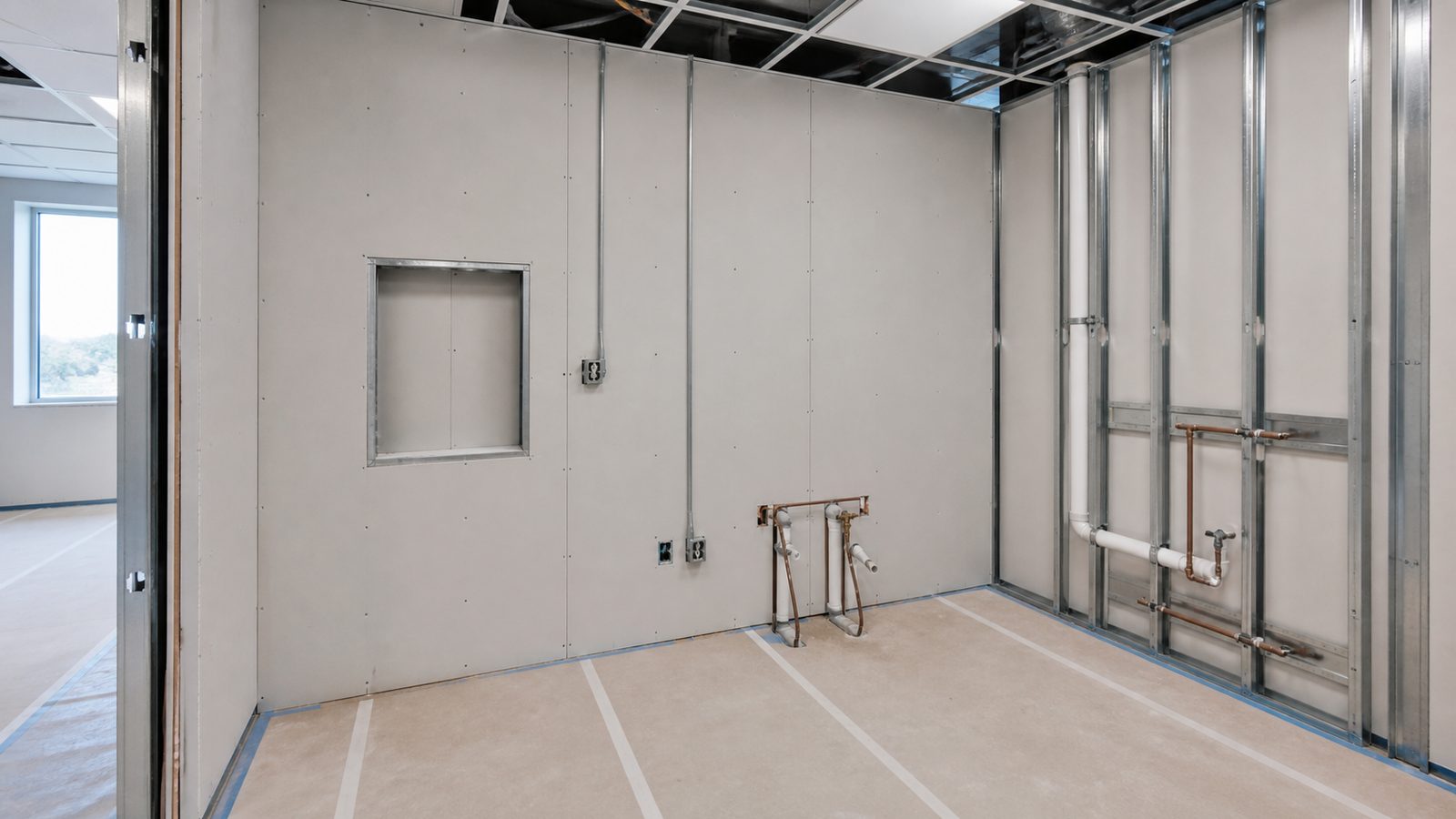
Why OSHA 30 Supervision Signals More Than Safety
An OSHA 30 certificate requires 30 hours of safety training through an OSHA-authorized provider. It covers fall protection, electrical hazards, scaffolding, personal protective equipment, and a range of construction-specific safety topics. For drywall work, the relevant hazards are fall protection (particularly for ceiling work and wall systems above 6 feet), overhead loading, and tool safety.
The certificate itself signals more than competence in those specific topics. It signals that the supervising foreman — and by extension, the company that employs them — takes safety seriously enough to invest in formal training. Safety investment correlates with operational investment: a company that trains its foremen on OSHA 30 is more likely to also invest in print reading, quality standards, and crew management.
The inverse is also informative. A drywall sub whose foreman does not hold OSHA 30 is operating without a formally trained safety supervisor on a commercial jobsite. That's a risk you carry if a recordable incident occurs on your project.
What OSHA 30 Requires in Practice for Drywall Work
An OSHA 30 foreman on a drywall crew is expected to:
- Serve as the competent person for fall protection — which means they are authorized to evaluate fall hazards and determine the appropriate control (guardrail, personal fall arrest, safety net)
- Produce a written fall protection plan before any work above 6 feet, including ceiling drywall work from stilts, scaffolding, or aerial lifts
- Conduct and document toolbox talks — brief, crew-level safety meetings held before each shift or before non-routine tasks begin
- Recognize and respond to OSHA 1926 Subpart C through L hazards and stop work when a hazard is identified that cannot be immediately controlled
A drywall foreman who holds OSHA 30 and actually practices these standards adds measurable value to your jobsite: lower incident probability, better documentation, and a crew that understands why the rules exist.

What Insurance Minimums to Require — and How to Verify Them
A certificate of insurance (COI) from a drywall sub should meet the following minimum requirements for commercial drywall work in Florida:
- General Liability: $1,000,000 per occurrence, $2,000,000 aggregate
- Workers' Compensation: Florida statutory limits (Florida has no cap on workers' comp liability — the WC policy must comply with Florida Statute 440)
- Employer's Liability: $100,000 per occurrence minimum
- Umbrella/Excess Liability: $1,000,000 minimum for projects over $500,000 in contract value
The COI alone is not sufficient verification. COIs can be issued without coverage actually being current. The steps to verify:
- Confirm the general contractor is named as additional insured on the GL policy — not just listed on the certificate. Ask for the additional insured endorsement, not just the COI.
- Call the insurance carrier listed on the COI and verify the policy number and current status. A two-minute call is all it takes.
- Verify that workers' compensation is not excluded — some policies exclude certain classifications of work. A drywall sub with a WC policy that excludes drywall work has no effective WC coverage for their drywall crew.
License Verification
In Florida, drywall work is within the scope of a Certified General Contractor (CGC) or Certified Building Contractor (CBC) license issued by the Florida Department of Business and Professional Regulation (DBPR). Verify the license at myfloridalicense.com before awarding work. Confirm that:
- The license is active (not expired, suspended, or under probation)
- The entity name on the license matches the entity name on the contract
- The license holder has no open disciplinary actions — visible in the DBPR database
A drywall sub who operates under a different entity name than their DBPR license is a red flag. It may indicate that the licensed entity has issues and the sub is operating around them.
What References Should Tell You — and What Questions to Ask
Generic reference calls ("they did great work, would use again") tell you almost nothing. You need to ask specific questions that get to specific information.
The only reference calls that matter are calls to GCs who completed projects with the drywall sub in the last 12 months. Not to building owners. Not to architects. To the GC superintendent or project manager who ran the project day-to-day.
Ask:
- "What was their punch list item count on the day they called the scope complete?" A sub who routinely calls work complete with 20 open punch items creates closeout problems. A sub who consistently closes with 3–5 items is operating at a professional standard.
- "Did they show up with the crew count they committed to?" This tells you about their workforce reliability, not just their work quality.
- "When there was a problem — wrong board, coordination conflict, missed call — how fast did they respond?" Speed of response to problems is the truest test of a sub's reliability.
- "Would you use them on a fixed-price project with a hard occupancy date?" This question forces the reference to think about schedule reliability, not just quality.
- "Did they read the prints, or did you have to walk them through the specs?" A drywall sub who reads prints independently reduces your coordination burden and reduces RFIs.
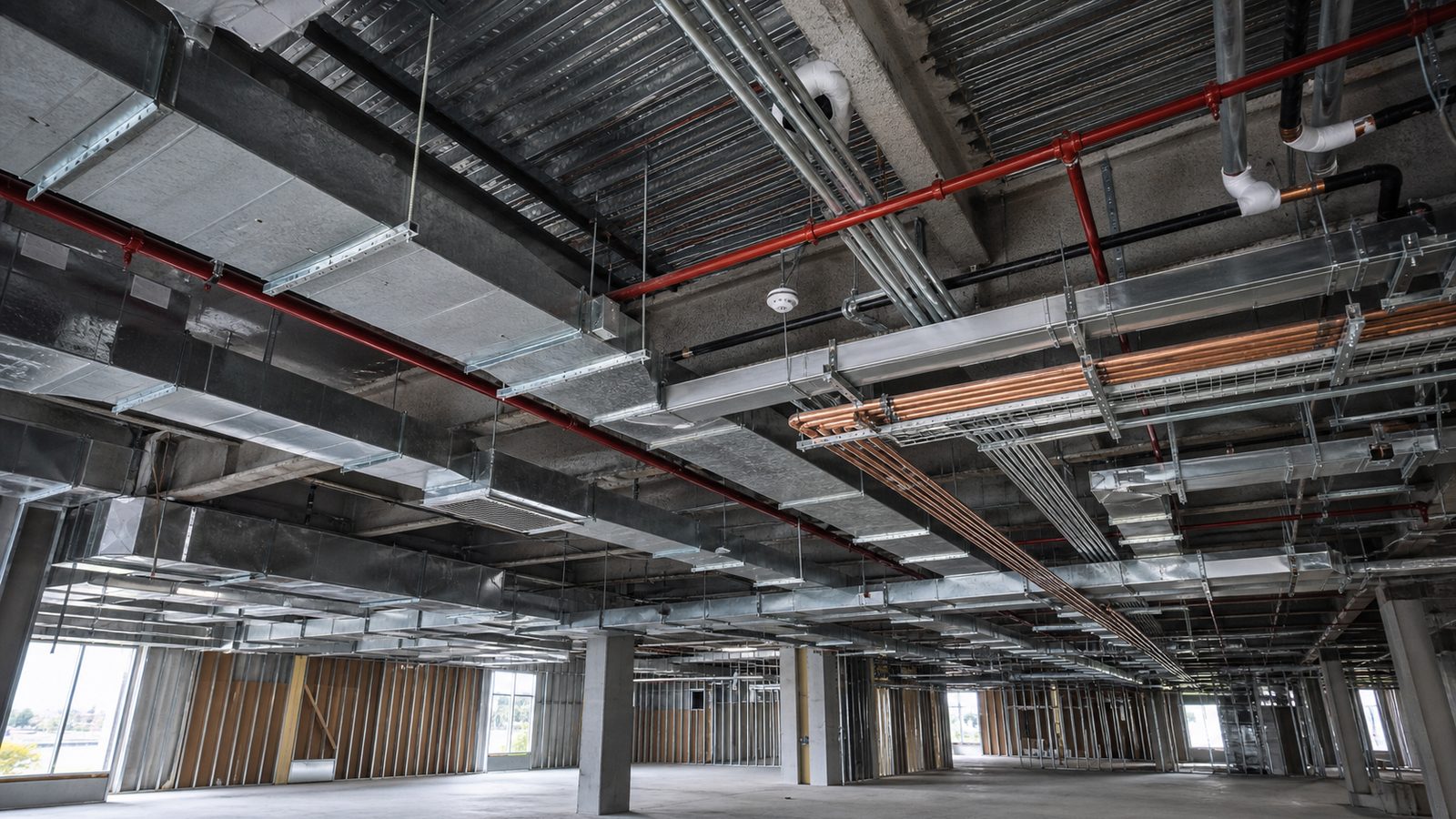
What JK's Drywall Crews Bring to GC Partners
JK Prestige's drywall crews are self-perform — JK's own employees, not a brokered labor pool. Every supervisory employee holds OSHA 30. Certificates of insurance are available with GC named as additional insured, with the endorsement attached. References are from GCs — names, numbers, project types, completion dates — not from building owners.
Before mobilization on any GC partner project, JK's crew:
- Reviews the print set independently — partition types, board thickness, fire-rated assemblies, Level specifications, reflected ceiling plan
- Attends a scope walk with the GC superintendent to confirm scope boundaries and coordination points with MEP trades
- Signs a scope sheet that maps to specific plan sheets, so there is no ambiguity about what is and isn't in the drywall scope
Clean handoffs to finish carpentry are a documented standard. JK's drywall scope is complete and inspectable when we say it is — punch list is not deferred to the next trade.
Request JK's trade packet — OSHA 30 certificates, insurance documentation, Florida license, and GC references — contact JK Prestige.
The JK Way governs how JK operates on GC partner projects: the same principal accountability, the same documentation standard, whether JK is the GC or the sub.
Request our trade packet, licensing, insurance certs, and references, contact JK Prestige. Call (904) 944-0278. A principal answers.
No call center. No coordinator. A JK principal reviews every inquiry and replies with a real number, not a range, not a follow-up form.
Request Free Estimate →