When a Jacksonville homeowner calls about a roof replacement, one of the first questions is whether a re-cover is possible or whether a full tear-off is required. The distinction matters: re-covers cost less upfront but carry risks that a full tear-off eliminates. Florida building code has specific rules about when each is permitted. And the wrong choice — a re-cover over wet insulation or a damaged deck — creates problems that a re-cover won't fix.
This post explains the difference, what Florida law allows, and how to determine which option is actually appropriate for your roof.
JK Prestige provides free 24-point roof inspections in Jacksonville before any recommendation is made. What we find on the roof drives the conversation — not what's easier to sell.
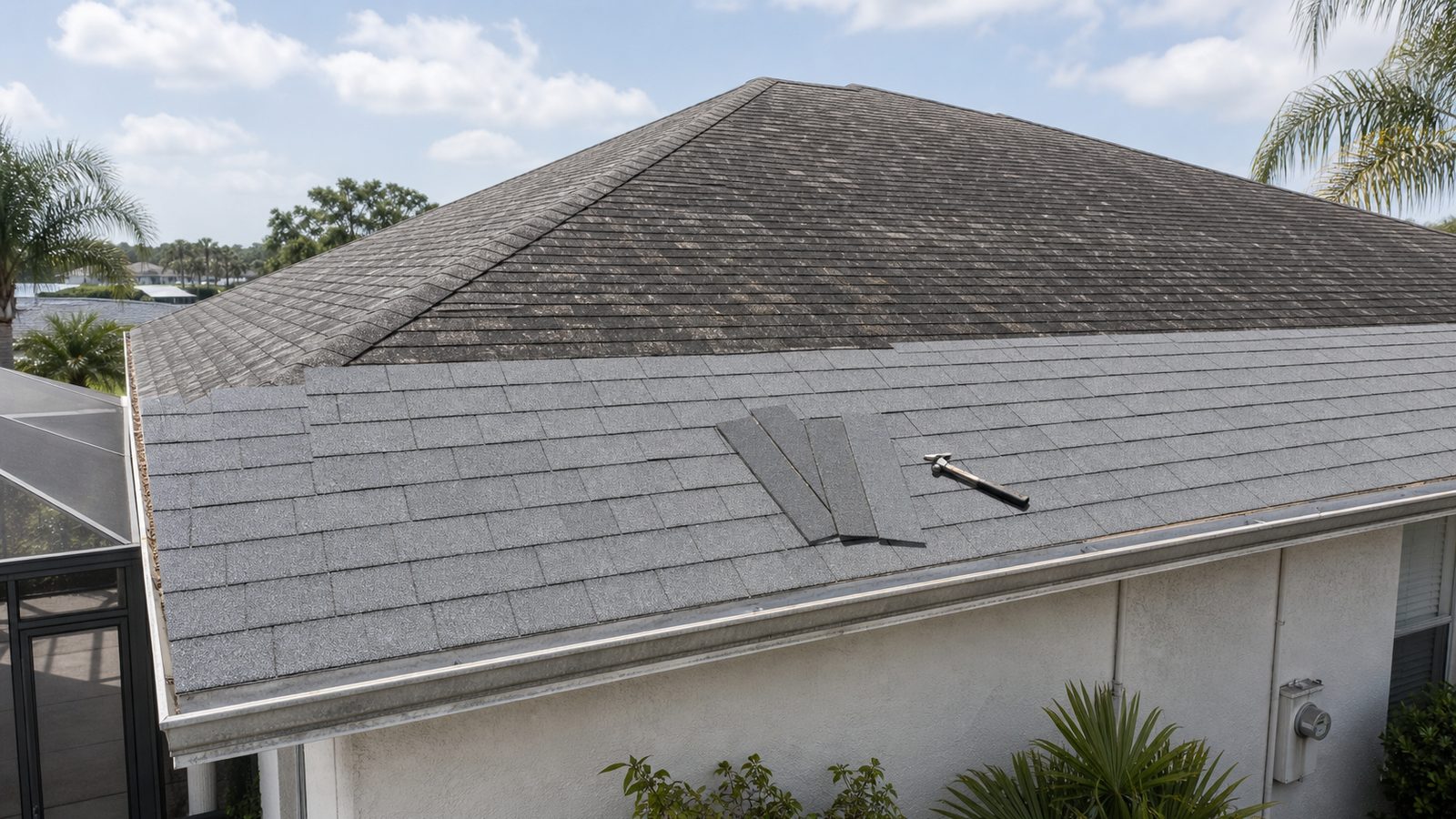
What Is a Roof Re-Cover?
A re-cover (also called an overlay or recover) means installing a new layer of roofing material directly over the existing layer. The old material stays in place. A new roof system is installed on top of it.
In a typical residential asphalt shingle re-cover:
- The existing shingles are not removed
- A new layer of synthetic underlayment or felt is sometimes installed between layers (varies by contractor and code jurisdiction)
- New shingles are fastened through the existing layer into the roof deck
Re-covers are faster and less expensive than full tear-offs because there is no tear-off labor, no dumpster, and no debris disposal cost. The labor savings are real: on a typical 2,000 sqft roof, tear-off and disposal add $1.50–$2.50 per sqft to the job cost. That's $3,000–$5,000 on a mid-size home.
What Is a Full Tear-Off?
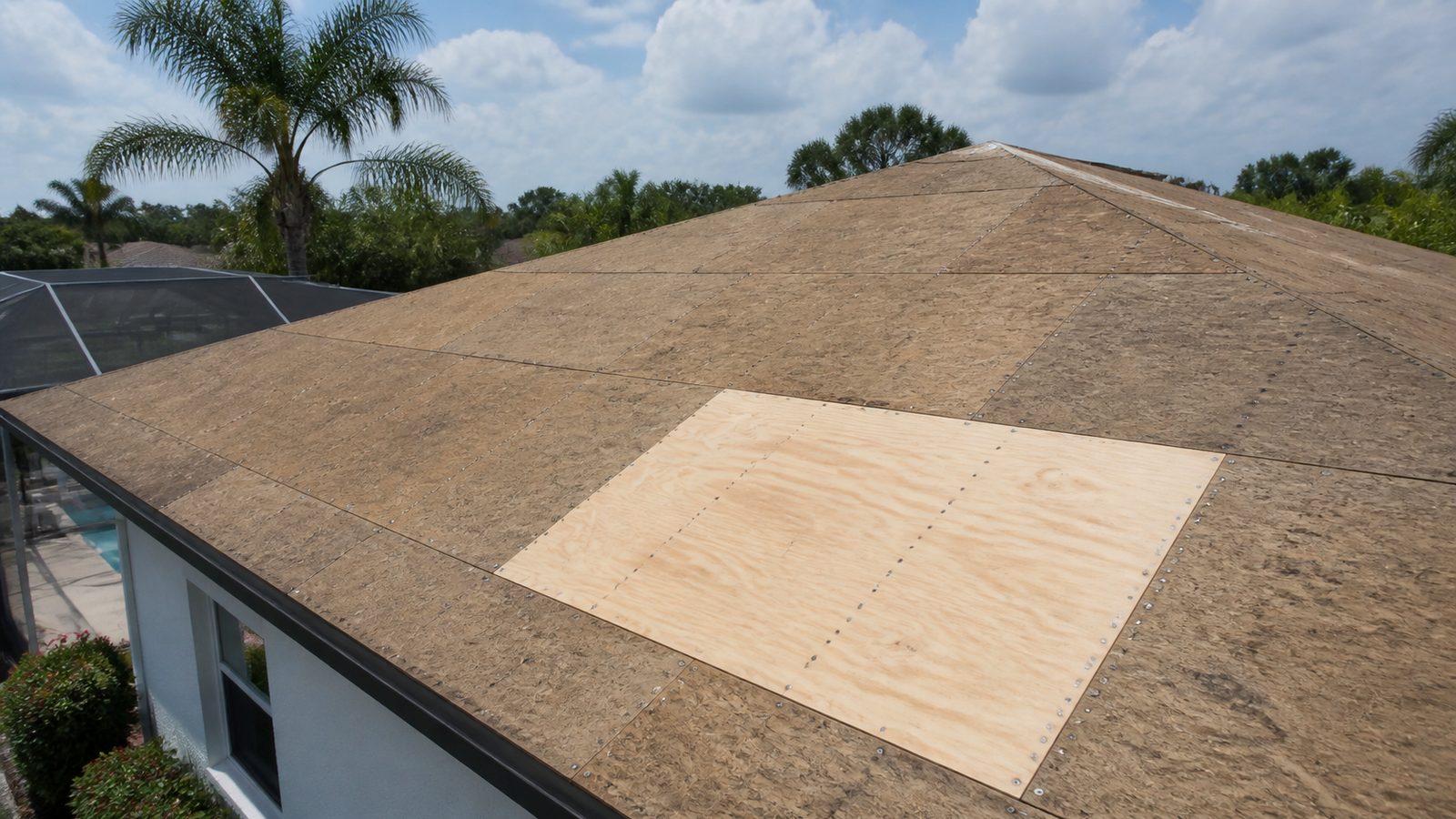
A full tear-off means removing all existing roofing material down to the bare deck — shingles, underlayment, and any existing base layers. The deck is exposed, inspected, repaired where needed, and a completely new system is installed from scratch.
Full tear-offs reveal what is actually happening under the surface: wet insulation or sheathing, deck rot, improper prior flashing, and nesting debris that would otherwise remain sealed under a second layer.
Florida Building Code: What the Law Allows
Florida Building Code Section R908 governs re-roofing on residential structures. The key rules:
- One re-cover maximum: Florida allows a maximum of one additional roofing layer over an existing layer on a residential structure. If the building already has two layers of roofing material (the original plus one prior re-cover), a full tear-off is required before any new material can be installed.
- Moisture testing required: Before a re-cover is permitted, the existing roof covering must be inspected for moisture damage. If moisture is found in the existing material or the underlying deck, a re-cover is not code-compliant — a tear-off is required regardless of layer count.
- Structural capacity: The existing structure must be capable of supporting the additional weight of a second layer. This is rarely an issue with asphalt shingles (a standard shingle adds roughly 2 lbs/sqft) but matters on heavy materials like tile.
These are not JK Prestige's internal rules — they are Florida law. Any contractor who installs a re-cover over two existing layers, or over documented moisture damage, is in violation of the Florida Building Code. The permit inspector will catch this at final inspection.
When a Re-Cover Is Appropriate
A re-cover is a legitimate and code-compliant option when all of the following are true:
1. Only one existing layer is present. Before any re-cover discussion, the contractor must verify how many layers are already on the roof. This is done at the eave edge: count the visible layers at the drip edge or rake. If there is any uncertainty, a core sample can be cut to confirm.
2. The existing material and deck are dry. No visible moisture, no soft spots when walking the roof, no staining at the deck from the interior, no granule loss patterns that indicate water infiltration at laps. JK Prestige uses a moisture meter in multiple locations across the roof field before confirming a re-cover is appropriate.
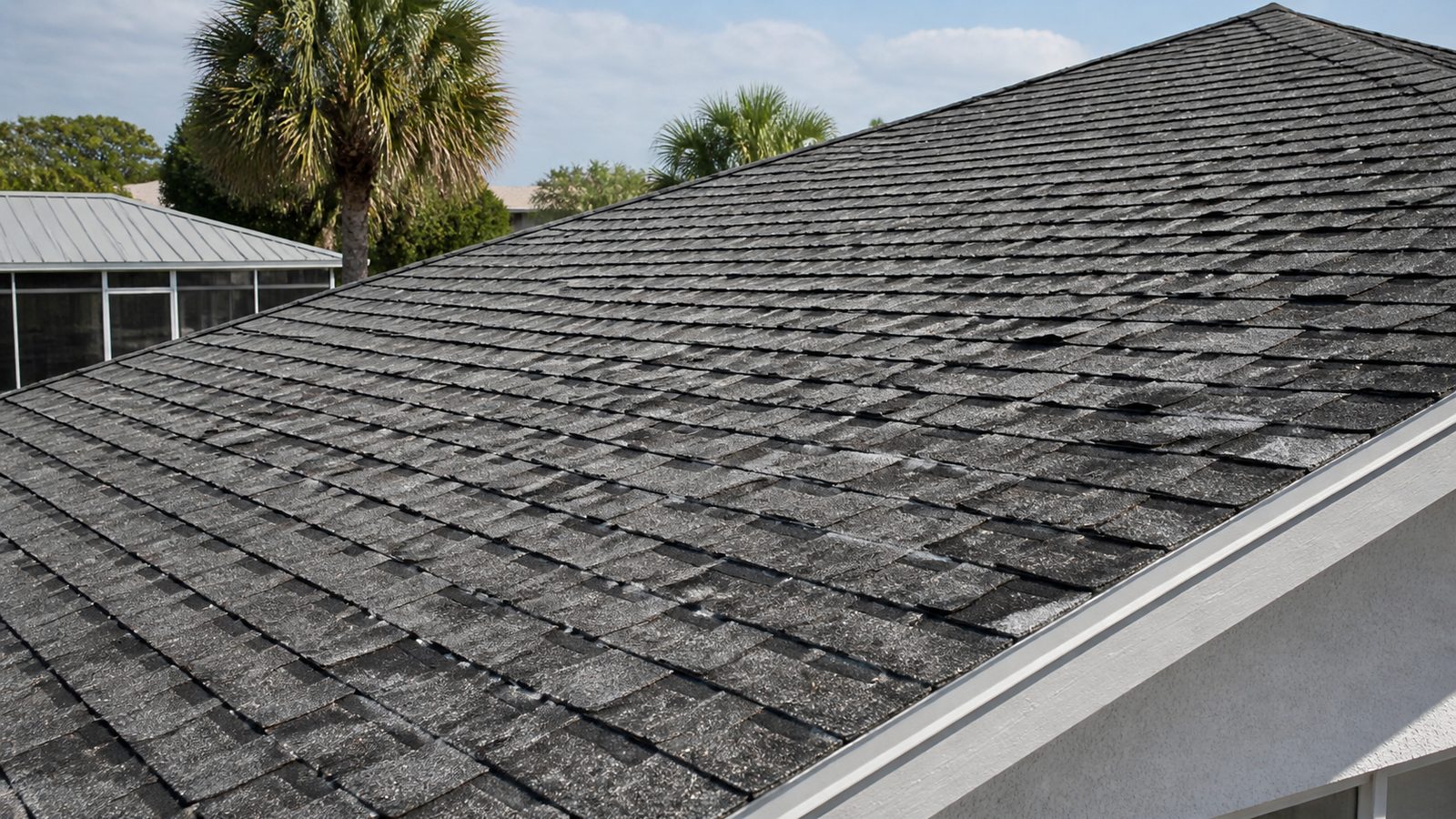
3. The existing surface is flat enough to accept a second layer. Curled shingles, lifted tabs, and damaged sections create an uneven substrate for the new layer. Severe surface irregularity means the new shingles won't lay flat — which affects both appearance and weathertight performance. Minor cupped shingles can be spot-repaired before the re-cover begins.
4. The existing flashing, valleys, and penetrations are sound. A re-cover doesn't improve the flashing. If the existing chimney flashing, pipe boot flashings, or valley metal are at end of life, they must be replaced during the re-cover — which adds cost and partially narrows the price gap vs. a full tear-off.
When a Tear-Off Is Required
A full tear-off is required — and the right call — in the following situations:
Two existing layers are present. This is a code mandate. A third layer is not permitted in Florida. If you're the second owner of the home and you don't know the roof history, have a contractor count layers at the eave before signing any contract.
Moisture is found in the existing material or deck. This is the most consequential factor. A re-cover over wet insulation or a compromised deck traps moisture between layers. Trapped moisture accelerates deck rot, creates mold, and ensures the new roof fails faster than it should. Finding wet material under a re-cover six years later costs far more than the tear-off savings upfront.
The deck has visible damage or structural soft spots. Walking the roof and finding soft spots, visible rot, or fastener failure at the deck level means the deck must be repaired before any new system goes on. You can't repair the deck without removing everything above it.
The owner is installing a different material type. Tile roofing cannot go over asphalt shingles — the structural load and fastening system are completely different. Standing seam metal requires a flat, clean substrate. Any material change that involves a different fastening system typically requires a full tear-off.
The manufacturer's warranty requires it. Most full-system manufacturer warranties — GAF Master Elite, CertainTeed, Owens Corning — require installation over a bare deck to issue the highest-tier warranty. If a 50-year warranty matters to the homeowner, the tear-off is part of the warranty requirement.
Cost Comparison: Re-Cover vs. Tear-Off in Jacksonville
On a 2,000 sqft Jacksonville home (2025 pricing, architectural shingles):
| Item | Re-Cover | Full Tear-Off |
|---|---|---|
| Material (shingles, underlayment) | $3,000–$4,500 | $3,000–$4,500 |
| Labor | $2,000–$3,500 | $3,500–$5,500 |
| Tear-off and disposal | $0 | $1,500–$3,000 |
| Total estimated | $5,000–$8,000 | $8,000–$13,000 |
The re-cover saves $3,000–$5,000 upfront in most cases. That saving disappears if the re-cover was installed over wet material that requires another full tear-off in 5–8 years.
The Hidden Risk of Re-Covers
The risk of a re-cover is not in the method — it's in what the method hides.
Once a second layer of shingles is installed, any moisture that was present in the original layer or deck is sealed in. You can't see it from inside the home until water infiltration is active. By the time interior damage appears, the deck is often significantly compromised.
JK Prestige's position: re-covers are appropriate when the conditions above are met. When there is any question about deck condition or moisture, we recommend a tear-off. The cost difference doesn't justify the risk of a premature failure.
We put our written inspection findings in front of the homeowner before making that recommendation. See how we document scope and communicate decisions before ground breaks on any project.
What the Inspection Should Include
Before any roofing contractor recommends a re-cover or tear-off, the inspection should include:
- Counting existing layers at the eave edge or via core sample
- Walking the full roof surface for soft spots and surface condition
- Moisture meter readings at multiple points in the field, ridge, and valleys
- Interior attic inspection (visible decking underside, insulation condition, ventilation)
- Flashing inspection at chimney, penetrations, and valleys
- Written report with photographs documenting each finding
JK Prestige provides this inspection at no cost with a written report. Book your free 24-point roof inspection or call (904) 944-0278. A principal answers and walks every roof we inspect.
No call center. No coordinator. A JK principal reviews every inquiry and replies with a real number, not a range, not a follow-up form.
Request Free Estimate →