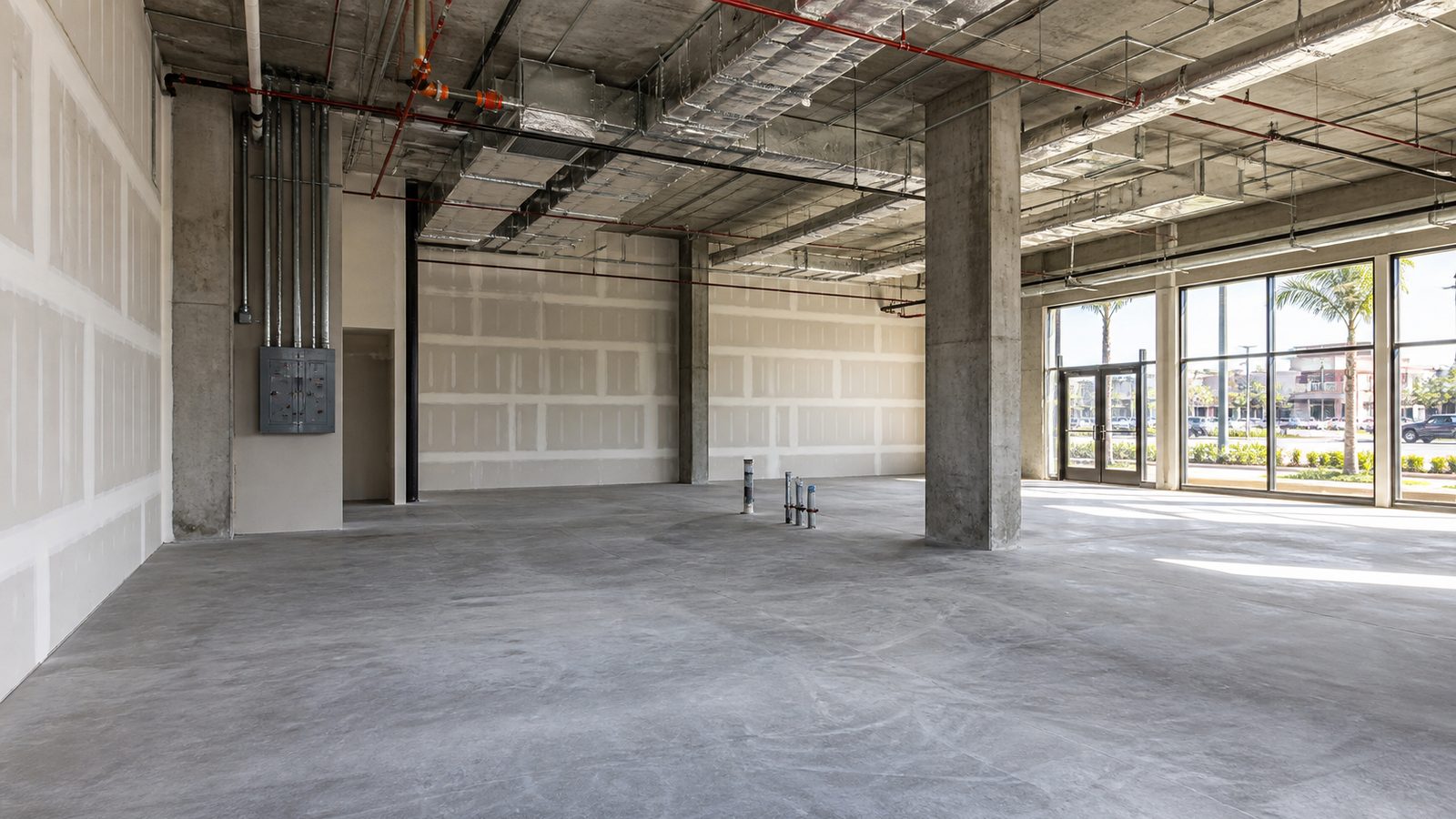
On a typical commercial tenant fit-out, two different subcontractors handle framing and drywall. The framing sub frames walls, drops headers, and installs backing. Then they leave the jobsite. The drywall sub is scheduled to start — but the drywall sub isn't the framing sub's problem anymore. They have three other projects. They'll get there when they get there.
That gap is usually one to two weeks. On a 12-week commercial fit-out, a two-week gap between framing completion and drywall start is a 17% schedule loss. That's not a minor inefficiency. It's the difference between delivering your space on the landlord's required occupancy date and paying penalties because you missed it.
Why the Gap Exists in Brokered Commercial Construction
The framing sub and the drywall sub don't work for the same company. They don't share a superintendent. They don't share a schedule. Each sub manages their own labor pool across multiple jobsites, and when your framing is done, you're no longer the priority — whoever is paying them next is the priority.
The general contractor (GC) in a brokered model schedules both subs and hopes the handoff happens on schedule. "Hopes" is the operative word. The GC has no direct authority over a framing sub's crew deployment decisions. When the framing crew gets pulled to another project for three days, the GC makes calls. Sometimes that works. More often it doesn't, and the schedule slips.
What a Two-Week Slip Costs on a Commercial Fit-Out
The direct cost isn't just the lost days. On a tenant improvement (TI) project, the lease start date, the TI allowance disbursement schedule, and the landlord's occupancy requirement are all locked before construction starts. Missing the CO date typically has one or more of the following consequences:
- Holdover penalties. If you're in a prior space on a holdover lease, you continue paying holdover rent — often 150% of the base rate — for every day the new space isn't delivered.
- TI allowance claw-back. Many leases condition the full TI allowance on occupying the space by a specific date. A missed date can reduce or delay the allowance disbursement.
- Lost revenue. For a retail or restaurant tenant, every day before opening is lost revenue. A two-week delay at a location projecting $30,000 per week in revenue is $60,000 in unrealized income.
The two-week framing-to-drywall gap isn't just an inconvenience. It has a dollar figure attached to it.
How Self-Perform Framing and Drywall Eliminates the Gap
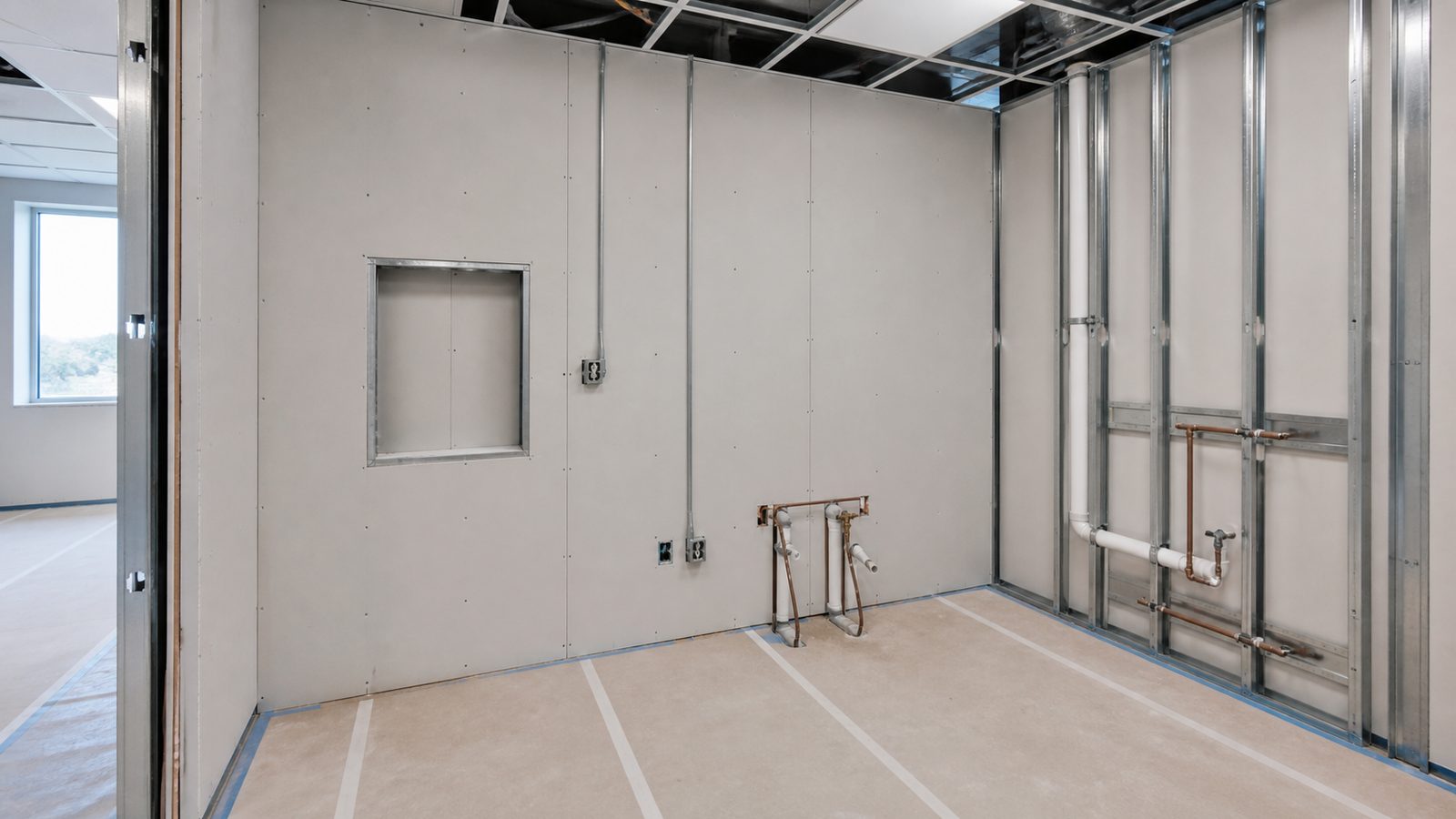
When JK Prestige self-performs both framing and drywall with its own crews, the handoff happens the same day. Framing completes a section; drywall starts on that section. The superintendent managing framing is the same superintendent managing drywall. There is no call to a separate sub. There is no schedule negotiation. There is no gap.
On a 12-week commercial fit-out, eliminating a two-week gap between framing and drywall doesn't just recover 17% of the schedule — it creates float. That float protects you when the Mechanical, Electrical, and Plumbing (MEP) rough-in runs long, when an inspection fails and needs to be rescheduled, or when a fixture delivery is delayed. Projects without schedule float don't recover from normal construction variance. Projects with float do.
What This Looks Like in Practice
JK's self-perform model on a commercial tenant fit-out works in coordinated phases:
- Framing rough-in. JK's framing crew builds all non-structural partitions, installs blocking, and sets door frames per the approved architectural drawings.
- MEP rough-in coordination. While MEP subs run their rough-in, JK's superintendent coordinates access and sequencing — no waiting for a separate framing sub to approve re-entry or patch blocking.
- Drywall hang. JK's drywall crew begins hanging immediately after MEP rough-in inspection sign-off — same superintendent, same crew pool, no gap.
- Tape, mud, and finish. JK completes the finish sequence through Level 4 finish (standard for commercial paint-ready surfaces) without rotating out to a separate finishing sub.
The superintendent walks every stage. Quality issues are caught before the next phase begins. That's direct accountability — not coordination theater.

TI Allowance Timeline Compliance and Why It Starts With the GC
Landlords in Jacksonville's commercial market typically structure TI allowances as reimbursements: the tenant builds the space, the landlord reimburses against paid invoices up to the cap. Some allowances are structured as credits against rent. Either way, the disbursement schedule is tied to construction milestones.
A common TI disbursement structure looks like this:
- 50% at framing inspection sign-off
- 40% at CO issuance
- 10% at final punchlist sign-off by landlord
When framing slips because the framing sub didn't mobilize on schedule, the first disbursement slips. The tenant is now carrying more of the project cost out of pocket while waiting for a construction milestone that the GC can't control. Self-perform framing gives the GC direct control over the milestone date — and gives the tenant a realistic disbursement schedule they can actually plan around.
JK provides milestone dates in writing before mobilization, as part of the fixed-price delivery model. If framing inspection is scheduled for week five, JK's superintendent is accountable to that date because it's JK's crew executing the work.
The Superintendent's Role in a Self-Perform Fit-Out
On a brokered fit-out, the GC superintendent is a coordinator. They call subs, push schedules, and manage the flow of information. They don't control the framing crew's deployment decisions, and they can't force a drywall sub to mobilize faster than the sub's capacity allows.
On JK's self-perform fit-out, the superintendent is the crew lead's direct supervisor. When the superintendent says mobilize drywall Thursday morning, the drywall crew mobilizes Thursday morning. No negotiation. No competing project priority. No gap.
This is the operating model described in JK's commercial construction approach: the critical path trades are not brokered. They're JK's crews, managed by JK's superintendents, delivering to JK's schedule commitments.
What to Ask Your GC Before Signing a Commercial Fit-Out Contract
Before signing a fit-out contract with any GC in Jacksonville, ask two direct questions:
- Are framing and drywall self-performed by your own crews, or subcontracted to separate companies?
- What is the contractual gap between framing completion and drywall start in your current schedule?
If the answer to the first question is "subcontracted," get the schedule gap in writing and build that gap into your TI allowance timeline, your holdover calculation, and your revenue projections. If the gap isn't disclosed, ask why.
A GC who self-performs both trades will give you a specific answer to both questions because they control the answer. A GC who brokers the trades will give you a schedule that assumes the subs perform as contracted — and commercial construction history in Jacksonville tells you that assumption fails more often than it holds.
Get a free written estimate in 48 hours. contact JK Prestige for your commercial fit-out. Call (904) 944-0278. A principal answers.
No call center. No coordinator. A JK principal reviews every inquiry and replies with a real number, not a range, not a follow-up form.
Request Free Estimate →