Framing is almost always on the critical path. It has to finish before Mechanical, Electrical, and Plumbing (MEP) rough-in can start, and MEP rough-in has to finish before drywall can start. Everything downstream of framing is waiting.
When you award framing to a brokered crew — a crew that a staffing agency supplies to a sub-tier company that bids your project — you have limited visibility into who shows up, what their experience level is, and what other jobsite has priority when your framing crew gets pulled. That's a structural risk to your schedule that most GCs accept as a cost of doing business.
Self-perform framing subs change the equation. Here's what "self-perform" means in this context, why it matters for your critical path, and what you should be demanding from any framing sub before awarding work.
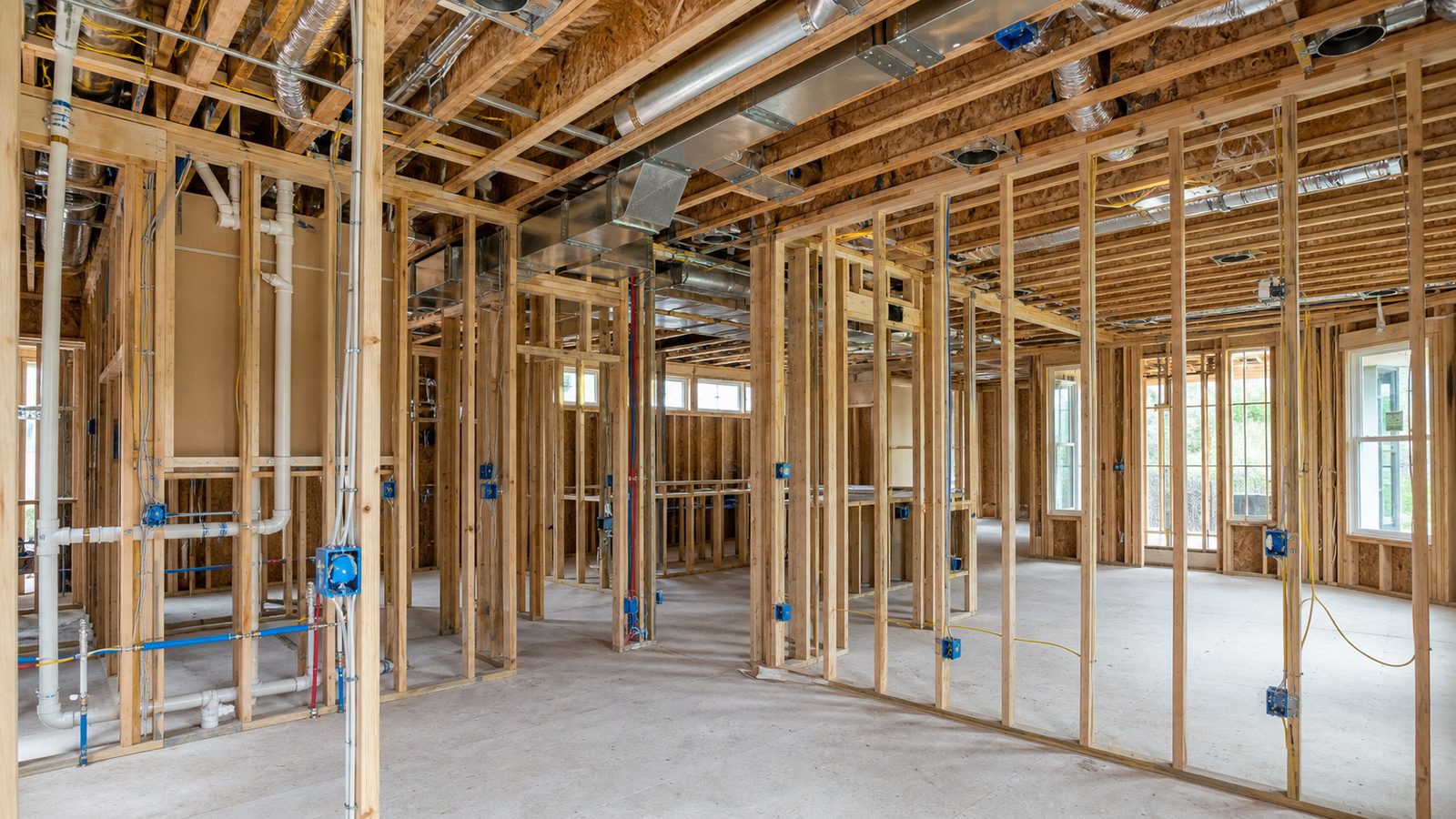
What "Brokered Crew" Means and Why It's a Problem
A brokered framing crew is assembled by a staffing agency or labor broker from a pool of available workers. The broker sells the crew's time to a framing sub, who then bids your project. The framing sub may have a field foreman who directs the crew — but the workers answer to the broker's deployment decisions, not to the framing sub's performance obligations.
When your project hits a schedule crunch and the framing sub needs to surge, they call the broker. The broker tells them what's available. If three other GC projects are also in crunch at the same time, the broker's available pool is stretched. Your surge request gets a fraction of what you needed, or nothing.
The framing sub is not indifferent to your schedule — they have a contract. But they can't control the labor pool they don't own, and they can't manufacture experienced framers out of thin air when their broker's available workers are booked.
The Accountability Gap
A brokered crew answers to their staffing agency first and to the GC's project second. This creates a specific accountability gap:
- Crew quality is unpredictable. The workers on your jobsite Monday may not be the workers on your jobsite Thursday. Skill levels vary within a brokered pool, and a framing sub who uses brokered labor doesn't have direct authority over which workers are deployed on a given day.
- The framing sub cannot guarantee surge capacity. When a brokered sub says "we'll get it done," they mean "we'll do our best to get it done given what labor is available." A self-perform sub who owns their crew means something different: "we'll adjust crew hours or add a second crew from our own workforce."
- Safety exposure is shared upward. If a brokered worker is injured on your jobsite and their safety training was managed by a broker — not by the framing sub — the liability chain is murky. Who trained the worker? Who verified the training? Who designated the competent person on the hazard?
What "Self-Perform" Means for a Framing Sub
A self-perform framing sub employs its own workers on W-2 or in a direct subcontract relationship — not through a staffing broker. The foreman manages workers who answer directly to the sub. When the sub commits to a crew count, they commit from their own workforce, not from a broker's available pool.
JK Prestige's framing crews are self-perform: JK employs its framing labor directly, the OSHA 30 foreman is JK's employee, and crew deployment decisions are made by JK's superintendent — not by a third-party labor broker.
What this means for a GC partner who awards framing work to JK:
Committed crew count. When JK commits four framers for a Monday mobilization, four JK framers mobilize on Monday. If one crew member calls out, JK resolves it from its own workforce — not with a call to a broker that may or may not produce a replacement.
Surge capacity from the same workforce. If the schedule requires a surge — weekend work, extended hours, a second crew — JK makes that decision internally. No broker negotiation. No waiting for availability.
Direct superintendent authority. JK's superintendent has direct authority over the framing crew's daily task assignments, work sequence, and quality standards. If a wall needs to be redone, the superintendent directs it. There is no intermediary between the quality standard and the crew executing it.
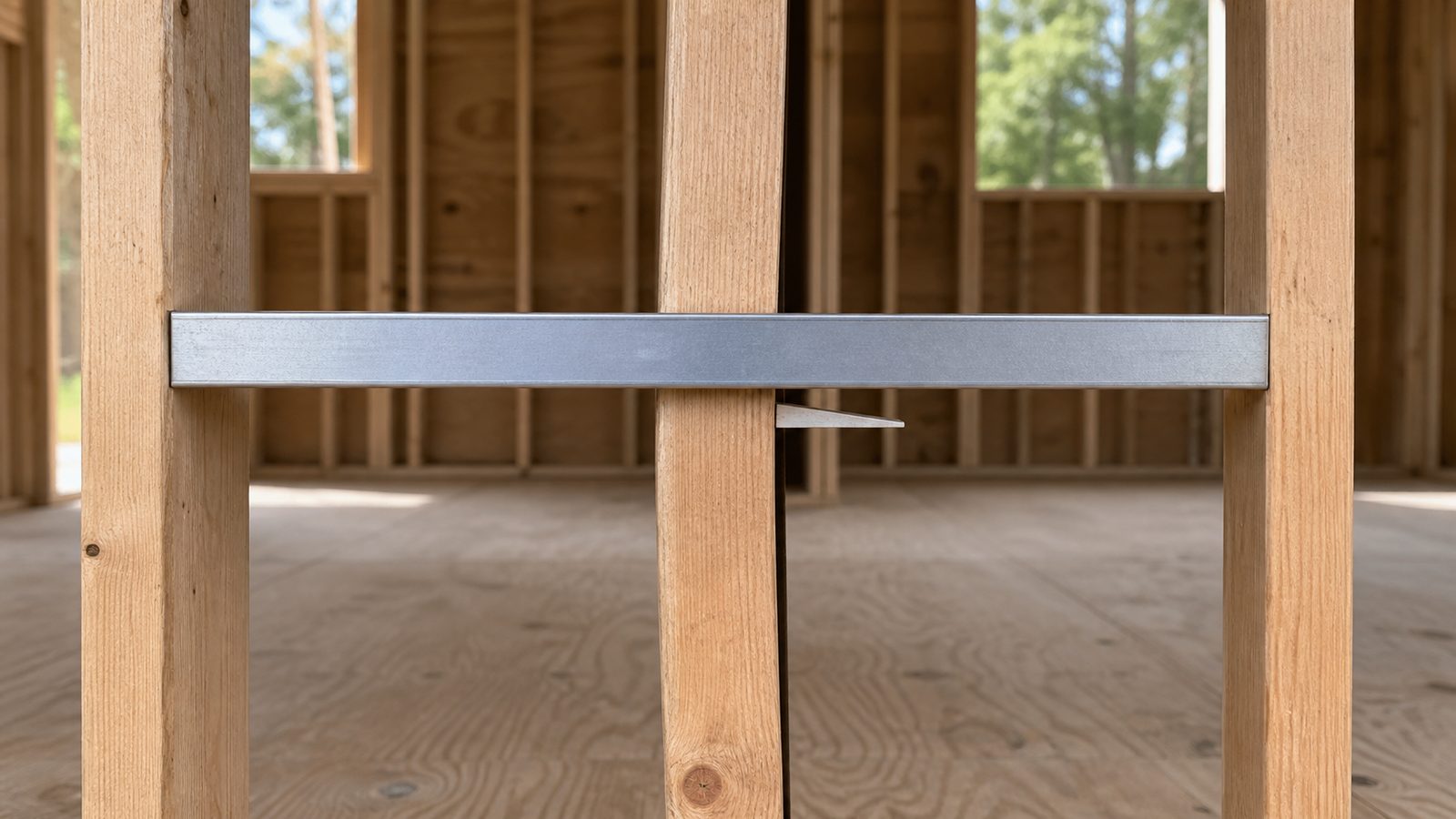
What "Critical Path" Means for Framing
The critical path in a construction schedule is the sequence of tasks that determines the project completion date. Any delay in a critical path task delays the project. Framing is frequently the longest single trade on a commercial or residential project, and its position at the front of the interior construction sequence means it cascades.
A two-day framing delay produces a two-day MEP rough-in start delay, a two-day drywall start delay, a two-day inspection delay, and a two-day CO slip. On a project with a hard occupancy date — lease commencement, hotel opening, hospital phase activation — that two-day cascade is a material cost.
Self-perform framing reduces the probability of that cascade in two ways:
First, the crew commitment is real. When a self-perform framing sub commits a crew size and mobilization date, they own that commitment with their own labor force. The probability of under-staffing due to broker availability is eliminated.
Second, problem resolution is faster. When a field condition creates a sequencing issue — a structural beam that wasn't where the drawings show it, a slab condition that requires a revised layout — a self-perform crew's foreman resolves it with the superintendent. A brokered crew's foreman either doesn't have the authority to deviate from the original scope or kicks the issue up to the framing sub company, who kicks it to the GC. Every additional link in that chain adds time.

What GCs Should Demand From Any Framing Sub
Before awarding framing to any sub on a Florida project, require:
Daily crew headcount in writing. The sub should commit to a minimum crew size for each phase of the project and report actual headcount daily to your project manager. If committed headcount falls below minimum, you need to know immediately — not when the schedule slips.
Three-week look-ahead schedule. A framing sub who can produce a three-week look-ahead by section or floor demonstrates that they have a foreman who reads and interprets the schedule, not just a crew that shows up and cuts lumber. The look-ahead should align with your master schedule and should be updated weekly.
Written Job Safety Analysis (JSA) for non-routine tasks. A JSA is a written analysis of the hazards in a specific non-routine task and the controls used to mitigate them. Any framing sub that asks "what's a JSA?" is not operating at a commercial standard.
OSHA 30 certificate for the supervising foreman. OSHA 30 is a 30-hour safety training course that designates the holder as competent in a range of construction hazards. OSHA 30 for the foreman is the minimum standard for any commercial framing scope. Verify the certificate directly — OSHA maintains a searchable database at osha.gov.
JK's trade packet for GC partners includes Florida contractor license documentation, certificates of insurance with general liability and workers' compensation, OSHA 30 certificates for all supervisory employees, project references from GCs (not owners), and a scope capability statement. Request JK's trade packet.
See the JK Way for the full standard JK applies to every project — the same standard we hold ourselves to as a framing sub that GC partners can rely on.
Request our trade packet, licensing, insurance certs, and references, contact JK Prestige. Call (904) 944-0278. A principal answers.
No call center. No coordinator. A JK principal reviews every inquiry and replies with a real number, not a range, not a follow-up form.
Request Free Estimate →