When a GC partners with a roofing sub on a commercial project, the handoffs matter as much as the installation quality. A roofing crew that needs constant direction from the GC, can't coordinate directly with the manufacturer, or leaves warranty submittals for the GC to chase is a liability on a compressed schedule.
JK Prestige deploys self-perform roofing crews as a trade sub for GC partners on commercial projects across Florida. This post explains exactly how that deployment works: mobilization, crew structure, what JK handles independently, and what we need from the GC to execute cleanly.
How Mobilization Works
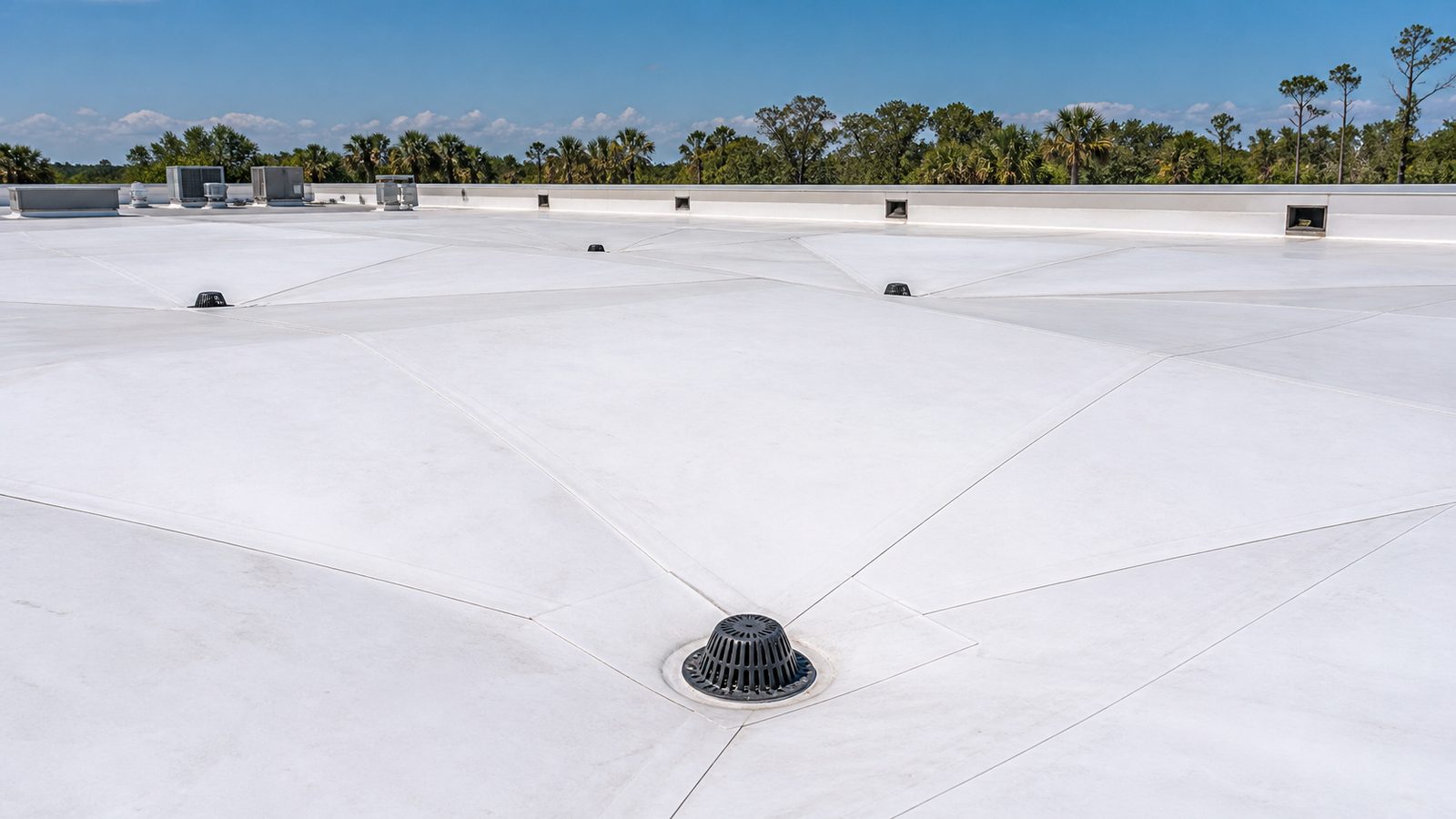
Mobilization for a JK roofing crew starts with a scope walk — a physical walkthrough of the roof deck with the GC's project manager before any material is ordered or crew is scheduled. The scope walk confirms:
- Deck type and condition (whether repairs or primer are required before membrane installation)
- Penetration count and type (HVAC curbs, drains, parapet conditions)
- Access plan: crane picks, material staging area, hoist routes
- Safety: edge protection requirements, existing anchor points, fall arrest plan
- Occupied areas below the work zone (waterproofing sequencing matters for occupied buildings)
After the scope walk, JK produces a scope sheet — a line-item breakdown of exactly what the roofing package includes: membrane type and thickness, fastener pattern, insulation board R-value, flashing materials, drain collars, sealants, and warranty type. The GC signs the scope sheet before any material is ordered. This is the document that prevents "I thought that was included" disputes at closeout.
From scope sheet signature to crew on site: typically 7-10 business days for standard TPO and EPDM commercial projects, assuming material lead times are normal. JK maintains supplier relationships with Carlisle SynTec and Firestone that allow expedited material pulls when schedule demands it.
Permit coordination: JK pulls the roofing permit directly where the GC authorizes it, or we submit under the GC's permit if the project is permitted as a single general contract. Either way, JK coordinates with the local building department for inspections and provides all required submittals.
Crew Structure for Commercial TPO and EPDM
A standard JK commercial roofing crew for a TPO or EPDM project:
- 1 crew foreman: OSHA 30 certified, holds the manufacturer certification for the membrane system being installed, owns all quality control decisions on the roof deck
- 3-5 installers: depending on project scale and membrane area
- Heat welder operator (for TPO): separate certified position; not every installer is qualified to run the welder
The foreman-to-crew ratio matters. A single foreman overseeing eight or ten installers on a large commercial roof is a quality control problem. JK limits crews to a span the foreman can actually supervise — no more than one foreman per 20,000 sqft of active work area.
For projects over 50,000 sqft or multi-phase projects, JK deploys a project superintendent above the crew foreman level. The superintendent coordinates with the GC's PM on sequencing, manages material deliveries, and handles inspection scheduling — keeping those tasks off the GC's plate.
What JK Handles Independently
GC partners who work with JK on roofing don't manage the roofing sub. JK owns these responsibilities without GC involvement:
Manufacturer certification: Every JK commercial roofing crew operates under current manufacturer certification for the membrane system being installed. For TPO, that includes Carlisle SynTec, Firestone, and GAF certification. For EPDM, Carlisle and Firestone. The certifications are a prerequisite for issuing the manufacturer's warranty to the GC at project closeout.
Warranty registration: At project completion, JK submits the warranty registration directly to the manufacturer — not through the GC. The GC receives the warranty certificate (typically 15-20 year NDL for commercial TPO) as part of the project closeout package. The GC doesn't chase it.
Final inspection coordination: JK schedules and coordinates the manufacturer's field representative inspection for warranty issuance, the building department inspection for permit closeout, and any third-party inspection required by the GC's specification. The GC receives the inspection reports.
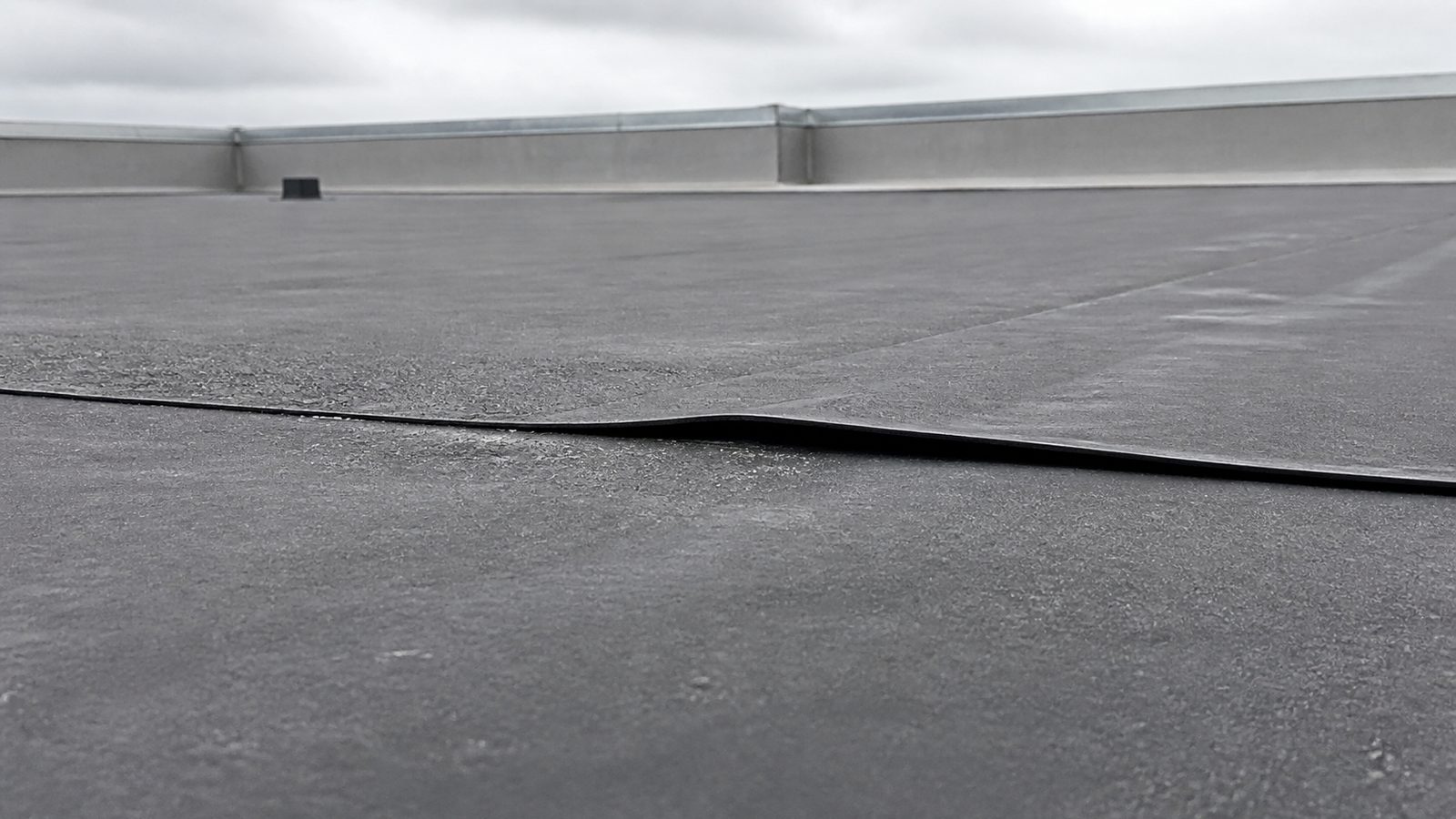
Seam documentation (TPO): TPO installation quality lives or dies at the seams. Every seam is tested — probe test immediately after welding, with results documented by the foreman. JK provides the seam test log to the GC as part of the closeout package.
What JK Needs from the GC
JK operates independently on the roof, but a clean installation requires three things from the GC:
Site access: Crane picks need to be scheduled and coordinated with the GC's site logistics plan. Roof hatches or ladders for crew access need to be clear. Dumpsters for removed membrane and insulation need a designated location. If material staging on the roof deck is planned, the GC's structural engineer needs to confirm the deck's live load capacity in advance.
Sequencing coordination: Roofing installation has to happen in the right sequence relative to other trades. MEP penetrations through the roof deck need to be stubbed before the membrane goes down. Rooftop equipment (HVAC units, exhaust fans) should be set before the roofing crew flashes the curbs. If the GC's schedule has these out of sequence, the roofing scope gets split into phases — which adds mobilization cost and extends the schedule.
Interior protection for occupied buildings: On occupied commercial buildings where roofing work creates water infiltration risk or dust/debris, JK requires that the GC provide interior protection below the work area — plastic sheeting over equipment and furnishings, temporary drain covers in occupied spaces. JK provides the roofing weatherproofing; the GC provides the interior protection.
TPO Specifics: Heat Welder Certification and Seam Testing
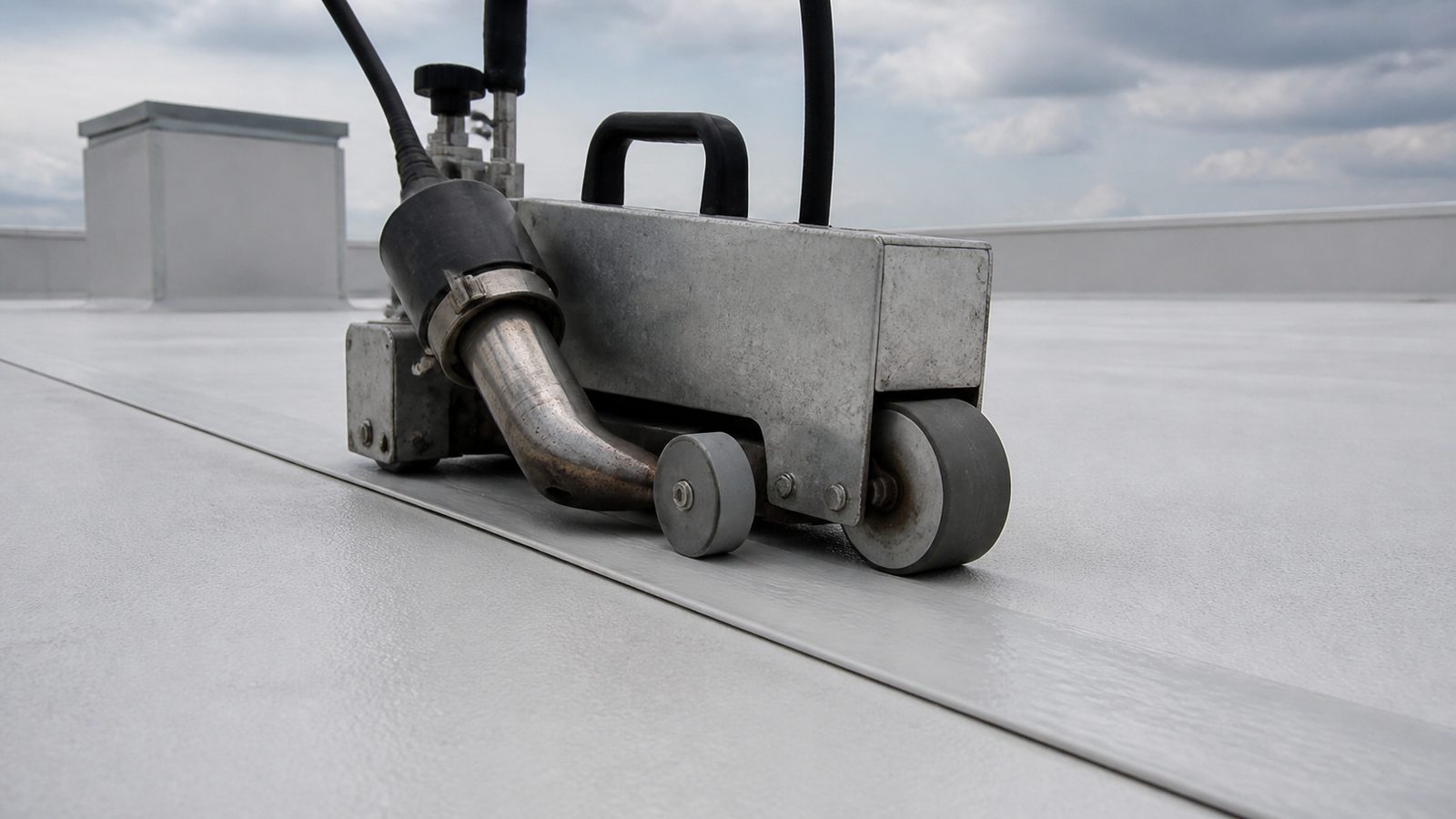
TPO (Thermoplastic Polyolefin) is the dominant commercial flat roofing membrane in Florida for new construction and re-roofing projects. It's a heat-welded system — the seams between membrane sheets are fused with a hot-air welder at 300-400°F. Done correctly, the seam is stronger than the membrane itself. Done incorrectly, it peels within 18 months.
Heat welder certification: The welder operator on a JK TPO crew holds current certification from the membrane manufacturer. Carlisle and Firestone both require operator certification for their warranted systems. JK does not allow uncertified operators to run the welder on a warranty project.
Seam test documentation: After welding, every seam is probed with a round probe tool while still warm. Any seam that probes (opens) is re-welded and re-tested before it cools. JK documents seam test results by section on a daily log that becomes part of the project closeout package. This is the evidence a GC needs if a warranty claim arises two years after project completion.
Warranty submittal to GC: At closeout, JK provides the GC with the completed warranty submittal package: manufacturer warranty certificate, seam test logs, crew certification records, and inspection reports. The GC submits this to the building owner as part of the O&M (Operations & Maintenance) manual.
Why GC Partners Work with JK on Commercial Roofing
The alternative to a self-perform roofing sub is a roofing company that hires crews project-by-project, can't produce their own warranty submittals, and requires the GC to chase every inspection and closeout document.
JK's roofing division is self-perform. The crews are on our payroll, the equipment is ours, and the supervisors carry OSHA 30 certifications and manufacturer certifications. When something goes wrong on the roof — and in Florida, wind and rain will test every seam — there's one number to call. A principal answers.
Request our trade packet — roofing licensing, COI with additional insured coverage, manufacturer certifications, and references from GC partners on completed commercial projects.
For an overview of how JK structures trade partnerships across framing, drywall, and roofing, the JK Way page covers our standard operating process from scope sheet to warranty closeout.
No call center. No coordinator. A JK principal reviews every inquiry and replies with a real number, not a range, not a follow-up form.
Request Free Estimate →