A storm rolls through Jacksonville. You walk outside and see missing shingles, granule debris in your gutters, or a section of fascia on the ground. The instinct is to call your insurer immediately. That is not the first call to make.
Storm damage roof insurance claims in Florida are governed by specific documentation requirements, adjuster inspection standards, and claim filing windows that most homeowners do not know until they miss them. Getting the sequence right in the first 72 hours after a storm directly affects whether your claim is approved, partially approved, or denied.
This guide walks through the process from the moment the storm passes through final settlement — and explains how a GC-backed roofer changes the adjuster dynamic.
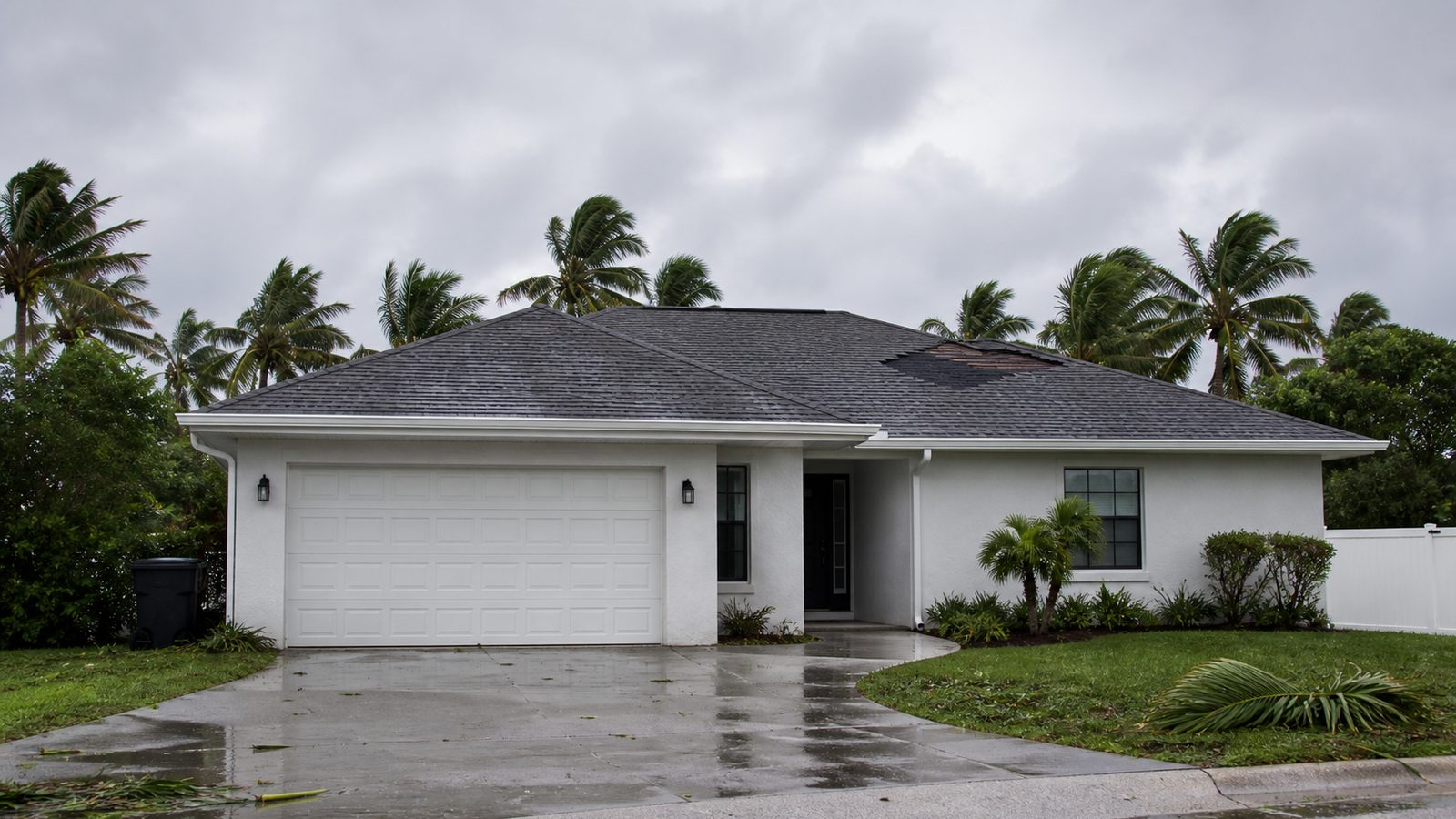
Step 1: Document Before You Touch Anything
Before anyone gets on your roof — before you call your insurer, before you call a contractor — document every piece of visible damage from the ground and from inside the house.
What to photograph from the ground:
- Missing or lifted shingles (use a telephoto or zoom in)
- Debris on the roof: branches, granule piles at downspouts, displaced flashing
- Dented or bent gutters, soffit, fascia, or aluminum trim
- Any visible impact marks on vents, skylights, or HVAC equipment
What to document inside:
- Any ceiling stains, active water intrusion, or wet insulation in the attic
- Date and time of your inspection (photo metadata works, or add a notepad in the frame)
Why this matters: Insurance adjusters assess whether damage is consistent with the reported storm event. If you have granules in your gutter downspout on a flat section of lawn — granules that were not there before — that is evidence. If you wait three weeks to document and the granules wash away in the next rain, that evidence is gone.
Do not climb on the roof yourself to document. Falls from residential roofs are the most common construction-related fatality. Call JK Prestige's emergency line and we will get crews on site and document the damage properly.
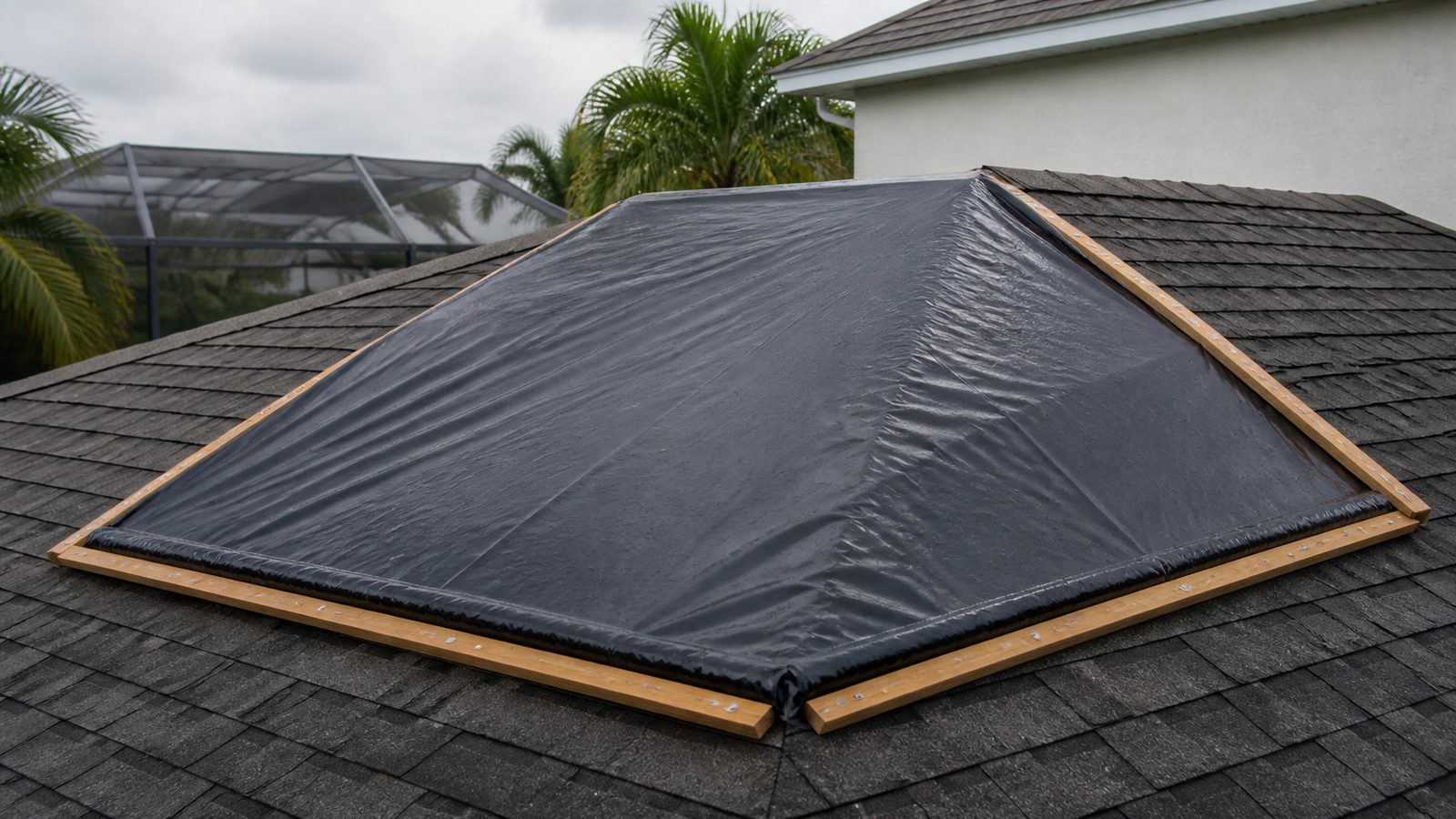
Step 2: Apply Emergency Tarping if There Is Active Leak Risk
If the storm caused a penetration — a branch through the deck, a section of flashing completely displaced, or visible open decking — you have an obligation under most Florida homeowner's policies to take reasonable steps to prevent further water damage. Failing to do so can give your insurer grounds to deny the portion of damage that occurred after the storm.
JK Prestige provides 24/7 emergency tarping service. A tarp installed within hours of a storm event, documented with before-and-after photos, creates a clear record: here is what the storm caused; here is what we did to prevent additional damage. That record matters when the adjuster comes.
Do not let a door-knocker contractor install a tarp and disappear. Your emergency tarp documentation needs to be professional and traceable.
Step 3: Review Your Policy Before You Call
Pull your homeowner's policy and find four numbers before you dial your insurer:
- Hurricane deductible: Florida law requires a separate hurricane deductible, typically 2% to 5% of your home's insured value. On a $400,000 insured home, that is $8,000 to $20,000 before your insurer pays a dollar. Know this number.
- Wind/hail deductible: Some policies have a separate deductible for wind or hail events that did not reach named-storm status. This is distinct from your standard deductible.
- Claim filing window: Florida Statute 627.70132 requires wind damage claims to be filed within 2 years of the date of the loss. Do not assume you have unlimited time.
- Actual Cash Value (ACV) vs. Replacement Cost Value (RCV): ACV policies depreciate your roof based on age. A 15-year-old roof may receive ACV payment that covers only a fraction of replacement cost. RCV policies pay what replacement actually costs, regardless of the roof's age. If you have an ACV policy, you need to know this before you submit a claim.
Step 4: File the Claim and Schedule the Adjuster
Call your insurance company and file the claim. Document the claim number, the date filed, and the name of the representative who took your call. Get a confirmation email if available.
Your insurer will schedule a field adjuster to inspect the property. This inspection is the most important step in the process. The adjuster's written report becomes the basis for the settlement offer.
Request to be present during the adjuster inspection. You have the right to be there. You also have the right to have your contractor present.
JK Prestige's insurance adjuster liaison service means a JK project principal accompanies the adjuster during the inspection. We know what adjusters are trained to look for, and we know the difference between what they document by default and what they will document if it is pointed out and explained.
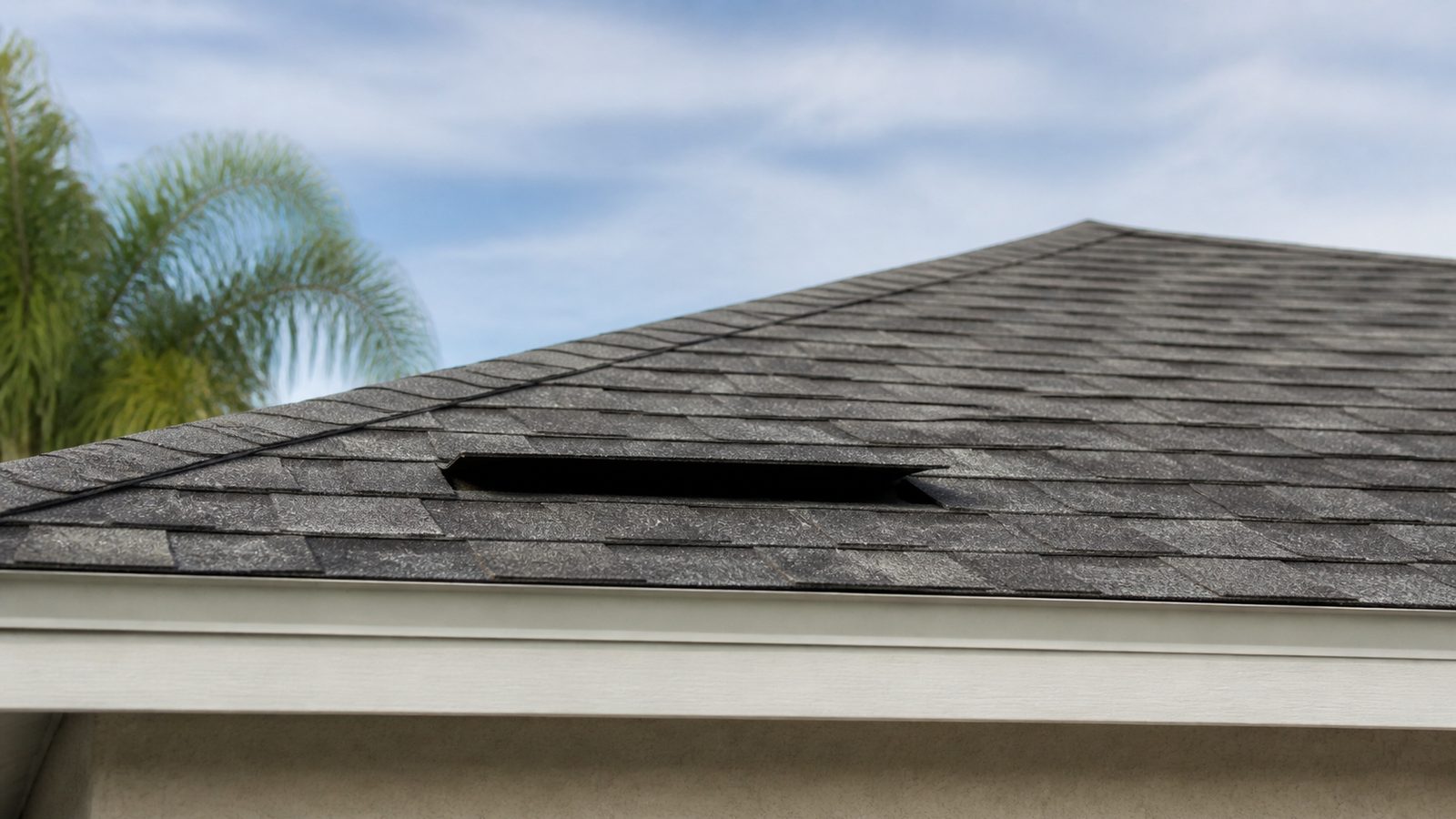
What Your Adjuster Is Looking For: Hail vs. Wind Damage
Adjusters are trained to distinguish between damage types because they affect claim handling differently. Understanding this distinction helps you know whether your adjuster is assessing your claim correctly.
Wind Damage Indicators
- Missing shingles: Direct wind lift. Look for exposed decking, adhesive strips torn away rather than peeled.
- Lifted tab edges: Shingles partially lifted; adhesive broken but shingle still present. Indicates wind uplift above the adhesive threshold.
- Creasing: Shingles bent back by wind and then laid back down — appears as a horizontal crease across the shingle face, often with broken fiberglass mat beneath.
- Flashing displacement: Wind gets under step flashing at walls, valleys, and penetrations. Separated flashing is a claim item even if no shingles are missing.
- Ridge cap displacement: Ridge cap takes the highest wind load on any residential roof. Missing or displaced ridge cap is a consistent wind damage indicator.
Hail Damage Indicators
- Soft metal hits: Hail leaves circular, soft-edged impact marks on aluminum gutters, downspouts, valley flashing, AC condenser fins, and metal vents. These marks confirm hail size and density and are often more visible than the shingle damage itself.
- Granule loss at impact points: Hail dislodges granules from asphalt shingles at the point of impact, leaving a dark circular area. On a dark-colored shingle, this can be subtle. An adjuster who is not spending time on the roof will miss it.
- Bruising: Beneath the granule surface, hail impacts create a soft depression in the asphalt mat. Press a thumb into a suspected impact area — if it compresses where an undamaged shingle would not, that is bruising.
- Fiberglass mat fracture: Severe hail can fracture the fiberglass reinforcement beneath the asphalt. This is a functional failure — the shingle will fail sooner than expected — but it requires close inspection to identify.
The Pattern Test
Adjuster training emphasizes pattern consistency. Hail damage appears in a random pattern across the full field of a roof because hailstones hit at slightly different angles. Wind damage concentrates on the leading edges, corners, and ridgeline where wind pressure is highest. If you are claiming hail damage but the damage pattern only appears on one side of the roof, the adjuster will challenge it — and may be right to do so. If you are claiming wind damage and the adjuster focuses only on missing shingles while ignoring lifted tabs and displaced flashing, push back. Or have JK's principal do it.
Common Claim Denials and How to Fight Them
"Pre-existing damage"
Adjusters may attribute visible deterioration — granule loss, minor cracking, worn sealant — to pre-existing conditions rather than the storm event. This is sometimes correct and sometimes a claim reduction strategy.
Response: Request documentation of what specifically the adjuster characterized as pre-existing and on what basis. If you have photos from a prior inspection, a real estate closing photo set, or a prior roof inspection report, that documentation establishes a baseline. JK Prestige's free 24-point inspection report documents current condition with photographs — if you have one from before a storm, it is exhibit A in this argument.
"Normal wear and tear"
Similar to pre-existing damage claims. Adjusters will attribute degraded sealant, minor granule loss, or small lifted tabs to wear rather than storm causation.
Response: If the storm event is documented — weather service records, neighbor claims on the same storm, hail reports from the National Weather Service — establish the event intensity and then correlate the damage pattern. A hail-spotter report showing 1.5-inch hail in your zip code, combined with soft metal impacts on your gutters, is difficult to characterize as wear and tear.
"Below deductible"
The adjuster's repair estimate comes in below your hurricane or wind deductible. This is not always incorrect — minor damage may genuinely not reach the threshold. But adjuster estimates routinely use per-square material pricing that does not reflect actual local replacement costs.
Response: Get an independent estimate from a licensed contractor. JK Prestige provides written estimates with line-item scope. If our estimate is materially different from the adjuster's, we can provide documentation to support a supplemental claim.
Hiring a Public Adjuster
If your claim is denied or significantly underpaid and the disagreement cannot be resolved with the insurer's field adjuster, you have the option to hire a public adjuster — a licensed professional who represents your interests in the claim process, not the insurer's. Public adjusters work on contingency (typically 10-15% of the settlement). They are regulated by the Florida Department of Financial Services.
JK Prestige does not serve as a public adjuster and cannot charge contingency fees based on your claim. We serve as a technical resource during the adjuster inspection and documentation process, and we provide the written estimates that support supplemental claims. For formal disputes, a licensed public adjuster is the appropriate resource.
How a GC-Backed Roofer Changes the Process
Most storm chasers — contractors who follow storm events door to door — are standalone roofing operations with no GC license and no stake in your property beyond the roofing contract. They identify storm events, mobilize fast, and move on. Their incentive is volume.
JK Prestige's roofing division operates under a licensed general contractor. That means JK can handle what storm damage often requires: not just roofing, but decking repair, framing assessment if structural penetration occurred, interior water damage remediation coordination, and the kind of documentation-heavy project management that a legitimate insurance claim requires. The JK Way means one principal, one contract, and one number to call through the entire process.
A principal answers at (904) 944-0278.
Book Your Free 24-Point Roof Inspection After a Storm
If you had storm activity in your area and are unsure whether your roof sustained damage, JK Prestige offers a free 24-point roof inspection with a written report. The report documents condition by section and can serve as the baseline documentation for an insurance claim if damage is found.
Book your free 24-point roof inspection — no obligation, written report included.
No call center. No coordinator. A JK principal reviews every inquiry and replies with a real number, not a range, not a follow-up form.
Request Free Estimate →