Hurricane season opens June 1. Jacksonville has a direct-hit history — Irma (2017) caused $1.8 billion in insured losses in Duval County — and any roof vulnerability that exists on May 31 becomes an entry point on June 1. The difference between a roof that survives a Category 2 landfall and one that fails is rarely the storm; it is the condition of the components before the storm. JK Prestige runs a free 24-point inspection on residential and commercial roofs throughout Jacksonville. This post is the checklist behind that inspection: what we look at, what we're looking for, and what each failure means when wind and water arrive.
The window to schedule is March through May. By June, lead times are measured in weeks.
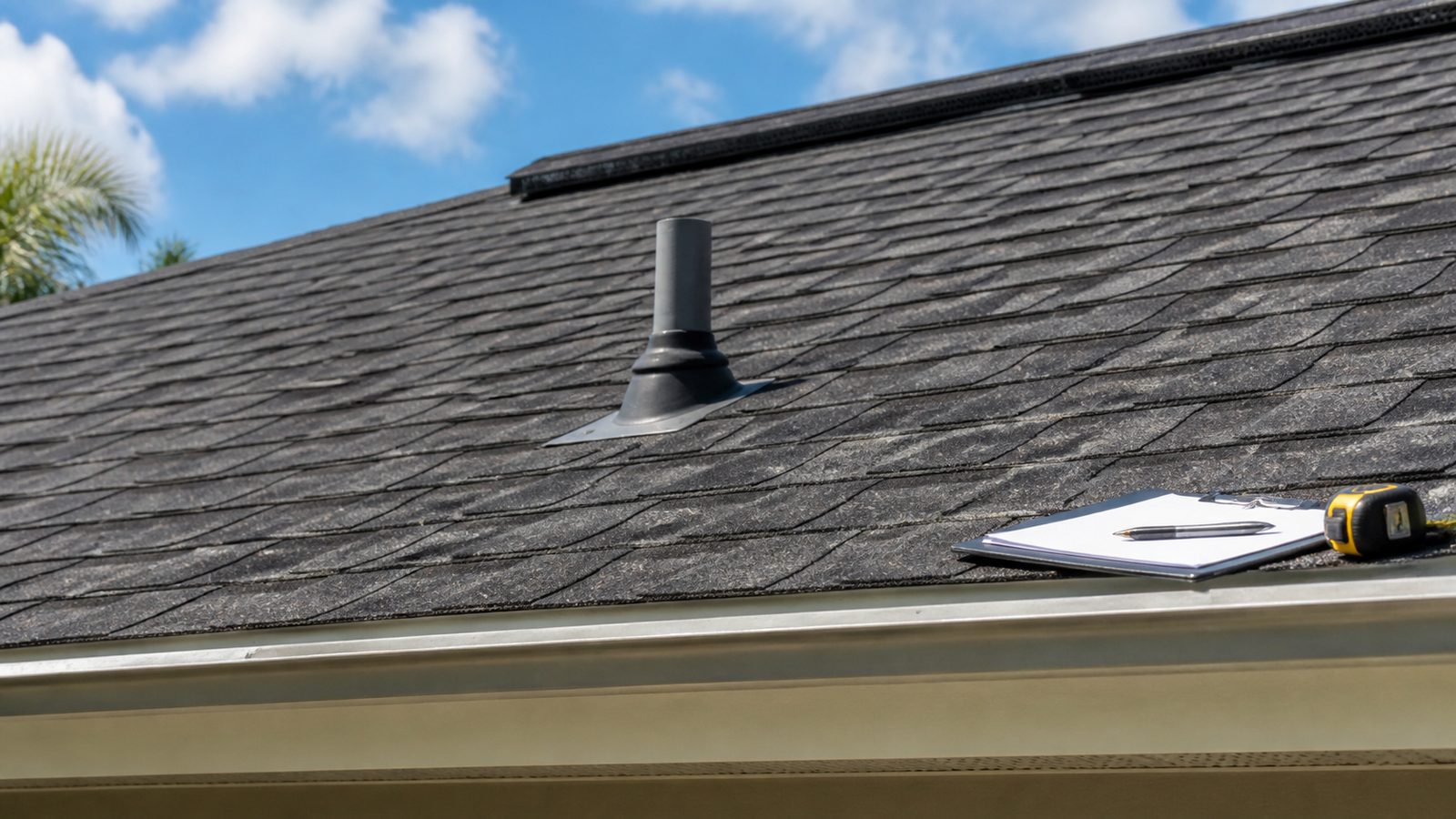
Storm Damage Roof Repair Jacksonville: Why Pre-Season Matters
An adjuster assessing post-storm damage asks one question before approving your claim: was this storm-caused or pre-existing? A lifted shingle with a UV-degraded mat and no fresh fracture pattern reads as pre-existing. A pipe boot that was already cracking before the storm hit becomes the carrier's argument for exclusion.
Pre-season inspection does two things. First, it identifies and fixes conditions that will fail under storm loads. Second, it creates a documented baseline — written inspection report, photographs, component condition ratings — that becomes your pre-storm evidence if a claim follows. That documentation is worth carrying into every adjuster conversation.
The inspection categories below track JK's 24-point inspection sequence.
Field Shingles: Granule Loss, Lifting, and Missing Sections
What we look at: Every slope of the roof, including low-slope transitions, valleys, and areas around penetrations.
What we're looking for:
- Granule loss: Granules are the shingle's UV and weather barrier. Heavy granule loss — visible as bare asphalt patches or high granule accumulation in gutters — indicates the shingle is aging past its protective threshold. A shingle with granule loss will not survive repeated wind-driven rain cycles without accelerating failure.
- Lifting or cupping: Shingles that are lifting at the tabs or cupping along the edges are no longer lying flat against the deck. Wind gets under them. A 90 mph gust will find every tab that isn't sealed.
- Missing shingles: Any missing shingle is an open deck — immediate repair required before season.
- Nailing pattern: On older roofs or re-roofs done over existing layers, high nailing (nails above the manufacturer's nailing zone) causes shingles to release under load. Not visible from the ground; requires hands-on inspection.
Storm vulnerability: Lifted tabs fail at 60 to 70 mph — well below Category 1 threshold (74 mph). Missing shingles allow deck saturation within hours.
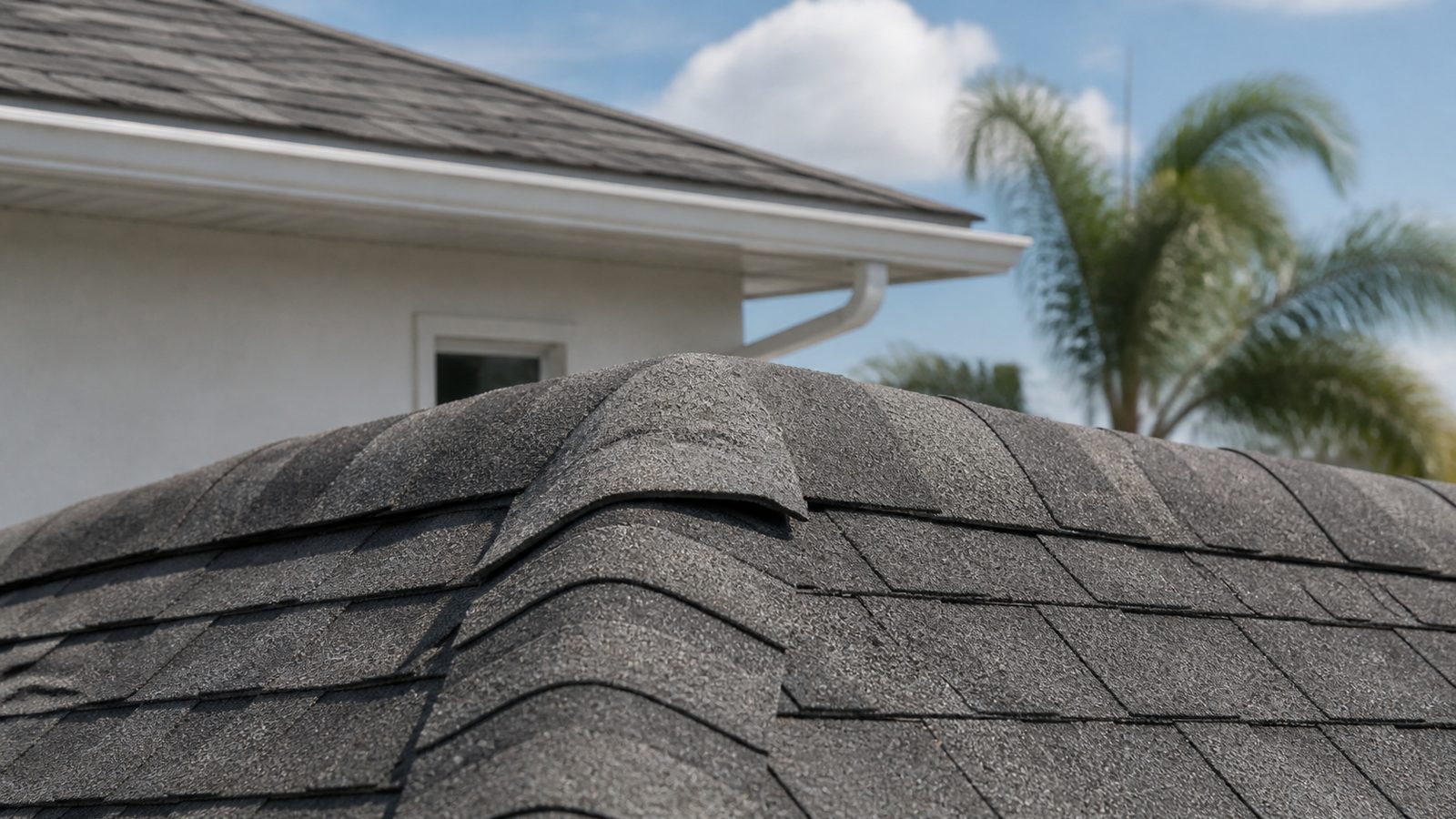
Ridge and Hip Caps: The First Thing Wind Grabs
What we look at: Ridge line, all hip runs, and transitions between slopes.
What we're looking for:
- Cap shingles that are lifting, cracking, or missing fasteners
- Sealant strips that have dried out and lost adhesion
- Ridge vent mesh that is blocked, dented, or missing sections
Storm vulnerability: Ridge and hip caps are at the highest wind-exposure point on the roof. They fail first. A cap loss at the ridge exposes the underlayment — and the deck — to direct rain entry the length of the ridge. In a multi-hour storm event, that is significant water intrusion.
Flashings: The Most Commonly Missed Failure Point
Flashings are the metal connections between the roof membrane and every vertical surface, penetration, and edge. They are the most common source of storm-related water entry — and the most commonly skipped item on low-cost inspections.
Step and Counter Flashing
Step flashing runs up the vertical walls at dormers, chimneys, and sidewalls, one piece per shingle course. Counter flashing caps the step flashing, typically embedded in masonry or under siding. JK looks for:
- Lifted or separated step flashing pieces (should be nailed and sealed to the vertical)
- Missing sealant at the counter flashing termination
- Rust or cracking in galvanized flashing (indicates age and coming failure)
Chimney Flashing
Chimney flashings fail at the corners. Water follows the chimney face down and finds any gap between the counter flashing and the masonry. If there is weep mortar at the flashing joints, it needs to be fresh and intact.
Pipe Boot Flashing
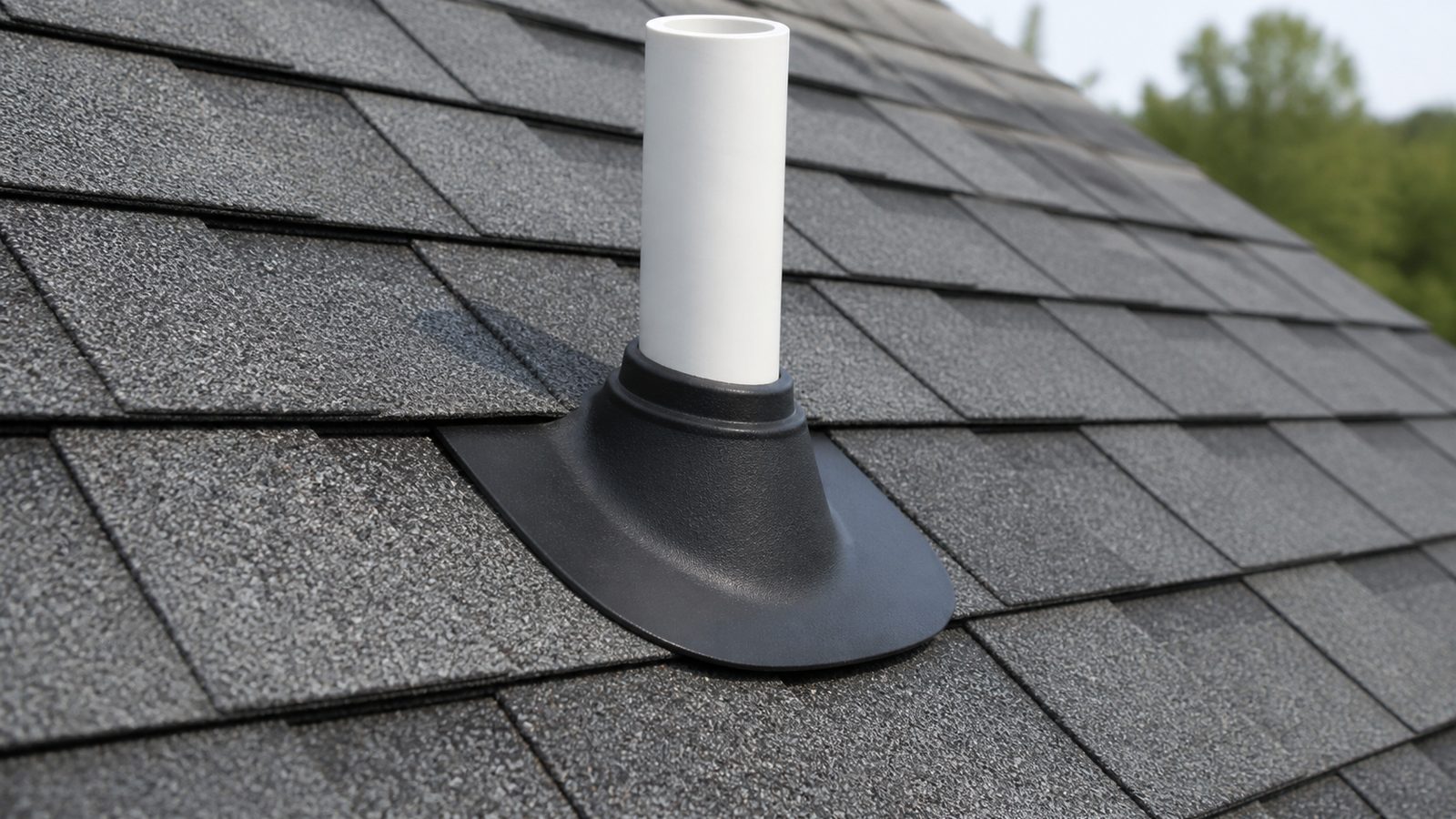
Every plumbing vent penetration has a pipe boot — a rubber collar that seals around the pipe. Florida UV degrades rubber. Boots last 10 to 15 years; most roofs have pipes that were installed years before the last roof replacement. JK looks for cracking, separation at the pipe, or visible daylight at the collar.
A cracked pipe boot is a guaranteed water entry point in any sustained rain event.
Drip Edge
Drip edge runs along the eave and rake edges, directing water off the decking into the gutter. Missing or lifted drip edge allows wind-driven rain to get under the shingle overhang and into the fascia. Florida Building Code Section R905.2.8.5 requires drip edge on all re-roofs — but existing roofs may predate that requirement.
Gutters, Downspouts, Soffit, and Fascia
Gutters and downspouts: Clogged gutters overflow at the fascia. In a storm, that overflow backs under the drip edge. Downspouts that terminate against the foundation redirect the problem, not solve it. JK checks for clogs, proper slope, and secure attachment points (gutter spikes pulling from fascia boards indicate rotted fascia behind them).
Soffit: Wind-driven rain enters through soffit vents if the screens are missing or damaged. Delaminated soffit panels can be lifted by wind and pulled off entirely, exposing the rafter bays. JK looks for delamination, paint failure (indicates moisture behind the panel), and any sections that flex when pressed.
Fascia: Rotted fascia cannot hold a gutter through a storm. Soft spots in fascia typically indicate an ongoing water entry from above — either a gutter overflow condition or a failed drip edge. The fascia repair is not the fix; the source needs to be found.
Attic Ventilation: The Pressure Problem No One Talks About
An unventilated or underventilated attic becomes a pressure vessel in a storm. Wind creates positive pressure on the windward side and negative pressure (suction) on the leeward side. A sealed attic amplifies that pressure differential internally, which can contribute to roof deck uplift. Proper ridge-to-soffit ventilation — one net free square foot of ventilation per 150 square feet of attic floor — allows pressure equalization.
JK checks ridge vent continuity, soffit vent screens, and whether baffles are in place to keep insulation from blocking the soffit inflow.
Active Leaks and Interior Staining
Any active interior staining — water marks on ceilings, staining at attic sheathing, mold on rafters — indicates an existing leak path. Those paths get worse in storms. JK includes interior attic inspection in the 24-point review.
What JK's Free 24-Point Inspection Covers
The inspection covers all components above. JK provides:
- Written report with component-by-component condition ratings
- Photographs with location notes
- Priority ranking (immediate repair vs. monitor vs. acceptable)
- Written estimate for any repair items identified
There is no charge for the inspection or the written report. The estimate is fixed-price — if scope doesn't change, price doesn't change. That is the JK operating model on every project.
For past inspection-to-repair projects on Jacksonville residential and commercial roofs, see JK's completed project portfolio.
Book Before May 31
JK's pre-hurricane scheduling fills through April and May. If you are reading this in March, schedule now.
If a storm has already hit, JK provides 24/7 emergency tarp service and adjuster liaison for claims. A principal answers.
No call center. No coordinator. A JK principal reviews every inquiry and replies with a real number, not a range, not a follow-up form.
Request Free Estimate →