Florida homeowners file more roof insurance claims than homeowners in any other state. Florida insurers also deny more roof claims than carriers in any other state. The most common basis for denial: "the damage is attributable to normal wear and deterioration, not a covered storm event."
That determination is not always wrong. But it's also not always right. And homeowners who don't understand the difference between storm indicators and wear indicators go into the claims process blind — which is exactly where an adjuster who is managing a high volume of post-storm claims wants you.
Here's what storm damage looks like, what normal wear looks like, and how a general contractor (GC) who does insurance documentation work protects your claim position.
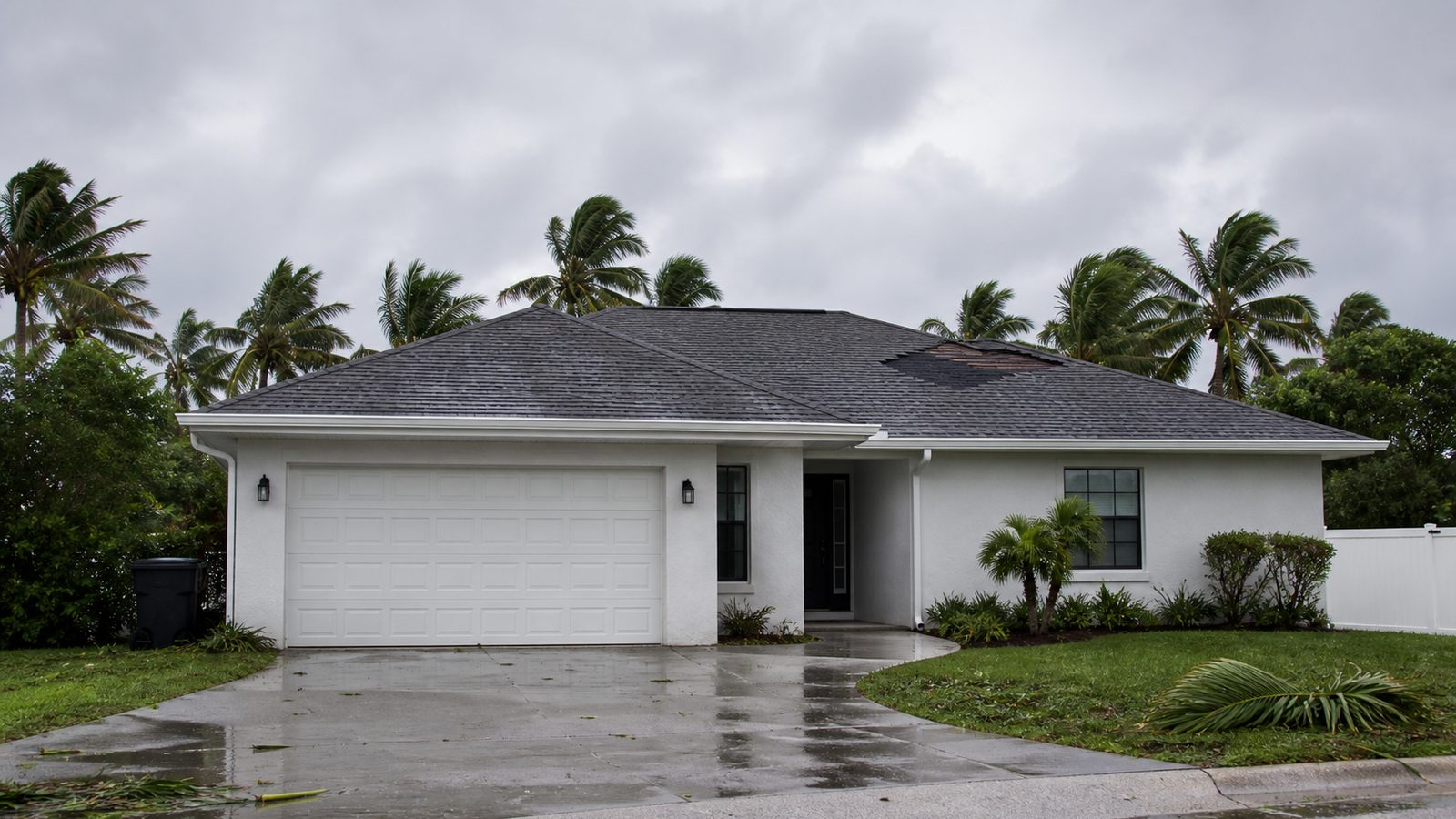
What Insurance Covers: The Policy Language That Matters
Standard homeowner's insurance policies in Florida cover sudden and accidental physical loss — including damage caused by named storms, wind, and hail. They do not cover:
- Deterioration from age and normal use
- Lack of maintenance
- Pre-existing damage
- Repeated seepage or leakage over time
The insurer's adjuster is trained to look for indicators that move damage from the "storm" column to the "wear" or "pre-existing" column. The difference between a paid claim and a denied claim often comes down to which category the physical evidence supports.
Understanding what physical evidence supports each category is not just interesting — it's how you protect your claim.
Storm Damage Indicators: What to Look For
Hail Damage Indicators
Hail damage has distinct physical characteristics. Not all granule loss is hail — but hail-specific granule loss has a pattern:
Circular granule impact pattern: A hailstone strike on an asphalt shingle creates a small, roughly circular area of granule displacement. The impact fractures the bond between granules and the asphalt mat underneath, and the granules fall away. Looking down at the shingle, you see a slightly darker, rough-textured circular area — the exposed mat.
In a true hail event across a roof, these circular impact marks are distributed randomly but in similar patterns on every exposed roof plane (because the hail fell from one direction). In a weather data analysis, a hail event that occurred at your address can be documented through third-party weather services — this data is admissible in the claims process.
Fractured tabs with straight breaks: Shingle tabs that have fractured with a straight break — versus gradual curling — can indicate a hail impact fracture. The break runs perpendicular to the slope, at the point of impact.
Soft metal impacts: Downspouts, gutters, flashing at valleys and chimneys, AC line sets, and other soft metal components adjacent to the roof will show dents from hail. A hail event that damaged only the shingles and left no marks on exposed soft metals should be scrutinized — adjusters use soft metal impacts as corroborating evidence for hail claims.
Wind Damage Indicators
Lifted shingles: The seal tab — the factory-applied adhesive strip on the shingle's underside — releases when wind forces air under the leading edge of the shingle. Once lifted, the shingle may reseat partially, making it difficult to see from the ground, but it has lost its wind-resistant seal and will lift again in subsequent wind events.
Bent or torn flashing: Metal flashing at valleys, chimneys, and rakes can be bent or torn at wind speeds well below hurricane level. A flashing that was flat before a storm and is now lifted or bent is storm evidence.
Missing shingles in a directional pattern: Wind-related shingle loss typically shows a directional pattern — shingles missing from one or two roof planes that faced the wind, while shingles on the lee side remain intact. Random single-shingle loss in all directions is more consistent with age deterioration.
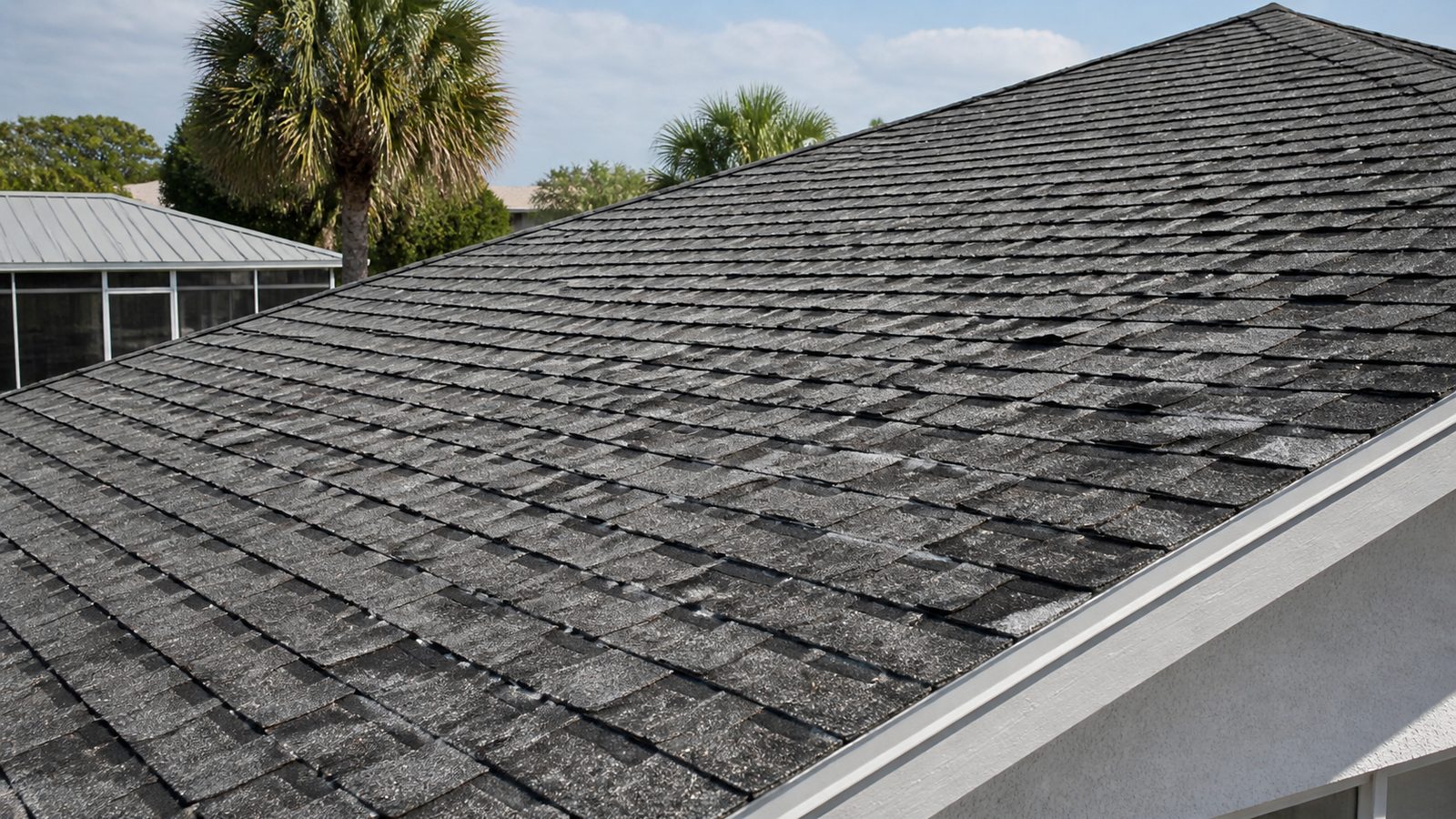
Normal Wear Indicators: What Adjusters Use to Deny Claims
Distributed Granule Loss
Age-related granule loss is distributed evenly across the entire roof surface. The granules erode from thermal cycling, UV exposure, and rain impact over time — not from discrete impact events. A shingle in the 15th year of a 25-year rated life will show significant granule thinning across all surfaces equally.
The distinguishing feature: hail creates discrete circular impact patterns with concentrated granule loss. Age creates a diffuse, distributed pattern with consistent thinning across the surface.
Uniform Curling
Thermal cycling curling — where shingles curl upward at the edges (cupping) or arch upward in the center (clawing) — is a deterioration pattern from repeated heating and cooling cycles. Florida's heat cycle accelerates this. Curling is not evidence of storm damage; it's evidence of age. An adjuster who photographs widespread uniform curling has documentation for a wear-and-tear denial.
Cracked Caulk at Penetrations
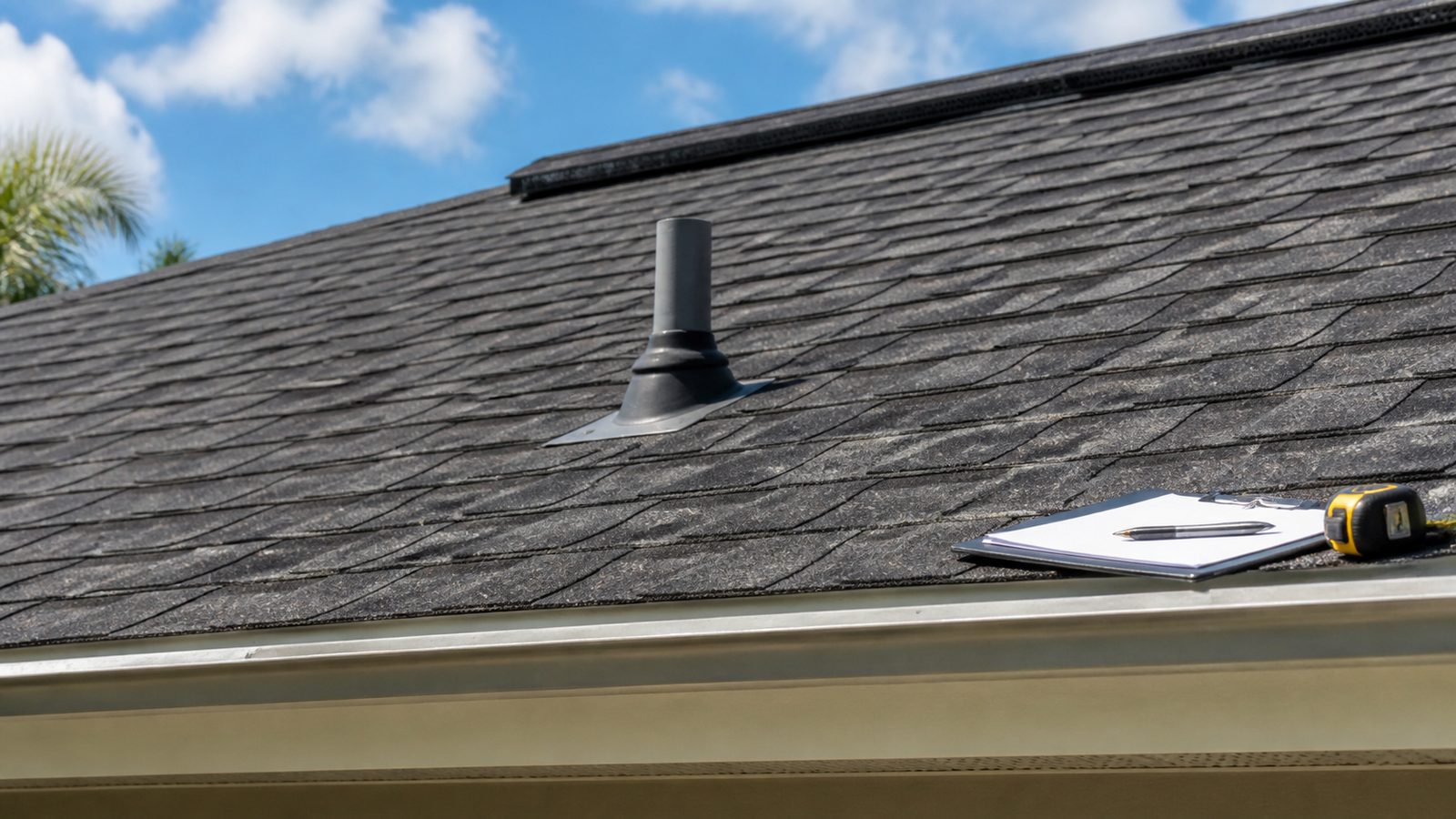
Pipe boot caulk, chimney flashing caulk, and skylight sealant all crack from UV exposure and thermal cycling over time. A leak traced to a cracked caulk joint at a penetration is typically a maintenance issue — not a storm claim. Caulk fails gradually over 5-10 years in Florida's climate. This is the most common "maintenance item" finding on adjuster reports.
Algae and Moss Staining
Algae (the dark streaking common on Florida roofs) and moss growth are maintenance indicators. They don't cause immediate structural damage, but they indicate a roof that has not been treated or cleaned. Adjusters note algae and moss as evidence of deferred maintenance, which is used to support the argument that the owner did not maintain the roof in a serviceable condition.
How a GC-Backed Roofer Documents the Difference
The documentation that wins claims is not just photographs — it's the professional assessment of what the photographs show and the weather correlation that connects the physical evidence to a storm event.
What JK Prestige's storm damage documentation includes:
- Date-stamped photographs of all damage indicators before any temporary repair or cleanup
- Written condition report distinguishing storm-related indicators (circular granule impacts, lifted flashings, directional shingle loss) from pre-existing conditions
- Third-party weather data for the storm date at the property address — hail size, wind speeds, storm track
- Soft metal documentation — photos of gutters, downspouts, flashings showing impacts that corroborate the hail event
- Aerial measurement report — industry-standard square footage documentation so the repair scope isn't underestimated
This documentation package is assembled before the adjuster's visit. It sets the evidentiary baseline. An adjuster who arrives to find a professionally prepared damage report with weather correlation data is having a different conversation than one who arrives to find a homeowner pointing at their roof.
Florida's Assignment of Benefits (AOB) Changes: What They Mean for Claims
Florida's 2023 legislation (SB 2A) eliminated the Assignment of Benefits (AOB) mechanism for property insurance claims. Under prior law, a homeowner could sign over their claim rights to a contractor, who would then litigate with the insurer. This created a litigation industry that drove Florida insurance premiums higher for all policyholders.
Under current Florida law:
- AOB agreements for property insurance are no longer permitted
- Attorney fees in property insurance lawsuits are no longer automatically awarded to the prevailing insured
- The one-way attorney fee provision that made litigation economically attractive for contractors is gone
What this means for Jacksonville homeowners: You own your claim. You negotiate with the adjuster directly, or through a licensed public adjuster. You cannot sign your claim rights to a contractor. If your claim is denied or underpaid, your remedy is to challenge the adjustment directly or hire a public adjuster — not to sign an AOB.
JK Prestige does not use AOB agreements. We document your damage, provide repair scope and pricing, work with your adjuster directly on scope disputes, and build what the insurance proceeds cover. Our contract is with you — not your insurer.
See our full roofing division capabilities and how JK Prestige handles adjuster coordination at The JK Way.
Book your free 24-point roof inspection. contact the JK Prestige roofing team. If you've had a recent storm, call (904) 944-0278 now.
No call center. No coordinator. A JK principal reviews every inquiry and replies with a real number, not a range, not a follow-up form.
Request Free Estimate →