After a hurricane hits Jacksonville, the first priority is stopping water intrusion. Emergency tarping and spot patching do exactly that — they are stop-gap measures designed to protect the interior while insurance is processed and the full scope of damage is established. They are not permanent solutions. They do not restore the roof's structural integrity. They do not reinstate manufacturer warranty coverage. And they have a defined limit of effectiveness.
Understanding what temporary repairs cover — and when you need to push for a full replacement — is not a technical question. It's a financial and legal one, and the answer affects your insurance claim, your warranty position, and your home's next storm readiness.
What Emergency Tarping Is and What It Is Not
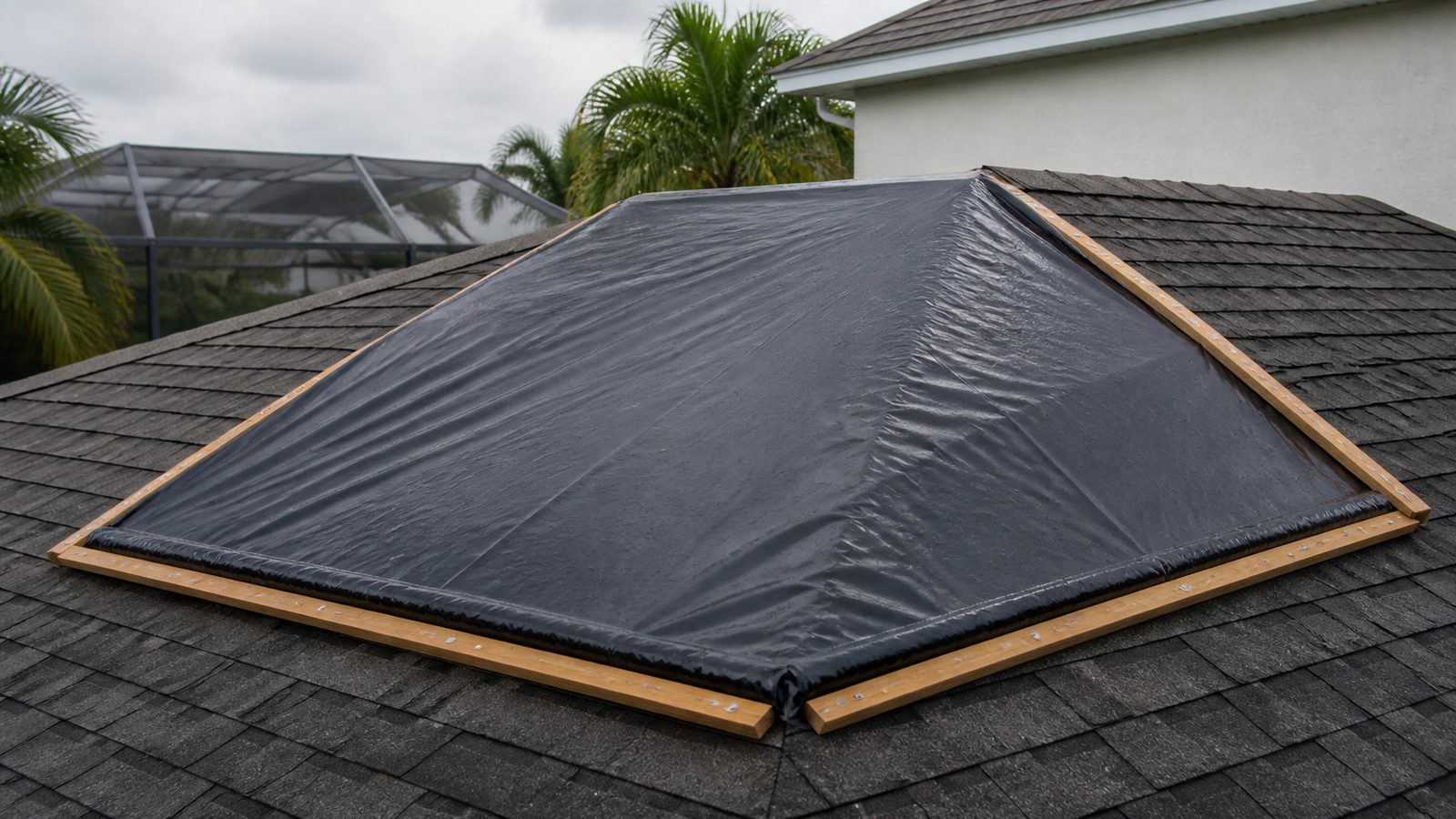
Emergency tarping is the installation of a heavy-duty polyethylene tarp over damaged areas of the roof, secured to the deck and structure to prevent rain intrusion into the building while permanent repairs are planned and permitted.
What a properly installed emergency tarp covers:
- Immediate water intrusion prevention at identified damage locations
- Protection of the interior from secondary water damage (ceiling, drywall, furniture, flooring) during the time between storm and permanent repair
- Preservation of the existing undamaged structure by keeping rain off it
What emergency tarping does not do:
- Restore the roof's rated wind uplift resistance. A tarp secured with battens or furring strips and roofing nails into the deck will lift in sustained winds above 40-50 mph. It is not a code-compliant roofing assembly and provides no meaningful wind protection in the next storm event.
- Fix the structural damage. If the wind event fractured structural members (rafters, sheathing, ridge beam), the tarp covers the symptom, not the problem.
- Reinstate manufacturer warranty coverage. Every major shingle manufacturer (GAF, CertainTeed, Owens Corning) has explicit language that damage to the roof during a storm event that is not repaired to the manufacturer's specification within a defined time window voids the existing warranty on the undamaged portions.
- Qualify for any code-compliant inspection. A tarp cannot receive a building department final inspection. Permitted permanent repairs are required for a CO.
What Spot Patching Covers
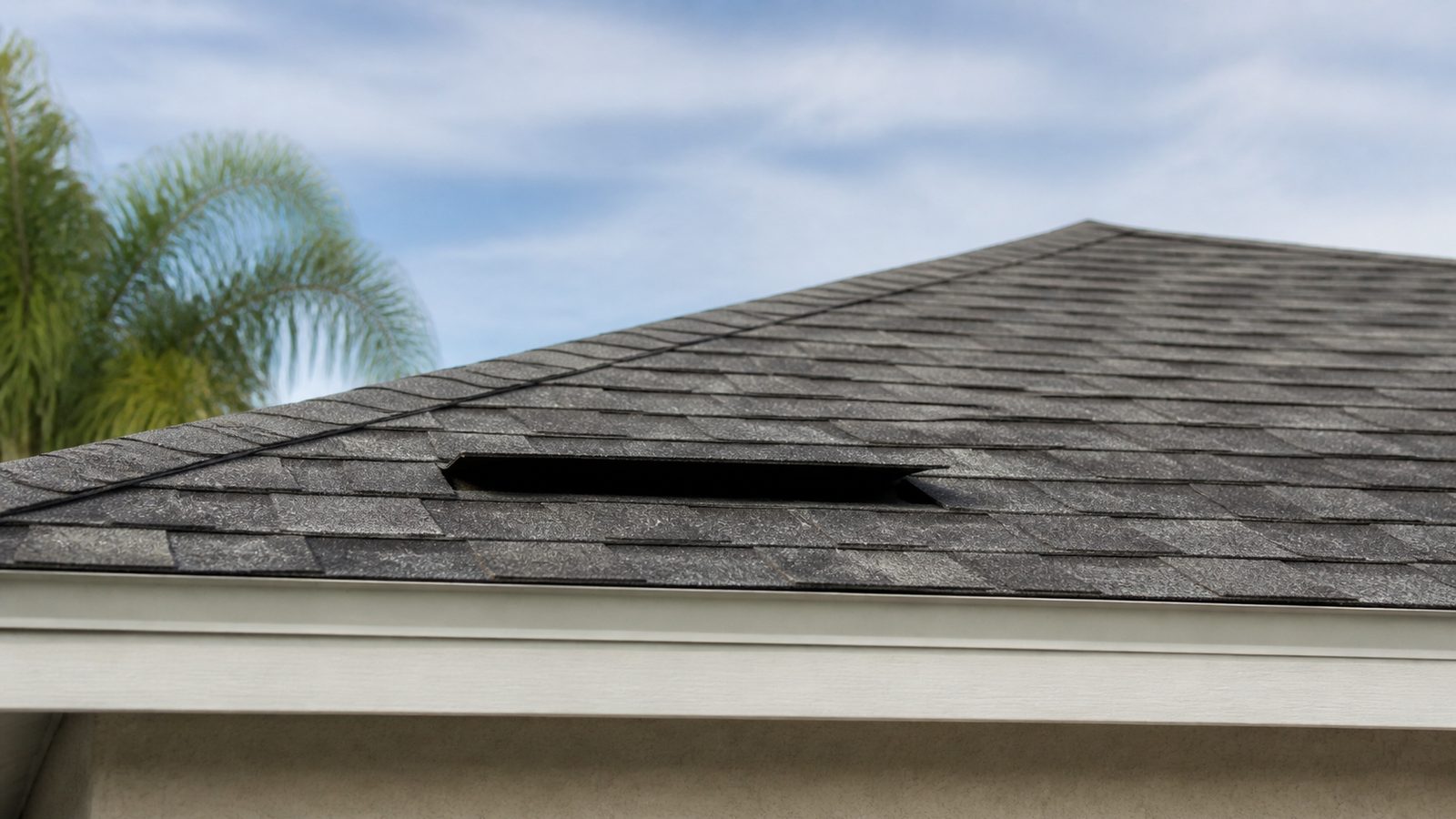
Spot patching — replacing individual damaged shingles, re-sealing lifted flashings, or applying roofing cement to localized damage — is a step beyond tarping. When executed by a licensed roofer, it can restore weather-resistance at specific locations.
What spot patching covers:
- Small areas of shingle damage (3-5 shingles or fewer) surrounded by intact, undamaged field shingles
- Flashing repairs that do not require membrane or structural work
- Pipe boot replacements where the remainder of the roof is serviceable
What spot patching does not cover:
- Large areas of damage. The Florida Building Code has a threshold for roof repairs vs. roof replacement: if more than 25% of the roof area requires repair, a full tear-off and replacement may be required by the building official. This is a code enforcement determination made by the inspector, not the roofing contractor.
- Mixed age shingles. When new shingles are applied next to shingles from a different production run (even the same product) on an older roof, the color and granule matching is often poor and the performance match between old and new shingles is inconsistent.
- Compromised deck. If the sheathing is delaminated, wet, or has fasteners that have backed out from wind uplift, patching the shingles on top does not address the structural failure below.
When to Push for Full Replacement Instead of Patching
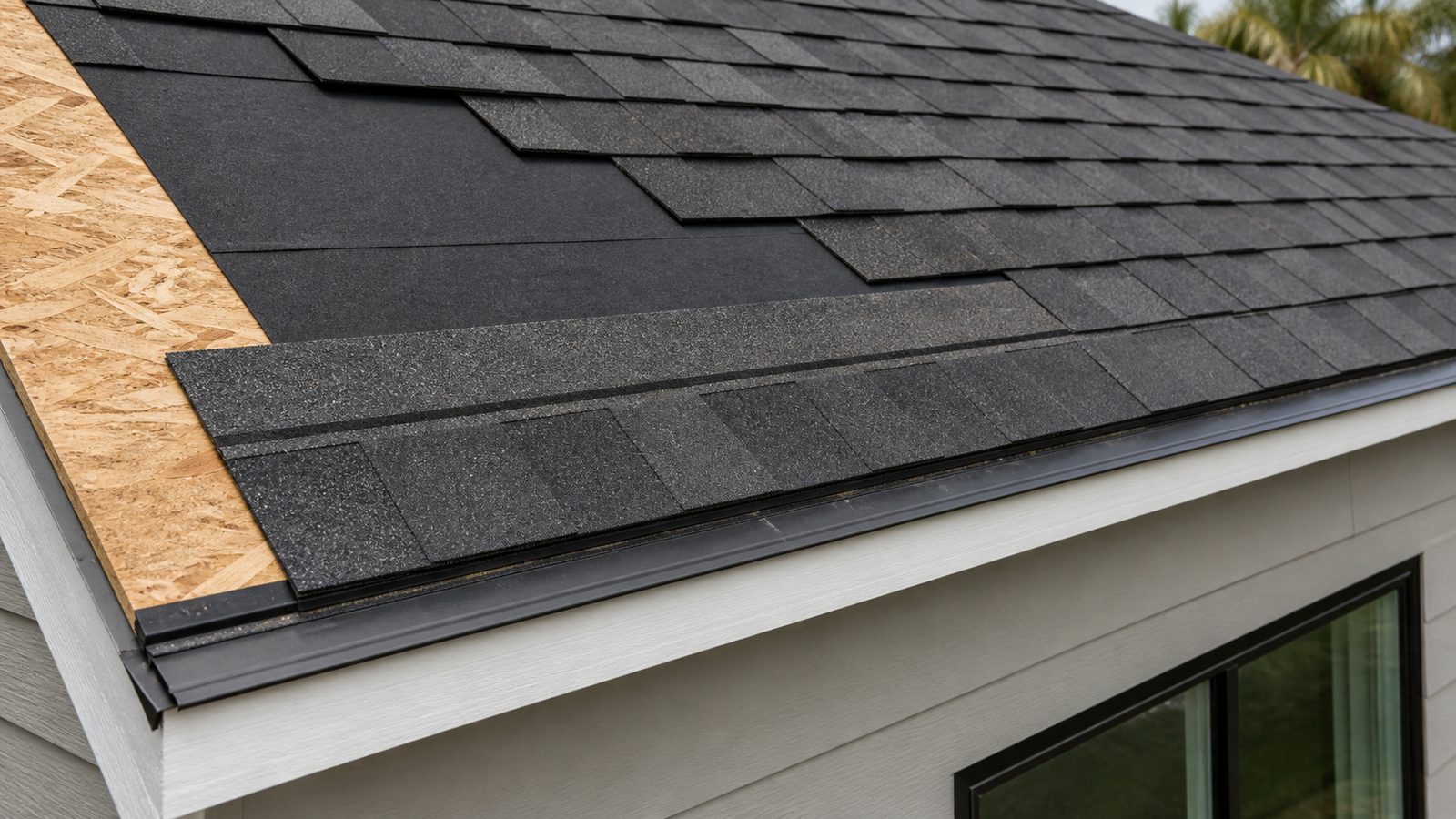
The decision between temporary/partial repair and full replacement is driven by four factors. When any of these conditions are present, full replacement is typically the right answer — and the insurance claim should reflect it.
1. More Than 25-30% of the Roof Surface Is Damaged
This is the Florida Building Code threshold for roof replacement vs. repair. When a storm damages 25% or more of the roof area — whether through missing shingles, lifted sections, or sheathing damage — the building official may require a full tear-off and replacement to bring the entire roof into current code compliance (current nailing patterns, current drip edge fastening, current product approvals).
Document the damaged percentage with aerial measurement tools and professional photography before any temporary repairs alter the damage footprint. Once tarps are installed and debris is removed, the photographic record is the only basis for the repair-vs.-replacement determination.
2. Deck Compromise
If the plywood or OSB roof deck (sheathing) has been damaged — delaminated from moisture intrusion, fractured from wind uplift, or visibly buckled — patching shingles on top of it is not a code-compliant repair. Deck replacement is required, and deck replacement requires a building permit with inspections.
When deck replacement is required, you're effectively performing a re-roof from the deck up. At that point, the cost difference between patching on a new deck and full replacement on a new deck is often minor — and full replacement provides the manufacturer warranty that a repair over a new deck does not.
3. The Roof Is Already Near End of Life
An adjuster who sees storm damage on a 22-year-old shingle with 3 years of expected useful life remaining will argue that storm damage is secondary to the pre-existing age. A partial repair that extends a near-end-of-life roof for 2-3 more years is not a long-term solution — it's a delay. The insurance carrier may also settle on an actual cash value (ACV) basis rather than replacement cost value (RCV) if the roof is beyond a certain age.
If your roof is 18+ years old on a 25-year shingle, or 12+ years old on a 20-year shingle, and a storm has caused significant damage, the economics of full replacement are almost always superior to patch repair.
4. Warranty Is Already Compromised
Check the existing roof warranty terms. Most shingle manufacturer warranties require that repairs use the same manufacturer's products and installation standards. They also typically require that damage be repaired within a specified window (30-90 days depending on manufacturer). If temporary repairs have been in place for months while an insurance dispute is resolved, and the manufacturer's repair window has passed, the existing warranty on the undamaged portions may already be void.
JK Prestige holds GAF Master Elite and CertainTeed Select contractor certifications. When we perform a full replacement using our own roofing crews, we can issue the manufacturer's strongest warranty tier — Golden Pledge (GAF) or SureStart Protection (CertainTeed) — which provides both material and installation coverage. A repair performed by a non-certified contractor on a GAF roof voids the GAF warranty.
How to Document the Difference Before Temporary Repairs Begin
The sequence matters for your insurance claim:
- Document all damage before tarping. Photograph every damaged area before any cover or repair material is applied. This is the evidentiary record of the storm's impact.
- Mark the damage boundaries. Have the roofing contractor mark or photograph the boundaries of each damage area — this establishes the percentage of roof affected.
- Document the deck condition. If any sheathing is visible (through missing shingles), photograph the deck condition before it is covered.
- Request a written damage assessment from the roofer before temporary repairs are authorized. The assessment should state whether repair or replacement is recommended and why.
This documentation package is what your adjuster compares against the physical evidence at their inspection. An adjuster who arrives to find a complete damage assessment with area calculations and deck condition documentation is less likely to attempt to reclassify storm damage as wear.
See our full storm damage and roofing services and how JK Prestige coordinates between emergency response and the full repair process at The JK Way.
Book your post-storm assessment — contact the JK Prestige roofing team. Call (904) 944-0278. A principal answers 24/7 after storms.
No call center. No coordinator. A JK principal reviews every inquiry and replies with a real number, not a range, not a follow-up form.
Request Free Estimate →