Commercial flat roofing in Florida gets tested in ways that northern climate specifications don't anticipate. 300 days of UV exposure per year. Afternoon thunderstorms that drop 2 inches in 30 minutes. Category 2 to 4 hurricanes that put wind uplift loads on membrane systems that expose installation quality fast.
When a Jacksonville commercial building owner is replacing or specifying a flat roof, the choice between TPO and EPDM matters. Not because one system is universally better, but because performance differences are real in Florida conditions.
JK Prestige self-performs commercial roofing on our own crews. GAF Master Elite certified. Here's what Florida building owners and their GCs need to know.
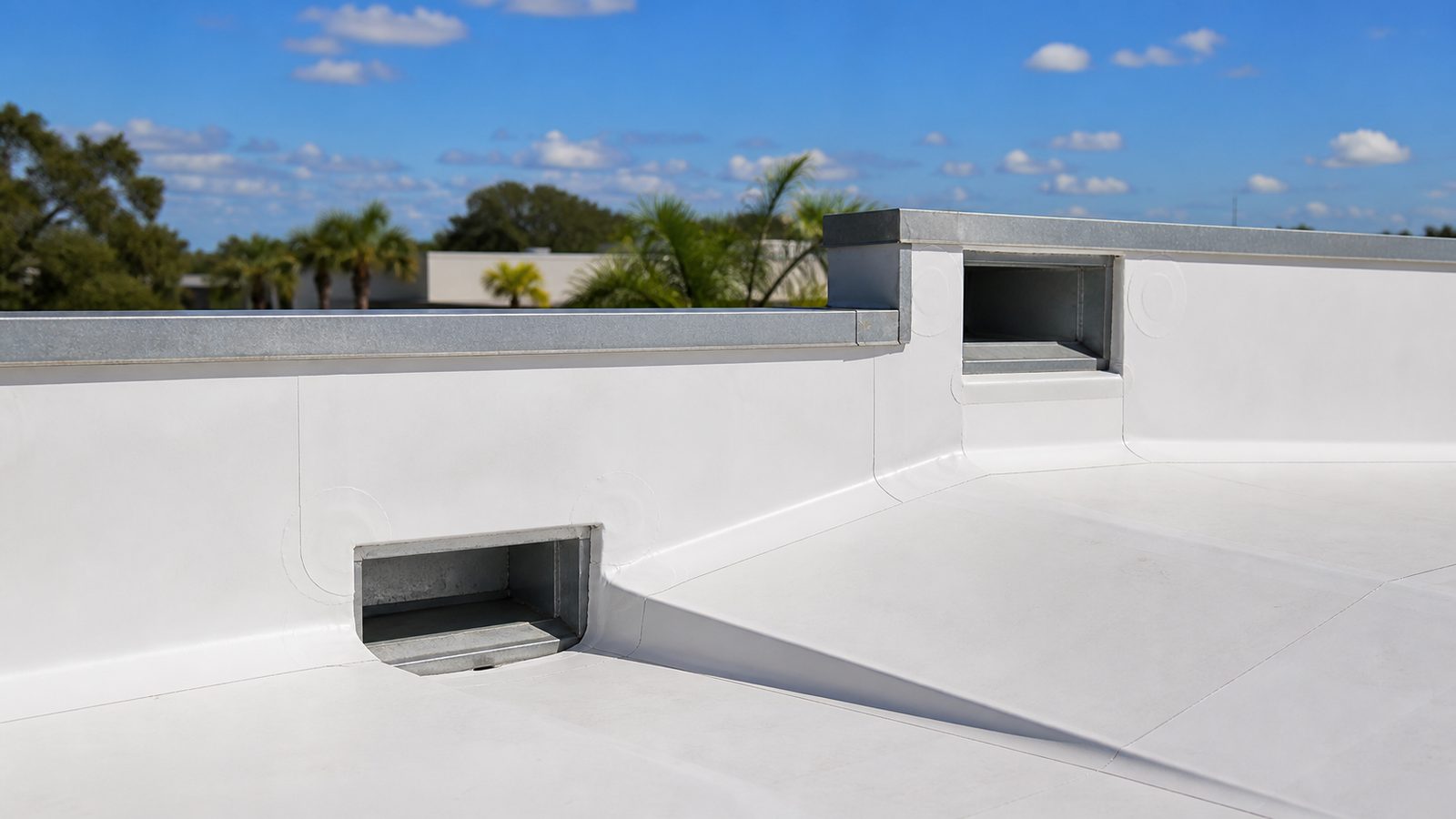
What TPO Is and How It Performs in Florida
Thermoplastic Polyolefin (TPO) membrane roofing is the dominant single-ply flat roof system installed in Florida commercial construction over the past 15 years. Its market share growth came primarily at EPDM's expense, driven by several performance characteristics.
TPO in Florida heat: TPO is a white or light-colored membrane. Light-colored roofs reflect solar radiation — a meaningful advantage in Florida where roof surface temperatures on dark membranes can exceed 160°F in summer. A TPO roof with reflectivity above 0.70 can reduce cooling loads for the building below by 15% to 25% in Florida climates, depending on insulation R-value.
TPO seam performance: TPO seams are hot-air welded. The factory-calibrated hot-air welder fuses the membrane at temperatures between 700°F and 1,100°F, creating a monolithic weld that is stronger than the membrane itself when done correctly. This is TPO's most significant advantage over EPDM — the seam is the system's strongest point, not its weakest.
Wind uplift: Florida Building Code requires specific wind uplift ratings for commercial roofing systems. Properly installed TPO systems using FM-approved or UL-listed fastening patterns meet or exceed the uplift requirements for most Florida wind zones, including Coastal High Hazard Areas.
Florida-specific concern: TPO quality varies significantly by manufacturer and product line. Cheaper TPO formulations lose flexibility and become brittle under sustained UV exposure. Premium TPO from GAF, Carlisle, Johns Manville, or Sika — installed to manufacturer specifications by a certified installer — performs consistently. Commodity TPO installed without proper certification can fail within 5 to 10 years in Florida conditions.
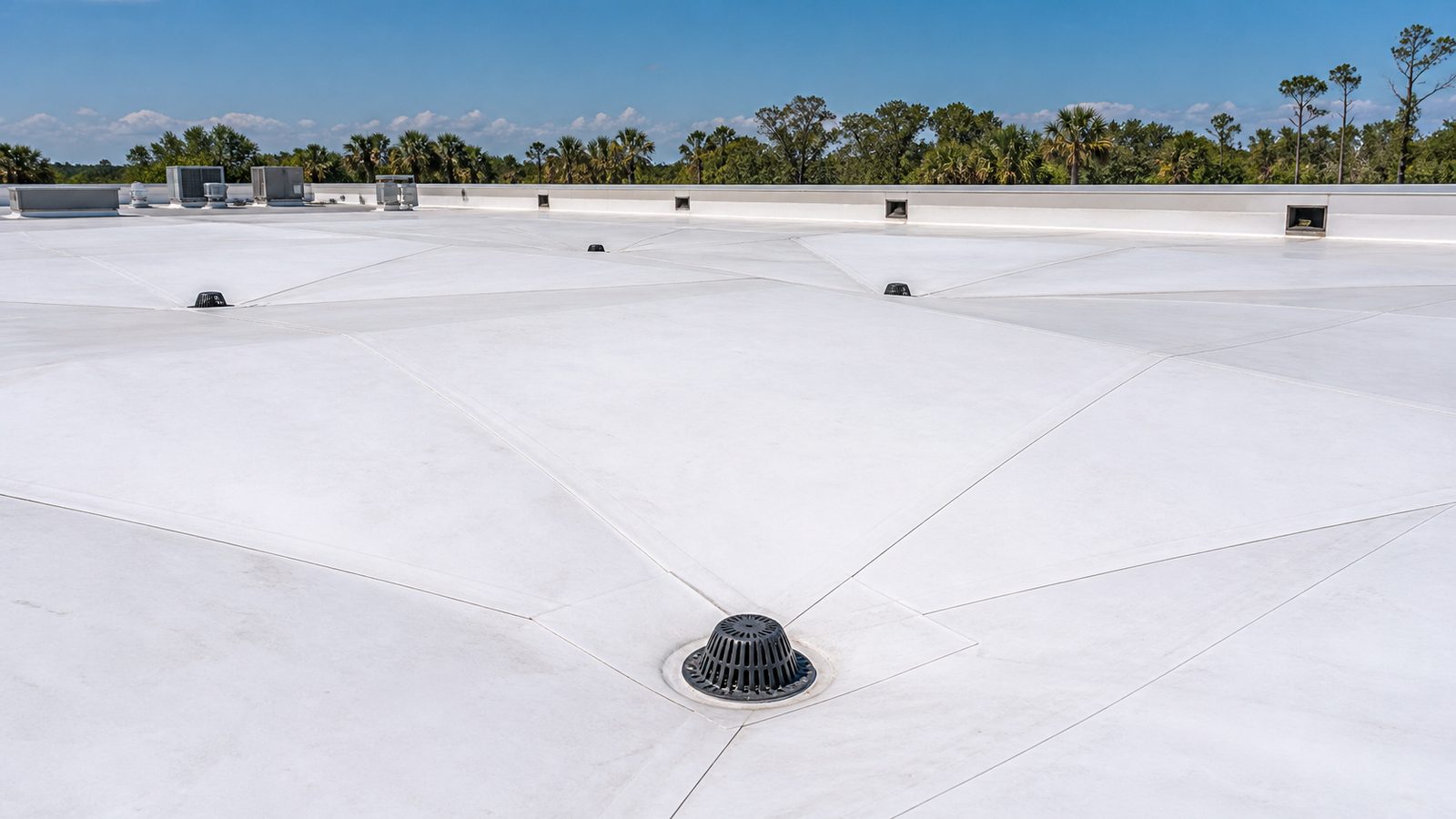
What EPDM Is and How It Performs in Florida
Ethylene Propylene Diene Monomer (EPDM) is a rubber membrane roofing system that has been used in commercial construction since the 1960s. It's black, highly flexible, and has a well-documented long-term track record.
EPDM and UV exposure: EPDM's black color absorbs solar radiation rather than reflecting it. This is a thermal disadvantage in Florida — black EPDM roofs run hot, which transfers heat into the building below and contributes to higher cooling loads. White-coated EPDM systems exist but require the coating to be maintained; uncoated EPDM in Florida is an energy performance liability.
EPDM seam performance: EPDM seams use adhesive bonding — lap seams are glued with seam tape or bonding adhesive. The seam is the system's known weak point. Adhesive seam failures account for the majority of EPDM leaks. Florida's temperature cycling — hot days, cool nights — stresses adhesive seams over time in ways that welded TPO seams don't experience.
Flexibility and durability: EPDM's rubber composition gives it genuine flexibility in cold temperatures — a significant advantage in northern climates. In Florida, where temperatures rarely drop below freezing, this advantage is largely irrelevant. EPDM remains flexible in Florida's temperature range, but so does properly formulated TPO.
EPDM long-term track record: EPDM systems properly installed and maintained have documented lifespans of 25 to 35 years. There are more EPDM roofs with long track records than any other single-ply system because it's been installed the longest.
Cost Comparison in Florida
Installed cost, standard commercial flat roof:
TPO (60-mil, mechanically attached, standard slope): $6.00 to $9.50 per sqft installed EPDM (60-mil, fully adhered, standard slope): $6.50 to $10.00 per sqft installed
These are Jacksonville market rates for qualified commercial roofing. Fully adhered installation costs more than mechanically attached for both systems. System with cover board insulation adds $1.50 to $3.50 per sqft depending on R-value.
The cost difference between comparable TPO and EPDM systems at similar installation specs is typically less than 10%. The energy performance difference — white TPO vs. black EPDM — has a larger long-term impact on operating cost than the installation cost differential.
Which System JK Prestige Recommends for Florida Commercial Buildings
For most Florida commercial applications, JK Prestige installs TPO as the primary recommendation:
- White membrane reflectivity reduces cooling loads
- Hot-air welded seams outperform adhesive EPDM seams in Florida's thermal cycling
- GAF EverGuard TPO and CertainTeed flintlastic systems available with manufacturer-backed warranties
- Better performance profile for Florida's UV exposure
EPDM is appropriate for:
- Retrofit situations where the existing system is EPDM and a full replacement is not warranted — overlay systems exist
- Applications where the building owner wants the longest documented track record
- Low-slope roofs in shaded areas where solar gain is not a significant load
Regardless of which system is specified, the installation quality matters more than the membrane choice. A well-installed EPDM roof outperforms a poorly installed TPO roof. JK Prestige self-performs commercial roofing — we don't broker it out. That's the quality control factor that matters more than any product comparison.
GAF Master Elite and Manufacturer Warranty
Commercial flat roof warranties depend on the installer's certification status. GAF EverGuard systems available through JK Prestige (GAF Master Elite certified) include:
- 20-year guarantee on qualifying TPO systems
- Labor and materials coverage
- Contractor-backed workmanship warranty
Carlisle and Sika also offer extended warranties through certified installers. The warranty terms vary by system and installation method — always review the warranty document before specifying a system based on warranty claims.
No call center. No coordinator. A JK principal reviews every inquiry and replies with a real number, not a range, not a follow-up form.
Request Free Estimate →