If you manage or own a commercial building in Jacksonville, you will eventually need to decide between thermoplastic polyolefin (TPO) and ethylene propylene diene monomer (EPDM) for your flat roof. Both are proven single-ply membrane systems. Both are widely used in Northeast Florida. They are not interchangeable.
The right choice depends on your building's use, your exposure conditions, your capital budget, and how long you intend to own the property. This article gives you the information to make that decision without relying on a contractor who profits from steering you one way.
JK Prestige Constructor Corp holds certifications with both Firestone (TPO) and Carlisle SynTec (EPDM) and installs both systems on commercial projects in Jacksonville and across NE Florida. We will call out where each system has a genuine advantage and where the difference is marginal.
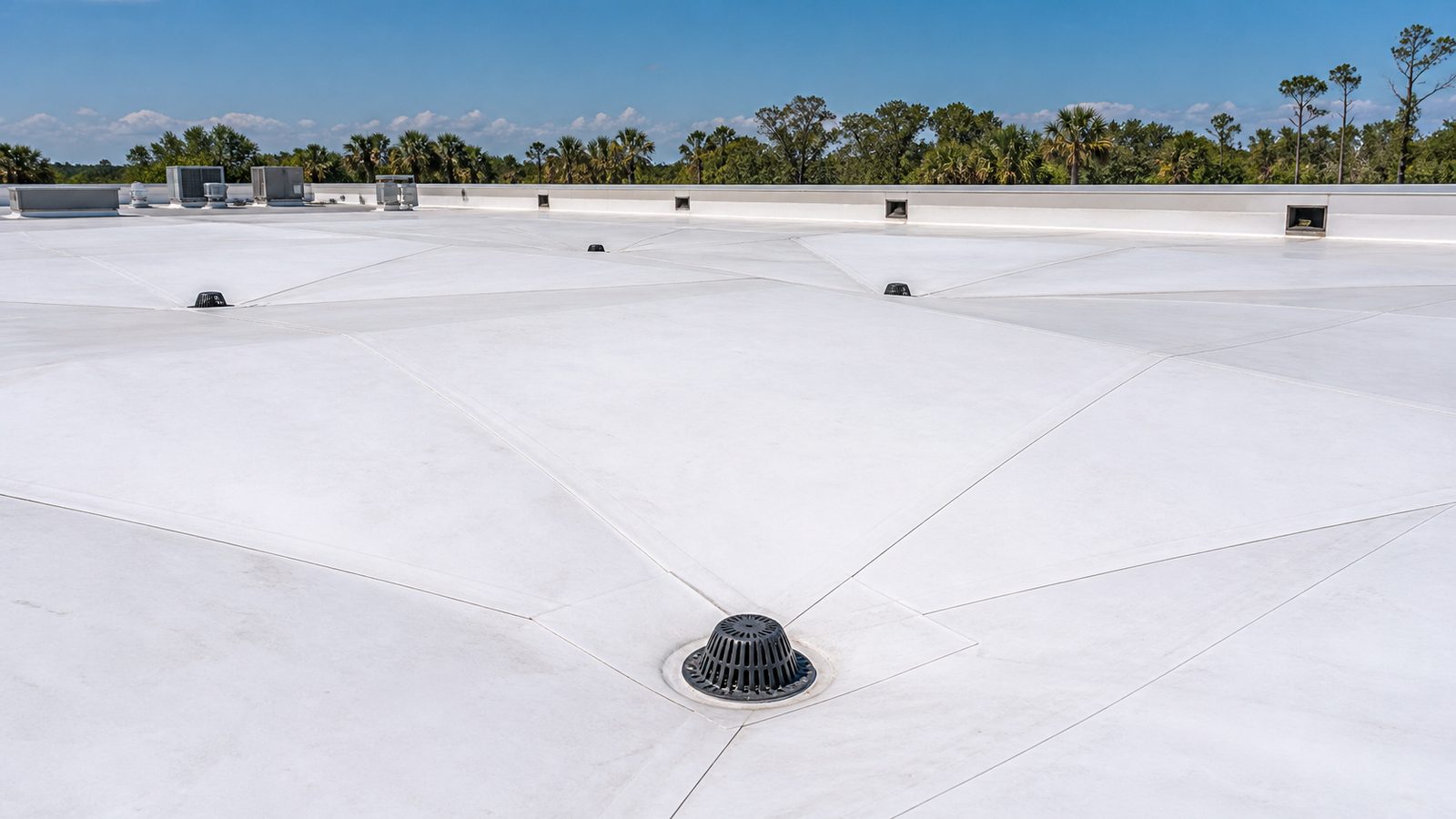
TPO vs. EPDM: Material Composition
TPO is a thermoplastic membrane — it becomes weldable when heated, which is how seams are formed. The membrane is manufactured in rolls, typically 10 to 20 feet wide, and contains UV stabilizers and fire retardants in the compound. Firestone TPO, the system JK uses on commercial projects, is available in 45-mil, 60-mil, and 80-mil thicknesses. White is the standard color for commercial applications in Florida because it reflects solar radiation.
EPDM is a synthetic rubber membrane derived from oil and natural gas. It is not thermoplastic — seams are formed with adhesive or tape, not heat welding. Carlisle SynTec EPDM comes in thicknesses of 45-mil to 90-mil and is available in black or white. Black EPDM absorbs heat; white EPDM reflects it. Black has historically been the dominant commercial color, though white has grown as energy codes have tightened.
Both systems can be installed mechanically fastened, fully adhered, or ballasted (EPDM only). The installation method affects wind uplift performance significantly — a distinction that matters in Duval County's wind exposure zone.
Installed Cost Per Square Foot in Florida
Material and labor costs for both systems vary by membrane thickness, installation method, roof complexity, and current material pricing. As of 2025, Jacksonville commercial projects typically fall in these ranges:
TPO (Firestone, fully adhered, 60-mil):
- $7.50 to $10.50 per square foot installed
- Lower end: simple, accessible, low-slope roof with minimal penetrations
- Higher end: multiple HVAC curbs, drains, parapets, and penetrations
EPDM (Carlisle SynTec, fully adhered, 60-mil, white):
- $6.50 to $9.50 per square foot installed
- Black EPDM runs $0.50 to $1.00 less per square foot than white (material cost difference)
- Fully adhered costs more than mechanically fastened; ballasted costs the least but adds structural load
On a 20,000-square-foot commercial roof, the spread between these systems can be $20,000 or more. That is a real number — not a reason to automatically choose the lower-cost option, but a number worth understanding.
JK Prestige provides fixed-price contracts with written scope before mobilization. If material pricing shifts between estimate and installation date on a long-lead project, we flag it in writing before it becomes a surprise.
Lifespan in Florida's Climate
Florida's climate accelerates roofing degradation through three mechanisms: UV radiation intensity, thermal cycling (temperature swings between night and day, and between summer and winter), and moisture exposure during hurricane season.
TPO in Florida heat: TPO membranes are formulated to reflect UV and resist thermal degradation. White TPO reflects 70-80% of solar radiation, which reduces thermal cycling stress on the membrane. However, early-generation TPO (pre-2010) developed a reputation for brittleness as plasticizers migrated out of the membrane. Modern Firestone TPO uses improved polymer blends that have held up better in long-term testing. Realistic service life for a properly installed, well-maintained 60-mil TPO system in Jacksonville: 20 to 30 years.
EPDM in Florida heat: EPDM rubber has a long track record — the material has been installed on commercial roofs since the 1960s. It handles thermal cycling well because rubber is inherently flexible across a wide temperature range. Black EPDM absorbs heat, which increases cooling loads on the building but does not accelerate membrane failure the way UV does with thermoplastics. White EPDM performs better thermally but costs more. Realistic service life for a 60-mil EPDM system in Jacksonville: 25 to 35 years.
Bottom line: EPDM has a modest longevity advantage when properly maintained. The difference is not dramatic on a 20-year ownership horizon, but it matters on a 30-year or longer hold.
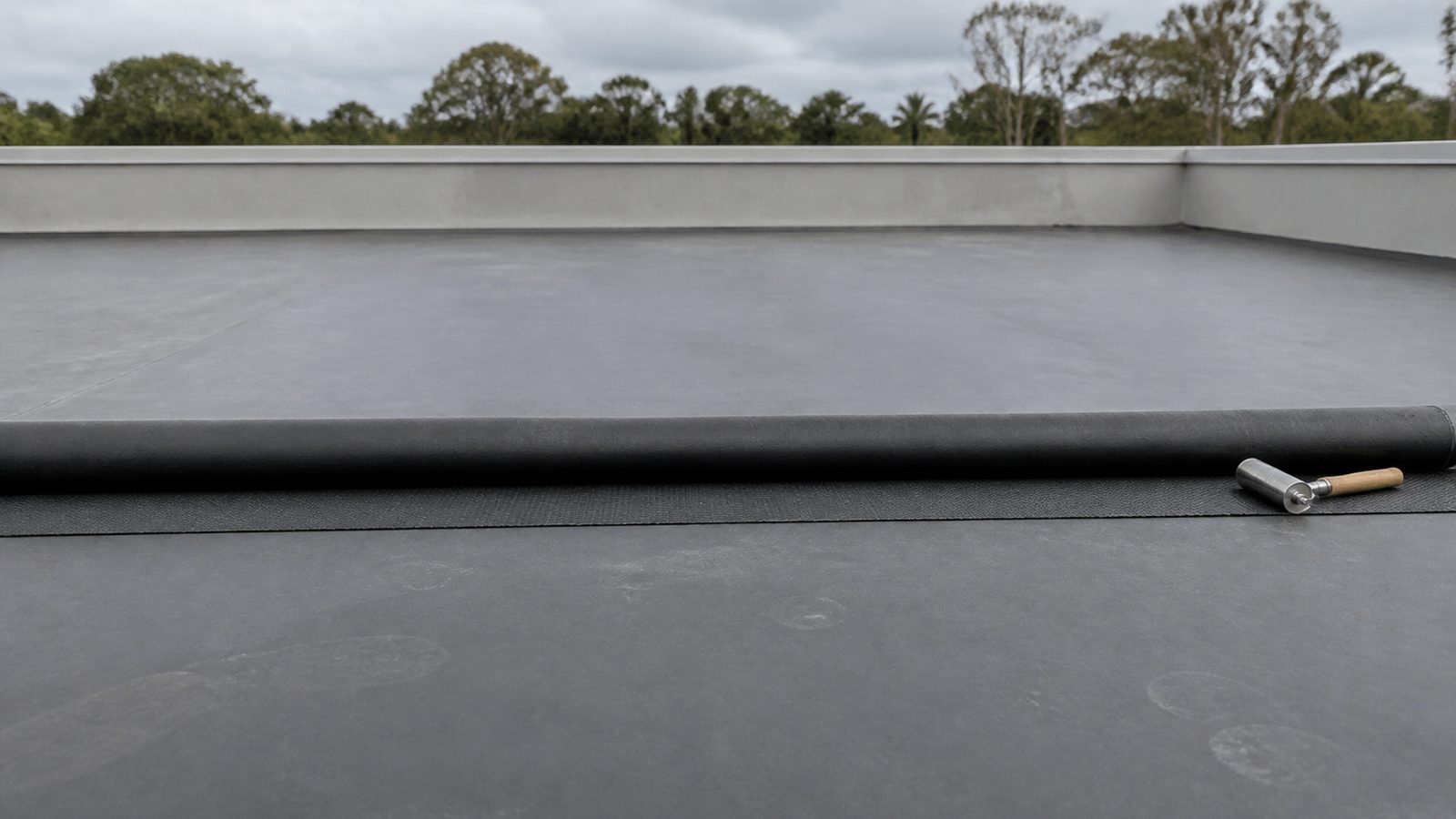
Seam Method: Heat Welding vs. Adhesive
This is where the two systems differ most in practice — and where installation quality has the biggest effect on long-term performance.
TPO: Hot-Air Welded Seams
TPO seams are formed by directing a stream of hot air (700°F to 1000°F) between overlapping membrane sections while rolling a weighted seeler across the joint. When done correctly, the weld creates a bond stronger than the membrane itself. When done incorrectly — wrong temperature, wrong speed, contaminated membrane surface — the seam fails. It does not fail immediately; it fails after two or three seasonal cycles, when water has worked under the overlap.
Hot-air welding requires trained operators and properly calibrated equipment. JK's crews are Firestone-certified, which means they have completed factory training on the specific equipment and technique Firestone specifies for warranty-eligible installations.
EPDM: Adhesive and Tape Seams
EPDM seams use either contact adhesive or seam tape applied between membrane laps. Adhesive seams require clean, dry surfaces and precise application — moisture or contamination at the time of application produces a weak bond that can delaminate. Seam tape (Carlisle's method of choice) is more consistent and less sensitive to surface conditions.
EPDM seams, when correctly installed, are reliable. They do not achieve the bond strength of a properly welded TPO seam. In wind uplift testing, welded TPO seams outperform adhered EPDM seams — a relevant distinction for Jacksonville's hurricane exposure.
Energy Efficiency
Florida's energy code (Florida Building Code, Energy Conservation section) requires commercial roofs to meet minimum Solar Reflectance Index (SRI) values for low-slope applications. White TPO and white EPDM both meet these requirements. Black EPDM does not, unless paired with insulation values that compensate.
White TPO typically achieves an initial SRI of 104 and an aged SRI of 82 (CRRC-rated Firestone products). This directly reduces cooling load on commercial buildings — in Jacksonville's climate, a building operating June through September at full HVAC capacity will see measurable energy cost reduction with a high-reflectance roof.
White EPDM achieves similar SRI values (initial 86–100 depending on product). The performance gap between white TPO and white EPDM on energy efficiency is narrow in real-world conditions.
Black EPDM, by contrast, absorbs heat aggressively. For a Jacksonville warehouse or distribution facility with high cooling loads, black EPDM can meaningfully increase energy costs versus a reflective white membrane. JK recommends white for any conditioned commercial space in NE Florida.
Which System Fits Which Applications
Neither system is universally superior. The right call depends on your building.
Choose TPO (Firestone) when:
- The building is air-conditioned and energy efficiency is a priority
- You have a large, simple roof plane with few penetrations (welded seams are fast on open field)
- Wind uplift is a concern and you want the highest seam strength
- The ownership horizon is 20 to 25 years
Choose EPDM (Carlisle SynTec) when:
- You are replacing an existing EPDM roof and recovering (EPDM can be recovered with a new ply in some conditions, avoiding full tear-off)
- The building is unconditioned — a warehouse, storage facility, or covered parking — where black EPDM's heat absorption is not a cooling-load problem
- Ownership horizon is 30+ years and maximum membrane life is the priority
- Budget is the primary driver and white reflectivity is not a code concern
JK Prestige installs both systems and will tell you which is appropriate for your specific building rather than which generates a larger contract. You can review past commercial roofing projects in our project portfolio.

What a Commercial Roofing Contract Should Include
Before signing with any contractor, verify these items are in writing:
- Membrane manufacturer, product name, and mil thickness
- Installation method (mechanically fastened, fully adhered, or ballasted)
- Tear-off scope (existing membrane, insulation, or recover)
- Warranty term and who registers it (contractor must register with the manufacturer)
- Drain and flashing work included vs. excluded
- Penetration detailing scope
- Payment schedule tied to milestones, not calendar dates
JK Prestige provides fixed-price contracts covering all of the above. Written scope, 48-hour estimate turnaround, and a named principal on the contract from day one.
Explore JK Prestige's commercial roofing capabilities or contact us for a free written estimate.
Book Your Free 24-Point Commercial Roof Inspection
Unsure whether your existing commercial roof needs replacement, repair, or another year of monitoring? JK Prestige offers a free 24-point roof inspection with a written report. For commercial roofs, this includes membrane condition, seam integrity, drain function, flashing status, and insulation issues visible at exposed edges.
Book your free 24-point roof inspection — call (904) 944-0278, and a principal answers.
No call center. No coordinator. A JK principal reviews every inquiry and replies with a real number, not a range, not a follow-up form.
Request Free Estimate →