The question every growing distribution or manufacturing operation in Jacksonville eventually faces: do we sign another lease, or do we build our own facility? The answer is not universal, but the math is knowable. This piece lays out the real numbers for Northeast Florida in 2025, including what land prices, construction costs, and lease rates actually look like — not averages pulled from national databases.
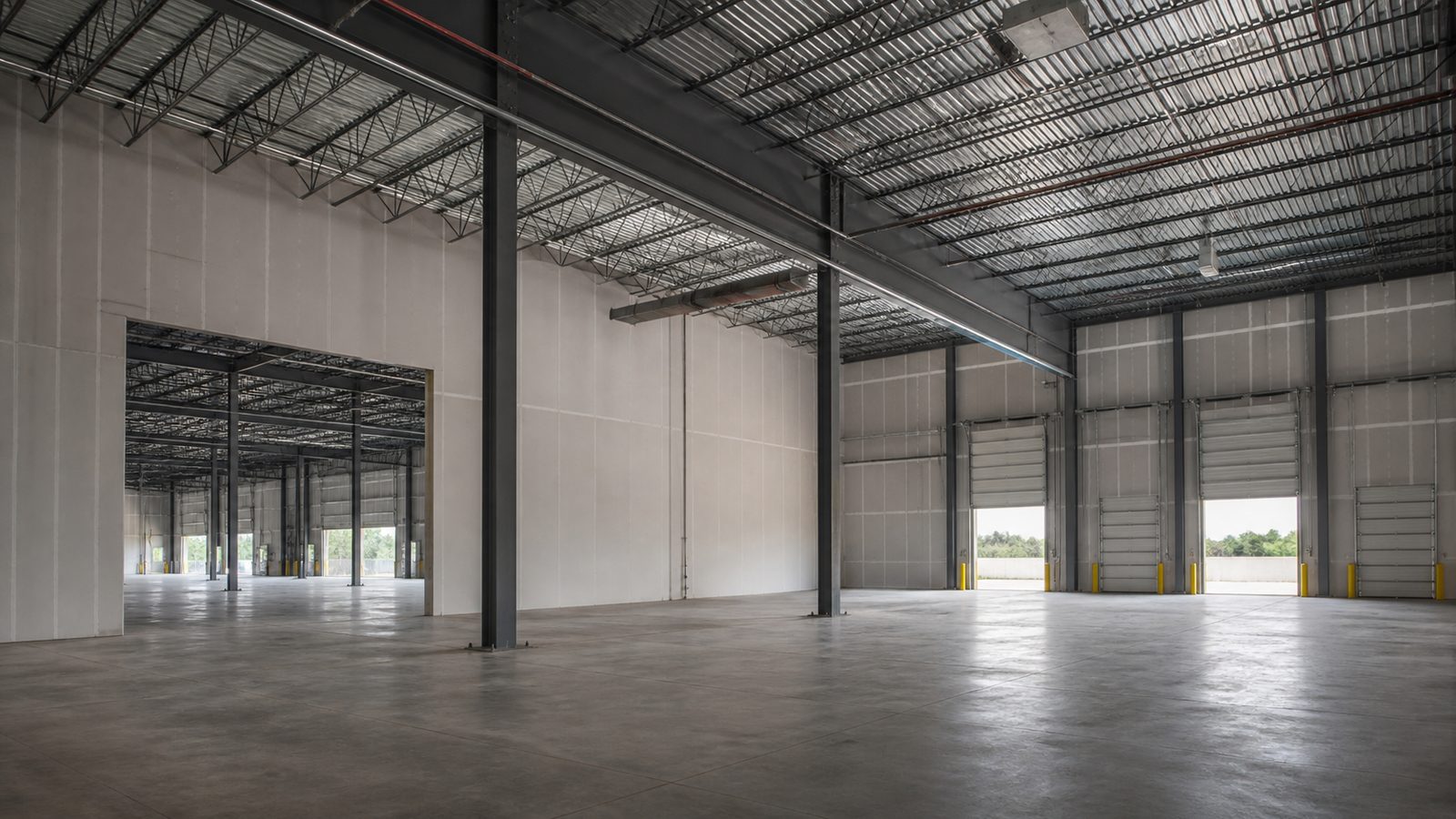
The Jacksonville Industrial Market Context
Northeast Florida's industrial vacancy rate has been running below 4 percent for most of 2024 and 2025. Duval, Nassau, and St. Johns counties have absorbed millions of square feet of new spec construction since 2022, and asking lease rates for Class A warehouse space have moved from $6.50 to $9.00 per square foot NNN over that period.
For a 50,000-square-foot facility, that is $325,000 to $450,000 per year in base rent, before NNN charges (taxes, insurance, maintenance) that typically add $1.50 to $2.50 per square foot — bringing total occupancy cost to $400,000 to $575,000 annually.
Those numbers matter when you run the build analysis.
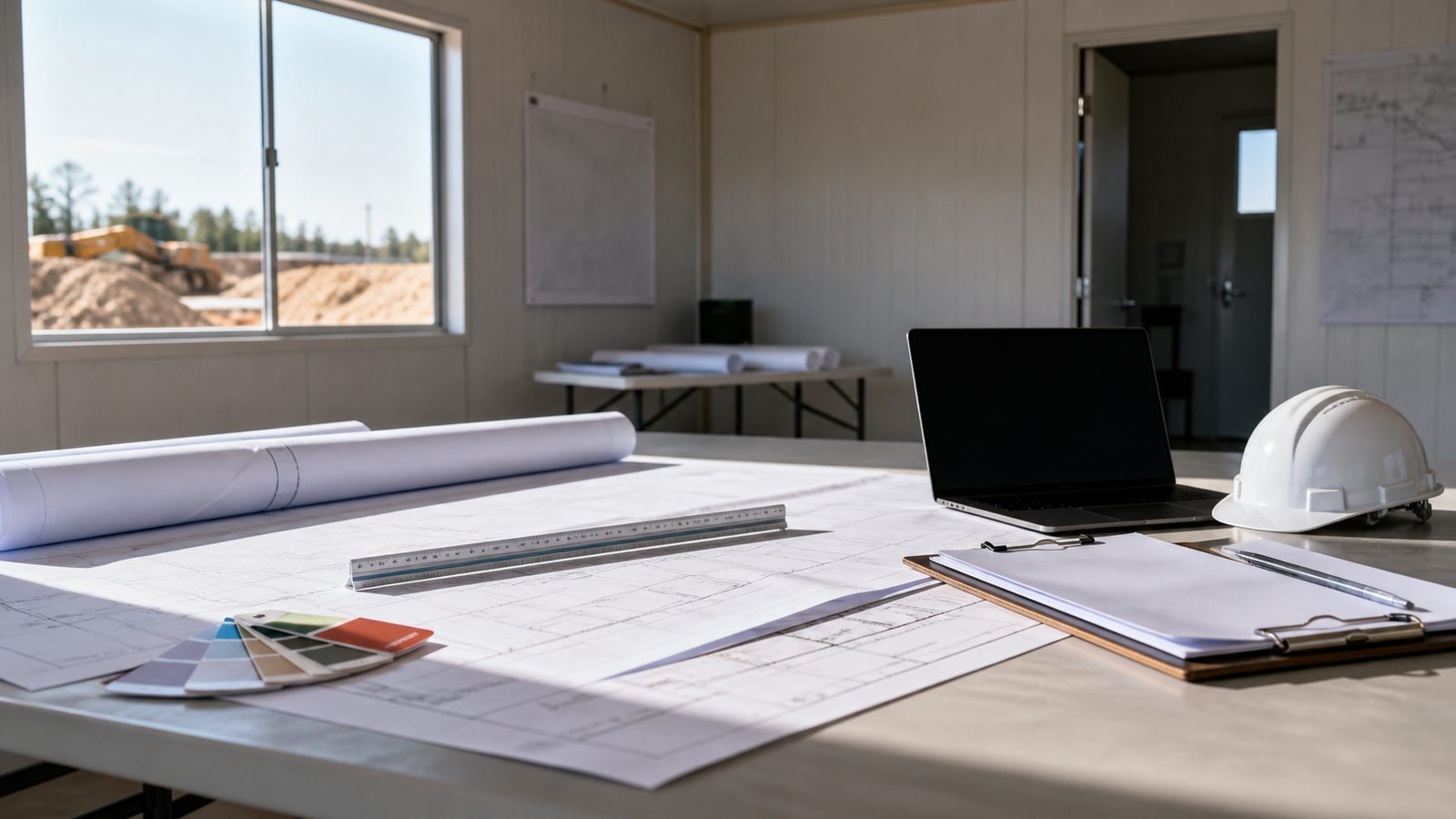
What Ground-Up Warehouse Construction Costs in Northeast Florida
Warehouse construction costs in Florida have stabilized after the 2021 to 2023 escalation period. Current ranges for Northeast Florida:
Tilt-up concrete shell (24- to 32-foot clear height): $55 to $75 per square foot for the building shell only. This includes the tilt-up concrete panels, structural steel roof framing, roofing (TPO), and basic utilities stubbed to the building.
Site work and infrastructure: $8 to $18 per square foot depending on site conditions, paving area, detention requirements, and utilities distance. Projects along established industrial corridors (Westside, Imeson, Northside) benefit from available utility infrastructure. Greenfield sites in Nassau County or outer St. Johns County may require more site investment.
Finished functional warehouse: $65 to $90 per square foot for a completed, CO'd facility with dock doors, ESFR sprinkler system, LED lighting, and basic office build-out (5 to 10 percent of floor area).
Land: $3 to $8 per square foot in established industrial zones. Nassau County and outer Westside parcels come in at the low end; Dames Point, Northside, and properties near the Port of Jacksonville command the high end.
For a 50,000-square-foot warehouse on a 4-acre site at mid-range numbers:
- Land: 4 acres x 43,560 sqft x $5/sqft = $871,000
- Building: 50,000 sqft x $75/sqft = $3,750,000
- Site work: 50,000 sqft x $12/sqft = $600,000
- Soft costs (design, permits, fees, contingency): ~$400,000
- Total development cost: ~$5.6 million
At a cap rate of 6.5 percent (current Northeast Florida industrial), this asset would appraise at $5.2 to $5.8 million on stabilization — essentially cost-basis.
The Break-Even Timeline
With $5.6 million in development cost financed at 7.5 percent (construction-to-perm, 20-year term), the annual debt service runs approximately $540,000. Compared to leasing the equivalent space at $475,000 per year in total occupancy cost, the difference is $65,000 per year more to own than to lease in year one.
However:
- Lease rates escalate. A 3 percent annual escalation clause on a 10-year lease means you are paying $621,000 in year 10 vs. $640,000 in year 10 if you built — at which point the building has 20 years of equity accumulation and the lease has zero.
- If the facility is owner-occupied, the tenant experience (layout, dock count, clear height, slab spec) is custom to the operation. Leased spec buildings are designed for generic tenants.
- Depreciation on the building creates a tax benefit. The land component does not depreciate, but the structure does — 39-year straight-line for commercial property. On a $4.75 million depreciable basis, that is approximately $122,000 per year in depreciation.
The break-even on lease-vs-build typically falls between year 5 and year 10 for owner-occupied facilities in Northeast Florida, depending on financing terms and lease rate trajectory.
When Building Makes Sense
Build if:
- You need specific clear heights (36 feet or taller) that spec buildings rarely offer
- Your operation has unusual loading configurations, floor load requirements, or process equipment that cannot be accommodated in generic shell space
- You plan to occupy the facility for 10 or more years
- The facility is large enough (30,000 square feet and up) to justify the development overhead
- You are in a growth trajectory where the building can expand (JK designs expansion bays into the initial design at no cost to the structural logic)
When Leasing Makes Sense
Lease if:
- Your space needs are likely to change within 5 years
- You need to be operational faster than a build timeline allows (ground-up typically runs 9 to 14 months from land acquisition to CO)
- Capital preservation is a priority and you would rather deploy that $5 million into your core business
- A Class A space exists in your market at a reasonable rate with lease terms that work
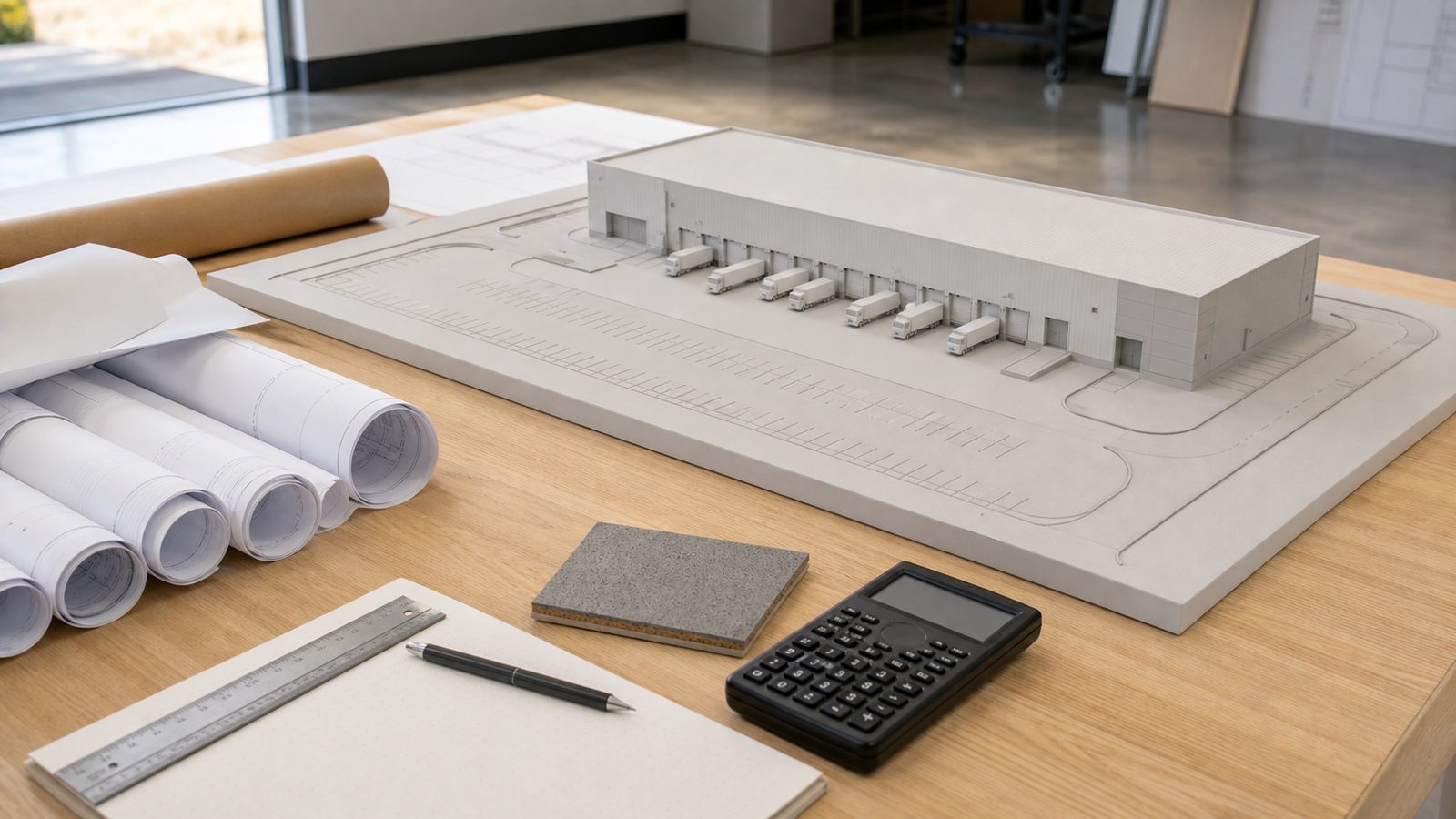
The Hybrid Option: Design-Build with a Retained Developer
Some operators find a middle path: a developer builds the facility to the tenant's spec and signs a long-term lease (15 to 20 years), with a purchase option at a defined point. The tenant gets a custom building without the balance sheet impact of development. The developer gets a long-term credit tenant and a stabilized asset.
JK has participated in these arrangements as the construction contractor. We work directly with the developer and the future occupant to align the building spec during design so the final facility actually fits the operation.
What Northeast Florida Land Buyers Often Overlook
Environmental assessments. Phase I and Phase II environmental assessments are standard due diligence before industrial land purchase. Former agricultural or industrial sites can carry contamination liability that is not visible in the purchase price.
Wetland delineation. Northeast Florida has significant wetland acreage. A 10-acre parcel may have 3 acres of usable upland. The Army Corps of Engineers 404 permit process for wetland impacts adds 6 to 18 months to development timelines in some cases.
Utility capacity. Three-phase power availability, potable water pressure for ESFR sprinkler demand, and sanitary sewer capacity all affect whether a site is buildable for industrial use. JK reviews utility availability in pre-construction before a client commits to land.
Flood zone. Elevating a warehouse slab in an AE flood zone adds cost. Flood insurance for leased or owned industrial property in flood zones has increased sharply since 2020.
No call center. No coordinator. A JK principal reviews every inquiry and replies with a real number, not a range, not a follow-up form.
Request Free Estimate →