A change order arrives and the number on the page looks like the cost of the change. It isn't. A change order has four distinct costs, and the one on the document is only the first. Florida owners who don't understand the other three are consistently surprised at how a change that seemed minor restructured their project budget and schedule.
This post breaks down all four costs, shows how they compound, and explains why a fixed-price contract with a fully locked scope is the only structural defense against change-order theater.

The Four Costs of a Change Order
Cost 1: The Direct Scope Cost
This is the cost most owners focus on — the actual materials and labor required to perform the changed work. If you decide mid-project to add a bathroom on the second floor, Cost 1 is the plumbing rough-in, drain lines, tile, fixtures, and finish carpentry for that bathroom.
This number is real and appropriate to scrutinize. Request a line-item breakdown from the GC that shows materials and labor separately. Ask for sub-quotes if the GC is using subcontractors for trade work. Cost 1 should be verifiable.
Cost 2: The GC Markup
The direct cost doesn't come to you at cost. Every GC charges a markup on change orders — typically 10-15% for established contractors, sometimes as high as 20-25% for GCs with change-order-heavy business models.
The markup is not inherently illegitimate. The GC has overhead — superintendent time, project management, insurance on the additional scope — that isn't in the direct cost. What makes markup problematic is when it's applied without disclosure and at rates the owner never agreed to in the contract.
Check your contract before signing. A well-written fixed-price contract specifies the change-order markup percentage in writing. If your contract doesn't, negotiate it now — not after you need a change order.
In Florida, GC markup on change orders ranges widely. A change order with a $10,000 direct cost at 20% markup becomes $12,000. At 15%, it's $11,500. That difference compounds across multiple changes.
Cost 3: The Schedule Impact
This is where change orders become genuinely expensive and where most owners are blindsided.
Every day of construction has a cost — the extended general conditions. This is the daily cost of running the site: superintendent salary, site trailer rental, temporary utilities (power, water, portable facilities), security, and the GC's project management time. On a residential project, general conditions might run $500-$1,500 per day. On a commercial project, $2,000-$8,000 per day or more.
When a change order extends the schedule, every additional day triggers general conditions costs. A bathroom addition that adds 3 weeks to the project schedule costs 21 days of general conditions on top of the direct scope cost. At $1,000/day on a residential project, that's $21,000 before a single fixture is installed.
Critical path matters here. A change to a non-critical-path activity — something with float in the schedule — may not extend the overall project duration. A change to a critical path activity extends the project day-for-day. Know which activities are on the critical path before requesting scope changes.
Cost 4: The Ripple Effect
One change in a construction project rarely stays contained. The ripple effect is the cost of work outside the direct scope that must be modified, redone, or repositioned because of the change.
A wall moved 2 feet affects:
- Electrical: outlets and switches must be relocated; conduit rerouted
- HVAC: duct runs may need to be redesigned; supply and return locations shift
- Drywall: the area around the moved wall must be patched on both sides
- Flooring: the transition at the new wall position must be addressed
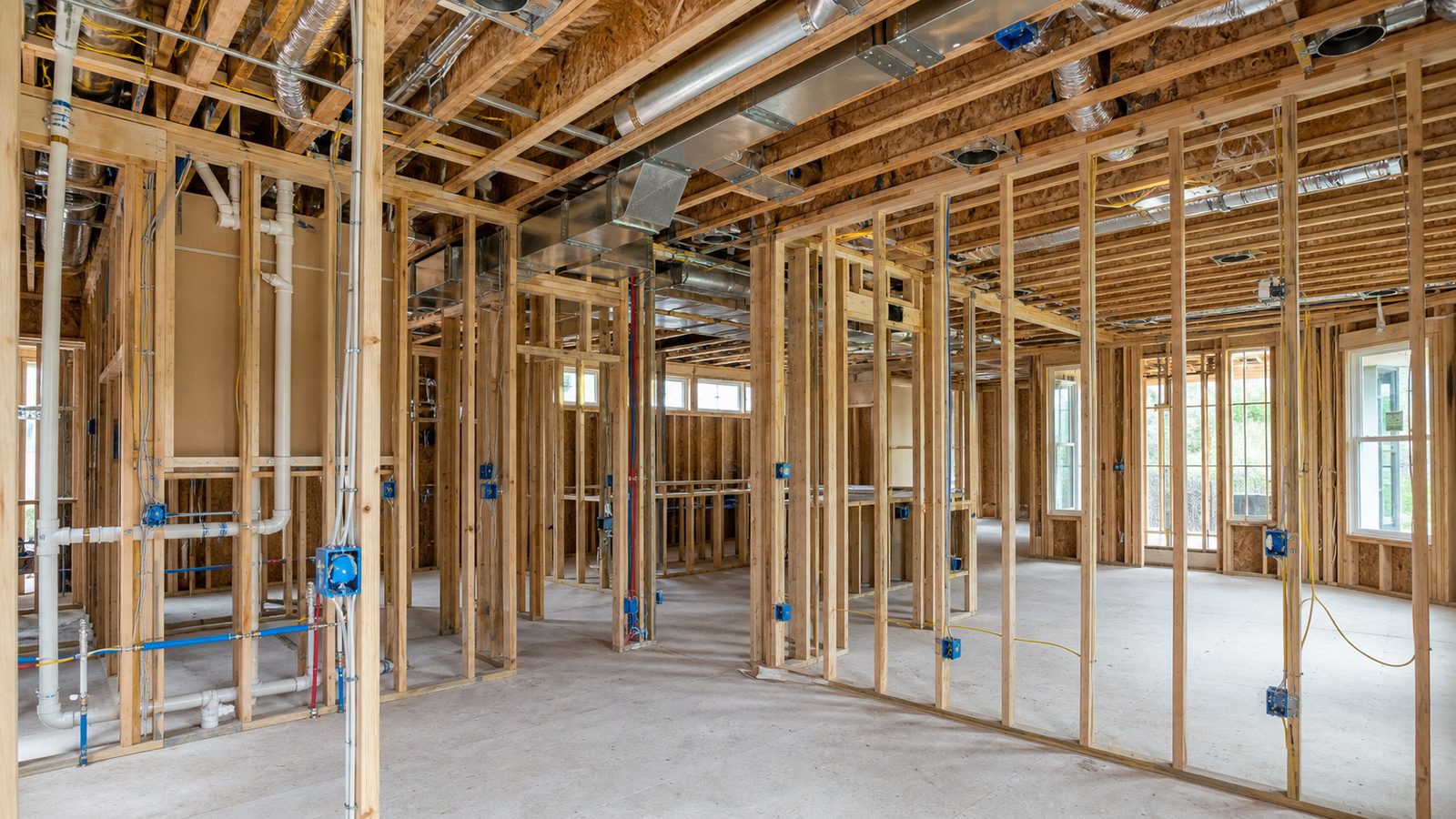
Each of these is a separate cost — and each may carry its own GC markup. A wall relocation that seems like a $3,000 direct cost becomes $7,000-$10,000 when the ripple costs are tracked.
The ripple effect is most severe mid-project, when trades are sequenced. Moving a wall after MEP rough-in is done costs far more than moving it before framing starts. The later in the project a scope change occurs, the more expensive the ripple.
How the Four Costs Compound
Run the math on a realistic scenario. You decide mid-project to relocate a kitchen island 18 inches to accommodate a larger refrigerator.
- Cost 1 (direct scope): Framing, electrical reroute, plumbing reroute, countertop modification — $4,200
- Cost 2 (markup at 15%): $630
- Cost 3 (schedule impact): The kitchen countertop fabricator had a 3-week lead time baked in. The modification restarts the fabrication clock. Project extends 2 weeks: 14 days × $1,000/day = $14,000
- Cost 4 (ripple): The cabinet installer who was sequenced to start immediately after countertops is now unavailable — he moved to another project. Rescheduling adds $1,500 to his return mobilization.
Total change order cost: $20,330 for a decision that felt like an 18-inch adjustment.
This isn't an extreme example. It's the ordinary math of mid-project scope changes on occupied-construction timelines.
How a Fixed-Price Contract with Scope Lock Minimizes All Four Costs
The defense against change orders is not negotiating a lower markup percentage — it's preventing the conditions that generate change orders in the first place.
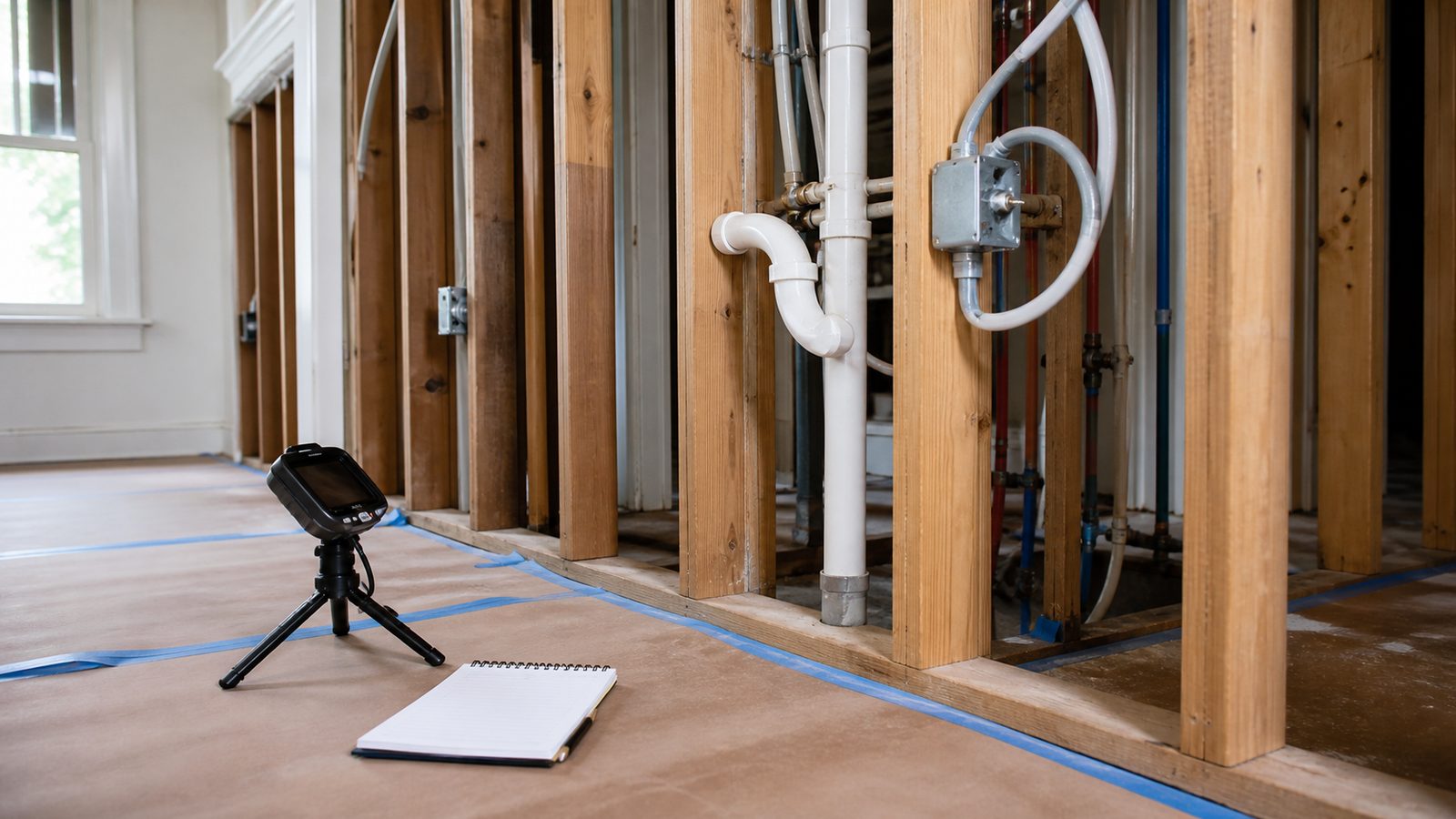
Full scope documentation before contract signing eliminates ambiguity — the primary source of change orders on fixed-price projects. If the scope says "kitchen island at current location per design documents," relocating it is an owner-initiated change. If the scope says only "kitchen renovation," the island location is negotiable, and that negotiation becomes a change order.
Pre-construction design coordination catches scope gaps before mobilization. When a JK Prestige principal walks the site and reviews design documents during pre-construction, the goal is to identify every decision that hasn't been made yet — and make it before the contract is signed. Decisions made in pre-construction cost nothing. Decisions made mid-project cost four ways.
Fixed markup in the contract. JK Prestige's contracts specify the change-order markup percentage before signing. You know the cost of a change before you request it. No surprise rates.
Schedule baseline with float identified. When JK Prestige locks a schedule before groundbreaking, we identify critical-path activities and activities with float. If a change affects a non-critical activity, we can tell you up front that it won't extend the project. If it affects the critical path, you know the schedule impact before you approve the change.
Learn more about how JK Prestige structures fixed-price contracts and what the scope documentation process looks like before groundbreaking.
Red Flags in Change Order Practices
If a GC is regularly generating change orders on a supposedly fixed-price project, something is wrong with one of three things: the original scope, the markup structure, or the GC's business model.
Watch for:
- Allowances instead of fixed prices. An allowance is an explicit placeholder — the GC is telling you they don't know the real cost yet. Allowances become change orders the moment actual costs exceed the allowance figure.
- "Unforeseen conditions" on predictable work. Soil conditions under a Jacksonville slab, existing electrical conditions behind drywall in a 40-year-old home — a GC who has done site investigation work in pre-construction shouldn't be surprised by these.
- No written scope to reference. If a change-order dispute arises and there's no written scope to determine what was "included," the GC holds the leverage.
Contact JK Prestige Constructor to review your project scope and understand what a fully documented fixed-price contract looks like before you sign anything.
No call center. No coordinator. A JK principal reviews every inquiry and replies with a real number, not a range, not a follow-up form.
Request Free Estimate →