Most people hiring a general contractor assume the GC's crew will be doing the work. That assumption is usually wrong.
The standard operating model for most GCs is to hire subcontractors for every trade — framing, concrete, drywall, roofing, finish carpentry — and manage those subs. The GC coordinates, schedules, and inspects. Someone else swings the hammer. When something goes wrong, the conversation starts with: "That was my framing sub. I'll get them back out there."
Self-perform means the GC's own employees do the work. The GC owns the tools, employs the crew, carries the supervisory responsibility, and is directly accountable for the outcome — not through a sub, not through a vendor relationship. Their people.
Why Most GCs Don't Self-Perform
Self-performing trades requires capital investment: tools, equipment, vehicles, and the overhead of a standing workforce. It also requires management depth — you need supervisors who know each trade well enough to direct and inspect the work at a professional level.
Subcontracting is easier to scale. When a GC subs out framing, they pay the framing sub a lump sum and the sub brings the crew, tools, and supervision. The GC doesn't carry the labor cost, the workers' comp risk, or the equipment overhead. If the project slows down, the sub absorbs the slack — not the GC's payroll.
The tradeoff is control. When the GC doesn't own the crew, they don't control the crew's quality standards, pace, or decision-making on the jobsite. They manage the sub, and the sub manages the work.
What Self-Perform Actually Means on a Jobsite
When a GC says they self-perform a trade, it means:
- The crew performing the work is on the GC's payroll as W-2 employees (not labor hired through a temp agency or a staffing sub)
- The GC owns or leases the equipment the crew operates
- The GC's supervisor — not a sub's foreman — is directing the work and making quality decisions in the field
- The GC's workers' comp policy covers the crew (not a sub's policy)
- The GC is directly responsible to the owner for the quality and schedule of that trade
This matters for accountability. When a brokered sub delivers bad drywall, the GC manages the dispute between the owner and the sub. When the GC's own crew delivers bad drywall, the GC is the responsible party — period. No intermediary. No dispute. Fix it.
That accountability structure changes how self-perform GCs operate on a jobsite. When the crew is yours, you don't tolerate quality shortcuts — because you can't point to someone else when the owner raises an issue at walkthrough.
Which Trades JK Prestige Self-Performs
JK Prestige self-performs five trades with their own employed crews:
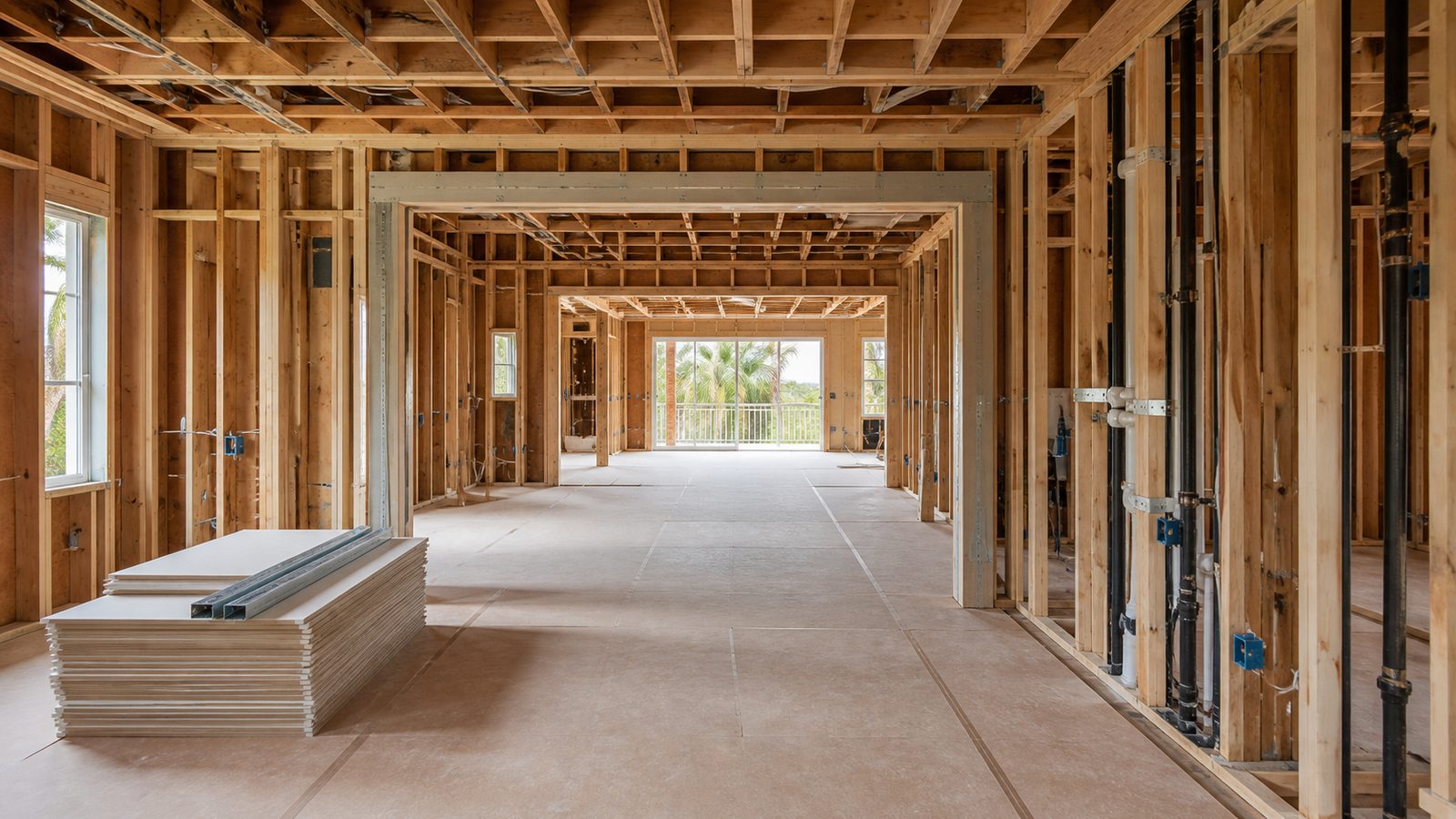
Framing: Wood and light-gauge steel stud framing, from rough structural framing through interior partition layout. JK crews handle everything from floor plate layout to top plate installation, header framing, hurricane strap connections, and sheathing.
Concrete: Foundation slabs, flatwork, and site concrete. Concrete is one of the highest-risk trades to broker out — a bad pour can't be reworked the way drywall can. JK controls concrete operations directly.
Drywall: Board installation, taping, mudding, and finishing. JK drywall crews handle Level 4 and Level 5 finishes — the difference between a finish that looks good and one that looks perfect under raking light.
Finish carpentry: Trim, millwork, built-ins, doors, and hardware installation. Finish carpentry is the last thing a homeowner or developer sees, and it's the most visible indication of construction quality. JK self-performs it because the margin for error is small.
Roofing: Both residential (asphalt shingle, metal, slate, cedar shake) and commercial (TPO, EPDM, modified bitumen, PVC, standing seam). JK holds manufacturer certifications — GAF Master Elite, CertainTeed Select, Carlisle SynTec, Firestone — that require self-perform installation to issue the manufacturer's warranty.
Why Self-Perform Changes Schedule Control
When every trade on your project is a separate subcontractor, the GC's schedule control depends on each sub honoring their commitment date. A sub who gets a better offer from another project can slow-walk yours. A sub whose crew is tied up finishing a previous job pushes your start date. The GC has leverage through the subcontract, but limited practical control over the sub's day-to-day decisions.
When the GC self-performs the critical path trades — framing, concrete, drywall — they control their own schedule. If framing needs to accelerate to recover from a weather delay, the GC can redeploy crew without renegotiating with a sub. If drywall is running behind, the GC's superintendent can add crew from another project the GC controls.
This is the schedule advantage that self-perform GCs have that brokered GCs don't: flexibility to respond to project conditions without depending on a sub's availability and goodwill.
Why Self-Perform Changes Quality Control
Every time work passes between a GC and a sub, and between the sub's supervisor and their crew, there's a transmission loss in quality standards. The GC tells the sub's PM what they expect. The PM tells the foreman. The foreman tells the crew. By the time it reaches the person holding the tool, the GC's standard may or may not still be intact.
When the GC employs the crew, their superintendent is talking directly to the workers installing the framing or hanging the drywall. There's no intermediary to dilute the standard. If the quality is wrong, the GC's supervisor addresses it on the spot — not through a sub's PM who may or may not relay the correction.
Self-perform also allows the GC to build a crew with consistent tenure. A drywall crew that has worked together for two years has developed shared standards, efficient sequencing, and a mutual understanding of quality that a newly assembled sub crew doesn't have.
How It Changes Accountability When Something Goes Wrong
This is the clearest difference between a self-perform GC and a brokered GC.
If a brokered sub installs framing with moisture-damaged lumber that causes a warranty claim two years after the project completes, the GC has to pursue the sub — a separate legal entity with their own insurance, their own position, and their own interest in limiting liability. That process takes time and money and rarely produces a clean resolution.
If a self-perform GC installs that framing, there is one party responsible: the GC. Their warranty, their repair obligation, their relationship with the owner at stake. The conversation doesn't start with "I'll reach out to my framing sub." It starts with "When can we get on site to fix it."
JK Prestige puts a principal's name on every contract, and that principal's crew performs the critical trades. The JK Way covers how this operating model works from estimate through year-one warranty.
If you're evaluating GCs for a custom home, hospital renovation, or commercial project in the Jacksonville area and want to understand what self-perform means for your specific scope, a principal at JK Prestige answers the phone directly.
No call center. No coordinator. A JK principal reviews every inquiry and replies with a real number, not a range, not a follow-up form.
Request Free Estimate →