JK Prestige self-performs concrete on most projects — slab on grade, tilt-up panels, foundation work. But on projects where scope, scale, or specialty work requires a concrete sub, JK has specific expectations developed over years of managing concrete work in Northeast Florida's climate, soil conditions, and inspection environment. This piece is written for concrete trade contractors in Florida who want to understand what a serious GC expects before, during, and after the pour.
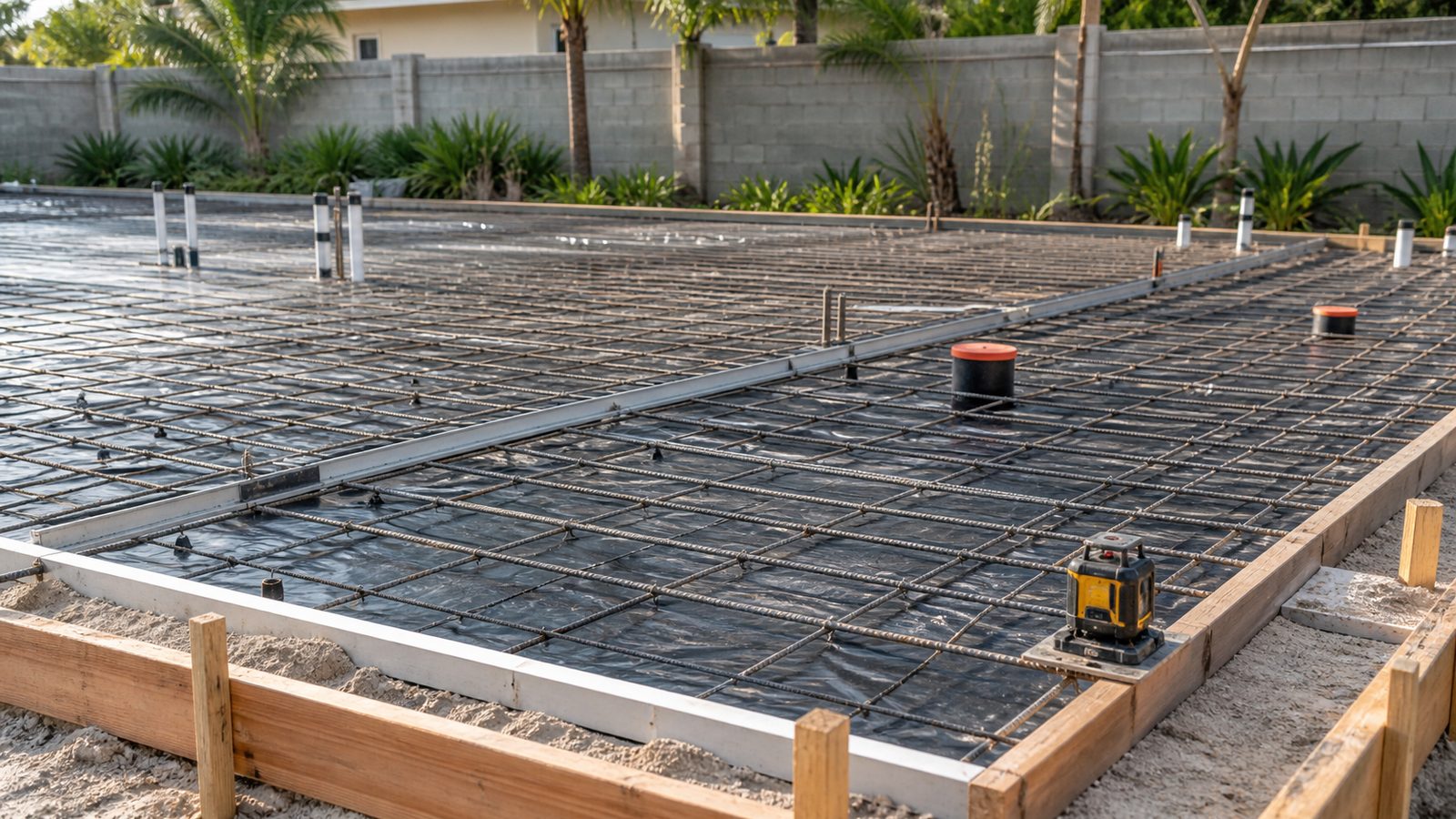
Before Mobilization: What Has to Be in Writing
Concrete scope that is not documented in writing before mobilization creates disputes at pour day. JK requires concrete trade partners to confirm the following in the subcontract or written scope document:
Mix Design Submittals
The concrete mix design must be submitted and approved before batching begins. Required information:
- Design compressive strength (f'c) in psi — typically 3,000 to 5,000 psi for commercial slabs, 4,000 to 6,000 psi for structural elements
- Water-cement ratio
- Aggregate size and type
- Admixtures proposed (water reducer, accelerator, fiber, fly ash)
- Testing lab for cylinder testing
JK does not accept verbal assurances that the mix "should" hit the strength. Submittals are reviewed and approved before the truck rolls.
Reinforcement Submittals
If rebar is in scope, the concrete sub submits rebar shop drawings showing size, spacing, cover dimensions, and splice lengths for structural engineer review. No rebar installation without approved shop drawings on-site.
Pour Sequence
For large slabs, tilt-up panels, or multi-stage structural pours, the pour sequence must be documented before mobilization:
- Pour panel numbers and dates (for tilt-up)
- Control joint locations and spacing
- Construction joint locations for large pour areas divided into sections
- Curing method and duration for each pour
Arriving on pour day without a documented sequence is a red flag. On JK's projects, it results in a delay until the plan is in writing.
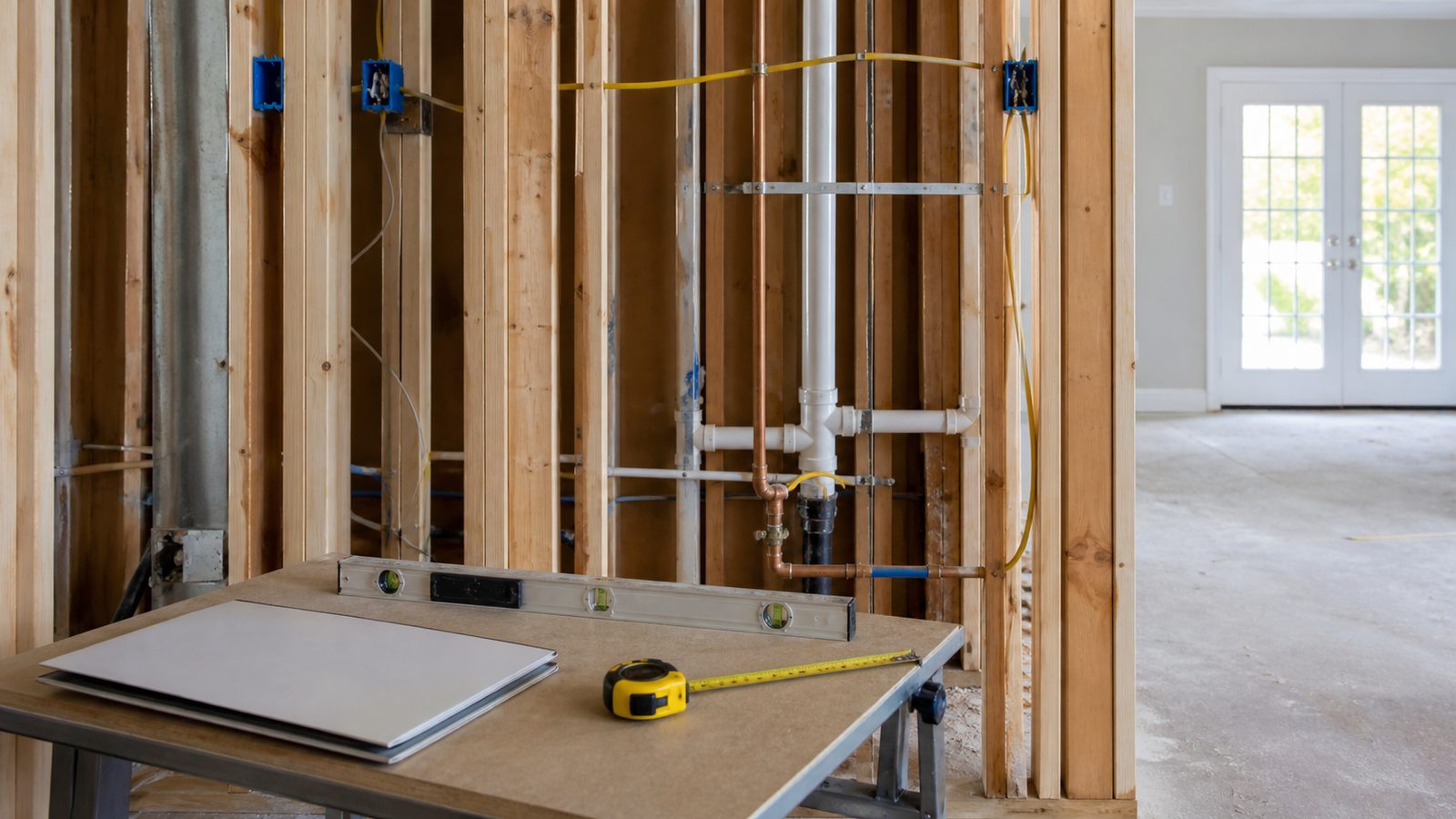
Inspection Coordination: The Florida-Specific Requirements
Florida has an active building inspection process with specific concrete hold points in most jurisdictions. In Duval County:
- Pre-pour inspection — rebar placement, cover, embedments, and form condition must be inspected and approved before any concrete is placed. This is not optional and does not get waived.
- Concrete batch tickets — the inspector may request batch tickets showing mix design, water-cement ratio, and load number. The concrete sub ensures tickets are on site and organized.
- Test cylinders — cylinder samples taken at the pour, cured, and tested at 7-day and 28-day intervals by a third-party testing lab. Strength failures require documented investigation and remediation plan.
The concrete sub on a JK project is responsible for:
- Notifying JK's superintendent 48 hours before the intended pour
- JK's superintendent requests the inspection with the AHJ
- Confirming inspector availability before committing crew and truck
- Not placing a single yard until the inspector has approved the pre-pour
A concrete sub who has poured without a pre-pour inspection in Duval County has put the GC's project in a difficult position. JK takes this seriously.
Florida Climate and Concrete: What the Sub Needs to Know
Florida's climate creates concrete placement challenges that do not exist in northern states:
Hot Weather Concreting
Under ACI 305, concrete placement in high ambient temperatures (above 90°F) and direct sun requires precautions:
- Pre-wetting forms and subgrade to reduce moisture absorption from fresh concrete
- Chilled water in mix design — some suppliers offer pre-chilled water to maintain batch temperature below 90°F at delivery
- Placing and finishing quickly — high evaporation rates in Florida summer can cause plastic shrinkage cracking before initial set if finishing is delayed
- Curing compound or wet cure applied immediately after finishing
Concrete subs in Florida who work through summer months should have documented hot weather concreting procedures. JK asks for these before first pour on a project.
Slump and Water-Cement Ratio Control
It is a common field problem: concrete arrives stiff in hot weather and the truck driver adds water. Adding water to the truck increases slump but reduces strength. JK prohibits field water additions to the mix without authorization. If the slump is insufficient, the load is rejected, not watered down.
Curing in High-Humidity Conditions
Florida's humidity actually helps curing if the concrete surface is kept wet or sealed — evaporation is slower. Curing compound must still be applied promptly after finishing. Wet cure with burlap and poly sheeting is acceptable and preferred for structural elements.
The Pour Day Checklist: What JK Walks Before the First Truck
On pour day, JK's superintendent walks the pour area against a specific checklist before calling the concrete truck:
- Rebar in correct positions with correct cover (checked with a cover meter or spacers visible)
- Embedments (anchor bolts, conduit sleeves, drains) in correct locations and secured
- Form work tight — no gaps, no bowing, adequate bracing for pour pressure
- Pump truck or chute access route clear
- Test cylinder molds, slump cone, and tamping rod on site
- Third-party inspector on site and pre-pour approval given
If any item on this list is not ready, the pour does not start. Resequencing a concrete pour in Jacksonville's heat costs time and money. Correct setup on the front end is cheaper.
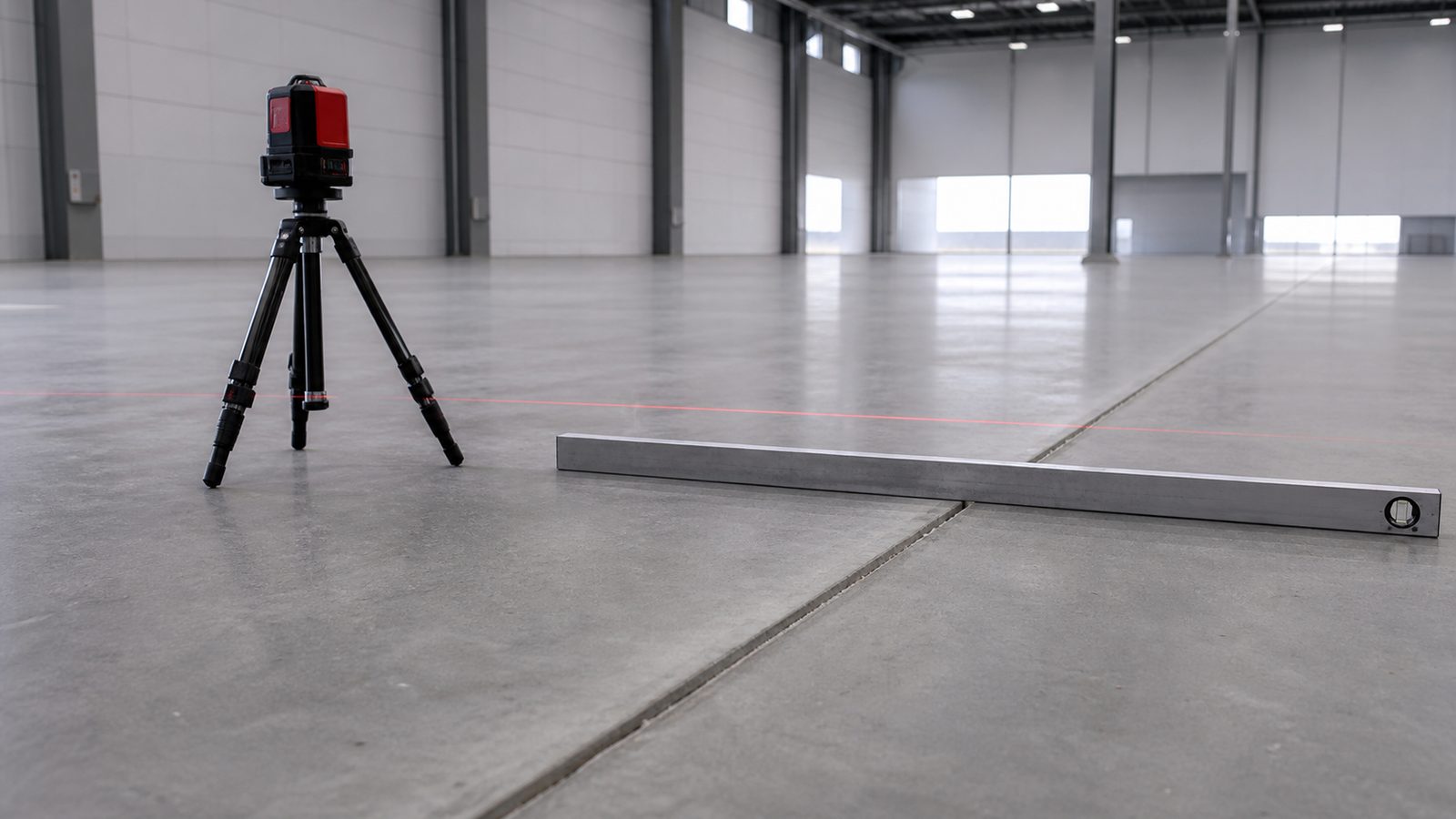
After the Pour: Curing, Protection, and Slab Flatness
Curing Requirements
Minimum 7-day wet cure or curing compound applied per ASTM C309 specifications. Curing failure — letting the slab surface dry out in the first 24-72 hours — leads to surface cracking and dusting that cannot be remediated without surface grinding or coating.
Protection from Traffic
Green concrete should not receive equipment traffic or significant foot traffic until it reaches a minimum 70% of design strength (typically 5-7 days for normal cure, depending on mix). The concrete sub is responsible for communicating the protection period to JK's superintendent and marking restricted areas.
Flatness and Levelness (FF/FL)
For warehouse and commercial floors where fork truck or rack installation will occur, floor flatness (FF) and floor levelness (FL) are specified in the contract drawings. Post-pour flatness testing using a Dipstick floor profiler or equivalent is required when specified. Deviations outside tolerance require grinding or topping, at the concrete sub's cost if the deviation resulted from improper strike-off or finishing technique.
Punch List Standards
Concrete punch list items that JK issues to concrete subs:
- Surface cracks wider than 1/8 inch — document, evaluate, provide remediation recommendation
- Exposed aggregate at column bases or embedments — grout fill per structural engineer direction
- Low spots or birdbaths in slab — document location and depth; grinding or topping remediation plan
- Honeycombs in formed concrete (walls, columns) — investigate depth, chip and fill per structural engineer approval
- Anchor bolt locations out of tolerance — document before steel erection; do not field drill rebar as a first response
JK issues punch lists with photos and measured locations. The expectation is a written response within three business days identifying which items the sub accepts and a remediation timeline.
No call center. No coordinator. A JK principal reviews every inquiry and replies with a real number, not a range, not a follow-up form.
Request Free Estimate →