A gut renovation in Jacksonville often uncovers electrical work that can't be left alone. Knob-and-tube wiring from the 1940s. Aluminum wiring from the 1960s and 70s. Federal Pacific or Zinsco panels that insurance companies won't touch. A 100-amp service that can't support a modern kitchen and HVAC system.
When that wiring comes out of the walls during a renovation, you have a decision to make: patch what's there or rewire the house properly. This post covers when a full rewire is the right call, what it costs in Jacksonville, and how the permit process works.
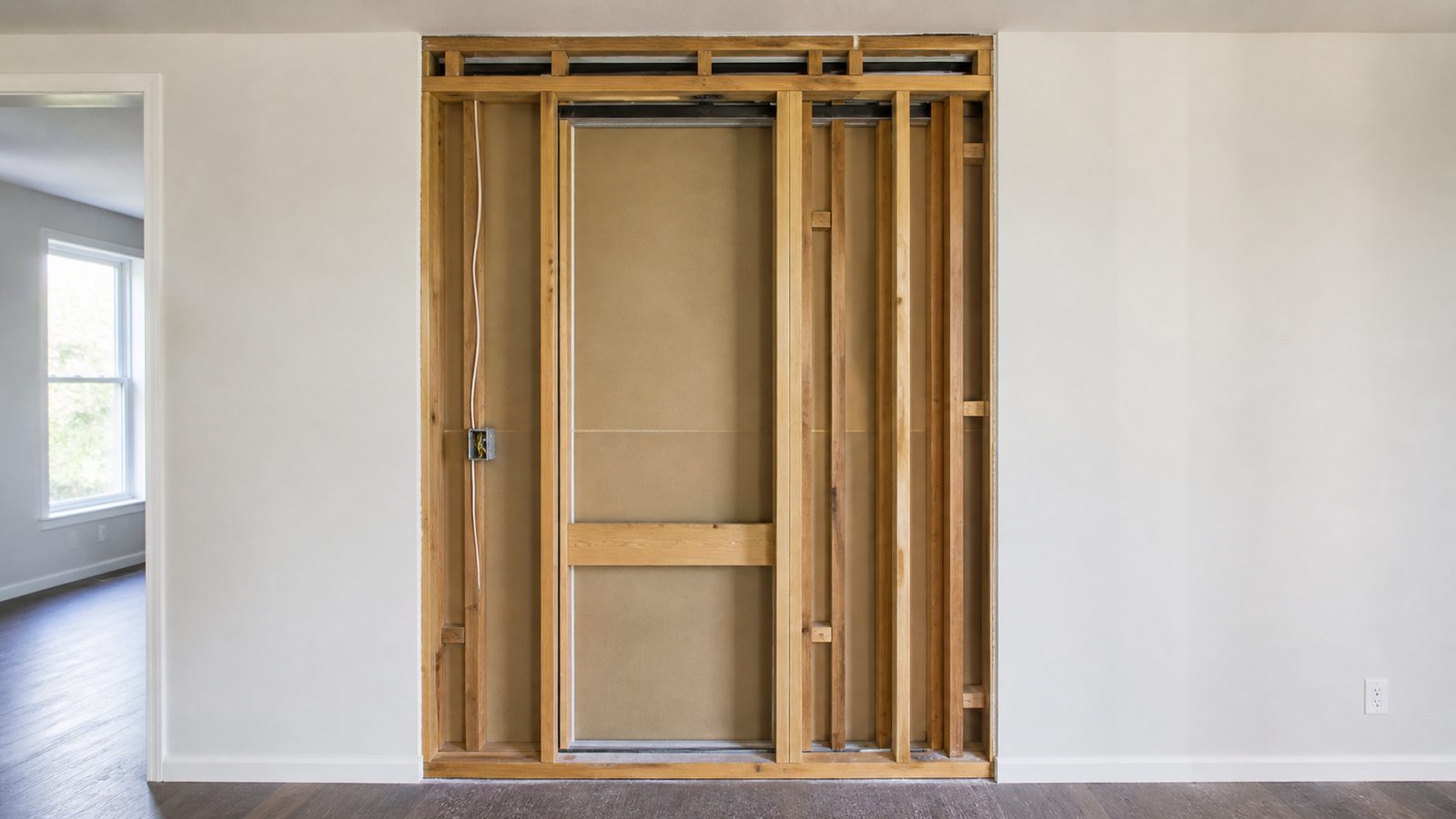
When a Whole-Home Rewire Is Required vs. Optional
In some cases, rewiring is mandatory. In others, it's a judgment call. Here's how to read the situation.
Mandatory Situations
Knob-and-tube wiring: Insurance carriers in Florida routinely refuse to write homeowner's policies on homes with active knob-and-tube. If you're doing a gut renovation on a pre-1950 home and opening up walls, any active knob-and-tube must be replaced. Florida Building Code Section 338 and NFPA 70 (National Electrical Code) require that replaced wiring meet current standards.
Aluminum wiring in branch circuits: Aluminum wiring used in branch circuits (the wiring that runs to outlets and switches, not the main service) was common from 1965 to 1973. It's not illegal, but aluminum-to-copper connections require approved connectors (CO/ALR or COPALUM crimps), and most renovation projects expose enough of the wiring to require a full replacement to bring it to code.
Federal Pacific Electric Stab-Lok panels: FPE panels have a documented breaker failure rate. Most insurance carriers in Florida won't insure a home with one. If your renovation is pulling permits and an inspector flags an FPE panel, you may be required to replace it before the CO is issued.
Service upgrade required by new load: A 100-amp service feeding a renovation that's adding a 5-ton central HVAC, an electric range, EV charger, and a tankless water heater needs to be upgraded to 200-amp minimum. That upgrade involves the utility (JEA in Jacksonville), a new meter base, and typically a full main panel replacement — which often leads to a full rewire because the existing branch circuits don't match the new panel layout.
Situations Where Rewiring Is a Judgment Call
Partial gut renovation: If you're opening three rooms but leaving four others, you can legally rewire the exposed portion and leave the unexposed wiring in place. The question is whether the existing wiring is reliable enough to be worth leaving. An electrician running a circuit map and load test on the existing wiring can give you a specific answer.
Pre-1980 wiring in good condition: 12-gauge copper wiring from the 1970s that has been properly maintained and shows no overloading or heat damage can stay. Get an electrician to pull a few outlets and look at the wire condition — if the insulation is brittle, cracked, or discolored, replace it.
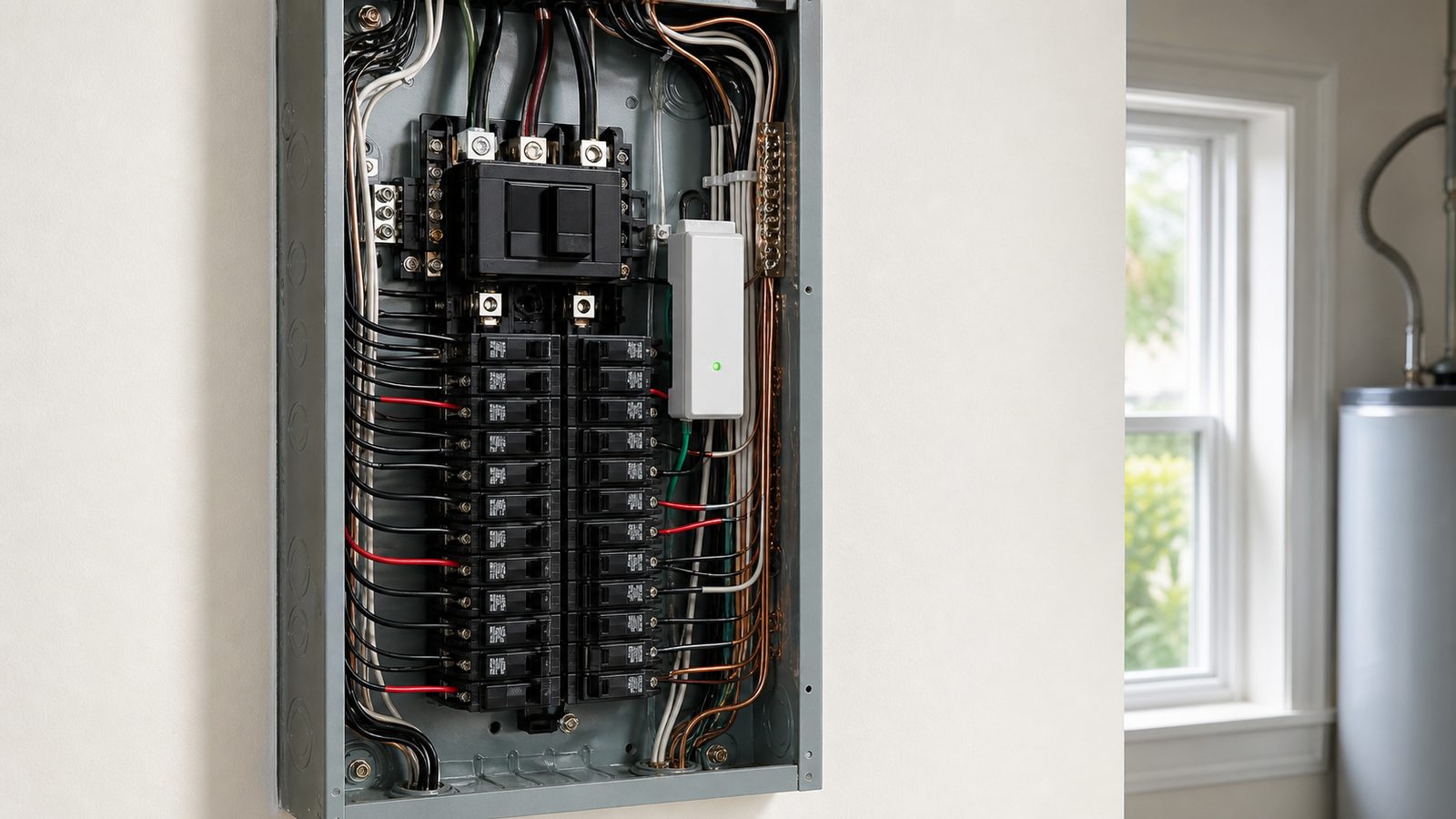
What a Whole-Home Rewire Costs in Jacksonville
Rewire costs vary significantly based on home size, existing infrastructure, and what's being replaced. These are real-world ranges for Jacksonville and surrounding Duval County:
1,200–1,500 sq ft home: $8,000–$14,000 for full rewire including panel upgrade to 200-amp, new branch circuits, outlets, and switches. Does not include fixtures.
1,500–2,500 sq ft home: $12,000–$22,000. The range widens because of layout complexity — two-story homes cost more than single-story, and homes with slab foundations cost more than those with crawl spaces.
2,500–4,000 sq ft home: $18,000–$35,000. At this size, the panel may need to be 400-amp (two 200-amp panels), particularly if the home has a large HVAC system, a pool, and a detached garage.
What Adds to the Cost
- Service upgrade to 400-amp: Add $3,000–$5,000 for the second panel and the utility coordination
- Conduit in concrete slab: If wiring runs through the slab, accessing it requires saw-cutting or going overhead — add $2,000–$4,000
- Smoke/CO detector compliance: Florida requires interconnected smoke alarms in every bedroom and hallway when permits are pulled. Plan for 8–15 detectors on most homes
- EV charger circuit: A dedicated 50-amp circuit for an EV charger adds $400–$800 per circuit
- Whole-home surge protection: Worth doing during a rewire. Plan $300–$600 installed
What's Not Included in a Rewire Quote
Make sure your electrician's quote specifies whether the following are included:
- Light fixture installation (typically excluded — fixtures are owner-supplied and installed by GC or electrician separately)
- Low-voltage wiring (data, coax, security — often a separate sub)
- HVAC wiring (often coordinated with the HVAC sub, not the electrician)
- Permitting fees (Duval County electrical permits are typically $150–$450 depending on scope)
At JK Prestige, we coordinate with our licensed electrical contractor on every gut renovation. The electrical scope is part of the fixed-price contract — no surprise adds when the walls open up and reveal more wiring than expected.
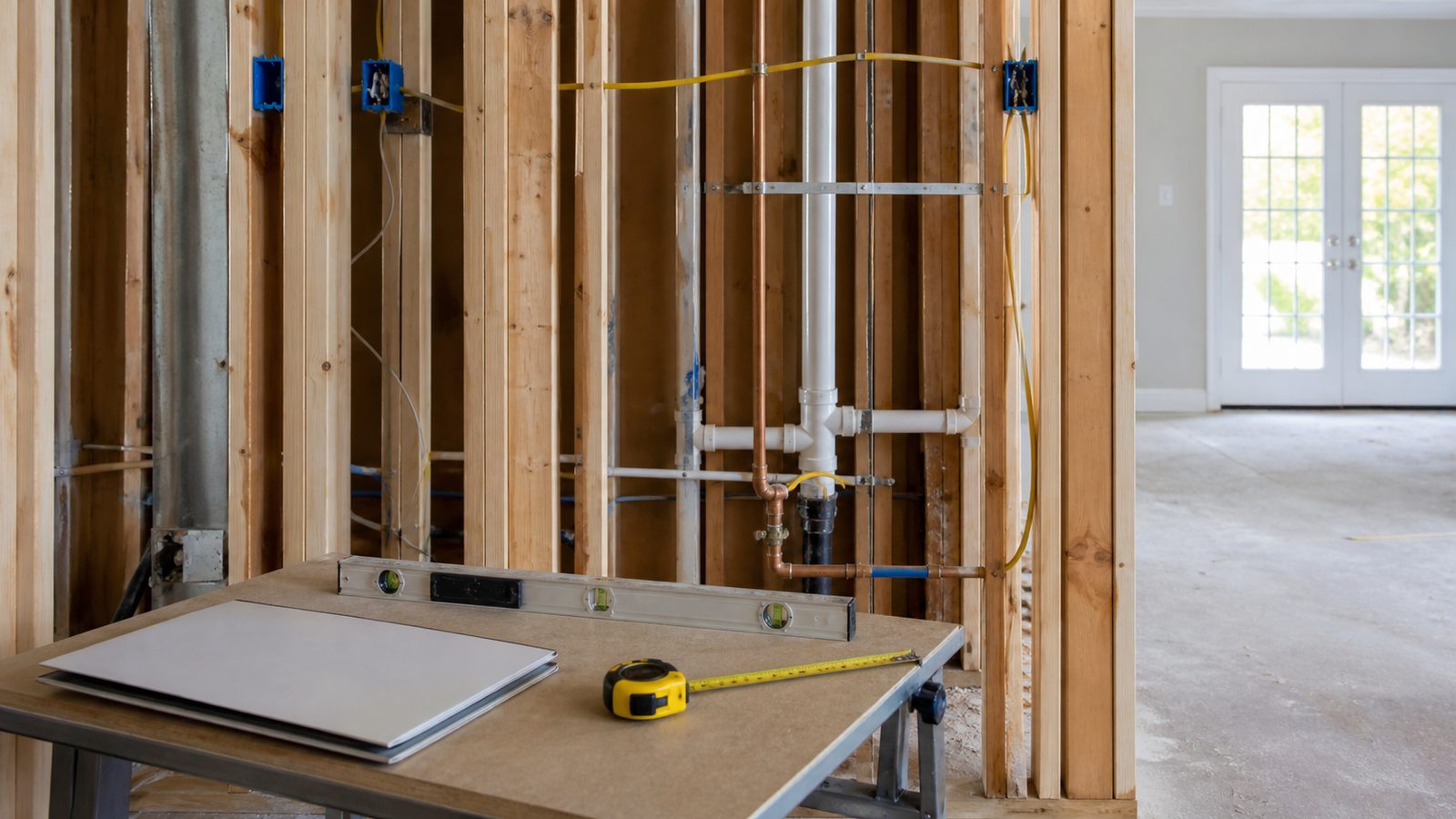
The Permit Process in Duval County
All electrical work in Jacksonville requires a permit pulled by a licensed electrical contractor. Homeowners cannot pull their own electrical permits in Florida for renovation work — that changed in 2019 under the Building Regulation Preemption Act. The licensed EC pulls the permit.
Here's the typical sequence:
1. Contractor applies for permit. Application through Jacksonville's e-permits portal. Typically 5–10 business days for review and approval on residential electrical.
2. Rough inspection. After new wiring is run but before walls are closed. The inspector verifies wire gauge, stapling intervals, box fill, and bonding. A failed rough inspection means the walls stay open until corrections are made.
3. Panel inspection. The main panel is inspected separately in some cases, particularly on service upgrades. JEA coordinates with the city for meter reconnection.
4. Final inspection. All fixtures installed, outlets live, GFCI and AFCI protection verified. Final inspection must pass before the CO is issued for the overall renovation.
One thing homeowners often underestimate: the gap between rough inspection and final inspection is driven by the rest of the renovation. The walls need to be insulated and drywalled before the electrician returns for finish work. Coordination between the electrical, drywall, and finish trades determines the final inspection timing more than the permit process itself.
JK Prestige manages this sequencing directly — our project superintendent coordinates the inspection schedule across all trades so the electrical final happens after drywall and before finish carpentry installs the trim that covers the outlets.
What Happens When Walls Open During a Renovation
The most common scenario is this: a homeowner hires a GC for a kitchen gut renovation. When the kitchen walls come down, the electrician finds that the wiring in the kitchen is fine — new romex, 20-amp circuits — but the main panel is a Federal Pacific that insurance won't touch, and the bedroom circuit that was supposed to be 20-amp is 15-amp. Now you're talking about a panel replacement and additional circuit work beyond the kitchen.
This is not unusual. It's also not a failure of planning — it's what renovation reveals.
The way to handle this is to build contingency into your budget from the start. On any pre-1980 home in Jacksonville, we recommend budgeting $5,000–$10,000 for electrical surprises beyond the quoted scope. On pre-1960 homes, $8,000–$15,000. The number is not a guarantee — it's a planning margin.
At JK Prestige, we walk the existing electrical before quoting a renovation and flag known issues. We can't predict every concealed condition, but we give you a real-world risk range before you sign.
Fixed-Price vs. Allowance for Electrical in Renovation
Some GCs quote electrical as an allowance in a renovation contract: "Electrical: $15,000 allowance." If the actual cost is $22,000, you owe the difference. If it's $11,000, you get a credit.
The allowance model transfers risk to the homeowner. It also creates no incentive for the GC to manage electrical costs aggressively, because any overage is billed through.
At JK Prestige, we quote electrical as part of the fixed price where we can assess the scope. For homes where the concealed condition is genuinely unknown, we use a documented allowance with a clear scope definition — and we walk you through the risk before you sign, not after the walls come down.
No call center. No coordinator. A JK principal reviews every inquiry and replies with a real number, not a range, not a follow-up form.
Request Free Estimate →