If you have talked to enough Jacksonville homeowners who have been through a renovation or new build, you start hearing the same story: the original number was $280,000, the final invoice was $390,000, and nobody can fully explain what happened. The contractor says there were unforeseen conditions. The homeowner says the scope never changed. Both may be telling the truth.
The problem is not dishonesty. It is contract structure. Most construction cost overruns in Florida — and across the country — trace back to four specific root causes, all of which exist before a single wall is opened or a footing is poured. A fixed-price contract backed by a complete scope document eliminates every one of them.
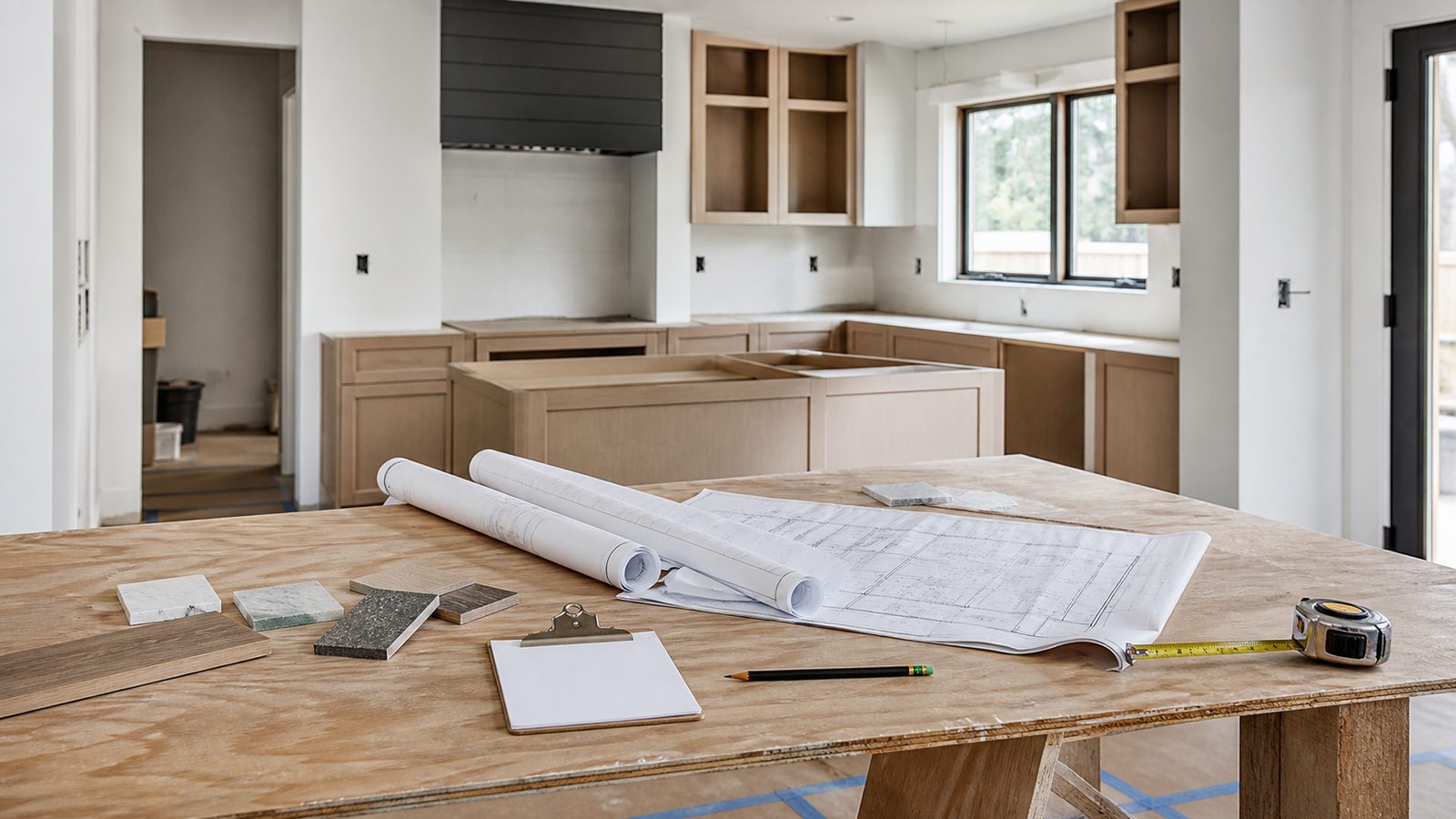
The Four Root Causes of Construction Cost Overruns in Jacksonville FL
Root Cause 1: Scope Was Never Locked Before Signing
The most common cause of overruns is also the most preventable. The contractor and owner agree on a rough description of the work — "kitchen renovation," "master bath addition," "gut the second floor" — and a price is attached to that description. Nobody writes down exactly what that description includes.
Six weeks later, the contractor says the tile selection was not in the base scope. The homeowner says of course it was — what else would a kitchen renovation include? The contractor says the proposal said "standard finishes" and this tile is an upgrade. A change order arrives.
This is not fraud. It is scope ambiguity being resolved in the field, after signing, in the direction of more money. It happens on virtually every project where the scope document is a short proposal rather than a detailed line-item breakdown.
What a locked scope prevents: Every disputed item gets resolved before the contract is signed, not during construction. When the scope is specific enough to be unambiguous — materials named by specification, quantities stated, exclusions listed — there is no room for interpretive change orders.
Root Cause 2: Time-and-Materials Contracts Have No Ceiling
A time-and-materials (T&M) contract charges the owner for actual labor hours and material costs as they occur. There is no fixed total. The contractor bills what they spend, and the owner pays it.
T&M contracts are appropriate for emergency repairs where scope cannot be determined in advance. They are inappropriate for any project with a definable scope — which includes almost every renovation and new build. Under T&M, the contractor has no financial incentive to work efficiently, source materials competitively, or finish on schedule. Every additional hour is additional revenue.
Homeowners often accept T&M contracts because the contractor presents them as "more transparent" than fixed-price. That framing is backwards. T&M exposes the owner to open-ended cost accumulation. Fixed-price protects the owner from exactly that.
What a fixed-price contract prevents: The total cost is defined before work begins. The contractor absorbs the risk of inefficiency and material cost fluctuation within the scope. If the scope does not change, the price does not change — that is the entire point.
Root Cause 3: Change Orders Are a Revenue Model for Brokers
Not every contractor who issues change orders is being opportunistic. But in a GC model where the critical trades are subcontracted out and the GC's margin is earned on markups, change orders become a structural revenue source — not an exception.
Here is how it works in practice. A GC bids a project competitively, knowing they will recover margin through change orders for items left ambiguous in the original scope. The brokered framing crew hits a condition the GC says was unforeseeable. A change order arrives. Then another, for MEP (Mechanical, Electrical, and Plumbing) coordination that "was not included." Then another for a material substitution the GC made without prior notification.
Each individual change order may look reasonable. Cumulatively, they add 15% to 30% to the original contract price on projects where this model operates aggressively.
What a fixed-price contract prevents: When the GC self-performs the critical trades — framing, drywall, roofing, concrete — and carries those costs directly, there is no margin-on-markup incentive to generate change orders. JK Prestige self-performs all five of those trades with in-house crews. The principal who signed the contract reviews every budget line weekly. Change orders that are not genuinely scope-driven do not survive that review.
Root Cause 4: Allowances Are Set Artificially Low
Allowances are line items in a proposal where the contractor estimates cost rather than fixing it. Common allowances: tile selection, cabinetry, light fixtures, plumbing fixtures, appliances. The contractor sets an allowance number — say $8,000 for cabinetry — and the total contract price reflects that number.
What the homeowner often does not realize: the allowance is frequently set at a level that covers builder-grade or below, even when the discussion assumed mid-grade finishes. When the homeowner selects actual cabinetry and it costs $14,000, they pay the $6,000 difference as a change order. Every allowance item that exceeds the set number becomes billable.
Allowance abuse is legal. It is also how a contractor quotes a competitive number knowing the real cost will be higher once selections are made.
What a fixed-price contract prevents: A properly structured fixed-price contract specifies materials by brand and grade, not by allowance. If cabinetry is specified as a named product line at a stated price, there is no allowance to exceed. Selections happen before signing — not during construction.
What a Scope Document Must Contain to Make Fixed-Price Work
A fixed-price contract is only as good as the scope document behind it. A real scope document — the kind that makes fixed-price enforceable — includes the following:
- Trade-by-trade breakdown: Every trade listed separately with their specific scope of work
- Material specifications: Named by brand, product line, grade, and color where applicable — not described as "standard" or "builder grade"
- Quantities: Square footage, linear footage, unit counts — not ranges
- Exclusions: An explicit list of what the contract does not cover, so gray areas are resolved before signing
- Permit responsibility: Who pulls permits, at what cost, and what that includes
- Phasing and access: How the work is sequenced, which areas of the home are affected, and when
- Payment schedule: Tied to defined milestones, not calendar dates or contractor convenience
For a full renovation, a complete scope document runs 15 to 30 pages. A two-page proposal with a bottom-line number is not a scope document. It is a placeholder.
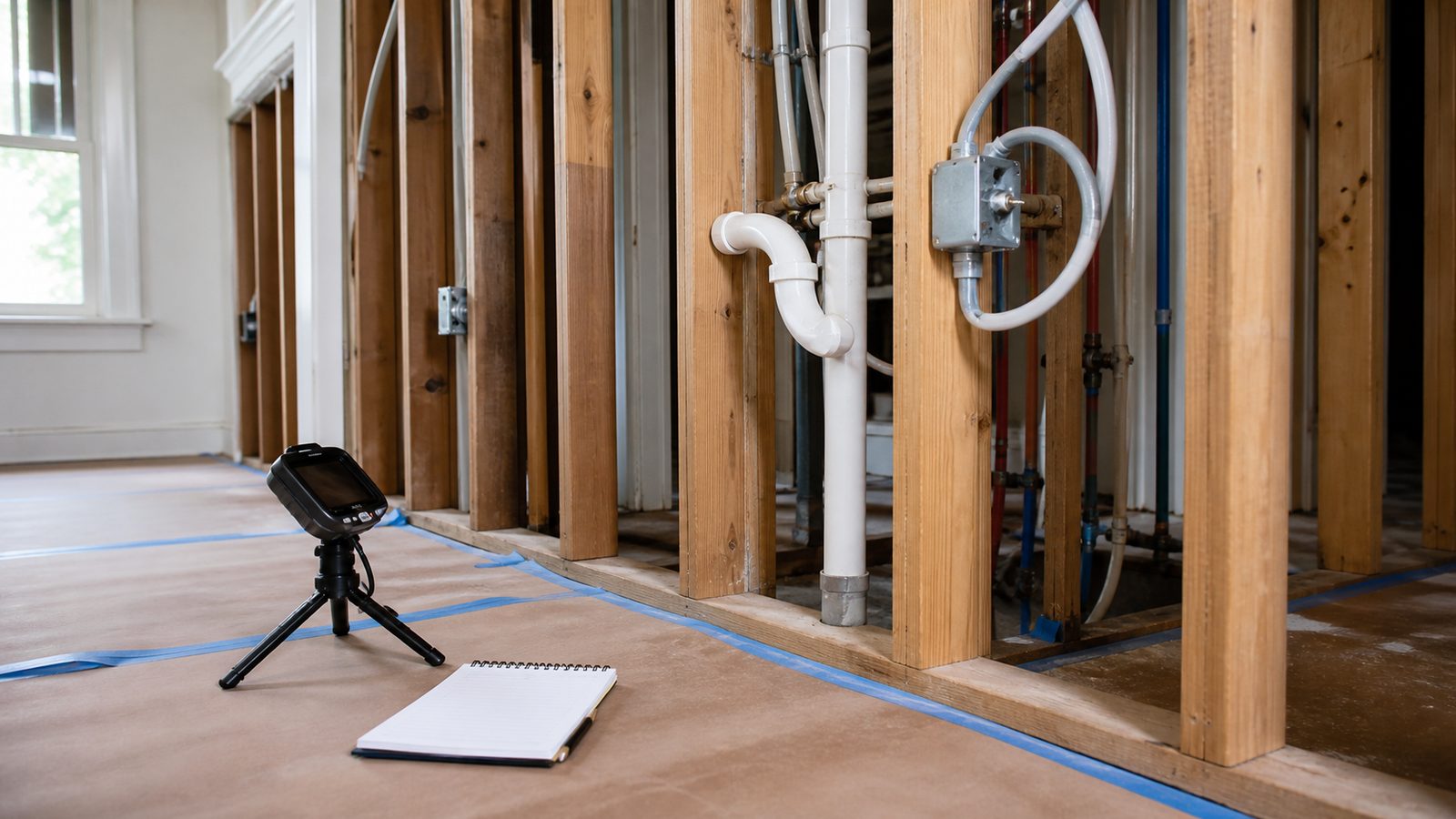
What Happens When Conditions Differ From Expectations
Even on a well-scoped project, genuine surprises happen. A slab is found under a room that was shown as crawl space. Knob-and-tube wiring turns up behind a wall that was quoted as a standard drywall replacement. Soil conditions at footing depth differ from what the surface suggested.
A fixed-price contract does not mean the contractor absorbs every conceivable condition. It means the contract specifies how genuine unforeseen conditions are handled before signing — with clear triggers, documentation requirements, and pricing methodology — rather than leaving them to field negotiation.
At JK Prestige, the pre-construction process addresses this directly. Before a fixed price is locked, the team conducts a site walk, performs subsurface validation where conditions are uncertain, and identifies long-lead items and known risk areas. The goal is to price the actual project — not a best-case assumption.
When a genuine unforeseen condition does arise, the principal discusses it directly with the owner: what was found, what the contract says, what the remediation costs, and how the schedule is affected. No coordinator relay. No retroactive billing. A written change order before the work begins.
You can see how this process is structured at The JK Way or review relevant completed projects for reference.

The Fixed-Price Model in Practice: Before Ground Breaks
At JK Prestige, the sequence before a single shovel moves looks like this:
- Site walk with the principal
- Subsurface validation where conditions are uncertain (soil borings, utility locate)
- Full scope document drafted with trade-by-trade breakdown
- Material specifications confirmed and priced — no allowances for major items
- Fixed-price contract signed with the scope document attached as an exhibit
- Schedule baseline locked with milestone payment tied to completion of defined phases
Only after all of that is complete does mobilization begin. The homeowner knows the total cost, the total schedule, and exactly what is and is not included before any work starts.
That is what makes fixed-price work. Not the label — the process behind it.
If you are planning a renovation or new build in Jacksonville and want a written fixed-price estimate with a full scope document, call (904) 944-0278 or request your estimate here. Written estimate delivered within 48 hours of the site walk. A principal answers.
No call center. No coordinator. A JK principal reviews every inquiry and replies with a real number, not a range, not a follow-up form.
Request Free Estimate →