The construction industry has a budget overrun problem. Studies consistently show that the majority of construction projects — across residential, commercial, and public sectors — come in over budget. Homeowners who've been through a renovation often say the same thing: "It cost way more than the estimate."
The uncomfortable truth is that most construction budget overruns are predictable and preventable. They don't happen because of bad luck. They happen because of structural problems in how the project is set up before a single foundation board goes in.
Here are the five root causes of construction budget overruns and the contract structures that address each one.
Root Cause 1: Scope Wasn't Defined Before Signing
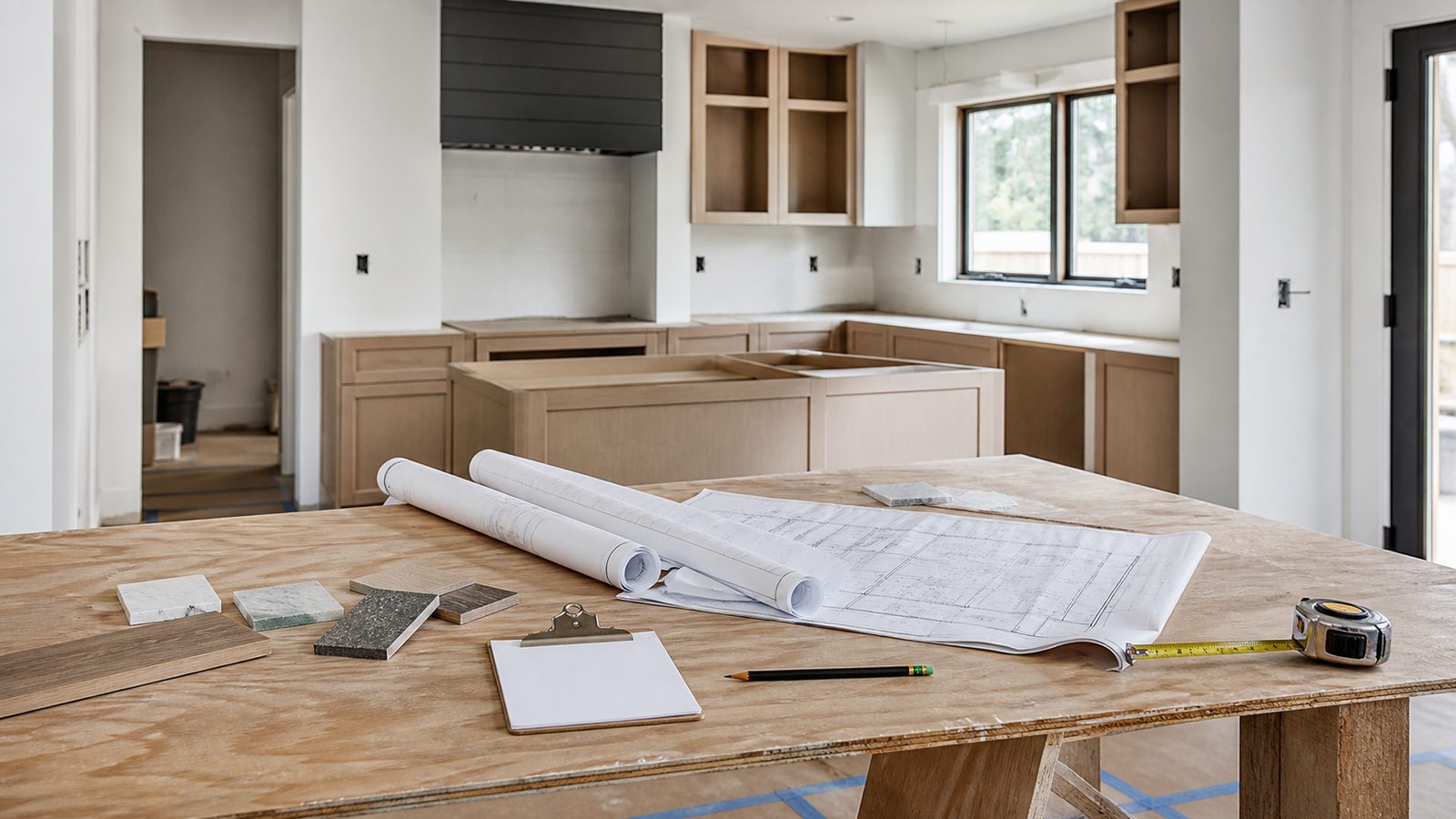
This is the most common and most damaging cause of budget overruns. An owner signs a contract for "kitchen renovation" or "office build-out" based on a general description — without a line-item scope document that defines every finish, every system, every trade, and every quantity.
The problem: what the GC priced and what the owner expected are two different things. The GC priced a functional kitchen. The owner expected a high-end kitchen. Neither party was dishonest — they were working from different mental pictures of the same project.
What happens next: Every difference between the GC's assumptions and the owner's expectations becomes a change order. The change order markup (typically 10% to 20% above cost) is charged on every single variation. By the time the project is complete, the owner has paid 15 to 30% more than the original contract number.
The fix: A complete scope document before the contract is signed. Every selection defined: cabinet brand and line, countertop material and edge profile, tile selection and layout, appliance model numbers, fixture brands and finish. A scope document that can be priced to the line item. When the scope is fully defined, the fixed-price number is real — not a guess.
Data from the construction industry consistently shows that projects signed with full scope documentation have 60 to 70% fewer cost overruns than projects signed on a general description. This is not a new finding — it's the one finding the industry keeps confirming and ignoring simultaneously.
Root Cause 2: Allowances Set Below Real Cost
Allowances are placeholder dollar amounts in the contract for items not yet selected — "tile allowance: $8/sqft installed," "appliance allowance: $12,000," "lighting allowance: $5,000."
The problem with allowances is that GCs set them at levels that make the total contract number look attractive. An $8/sqft tile allowance sounds reasonable — until the owner goes to the tile showroom and discovers the tile they want is $18/sqft installed. The difference is a change order on every square foot of tile in the house.
This is not always intentional. Sometimes the GC genuinely doesn't know the owner's taste and uses an average. Sometimes the GC is deliberately setting allowances low to win the contract. Either way, the owner pays the difference.
The fix: Make selections before the contract is signed. Every dollar in an allowance is a dollar of budget uncertainty. The goal of the preconstruction phase is to convert allowances to specified items with known prices. A contract with no allowances is a contract with maximum price certainty.
When allowances are unavoidable — because a selection genuinely can't be made during preconstruction — they should be set at the realistic cost of what the owner is likely to choose, not at the minimum possible cost of the category.
Root Cause 3: Time-and-Materials Contract With No Ceiling
A time-and-materials (T&M) contract pays the GC for actual labor hours at a stated rate plus actual material costs with a markup. There is no fixed price. The owner doesn't know what the project will cost until it's finished.
T&M contracts are not always bad — they're appropriate for emergency work (storm damage repair, a burst pipe emergency), for scope that genuinely can't be defined in advance, and for small exploratory work before a full scope is established. But using a T&M contract for a renovation or construction project with a defined scope is unnecessarily risky for the owner.
What happens on T&M without a ceiling: The GC has no financial incentive to work efficiently. Labor hours accumulate. Material costs are passed through with markup. Change in conditions become change events that add T&M costs. There is no moment at which the GC says "we're done" because there's no defined endpoint.
The fix: A fixed-price contract for defined scope. When scope genuinely can't be defined — renovation of a building with unknown conditions inside the walls — use a GMP (Guaranteed Maximum Price) contract with a stated ceiling and an open-book cost ledger. The GMP caps the owner's exposure. The open book allows the owner to verify actual costs against the GMP.
Root Cause 4: Change Orders Used as a Business Model
Some GCs bid low to win the contract, then use change orders to make their actual margin. The pattern: the original bid is below market because the GC knows they'll recover it on change orders for scope additions, unforeseen conditions, and owner-requested modifications. Each change order carries a markup of 10% to 20% (sometimes more).
This is sometimes called "change-order theater" — the GC generates change order volume as a revenue mechanism, not as a transparent accounting of legitimate scope changes.
The warning signs:
- The original bid was significantly below every other bidder
- Change orders appear within the first two weeks of a project
- Change orders reference conditions that should have been identified in preconstruction
- The change order markup is not disclosed in the original contract
- Change orders are presented under time pressure ("we need an answer today or we can't hold the subcontractor's schedule")
The fix: A fixed-price contract with the change order process defined in writing before signing. Change orders should require written documentation of the specific scope change, the reason it wasn't in the original scope, the unit cost basis for pricing, the markup rate (which should be disclosed and capped), and the schedule impact. Change orders generated by unforeseen conditions should be supported by a subsurface investigation or existing conditions survey conducted in preconstruction. If you already paid for that investigation and the conditions it found were priced into the contract, unforeseen condition claims for those same areas should not exist.
Root Cause 5: Unforeseen Conditions With No Contingency Plan
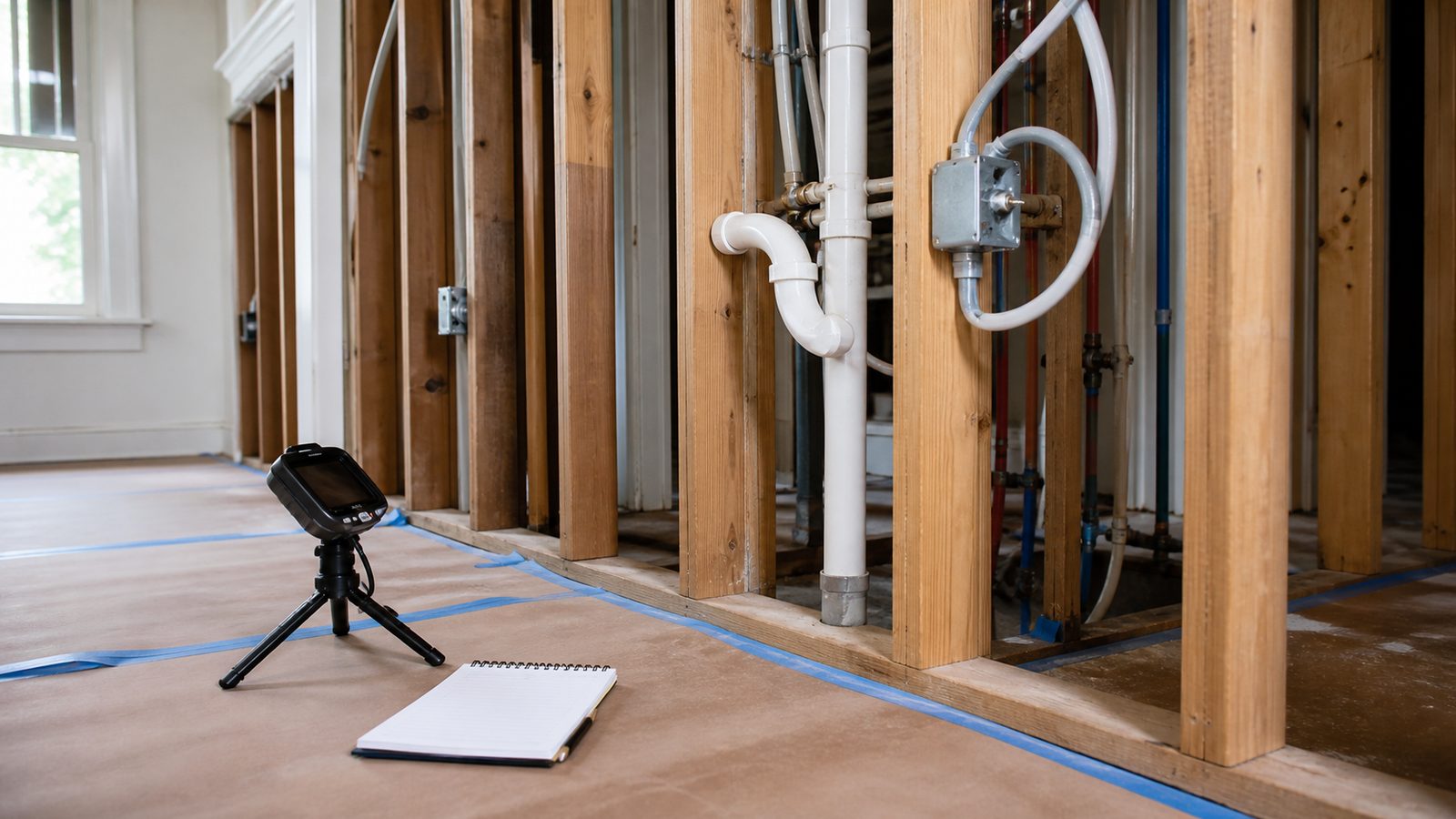
Some budget overruns are genuinely unforeseeable — conditions inside the walls that couldn't have been found without opening them, a soil condition at depth that the borings didn't capture, a structural deficiency in an existing building that became visible only during demolition. These are not GC failures; they are genuine unknowns.
The problem is not that unforeseen conditions exist. The problem is when there is no contingency plan for how they'll be handled financially.
The fix: An explicit contingency allocation in the contract — a stated percentage of construction cost (typically 5% on gut-renos, 10% on historic building renovations, 3% on new construction with full site investigation) set aside specifically for unforeseen conditions. The contingency is the owner's money, managed through the GC. It is drawn only for genuine unforeseen events, not for scope additions. Any unused contingency at project completion belongs to the owner.
A GC who doesn't suggest contingency allocation in the contract is either being optimistic to the point of negligence or setting up a scenario where cost overruns come as a surprise rather than as a preplanned provision.
What the Data Says About Scope-Defined Projects
Construction industry research from the Project Management Institute, the Construction Industry Institute, and multiple academic studies consistently shows the same result: projects with full scope documentation before contract signing have significantly fewer cost overruns than projects signed on general descriptions. The range in studies is 60 to 75% fewer overruns. The underlying mechanism is simple — defined scope eliminates the ambiguity that change-order theater depends on.
This is not a management consulting insight. It's a practical reality that every well-run GC knows and that every owner should understand before signing anything.
How JK Prestige Prevents Budget Overruns
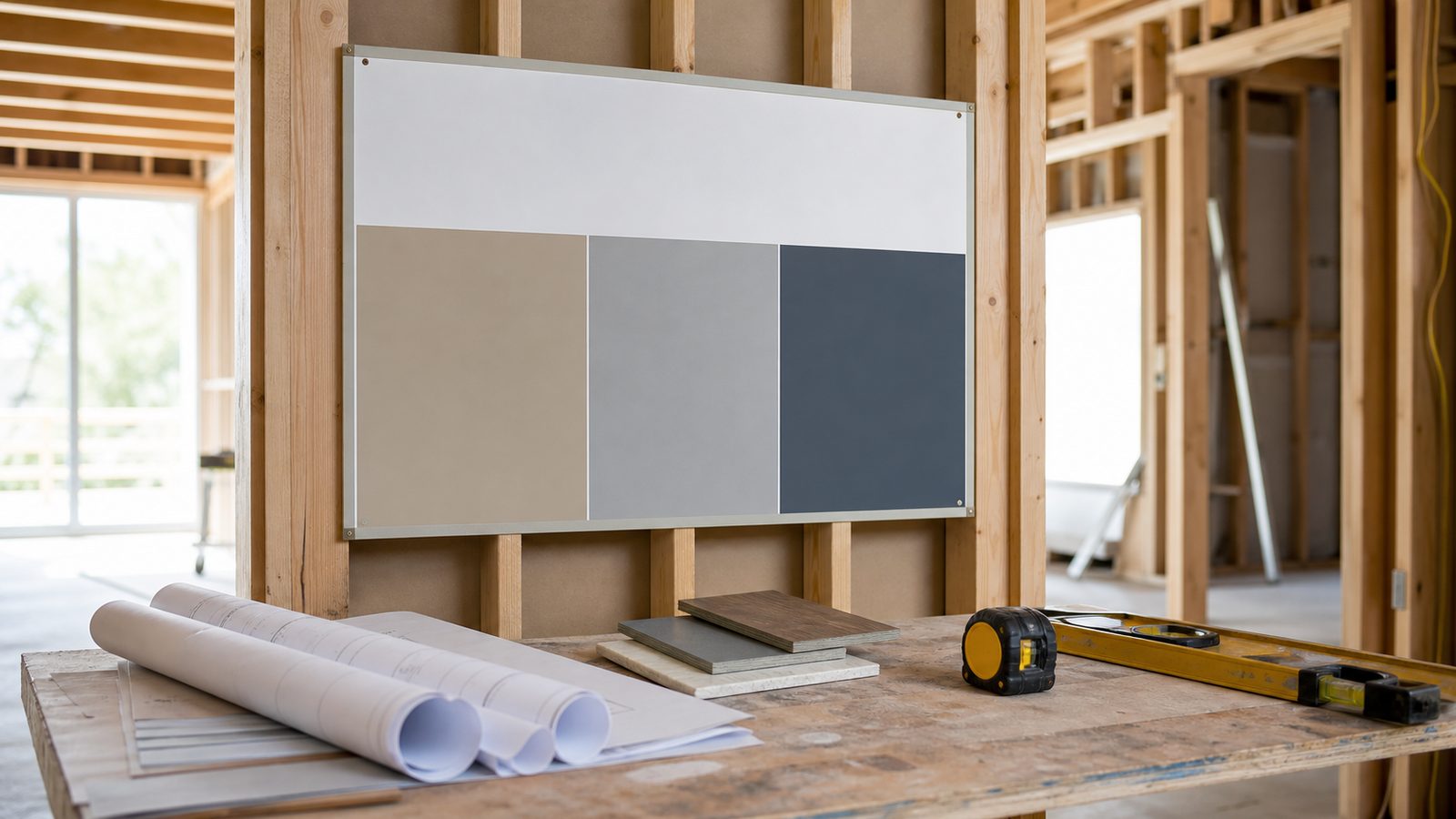
At JK Prestige Constructor, no construction crew mobilizes without a complete scope document, full material selections, and a fixed-price contract. The preconstruction phase — site walk, existing conditions survey, scope development, subsurface investigation, full material and system selection — produces the basis for a contract that can be priced accurately.
The fixed-price model is described in The JK Way: if the scope doesn't change, the price doesn't change. Change orders at JK exist only for owner-initiated scope changes, genuine unforeseen conditions that weren't identifiable in preconstruction, or code changes that affect the project mid-construction. They are not a revenue mechanism.
If you're planning a renovation or ground-up project and want to understand what a properly structured fixed-price contract looks like, contact JK Prestige Constructor. Get a free written estimate in 48 hours. Call (904) 944-0278. A principal answers.
No call center. No coordinator. A JK principal reviews every inquiry and replies with a real number, not a range, not a follow-up form.
Request Free Estimate →